

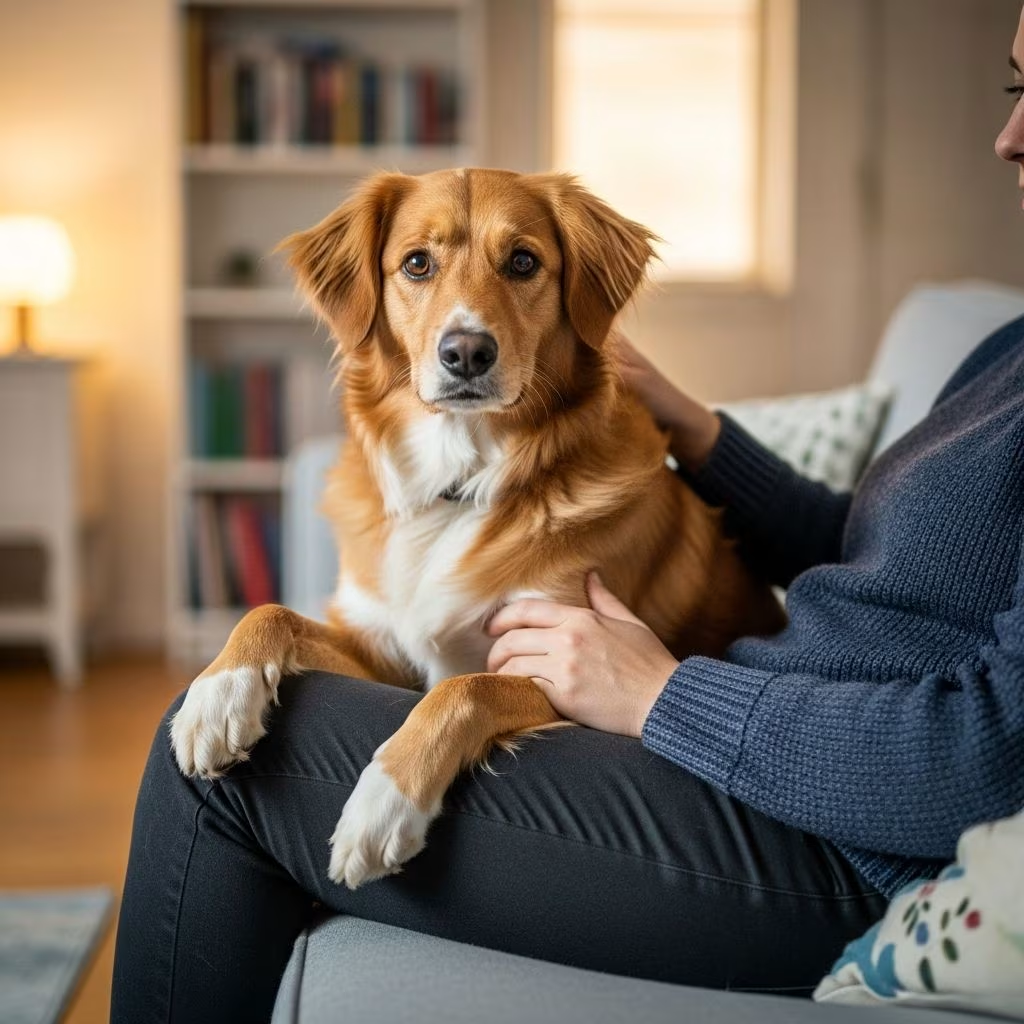
Dogs often climb onto their owners’ laps or feet as a natural expression of their emotional world, rooted in evolutionary bonds and daily interactions. This behavior, while endearing, carries layers of meaning from simple affection to protective instincts.
The Instinctive Drive for Closeness
At the heart of a dog’s desire to perch on you lies their profound need for social connection, a trait honed over thousands of years of domestication. Dogs view their human families as pack members, seeking physical proximity to reinforce these ties. Veterinary behaviorists note that this isn’t about dominance but genuine attachment, much like a child’s hug to a parent.
Physical closeness provides dogs with a sense of reassurance. In unfamiliar environments or during stressful moments, such as a visit to a new place, dogs may press against you to feel grounded. This behavior mirrors how puppies huddle with littermates for comfort, evolving into adult reliance on human companions.
Affection Expressed Through Contact
One of the purest reasons dogs perch on you is to show love. Tail wags, licks, and body wiggles often accompany this, signaling joy in your presence. Certified animal behaviorists describe it as the canine equivalent of a warm embrace, where sitting on feet or laps invites petting and scratches.
- Encourages interaction: Dogs learn that perching prompts belly rubs or ear kneads from owners.
- Strengthens bonds: Regular contact releases oxytocin in both dogs and humans, deepening emotional links.
- Breed tendencies: Small breeds like Chihuahuas or Pugs, bred for companionship, exhibit this more frequently.
Seeking Safety and Warmth
Your body heat and steady heartbeat offer dogs a secure haven, especially during anxiety spikes. Puppies in fear periods or dogs in new homes often perch to self-soothe, using your presence as an emotional anchor. Research on heart rate variability shows that proximity to trusted owners reduces stress markers in dogs.
This isn’t always separation anxiety; it’s often just a preference for your comforting vibe. Dogs with strong attachments show heightened arousal when apart, prompting them to reclaim closeness upon reunion.
Protective and Guarding Behaviors
Sometimes, perching signals a dog’s protective nature. Facing outward while on your lap, they scan for threats like strangers or other pets, positioning themselves as sentinels. This guard-like stance says, “I’ve got you covered.” Resource guarding can play a role too, where dogs “claim” you from perceived rivals, potentially leading to tension if challenged.
| Body Language Cue | Meaning | Response Tip |
|---|---|---|
| Facing outward, alert ears | Protector mode | Praise calmly to reinforce without escalating |
| Body tense, growling softly | Guarding you | Consult a behaviorist for training |
| Relaxed sprawl | Pure affection | Enjoy and reciprocate gently |
Rewards and Learned Habits
Positive reinforcement shapes this habit powerfully. When dogs perch and receive pets, treats, or attention, they associate the action with rewards, repeating it eagerly. Even passive proximity—simply being near you—feels inherently pleasing to dogs, as studies on canine rewards confirm.
Owners unwittingly train this through responses. A quick scratch under the chin turns occasional perching into a routine, especially in multi-pet homes where dogs compete for your lap.
When Perching Signals Underlying Issues
Sudden increases in this behavior warrant observation. New stressors like household changes, health discomfort, or environmental shifts can trigger clinginess. Keep a behavior diary noting patterns: Does it happen around specific people, times, or places?
If paired with anxiety signs like panting, whining, or avoidance, veterinary checks rule out medical causes. Behaviorists recommend watching for resource guarding aggression, which might escalate if ignored.
Interpreting Variations in Perching Styles
Not all perches are equal; posture reveals intent. A dog curling inward seeks comfort, while one straddling your feet asserts closeness. Larger breeds may “lean” rather than fully sit, adapting to size differences while achieving the same goals.
- Lap loungers: Small dogs claiming prime real estate for warmth and pets.
- Foot sitters: Any size dog marking territory or awaiting cues.
- Chest perchers: High-attachment dogs syncing heartbeats for calm.
Enhancing Your Bond Through Understanding
Embracing this behavior thoughtfully strengthens relationships. Respond with calm affection to encourage healthy expressions, but set boundaries for training. Use perching moments for gentle commands like “off” followed by rewards nearby, balancing needs.
Activities like puzzle toys or short separations build independence, reducing over-reliance while preserving joy in closeness.
Frequently Asked Questions
Is it bad if my dog always sits on me?
No, it’s typically a sign of trust and love. Monitor for sudden changes or aggression, and consult pros if concerned.
Why does my dog sit on me only around strangers?
This often indicates protection or anxiety; they view you as safety amid unknowns.
How can I stop excessive perching?
Provide alternatives like nearby beds, use chairs without laps, and reward independent sitting.
Does breed affect this behavior?
Yes, companion breeds perch more due to selective breeding for human affinity.
Can perching indicate pain?
Possibly; track with vet visits if accompanied by limping or reluctance to move otherwise.
References
- Why Do Dogs Sit on You? — Whole Dog Journal. 2023. https://www.whole-dog-journal.com/behavior/why-do-dogs-sit-on-you/
- Why Does My Dog Sit On Me? 6 Reasons Explained — Zigzag. 2024. https://zigzag.dog/en-us/blog/puppy-behavior/separation-and-sleep/why-does-my-dog-sit-on-me-6-reasons-explained-zigzag/
- Dog–Owner Relationship, Owner Interpretations and … – PMC – NIH — National Center for Biotechnology Information. 2022-05-25. https://pmc.ncbi.nlm.nih.gov/articles/PMC9179432/
- Just Being Near You Is Rewarding for Dogs — Psychology Today. 2016-07-01. https://www.psychologytoday.com/us/blog/canine-corner/201607/just-being-near-you-is-rewarding-for-dogs



