

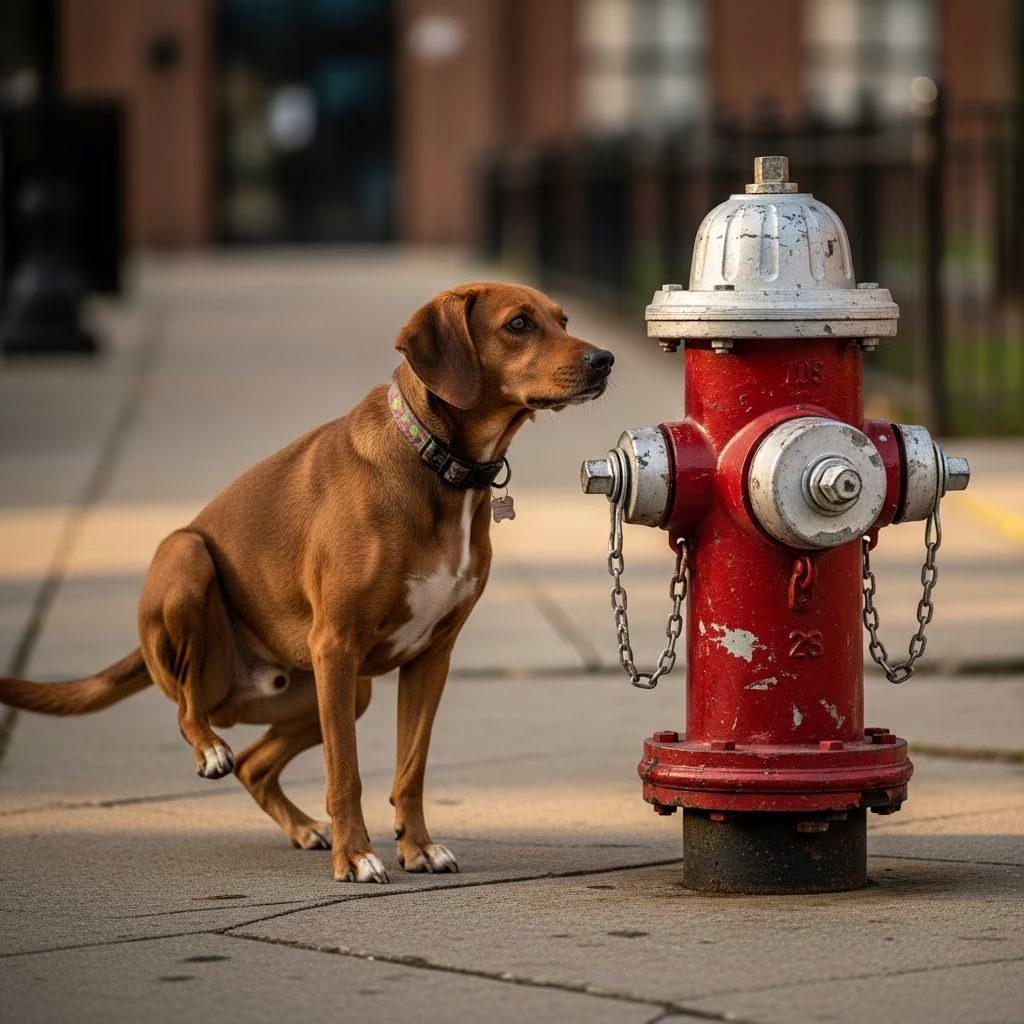
Dogs urinate on fire hydrants primarily to communicate through scent marking, driven by territorial instincts, social status signaling, and responses to environmental odors from other dogs. These bright red, vertical structures in urban settings become hotspots due to their visibility, height, and frequent use by multiple canines.
The Science of Canine Scent Communication
Canines rely heavily on olfaction for social interaction. Urine contains pheromones, hormones, and neurotransmitters that convey information about a dog’s sex, health, reproductive status, and dominance. When a dog sniffs a fire hydrant laden with layered scents, it processes this data, often responding by adding its own mark to participate in this chemical dialogue.
Research shows marking behavior correlates with urinary levels of cortisol, oxytocin, testosterone, and dopamine. For instance, exposure to threatening odors elevates cortisol, prompting distant or overmarking to signal avoidance, while arousing scents boost oxytocin linked to closer, bolder deposits. This modulation reflects cognitive flexibility in how dogs strategize communication.
Why Fire Hydrants Stand Out as Marking Posts
Fire hydrants mimic natural vertical markers like trees, elevated about 2-3 feet off the ground—ideal for leg-lifting to disperse urine widely. Their metallic surface retains scents longer than grass, and prominent placement on sidewalks ensures high traffic from passing dogs.
- Height and Structure: Matches canine preference for upright objects over flat ground.
- Visibility: Bold color and fixed location make them easy to locate during walks.
- Scent Accumulation: Multiple dogs reinforce the spot, creating a “community bulletin board.”
Urban dogs, lacking forests, adapt to human infrastructure. Studies indicate overmarking—urinating directly on existing marks—signals higher social status, with males raising tails higher during such acts.
Territorial Claims and Social Hierarchy
Marking delineates territory and asserts rank. Intact males mark most frequently to advertise availability and dominance, but neutered dogs and females also participate, especially in competitive environments. Fire hydrants in neighborhoods become contested zones where dogs “overmark” rivals’ scents to claim superiority.
| Factor | Influence on Marking | Example on Hydrants |
|---|---|---|
| Sex | Males mark more; females during estrus | Higher testosterone drives frequent lifts |
| Status | Dominant dogs overmark | Tail-high posture signals confidence |
| Emotional State | Stress elevates cortisol | Distant marks avoid threats |
Hormonal profiles in urine reveal these dynamics: elevated adrenaline and norepinephrine near agonistic odors indicate threat response.
Distinguishing Marking from Other Urination Types
Not all peeing is marking. Dogs eliminate fully in private spots but use small squirts (1-10ml) for posts like hydrants. Differentiate from excitement or submissive urination:
- Marking: Purposeful leg-lift on vertical objects, scant volume, during walks.
- Excitement: Involuntary leaks amid joy, common in young/submissive dogs during greetings.
- Submissive: Fear-triggered, with cowering, ear flattening; often indoors.
Triggers vary: excitement from play, submissive from scolding or authority figures. House soiling may blend anxiety with marking.
When Marking Becomes Problematic
Excessive marking indoors signals stress, anxiety, or incomplete house training. Intact pets mark more; spaying/neutering reduces it by 50-90%. Urine spraying leaves strong odors, prompting repeat incidents.
Triggers include:
- Separation anxiety upon owner departure.
- New pets/humans altering hierarchy.
- Medical issues like UTIs mimicking behavior.
Strategies to Manage and Redirect Marking
Boost confidence via daily obedience sessions (3-4x10min): commands like sit/stay build stability, curbing emotional extremes. Positive reinforcement—treats/praise—fosters self-assurance.
- Consistent Routine: Scheduled walks/potty breaks prevent desperation marking.
- Neutering: Reduces hormone-driven urges.
- Cleaning: Enzymatic cleaners erase scent cues.
- Training Tools: Leash control to interrupt lifts; redirect to grass.
- Environmental Enrichment: Toys/puzzles alleviate anxiety.
For submissive cases, avoid punishment—eye contact or raised voices worsen it. Patience yields confident pets.
Health Checks for Persistent Issues
Rule out medical causes: consult vets for incontinence, diabetes, or infections. Puppies outgrow submissive peeing by 12 months.
FAQs
Is peeing on fire hydrants normal?
Yes, it’s instinctual territorial marking, amplified by hydrants’ popularity.
How to stop indoor marking?
Combine cleaning, training, neutering, and stress reduction.
Do all dogs mark hydrants?
Most do, especially males, but females and pups participate less.
What’s the difference between marking and excitement peeing?
Marking is deliberate/small volume/outdoors; excitement is involuntary/large volume/during arousal.
Can training eliminate marking?
It redirects but rarely erases instincts; focus on management.
References
- Excitement Urination in Dogs — Kate’s Furreka Rescue. Accessed 2026. https://kfrescue.com/excitement-urination-in-dogs/
- Decoding dog communication through the physiology and behavior — PMC/NCBI. 2023. https://pmc.ncbi.nlm.nih.gov/articles/PMC12800104/
- Understanding Excitement and Submissive Peeing — Kahoots Feed and Pet. Accessed 2026. https://kahootsfeedandpet.com/blogs/blog/understanding-excitement-and-submissive-peeing
- A Guide to Submissive Urination in Dogs — Woofz. Accessed 2026. https://www.woofz.com/blog/submissive-urination-in-dogs/
- Dog Behavior Problems – House Soiling — VCA Animal Hospitals. Accessed 2026. https://vcahospitals.com/know-your-pet/dog-behavior-problems-house-soiling



