

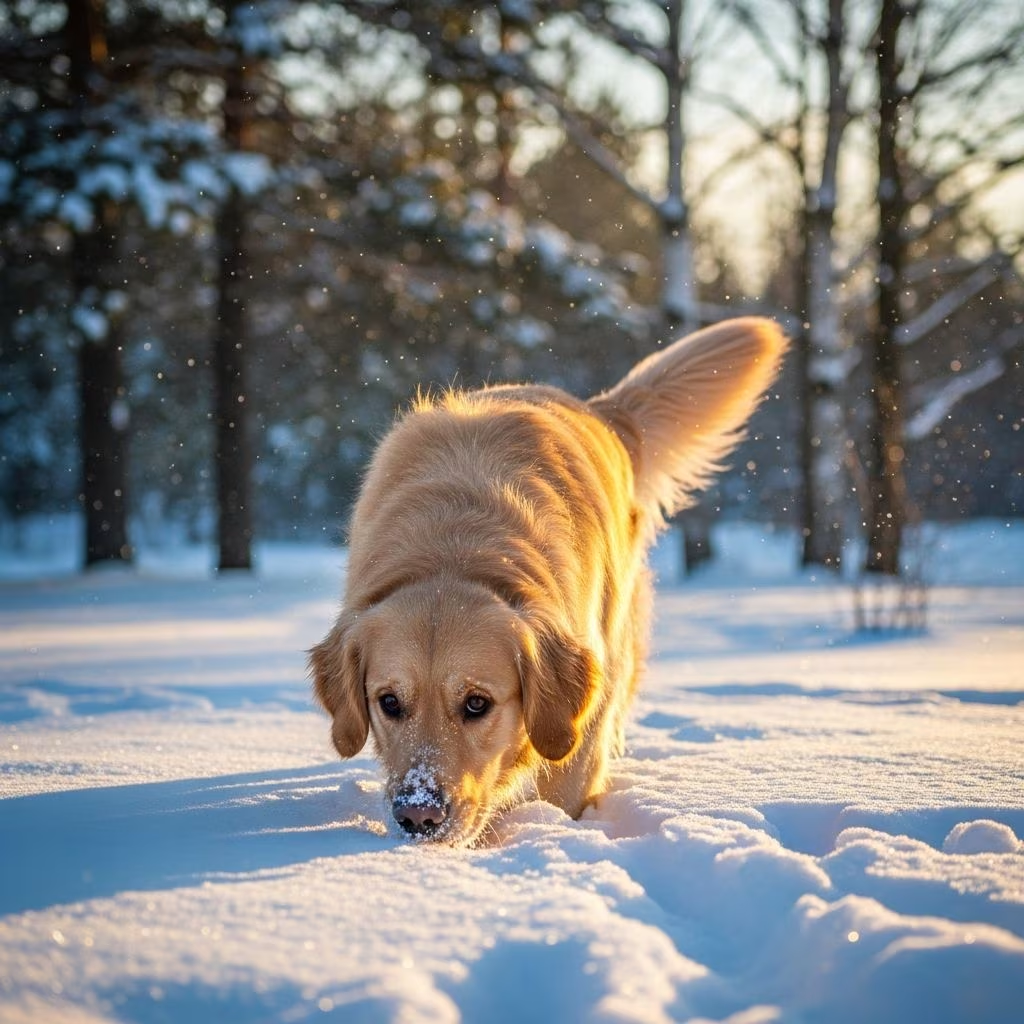
When the first snow falls, many dogs turn every walk into a full-body sniffing session. Their noses dive into snowbanks, they follow invisible trails, and they seem more captivated by the ground than ever. This winter behavior is not random — it’s driven by powerful instincts, advanced biology, and the special way snow holds scents.
Understanding why dogs love sniffing snow can help you appreciate their experience, support their natural behaviors, and keep them safe and comfortable during winter adventures.
How Snow Supercharges Your Dog’s Sense of Smell
To understand why snow is so exciting to dogs, it helps to know just how extraordinary a dog’s nose is and how cold, wet conditions can enhance scent.
The superpowered canine nose
Dogs rely on olfaction — their sense of smell — as a primary way to gather information about the world around them. Their nasal anatomy is designed to capture and process scent far more efficiently than ours.
- Dogs have up to hundreds of millions of scent receptors in their noses, compared with about 5–6 million in humans.
- Their nasal airflow separates breathing air from odor-sampling air, guiding scents toward a large olfactory epithelium (odor-sensing tissue).
- Dogs can analyze scent with each nostril separately, helping them locate where a smell is coming from.
- Even a single sniff can be enough for many dogs to distinguish between very similar odors with high accuracy.
Because smell is so central to how dogs experience life, anything that intensifies or concentrates odors — like snow — can make the world more interesting to explore.
Why moisture and cold make smells last longer
Snow is simply frozen water, but that moisture matters. Water molecules in snow can help trap and hold odor molecules close to the surface instead of letting them disperse quickly into the air. This can make scent trails more stable and easier for a dog to follow.
- Moist environments tend to preserve scent particles longer than very dry conditions, allowing odor trails to linger.
- Cold temperatures can slow down the evaporation and breakdown of many odor molecules, helping scent stay available for longer periods.
- Compact or layered snow can act like a lid, holding scents from animals, people, food, and plants near the ground where dogs sniff.
In search-and-rescue work, dogs have been able to detect human scent through several meters of snow, demonstrating how odor molecules can diffuse upward and remain detectable even when buried. That same principle helps explain why your dog is so excited by every snowdrift on the sidewalk.
Snow as a giant scent sponge
Everyday life leaves a chemical record on the ground: traces from wildlife, other dogs, people, vehicles, plants, and food. When it snows, much of this olfactory record becomes preserved.
- Scent from animals that walked by earlier can be captured and layered in the snow.
- Fresh snowfall can partially cover older smells without erasing them, creating complex scent “sandwiches” for your dog to decode.
- Footprints, urine spots, dropped food, and plant material can all leave powerful odor signatures in snow.
For a dog, that makes each patch of snow a rich, three-dimensional smell-map — far more interesting than a simple patch of dry sidewalk.
What Dogs Are Actually Smelling in the Snow
Your dog isn’t just sniffing “snow” as a single smell. They’re picking up layers of odor information that reveal who has passed by, what they were doing, and how recently they were there.
Hidden wildlife and neighborhood visitors
Tracks that look faint or invisible to you can be incredibly clear to your dog’s nose.
- Squirrels, rabbits, deer, birds, cats, and other wildlife leave distinct, traceable scent trails as they move across snow.
- Other dogs leave strong olfactory signatures through paw pads, fur, breath, and urine.
- Even human footsteps can carry subtle smells from shoes, skin, and clothing.
Because snow helps preserve and concentrate these scents, your dog may enthusiastically follow tracks that were made hours ago, thoroughly investigating where another animal walked, paused, or marked.
Trapped smells, layered over time
Each new layer of falling snow doesn’t erase the scents beneath it; it tends to slow their dispersal. That means your dog might be smelling:
- Old scent from animals or people that passed by before the snowfall
- Fresher scent from recent visitors on top
- Multiple overlapping trails from different species
This creates a complex puzzle. Many dogs find it deeply rewarding to sift through these layers the only way they know how — by sniffing, sniffing, and sniffing some more.
Ground sniffing vs. air sniffing
Dogs use more than one strategy to detect scent, and you may see both when they explore snowy areas.
| Sniffing style | What it looks like | What your dog is doing |
|---|---|---|
| Ground sniffing | Nose close to the snow, following a path step by step | Tracking odor molecules left on the ground, often tracing a specific trail left by an animal or person. |
| Air sniffing | Head up, nose working, sniffing the breeze | Sampling airborne scents carried by wind, useful for detecting more distant sources like wildlife or people. |
In snow, dogs may switch quickly between these two methods as they move between strong ground trails and interesting scents carried in the cold air.
Beyond Smell: The Sensory Joy of Snow
Sniffing is a big part of the story, but many dogs also love snow for the way it feels and for the novelty it brings to their environment.
The feel of cold, fluffy snow
When your dog buries their face in a snowbank or rolls joyfully on their back, they are enjoying a full-body sensory experience, not just collecting smells.
- Snow is cold, soft, and moldable — a very different texture from grass, dirt, or pavement.
- Dogs may relish the sensation of coolness on their face, paws, and belly.
- Some dogs learn that they can dig, toss, and “pounce” into snow, turning it into an interactive toy.
Studies on dogs’ circulation show that they have specialized blood flow in their paws that helps protect them from cold surfaces, similar to Arctic animals like foxes and even non-canines like penguins. That adaptation may help explain why many dogs are comfortable walking and playing on snow for moderate periods.
Snow as something new to explore
Many domestic dogs are naturally neophilic, meaning they tend to be attracted to new or unusual things rather than avoiding them, especially when they have been well socialized and feel safe. For such dogs, snow is a seasonal novelty:
- The landscape suddenly looks, smells, and feels different.
- Familiar routes become unfamiliar, prompting fresh exploration.
- Each winter, snow returns as a new experience after months of absence.
Because dogs use their noses as their primary exploration tool, this curiosity about a changing environment often appears as intense, focused sniffing in the snow.
When to Interrupt the Sniffing and Head Inside
In most cases, letting your dog sniff the snow is healthy and enriching — it provides mental stimulation, fulfills natural instincts, and can make walks more satisfying. Still, there are times when it is best to cut the session short or gently redirect your dog.
Signs your dog is too cold or uncomfortable
Dogs vary widely in their tolerance for cold depending on factors like coat type, age, health, and body condition. Watch closely for signs that they are having trouble with the temperature.
- Shivering or trembling that does not stop quickly
- Snow and ice forming balls on fur, especially between toes or on long hair
- Prancing or lifting paws frequently as if the ground is painful
- Limping or refusing to put weight on a paw
- Hunched posture, tucked tail, and reluctance to move forward
These signs are cues to end the outdoor time, warm your dog up, and gently remove any clumped snow or ice from their coat and paws. Veterinary organizations emphasize monitoring for cold-related problems such as frostbite and hypothermia, especially in very low temperatures or windy conditions.
Other reasons to pause the sniffing
In addition to cold, there are environmental and safety issues to consider during winter walks.
- Road salt and de-icers: These can irritate paws and may be harmful if licked in large amounts. Rinsing paws after walks or using dog-safe booties can help reduce risk.
- Hidden hazards under snow: Sharp objects, frozen trash, or animal waste may be concealed where your dog is sniffing or digging.
- Deep, unstable snow: Smaller dogs or those with mobility issues may struggle in deep drifts, increasing the chance of strain or injury.
If you notice any signs of pain, excessive licking of paws, or sudden changes in your dog’s behavior during or after snowy outings, consult your veterinarian for guidance.
How to Make Snow Sniffing Safe and Enriching
With a few simple strategies, you can support your dog’s love of snow while protecting their health and safety.
Let them linger and sniff
Sniffing is not just “wasting time” — it is a form of mental exercise and enrichment. Behavior and welfare experts often describe scent exploration as a key way to reduce stress and support emotional well-being in dogs.
- Build extra time into winter walks so your dog can investigate snowbanks and scent trails.
- Use a longer leash (where safe and legal) to allow more freedom to explore.
- Look for low-traffic, quiet areas where your dog can sniff without pressure to move quickly.
Protect paws and skin
Depending on your dog and your climate, protective gear and grooming can make snow play more comfortable.
- Consider booties for dogs who are sensitive to cold or exposed to salted sidewalks.
- Trim long fur between toes to reduce snow and ice buildup.
- Dry paws and belly after walks, and check closely for cuts, redness, or clumped ice.
- Use dog-safe paw balms or waxes if recommended by your veterinarian.
Adjust duration based on your dog
Some breeds with double coats and sturdy builds may be comfortable outside longer than small, short-haired, or senior dogs. Veterinary guidance suggests tailoring winter exposure to the individual dog’s health, size, age, and coat type.
- Start with shorter sessions in very cold weather and gradually adjust based on how your dog responds.
- Watch their body language closely; enthusiasm can hide early discomfort.
- When in doubt, err on the side of shorter, more frequent outings rather than long stays in severe cold.
Frequently Asked Questions (FAQs)
Q: Why does my dog sniff more in winter than in other seasons?
Cold, moist air and snow tend to preserve and concentrate smells, making scent trails stronger and longer-lasting than in hot, dry conditions. Because dogs rely heavily on their noses, this seasonal boost in scent intensity naturally leads to more focused sniffing.
Q: Is it safe for my dog to stick their nose deep into snow?
For most healthy dogs, briefly burying their nose in clean snow is safe and enjoyable. However, avoid areas where there may be road salt, chemicals, sharp debris, or hidden ice, and watch for signs of discomfort such as sneezing fits, pawing at the face, or reluctance to continue.
Q: Can my dog really smell animals that walked by hours earlier?
Yes. Dogs have highly sensitive olfactory systems and can detect extremely low concentrations of odor molecules. Snow and cold conditions help preserve scent, allowing dogs to follow trails from wildlife or other dogs long after they passed, especially when the area is relatively undisturbed.
Q: How long is it safe for my dog to play and sniff in the snow?
There is no single time limit that fits all dogs. Factors like temperature, wind, moisture, breed, coat thickness, age, and health all matter. Monitor for shivering, paw lifting, reluctance to move, or behavioral changes. If any appear, it is time to go inside and warm up. When in doubt, ask your veterinarian for guidance tailored to your dog.
Q: Should I stop my dog from eating snow while they sniff?
Occasional small amounts of clean snow are unlikely to harm a healthy dog, but eating large quantities can cause stomach upset, and snow may contain road salt, antifreeze, or other contaminants. Gently redirect your dog from eating snow, especially near roads, driveways, or parking areas.
References
- Sweat diffusion through snow — Peak Scientific. 2016-06-22. https://www.peakscientific.com/discover/news/sweat-diffusion-through-snow/
- Why Are Dogs Obsessed With Sniffing the Snow? — Kinship. n.d. https://www.kinship.com/dog-behavior/dog-sniffing-snow
- Canine Olfaction: Physiology, Behavior, and Possibilities for Practical Applications — Jezierski T, Woszczyło M, eds., Animals (Basel). 2021-08-10. https://www.ncbi.nlm.nih.gov/pmc/articles/PMC8388720/
- Why Do Dogs Love Snow? — The Farmer’s Dog Digest. 2023-01-10. https://www.thefarmersdog.com/digest/why-do-dogs-love-snow/
- Cold Weather Safety Tips — American Veterinary Medical Association (AVMA). 2020-12-01. https://www.avma.org/resources/pet-owners/petcare/cold-weather-animal-safety



