

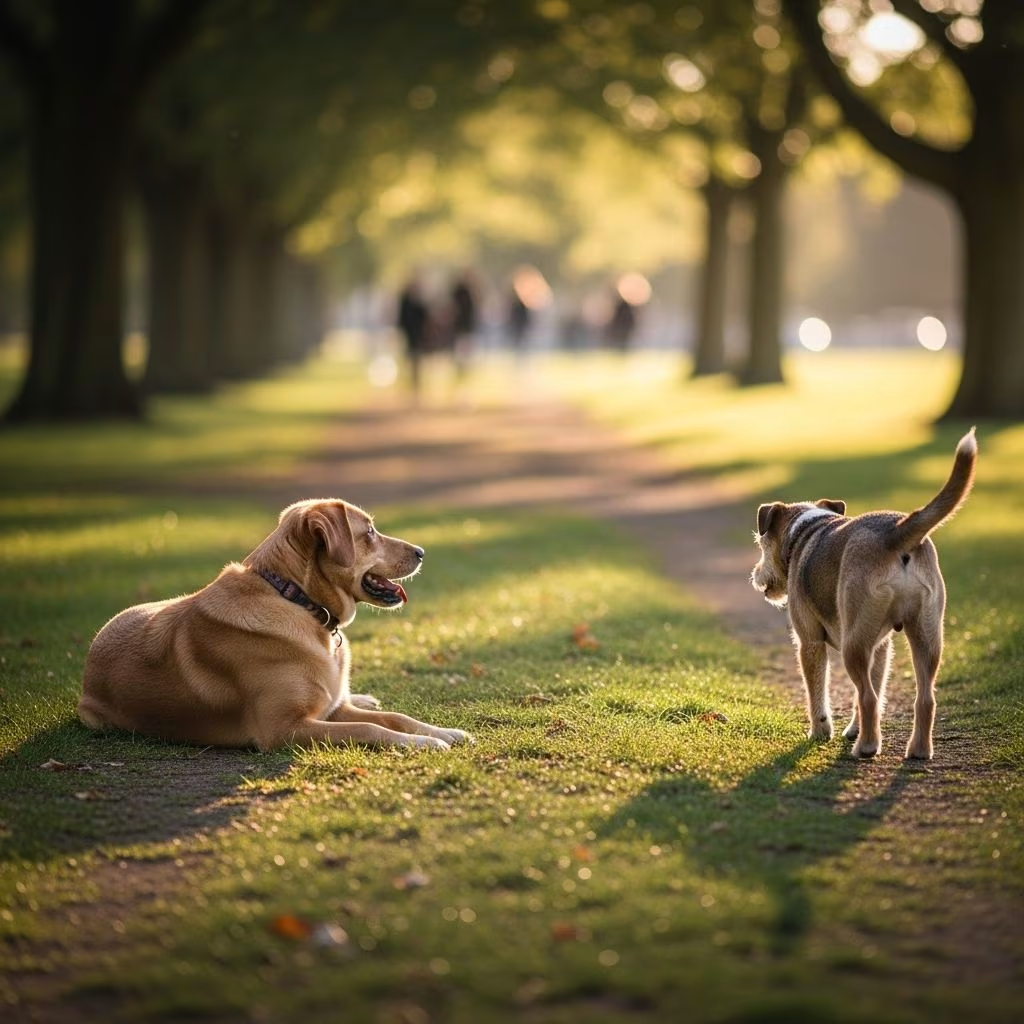
Observing one dog suddenly lie down flat on the ground mid-walk as another approaches can puzzle many pet parents. This behavior, often seen during greetings, serves specific purposes in canine communication, blending instinct, learned responses, and social signaling. While it frequently signals friendliness or play invitation, interpretations vary among dogs, sometimes leading to confusion or tension. Experts like certified animal behaviorists explain it as a non-threatening posture or breed-specific trait, helping owners navigate walks more confidently.
A genetic predisposition, or a strategy for playtime?
Dogs that crouch or lie down upon spotting another dog often exhibit behaviors rooted in genetics, particularly among herding breeds such as Border Collies and Australian Shepherds. According to Maddie Messina, an associate certified applied animal behaviorist and founder of Paws For Thought Dog Training, this mimics the “prey sequence”—an instinctive pattern where dogs stalk, chase, and pounce on prey. In play, herding breeds rehearse this sequence, dropping low to the ground in anticipation, inviting the other dog to engage.
This low posture isn’t limited to herders. Robert Hausmann, certified dog trainer and founder of DogBoy NYC, notes that it can represent a modified play bow. Normally, a play bow involves front legs extended forward with rear elevated, signaling ‘let’s play.’ However, leash restraint often flattens the dog into a ‘full pancake’ position, emphasizing non-threat and interest.
Beyond instinct, this can become a learned behavior through positive reinforcement. Dogs discover that lying down halts the walk, prompting owners to allow greetings. Hausmann explains: “It’s possible that the dog has learned through trial and error that refusing to move forward means they get to say hello.” Over time, this reinforces the action, as successful interactions reward the drop-and-wag routine.
Real-world examples illustrate these motivations. A Reddit user described their five-month-old Lab lying down for 75% of encounters, allowing sniffs without pouncing, likely signaling friendliness. Another’s large Newfoundland/Pyrenees/Akbash mix adopted it to avoid intimidating smaller dogs at parks, transforming her into a social success. Conversely, some dogs freeze low then lunge, startling others and escalating tension.
Understanding Canine Body Language in Greetings
Canine greetings follow nuanced social norms distinct from human etiquette. Standard rituals include butt sniffing and play stances, but lying down adds complexity. It typically conveys appeasement—’I’m small and harmless’—reducing perceived threat, especially for larger dogs toward smaller ones. However, reception depends on the approaching dog’s temperament; confident dogs may interpret it as an invitation, while fearful ones see it as predatory stalking.
Leash dynamics amplify issues. Tight leashes create tension, distorting natural curves in body language. Appropriate greetings feature loose leashes, side-by-side sniffing, and mutual consent, per guidelines from dog training resources. In contrast, a dog lying down then springing up signals inappropriate intensity, potentially leading to defensive reactions like barking or lunging.
| Appropriate On-Leash Greeting | Inappropriate On-Leash Greeting |
|---|---|
|
|
This table highlights key differences, emphasizing respect for space and signals to prevent conflicts. Friendly dogs insisting on every greeting risk rudeness, akin to humans invading personal space indiscriminately.
How to Handle Your Dog Lying Down During Greetings
If your dog pancakes on walks, intervention prevents reinforcement. Messina advises against allowing interactions in these moments: position yourself over your dog and inform the other owner, “Sorry, we’re in training; we’re not saying ‘hi’ right now.” This maintains control and discourages the behavior.
Training counters the habit effectively. Teach a “stand” cue using high-value treats, rewarding upright postures. Alternatively, introduce a “hand target” where the dog touches its nose to your hand, necessitating standing. Practice in low-distraction environments, gradually adding distance from triggers. Consistency is key—reward ignoring dogs and continuing walks.
For stubborn cases, desensitization helps. Start at a distance where your dog notices but doesn’t drop, rewarding calm focus on you. Slowly decrease distance over sessions, building impulse control. Professional trainers can tailor protocols, especially for herding breeds wired for the prey sequence.
What If You’re Approaching a Dog That’s Lying Down?
Encountering a downed greeter requires caution. Some explode into play upon approach, startling reactive dogs. If unsure, avoid by walking briskly past or crossing streets. Communication prevents mishaps: ask, “Hey, are you OK with us approaching?” or “Does your dog enjoy playing on leash?” Clear owner consent ensures safety.
Observe body language: relaxed wagging with soft eyes suggests friendliness; stiff freezing or intense staring warrants distance. Prioritize your dog’s comfort—polite dogs respect boundaries without pursuit.
Breed-Specific Tendencies and Variations
Herding breeds dominate this behavior due to prey drive, but others adopt it situationally. Large dogs like Newfies use it for approachability; puppies experiment socially. Age influences: young Labs may test friendliness, maturing into selective greeters.
- Herding Breeds (e.g., Border Collie, Aussie Shepherd): Prey sequence practice.
- Large/Giant Breeds: Appeasement for smaller dogs.
- Puppies/Young Dogs: Social exploration.
- Leash-Reactive Dogs: Frustrated play attempts.
Individual personality trumps breed; observe patterns for tailored management.
Benefits and Risks of This Greeting Style
Positively, it fosters friendships, especially for intimidating dogs. The Newfoundland example shows smaller dogs warming up post-bow. Risks include misinterpretation as threat, leash frustration building reactivity, or rewarding shutdowns over engagement. Balanced socialization—off-leash playdates, controlled greetings—mitigates downsides.
Frequently Asked Questions (FAQs)
Is it always a sign of friendliness when a dog lies down to greet?
No, while often friendly, it can precede lunging in excited or frustrated dogs. Context like body stiffness or prior history matters.
Why do herding breeds do this more often?
They reenact the prey sequence instinctively, using low crouches in play to mimic stalking.
How can I stop my dog from lying down on walks?
Use ‘stand’ or hand target cues with treats; prevent rewarding interactions by blocking greetings.
Should I let my dog greet others on leash?
Limit to occasional, appropriate encounters; frequent greetings can seem rude and risky.
What if the other dog reacts negatively?
Avoid by communicating with owners or increasing distance; respect signals like barking.
Long-Term Training for Better Social Walks
Building reliability takes time. Integrate recall, focus exercises like ‘look at me,’ and emergency U-turns. Group classes simulate real-world scenarios safely. Track progress: fewer drops signal success. Consult vets to rule out pain mimicking appeasement.
Ultimately, understanding this behavior empowers owners. It bridges instinct and training, turning potential walk-stoppers into confident walkers. Patient, positive methods yield harmonious outings for all dogs involved.
References
- Why Do Some Dogs Lie Down When They Greet Other Dogs? — Kinship.com. 2023. https://www.kinship.com/dog-behavior/why-dogs-lie-down-when-they-greet-other-dogs
- Friendly? Or Pushy and Impolite? What is Your Dog’s Greeting Style? — Leash and Learn NYC. 2020. https://leashandlearnnyc.com/your-dog-might-be-friendly-but-he-is-not-polite-appropriate-on-leash-dog-greetings/
- Canine Communication: Body Language — American Kennel Club (AKC). 2024-01-10. https://www.akc.org/expert-advice/training/canine-body-language/
- Play Bow in Dogs: Function and Interpretation — Journal of Veterinary Behavior (Peer-reviewed). 2022-05-15. https://doi.org/10.1016/j.jveb.2022.03.005
- Herding Dog Instincts and Behavior — United States Border Collie Handlers Association (Official breed org). 2025-03-01. https://www.usbcha.com/resources/herding-instincts



