

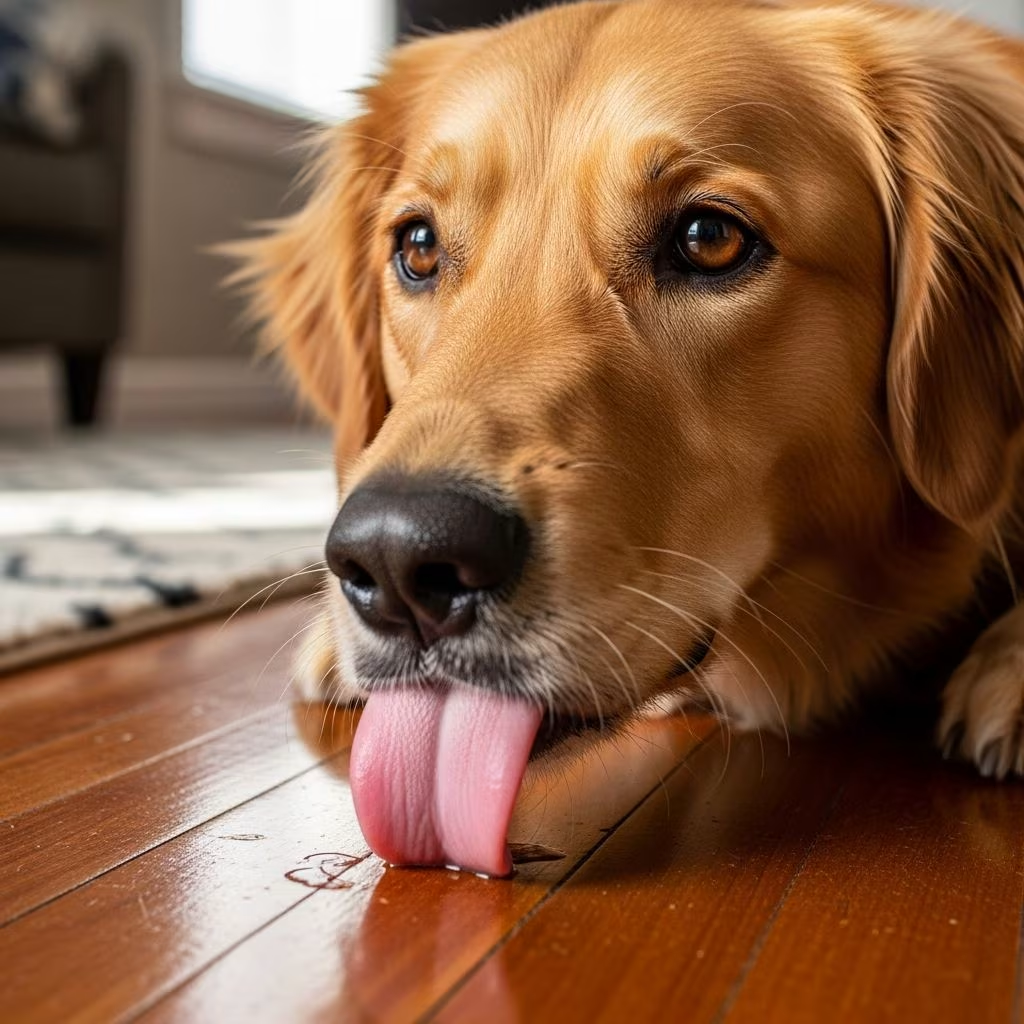
Dogs use their tongues as tools for exploration, communication, and comfort, often licking hands, faces, floors, furniture, and more. This behavior stems from instinctual drives, sensory needs, and emotional states, but when it becomes relentless, it may signal underlying issues requiring attention.
The Instinctual Roots of Licking in Dogs
From puppyhood, dogs lick to interact with their world. Puppies lick their mothers’ faces to solicit regurgitated food, a survival mechanism that evolves into broader licking patterns in adulthood. This action activates endorphins and dopamine in a dog’s brain, creating feelings of calm and pleasure, making it a self-rewarding habit.
Licking also serves as a primary sensory input. A dog’s tongue contains thousands of taste buds sensitive to salt, sweetness, and textures, allowing them to ‘taste’ their environment. Sweat and skin oils on human hands provide appealing flavors, drawing repeated licks.
Social and Emotional Drivers Behind Licking
Licking communicates a range of emotions in canine social dynamics. It often expresses affection and bonding, releasing oxytocin—the ‘love hormone’—in both dogs and humans, strengthening relationships.
- Affection and Greeting: Gentle licks on faces or hands mimic puppy behaviors to show trust and excitement upon reunion.
- Submission and Appeasement: Dogs may lick higher-status pack members (including owners) to demonstrate respect or defuse tension.
- Attention-Seeking: If licking elicits reactions like petting or scolding, dogs learn it guarantees interaction.
- Stress Relief: In anxious moments, licking acts as a calming signal or displacement behavior, similar to nail-biting in humans.
Context matters: a quick lick with a wagging tail signals joy, while persistent licking paired with avoidance indicates discomfort or a desire for space, known as a ‘lick to dismiss’.
When Licking Targets Everyday Objects
Beyond people, dogs lick walls, carpets, toys, and paws excessively for varied reasons. Boredom prompts exploratory licking, while compulsive patterns suggest deeper issues.
| Target | Possible Reasons | Signs to Watch |
|---|---|---|
| Hands/Feet | Salt taste, bonding | Playful, occasional |
| Floors/Walls | Anxiety, nausea | Repetitive, intense |
| Paws/Furniture | Allergies, irritation | Localized redness |
| Air/Objects | GI upset, compulsion | Pacing, drooling |
High-frequency licking often correlates with unmet needs like exercise or mental stimulation.
Medical Conditions Linked to Excessive Licking
Not all licking is behavioral; medical triggers demand veterinary evaluation. Skin allergies cause itchy spots leading to focused licking, while gastrointestinal distress prompts surface licking as nausea manifests.
- Allergies and Dermatitis: Food or environmental allergens inflame skin, prompting soothing licks that worsen irritation.
- Pain or Injury: Dogs lick wounds instinctively to clean and cool them, but overdoing it delays healing.
- Neurological Issues: Conditions like canine compulsive disorder mimic OCD in humans, fixating on licks.
- Nutritional Deficiencies: Pica-like licking of non-food items may indicate mineral shortages.
Consult a vet if licking creates bald patches, sores, or persists despite environmental changes.
Distinguishing Normal from Problematic Licking
Normal licking is brief, context-specific, and responsive to redirection. Problematic licking is relentless, interferes with daily life, or accompanies symptoms like lethargy or appetite loss.
Frequency gauges concern: occasional licks affirm bonds, but hourly episodes suggest intervention. Track patterns in a journal noting triggers, duration, and body language for accurate diagnosis.
Practical Strategies to Manage Licking Behaviors
Redirect and prevent through positive reinforcement. Increase daily exercise to 60 minutes of walks or play, reducing stress-fueled licking. Provide puzzle toys stuffed with kibble to channel oral fixation.
- Ignore and Redirect: Turn away from licks, offering a toy instead. Reward calm sitting.
- Training Commands: Teach ‘leave it’ or ‘enough’ with treats for compliance.
- Environmental Enrichment: Rotate toys, use lick mats with peanut butter for controlled licking.
- Desensitization: Gradually expose to triggers while rewarding non-licking.
For compulsive cases, vets may recommend anxiety meds or behaviorists. Consistency from all household members prevents mixed signals.
Breed and Age Influences on Licking Tendencies
Certain breeds like Labradors show higher licking due to food-driven instincts, while herding breeds lick from stress. Puppies lick exploratively, seniors from cognitive decline or pain. Tailor management to your dog’s profile.
Building a Lick-Free Bond with Your Dog
Understand licking as communication to foster mutual respect. Respond to needs proactively—more play curbs attention licks, affection reinforces positives. A balanced routine minimizes issues, enhancing your companionship.
Frequently Asked Questions
Is it safe for dogs to lick my face?
Occasional face licks are harmless but carry bacteria risks. Discourage if immunocompromised.
Why does my dog lick the air?
Air-licking signals nausea, seizures, or compulsions; vet check essential.
How to stop paw licking?
Examine for allergies/injuries, use booties, and moisturize skin.
Does licking mean my dog is happy?
Often yes for bonding, but read full body language for stress cues.
Can diet affect licking?
Yes—imbalanced diets spur pica; switch to vet-approved food.
References
- The Behavioural Science Behind Canine Hand-Licking: Insights and Responses — Pine Grove Veterinary Hospital. 2023. https://www.pinegroveveterinaryhospital.ca/news/the-behavioural-science-behind-canine-hand-licking-insights-and-responses
- Why do dogs lick humans? — Popular Science. 2023-08-01. https://www.popsci.com/science/why-do-dogs-lick-humans/
- Why is Your Dog Licking Everything? — Savannah Veterinary Internal Medicine. 2024. https://savannahveterinary.com/pet-internal-medicine/why-is-your-dog-licking-everything/
- Why Do Dogs Lick You? — PetMD. 2024. https://www.petmd.com/dog/behavior/why-do-dogs-lick-you
- The (rather gross) reason your dog loves to lick people — BBC Science Focus. 2023. https://www.sciencefocus.com/nature/why-do-dogs-lick-people



