

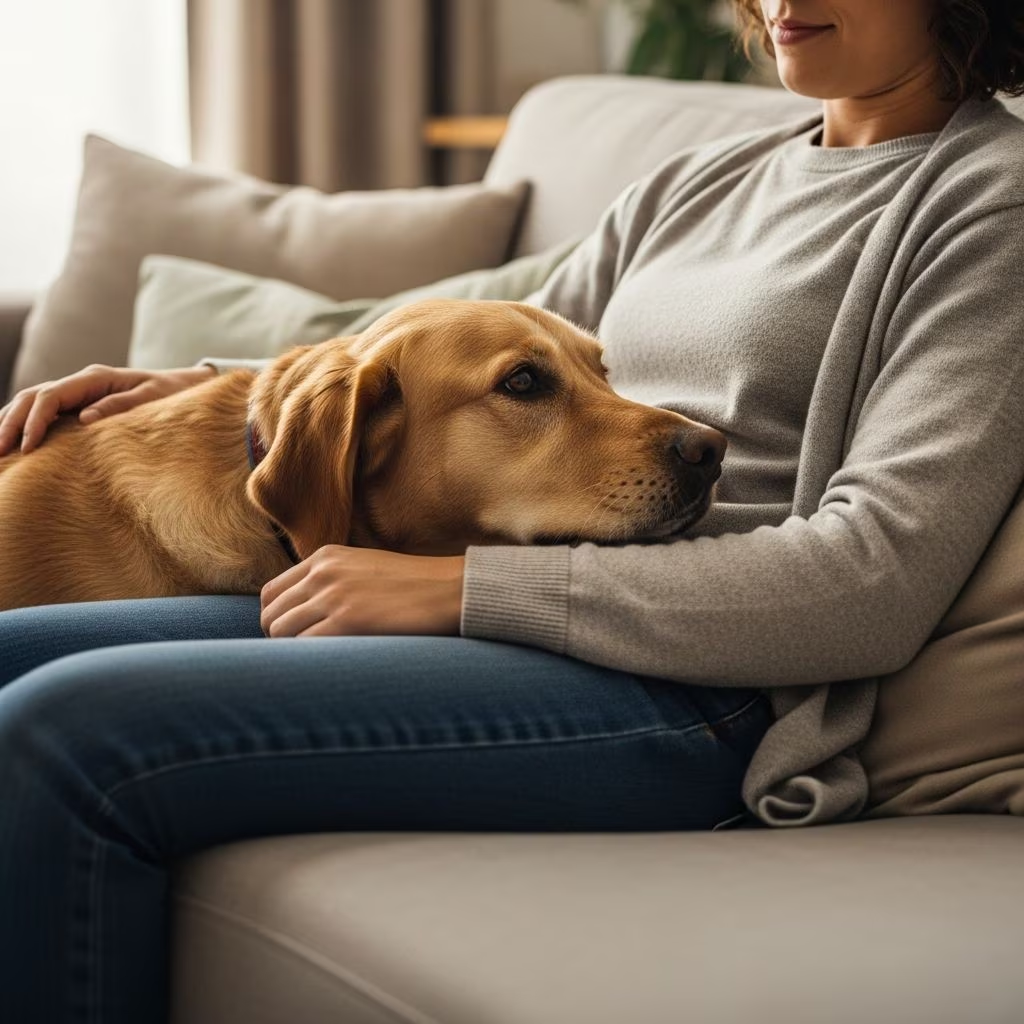
Dogs leaning against their owners is a common, endearing behavior that speaks volumes about the human-canine bond. This physical contact serves multiple purposes, from expressing affection and seeking security to communicating needs or simply enjoying comfort. Understanding why dogs lean helps strengthen your relationship and address any underlying issues.
It’s a Sign of Affection and Love
One primary reason dogs lean on you is to show **affection**. In the wild, pack animals like wolves use physical contact to reinforce social bonds and demonstrate trust. Domestic dogs have retained this instinct, leaning into their trusted humans as a way to say, “I love you.” Certified dog trainer and behaviorist Sian Lawley-Rudd explains that this leaning is often a voluntary choice, indicating the dog feels safe and valued in your presence.
Physical touch releases **oxytocin**, the ‘love hormone,’ in both dogs and humans. A study from PMC on canine social roles notes that dogs perceived as companions exhibit higher levels of affectionate behaviors, including close physical proximity, which mirrors leaning. This hormone surge strengthens emotional ties, making leaning a mutual feel-good activity.
They See You as Their Protector
Dogs lean to seek **security and protection**. By pressing against you, they position you as their safe haven, much like a pack leader or mother dog provides shelter for puppies. Veterinary behaviorist Dr. Sally Thompson notes that this behavior stems from a dog’s evolutionary need for a guardian in potentially threatening environments.
In multi-dog households or during walks, leaning intensifies when a dog feels vulnerable, such as around strangers or loud noises. This is supported by research in peer-reviewed journals indicating that dogs with ‘companion’ roles show increased dependency on owners for safety, often manifesting as physical clinging.
They’re Seeking Your Attention
Leaning is a subtle (or not-so-subtle) bid for **attention**. Dogs learn that body contact prompts petting, play, or treats from responsive owners. If your dog leans during idle moments, it’s likely their way of saying, “Notice me!”
Behavior experts recommend rewarding calm leaning with affection while ignoring pushy demands to prevent escalation into jumping or pawing. Kinship’s dog training insights emphasize consistency: respond positively to polite leans but teach boundaries for excessive nudging.
Comfort and Physical Relaxation
Sometimes, leaning is purely about **comfort**. Your body provides warmth, stability, and a cozy spot to rest. Larger breeds like Great Danes or Mastiffs lean due to their size, using you as a convenient leaning post after play or exercise.
This behavior promotes relaxation, lowering a dog’s stress levels through contact comfort, akin to how humans hug for reassurance. Owners report that evening leans signal winding-down time, fostering mutual downtime.
Breed-Specific Leaning Tendencies
Not all dogs lean equally; **breed traits** play a role. Herding breeds like Border Collies or Australian Shepherds lean to ‘herd’ their owners, a remnant of working instincts. Velcro breeds such as Labrador Retrievers and Vizslas are notorious leaners, bred for close human partnership.
| Breed Group | Examples | Leaning Style |
|---|---|---|
| Herding | Border Collie, Shetland Sheepdog | Gentle nudges to guide |
| Hunting/Retriever | Labrador, Golden Retriever | Full-body leans for affection |
| Guardian | Mastiff, Great Dane | Heavy, stabilizing pressure |
| Toy | Cavalier King Charles Spaniel | Light, lap-oriented leans |
This table highlights how genetics influence leaning, with working breeds showing purpose-driven contact.
When Leaning Might Signal a Problem
While usually benign, excessive leaning can indicate **anxiety, pain, or health issues**. Dogs in pain lean for support, hiding weakness per pack survival instincts. Sudden increases warrant a vet check for arthritis, hip dysplasia, or injuries.
Anxiety-driven leaning appears during thunderstorms or separation fears. A PMC study links companion dogs’ high dependency to behavioral issues like overexcitement if needs aren’t met. Watch for accompanying signs: trembling, whining, or avoidance.
- Anxiety: Leans during stressors, pants heavily.
- Pain: Reluctance to move, limping alongside leans.
- Illness: Lethargy, appetite loss with persistent contact.
How to Respond to Your Dog’s Leans
Encourage positive leaning while setting boundaries. Pet and praise calm contact to reinforce good behavior. For overzealous leaners:
- Teach ‘sit’ before affection.
- Use treats for controlled proximity.
- Provide alternative comforts like beds.
Training tip: Ignore demands, reward self-settled states. This builds confidence, reducing needy leans over time.
The Science Behind Dog Leaning
Research validates leaning’s benefits. Oxytocin studies show mutual gazing and touch boost bonding hormones. fMRI scans reveal dogs process human touch in reward pleasure centers, explaining the persistence of leaning.
Evolutionary biologists trace it to wolf packs, where physical pile-ups conserved heat and signaled unity. Modern dogs adapt this for emotional support, with urban companion dogs leaning more due to smaller social networks.
Frequently Asked Questions (FAQs)
Is dog leaning always a good sign?
Mostly yes, but monitor for excess or new patterns indicating stress or health concerns. Consult a vet if worried.
Why do some dogs lean more than others?
Breed, personality, and upbringing factor in. ‘Velcro dogs’ and those with secure attachments lean frequently.
Should I discourage leaning?
No, unless disruptive. Redirect with training for balance between affection and independence.
Can leaning indicate dominance?
Rarely; modern ethology debunks dominance myths. It’s more about trust than control.
How can I encourage healthy leaning?
Respond consistently to calm leans, provide security, and enrich their environment to prevent needy behavior.
Strengthening Your Bond Through Leaning
Embrace leaning as a window into your dog’s world. Reciprocate with gentle pets, turning moments into bonding rituals. Regular exercise, training, and vet care ensure leaning remains a joy, not a symptom.
By interpreting leans accurately, you meet your dog’s emotional and physical needs, fostering a deeper, healthier relationship. Whether a subtle nudge or full flop, it’s your dog’s way of saying you’re family.
References
- The role of dogs is associated with owner management practices — PMC/NCBI. 2024-10-15. https://pmc.ncbi.nlm.nih.gov/articles/PMC11557872/
- 8 Signs Your Dog Thinks They’re in Charge of the House — Kinship. 2023-05-12. https://www.kinship.com/dog-behavior/signs-your-dog-thinks-they-are-in-charge
- 7 Signs Your Dog Has Imprinted on You — Kinship (YouTube transcript). 2024-03-20. https://www.youtube.com/watch?v=mn0VmfHcVMQ
- New paper published in Animals is first real world study to validate accuracy of pet behavioural signs — Veterinary Practice. 2021-06-10. https://www.veterinary-practice.com/2021/new-paper-published-in-animals-is-first-real-world-study-to-validate-accuracy-of-pet-behavioural-signs-to-detect-disease
- Dominance in Dogs: Myths and Facts — American Veterinary Society of Animal Behavior. 2023-11-05. https://avsab.org/resources/position-statements/



