

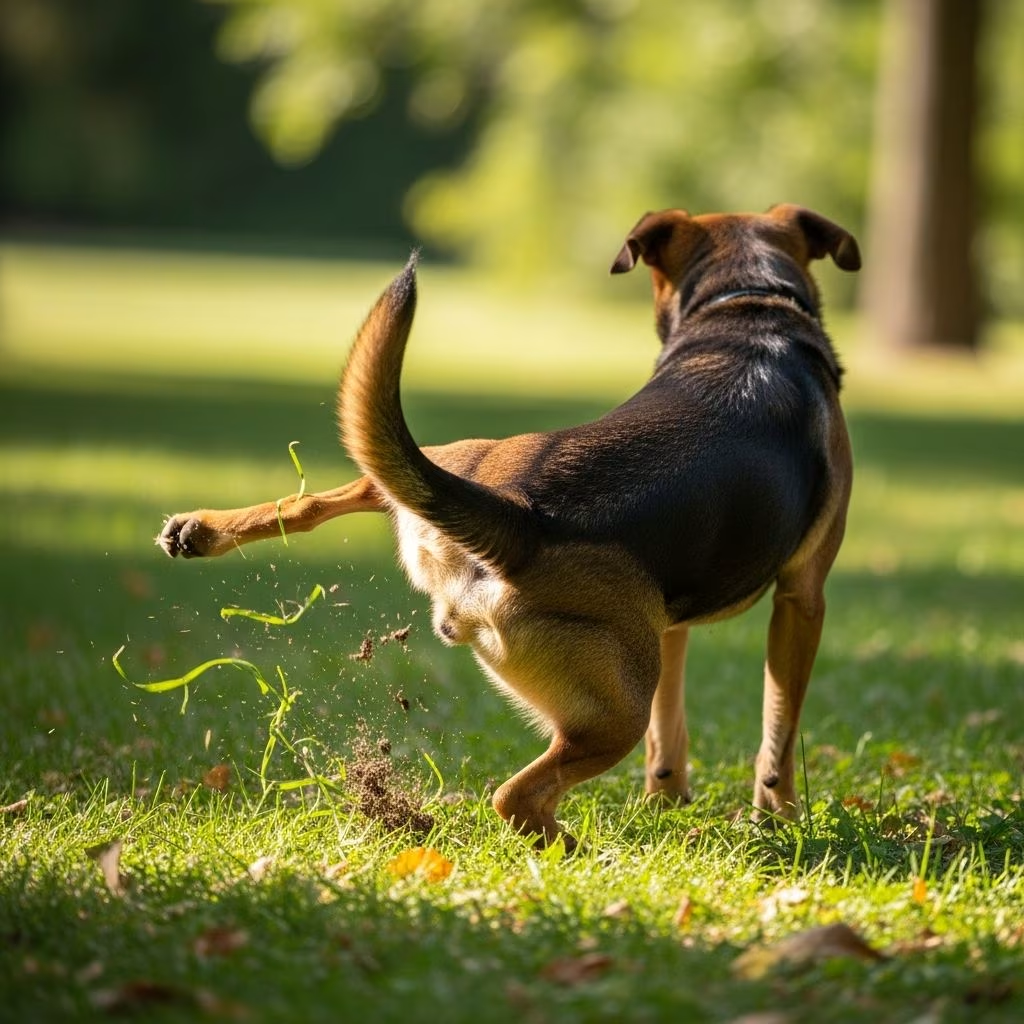
This quirky canine ritual—where dogs rapidly kick their hind legs backward after defecating—piques the curiosity of many pet owners. Far from random, this action stems from deep-rooted instincts that serve communication, survival, and sensory purposes. Understanding it sheds light on how domestic dogs retain wild ancestry behaviors.
The Science of Canine Scent Communication
Dogs possess specialized scent glands in their paw pads, which secrete pheromones during kicking. These chemical signals mix with fecal odors from anal glands, creating a potent territorial marker that lingers longer than waste alone. The disturbed ground visually reinforces the scent, alerting other dogs to the claimant’s presence.
Research on free-ranging dogs shows this “ground-scratching” often follows raised-leg urination or defecation, especially when other canines are nearby, functioning as a composite visual and olfactory signal. In shelters, senior dogs exhibit this more frequently post-defecation, possibly to assert presence in competitive environments.
Instinctual Reasons for the Kicking Motion
Several evolutionary drivers explain this behavior:
- Territorial Reinforcement: Kicking spreads paw pheromones over a wider area, amplifying the message “this spot is mine” to deter intruders.
- Waste Concealment: Inherited from wild canids like wolves, dogs may attempt to bury feces with dirt or grass to hide from predators, even if it paradoxically spreads scent.
- Social Signaling: The vigorous motion acts as a dominance display or confidence booster, particularly in the presence of rivals.
- Paw Maintenance: Some dogs shake off debris or clean paws post-elimination, though this is secondary to scenting.
Anal sacs, located near the anus, express during defecation, releasing unique identifiers. Kicking disperses this further, enhancing communication.
How the Behavior Manifests in Everyday Dogs
Typically, dogs use both front and hind legs in a rhythmic scratch lasting seconds to a minute right after pooping. It’s less common after urination but occurs in some cases. Both males and females perform it equally, unaffected by neuter status.
In urban settings, concrete limits visible scratches, yet the intent persists. Wolves, foxes, and even cats show analogous post-toileting kicks, underscoring its cross-species instinct.
Breed and Age Variations in Kicking Habits
| Breed Type | Kicking Frequency | Possible Reasons |
|---|---|---|
| Territorial Breeds (e.g., Terriers) | High | Strong guarding instincts amplify marking |
| Herding Breeds (e.g., Border Collies) | Moderate | Balanced territorial and energy expression |
| Senior Dogs | High | Increased need to assert in social settings |
| Puppies | Low | Instincts developing; less territorial drive |
Observational studies note higher incidence in older shelter dogs post-defecation, linking it to hierarchy maintenance. Breeds with potent prey drives often kick more vigorously.
Is This Behavior Always Harmless?
Generally, yes—veterinarians confirm it’s a standard, non-concerning instinct. Discourage only if it causes injury like torn nails or excessive dirt ingestion. Sudden onset or intensity in adults may signal anal gland issues, stress, or discomfort—consult a vet if paired with scooting or straining.
Avoid interrupting; suppression can induce anxiety. Provide soft grass areas to minimize paw damage.
Comparing Kicking After Poop vs. Pee
| Aspect | After Pooping | After Peeing |
|---|---|---|
| Frequency | Very Common | Less Common |
| Duration | Seconds to 1 min | Brief |
| Glands Involved | Anal + Paw | Primarily Paw |
| Purpose | Mark + Cover | Visual Scent Spread |
Post-pee kicking emphasizes urine scent dispersion via ground visuals, as urine evaporates quickly.
Historical and Evolutionary Context
Traced to wild canids, this “scrape behavior” combines chemical (pheromones) and visual (scratches) cues for territory defense. Domestic dogs retain it despite abundant food, highlighting instinct’s persistence. A 1979 study by Bekoff observed it post-raised-leg displays in free-ranging packs.
Practical Tips for Dog Owners
To manage:
- Choose grassy potty spots to protect paws.
- Monitor for health flags like obsessive kicking.
- Use pheromone collars if territorial aggression arises.
- Train redirects for indoor or high-traffic areas.
Embrace it as normal—it’s your dog’s way of navigating their world.
Frequently Asked Questions (FAQs)
Should I stop my dog from kicking after pooping?
No, unless it harms paws or spreads mess excessively. It’s instinctual and healthy.
Why does my dog only kick when other dogs are around?
Social context triggers visual displays for competitors.
Does spaying/neutering reduce kicking?
Not typically; it’s not hormone-driven like lifting legs.
My indoor dog kicks on carpet—normal?
Yes, instinct overrides surface; provide dig mats if needed.
Can stress cause more kicking?
Possibly, as a tension release; check environment.
Debunking Common Myths
- Myth: It’s just cleaning paws. Primarily scent-related, not hygiene.
- Myth: Only males do it. Both genders equally.
- Myth: It means they’re unhappy. Usually confident expression.
References
- Why Do Dogs Kick after They Poop? — Waggle Pet Monitor. 2023. https://mywaggle.com/blogs/pet-behaviour/why-do-dogs-kick-after-they-poop
- Why Do Dogs Kick the Ground After They Poop? Is This Normal? — Chewy.com. 2024-01-15. https://www.chewy.com/education/dog/training-and-behavior/why-do-dogs-kick-the-ground-after-they-poop
- Why Dogs Kick After Pooping — Husky Haven of Florida. 2025-03-05. https://www.huskyhavenfl.org/hhofl-blog/2025/3/5/why-dogs-kick-after-pooping
- Why Does My Dog Kick up Grass After Relieving Themselves? — Adaptil UK. 2023. https://www.adaptil.co.uk/blogs/news/why-does-my-dog-kick-up-grass-after-relieving-themselves
- Why Do Dogs Kick After Pooping? — PetMD. 2024. https://www.petmd.com/dog/behavior/dog-behavior-why-do-dogs-kick-their-feet-after-pooping



