

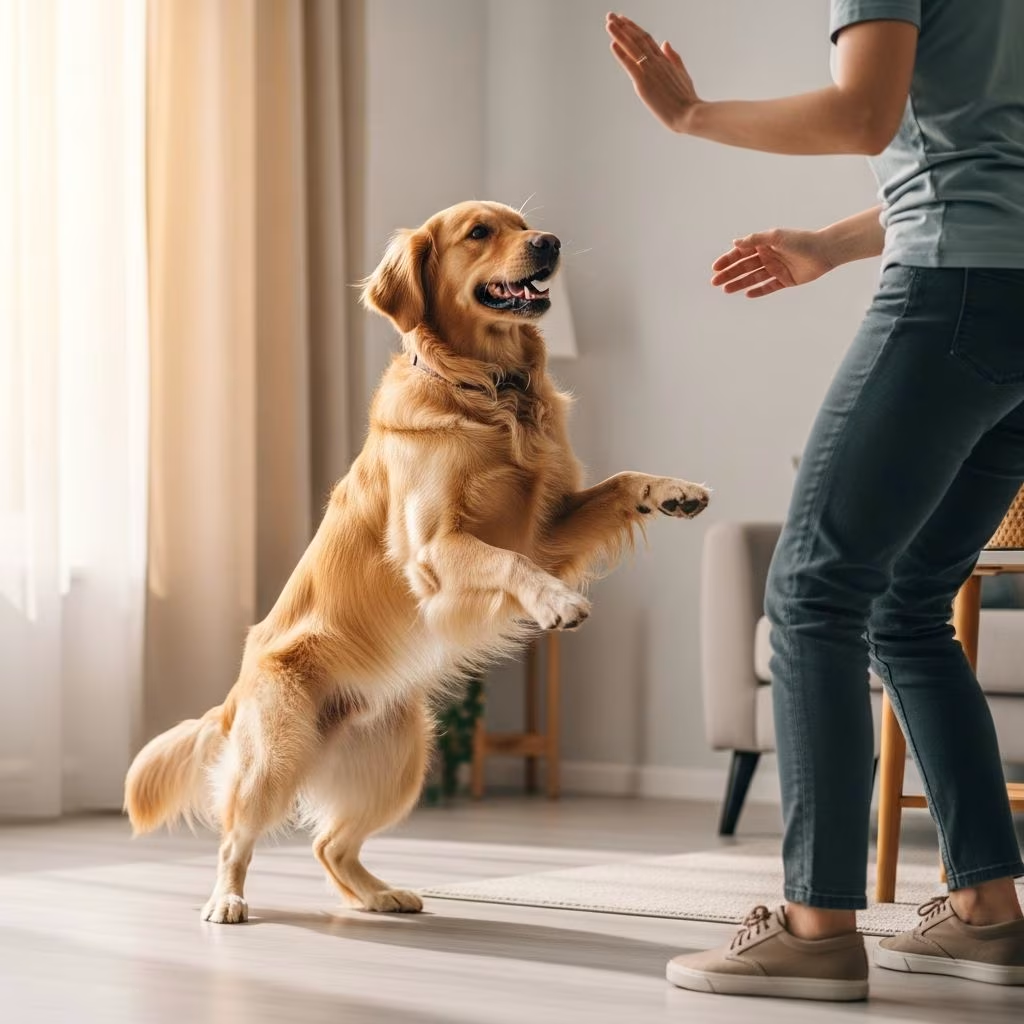
Dogs often leap onto people as a natural expression of joy, attention-seeking, or even anxiety relief, but this behavior can lead to scratched skin, knocked-over items, or discomfort for guests. Understanding the root causes allows owners to address it effectively through consistent training and management.
The Instinctive Roots of Canine Jumping
From a young age, puppies jump to interact with their littermates and mothers, mimicking play bows and physical contact that brings faces closer together. Adult dogs carry this forward, viewing humans as oversized pack members. When you return home or a visitor arrives, the surge of excitement triggers this ingrained response, positioning their face near yours for sniffing or licks.
High-energy breeds like Border Collies, Labrador Retrievers, and German Shepherds are particularly prone due to their athleticism and enthusiasm. Less confident dogs might jump as a stress outlet, using the motion to diffuse uncertainty during new encounters.
Common Triggers That Spark Jumping Episodes
- Excitement from arrivals: Your entrance after work or a guest’s knock elicits tail-wagging frenzy, prompting leaps to share the thrill.
- Attention cravings: If past jumps earned pets or laughs, dogs repeat it knowingly for interaction.
- Play invitations: Bouncy energy during fetch or roughhousing spills over into greetings.
- Lack of exercise: Pent-up physical and mental energy manifests as hyper greetings.
These triggers highlight how jumping serves as communication. Dogs lack hands for waving hello, so paws become their tool—until we teach alternatives.
Why Inconsistent Responses Make It Worse
Pushing, yelling, or kneeing often backfires because any contact feels rewarding to the dog. Even negative attention reinforces the cycle, as variable rewards (sometimes petted, sometimes scolded) strengthen habits like slot machines do. Guests who giggle or crouch exacerbate it, turning polite visits chaotic.
| Common Reaction | Why It Fails | Better Alternative |
|---|---|---|
| Pushing away | Physical touch rewards jumping | Turn away silently |
| Verbal scolding | Voice attention excites more | Ignore completely |
| Knee nudge | Can cause injury or fear | Use treats on floor |
| Petting mid-jump | Directly reinforces behavior | Reward only calm paws |
Building a Foundation: Four Paws on the Floor
The cornerstone of correction is “four on the floor,” rewarding calm contact over leaps. Start in low-distraction settings: hold treats at chest level, say nothing, and drop them only when all paws touch ground. Speed matters—anticipate jumps and feed preemptively to prevent takeoff.
Practice daily: 5-10 sessions of 2 minutes each. Cross arms, turn sideways if jumping starts, pivoting back with praise once settled. High-value rewards like pea-sized chicken keep motivation high without overfeeding.
Proactive Prevention Strategies for Success
Stop rewards before paws lift. Prevention trumps reaction, as successful jumps self-reward through proximity and motion.
- Leash management: Keep dogs leashed during greetings, asking for sits before unleashing.
- Scatter feeding: Toss handfuls of kibble downward as people approach, redirecting focus earthward.
- Guest prep: Crate or gate with a stuffed Kong until calm, then controlled intros.
- Threshold routines: Sit before door opens, reinforcing boundaries.
Consistency across household members is non-negotiable. Family meetings ensure everyone ignores jumps and celebrates sits.
Training Incompatible Behaviors: Sit and Stay for Greetings
Replace jumping with sits, an action physically impossible mid-leap. Lure into position with treats, marking “yes” or clicks on contact, then reward lavishly. Chain to stays: down-stay on mats during visits builds impulse control.
For advanced pups, teach “place” on beds. Command, reward holding position even as you exit rooms. This leadership fosters respect, reducing boundary-testing.
- Practice sits 10x daily sans greetings.
- Add movement: walk, cue sit.
- Introduce calm “actors” for mock hellos.
- Graduate to real guests with treats in hand.
Boosting Exercise and Mental Stimulation
Jumping often signals unmet needs. Aim for 30-60 minutes daily aerobic activity—fetch, runs, hikes—for high-drive dogs. Mental games prevent boredom-fueled antics.
- Stuffed Kongs with peanut butter.
- Puzzle toys dispensing meals.
- Scent games or obedience drills.
Enroll in manners classes for socialization and pro guidance. Fatigued, engaged dogs greet sedately.
Addressing Underlying Anxiety or Overstimulation
Nervous jumpers benefit from desensitization: gradual exposures to triggers with counter-conditioning. Pair doorbells with treats, building calm associations. Overstimulated pups need cooldown zones.
If persists post-training, consult vets for medical checks—pain or thyroid issues mimic behavioral excesses.
Real-World Scenarios and Troubleshooting
Multiple dogs: Train individually, then group sits.
Visitors who encourage: Brief them firmly; provide handouts.
Relapses: Revert to prevention; up exercise.
Expect 1-4 weeks for habits to fade with daily practice.
FAQ
Why does my dog only jump on guests?
Novelty spikes arousal; practice mock visits.
Is it okay for puppies to jump?
Prevent early to avoid entrenched habits.
What if my dog jumps when excited during play?
Cue sits mid-game; reward pauses.
How many training sessions daily?
Short, frequent: 5x 2-5 minutes.
Will shock collars help?
Avoid; positive methods yield lasting change without fear.
Long-Term Maintenance for Lasting Results
Sustain gains with random rewards, preventing extinction bursts. Lead firmly: structured meals, walks, rests affirm your role, curbing demands. Celebrate progress—calm greetings transform homes.
References
- Why Your Dog Jumps… and How To Stop It NOW! — NOVA Canine Academy (YouTube). 2023. https://www.youtube.com/watch?v=xYc1s8bdAV8
- How to Reduce Jumping — Wisconsin Humane Society. 2024-01-15. https://www.wihumane.org/behavior/ask-the-experts/dogs/jumping
- What should I do when my dog jumps on me? — Koinonia Dogs. 2023-05-20. https://www.koinoniadogs.com/blog/kdt3dnhnl4xbrn98323kk6rwzhmbsy
- Dog Behavior Problems – Greeting Behavior – Jumping Up — VCA Animal Hospitals. 2025-03-10. https://vcahospitals.com/know-your-pet/dog-behavior-problems-greeting-behavior-jumping-up
- How to Stop Your Dog From Jumping Up on People — American Kennel Club. 2024-11-05. https://www.akc.org/expert-advice/training/how-to-stop-your-dog-from-jumping-up-on-people/
- Stop Dog Jumping — Jeff Millman Dog Training. 2023. https://www.jeffmillman.com/index.php/training-topics/dog-obedience/stop-dog-jumping



