

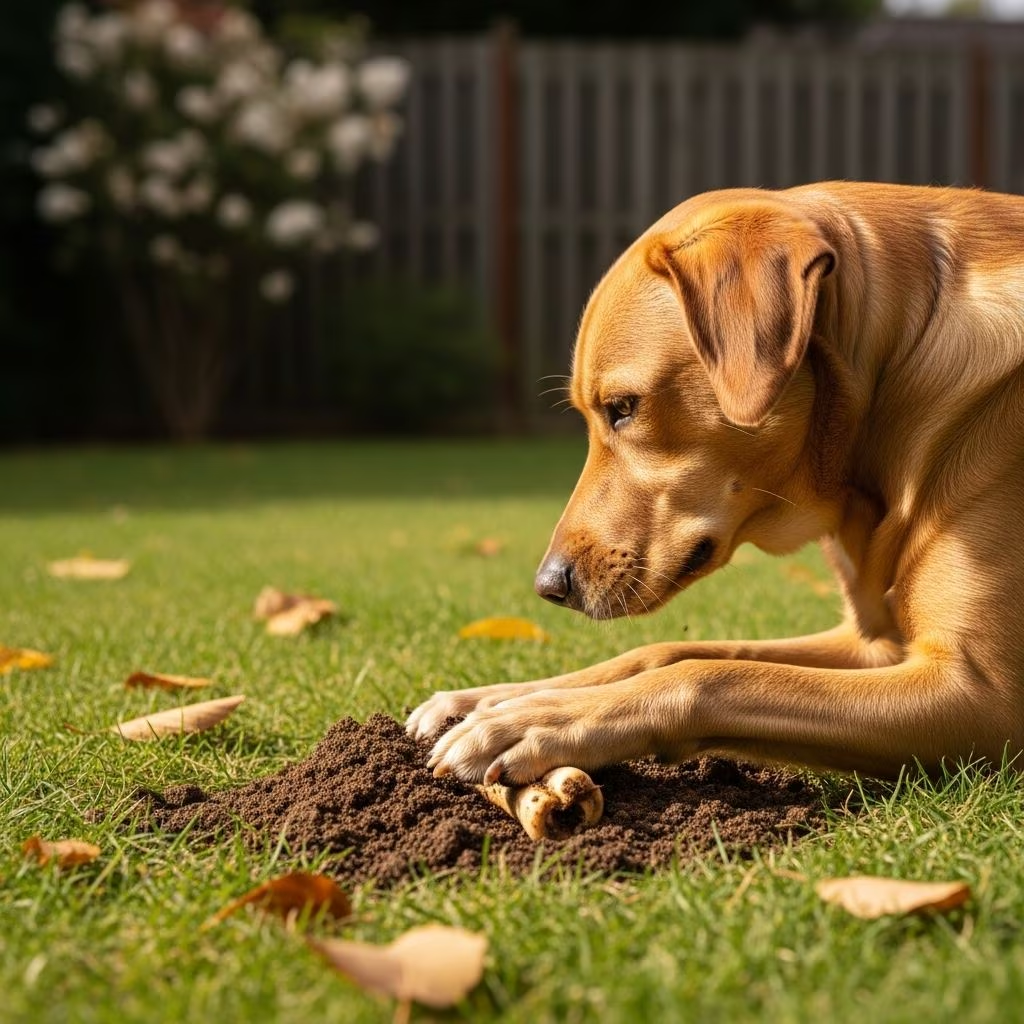
If you’ve ever discovered your dog’s hidden stash of toys under the couch cushions, kibble buried in the garden, or bones tucked away in unexpected places, you’re witnessing a behavior deeply wired into canine DNA. This phenomenon, known as caching, represents far more than a quirky habit—it’s a complex interplay of evolutionary survival mechanisms, individual psychology, and breed-specific traits that have shaped dog behavior for millennia.
The Evolutionary Foundation of Burying Behavior
To understand why your pet engages in burying behavior, we must first look backward through evolutionary time. Dogs are highly instinctual creatures despite centuries of domestication, with their close relatives, wolves, often burying food to protect it from scavengers. This practice provided a critical survival advantage for wild canines, particularly when food sources were unpredictable.
Within canine evolutionary history, burying excess food allowed their wolf ancestors to have sustenance available whenever needed, while also preventing spoilage and deterring scavengers from discovering their kills. Imagine this strategy functioning as nature’s refrigerator—a way to preserve nutritional resources across periods of scarcity. Wolves have been observed burying extra food such as meat, bones, and even parts of small prey to avoid spoilage or theft from competing predators.
Even though your domesticated companion receives regular, predictable meals in a temperature-controlled home environment, these ancient neural pathways remain active. The behavior persists because genetic programming doesn’t require external justification—the impulse simply exists, waiting for the right environmental trigger.
Breed-Specific Predispositions and Genetic Influence
Not all dogs exhibit burying behavior with equal frequency or intensity. Certain breeds demonstrate a substantially heightened inclination toward this activity, reflecting their original developmental purpose.
Terriers and Dachshunds were bred to hunt underground animals like gophers that threatened farmers’ crops, and they’re so adept at digging that the American Kennel Club developed Earthdog—a simulated sport for underground hunting dogs. These breeds possess an almost obsessive drive to excavate and conceal items, rooted in their historical role as pest controllers.
Owners of hunting breeds witness burying behavior more frequently than owners of herding or non-sporting breeds, with hunting dogs potentially having a heightened desire to save resources as part of their hunting instinct. Similarly, beagles and other scent-driven breeds often display prominent caching tendencies. This variation demonstrates how selective breeding has amplified certain instinctive behaviors across specific lineages while diminishing them in others.
Resource Guarding: Protection Against Perceived Scarcity
Beyond ancestral programming, many dogs bury possessions due to a behavioral pattern known as resource guarding. This protective behavior operates independently from basic survival instinct and instead reflects a dog’s emotional assessment of their living situation.
Resource guarding is defined as a dog’s protective behavior toward food or toys it fears another animal might steal. In multi-pet households, this dynamic becomes particularly pronounced. Dogs who feel competition for food and resources might resort to hiding their possessions to keep them safe, a pattern especially common in small breeds like Chihuahuas who fear larger pets taking their items.
This behavior deserves careful attention, as it sometimes escalates. Resource guarding can manifest in many different ways, sometimes involving burying bones and sometimes even progressing to aggressive confrontations. Dogs with histories of food insecurity or past competition for resources demonstrate heightened resource-guarding behaviors. For rescue dogs or those raised in environments where meals weren’t guaranteed, burying food becomes a psychological coping mechanism—converting scarcity anxiety into a feeling of control and safety.
Anxiety, Stress, and Psychological Comfort
Beyond instinct and resource protection, digging and burying serve important emotional functions for many canines. Dogs experiencing anxiety or psychological stress frequently employ these behaviors as self-soothing mechanisms.
Dogs are often soothed by the act of digging, and those feeling anxious or insecure may turn to digging and burying objects as coping mechanisms for their anxiety. The physical repetition of digging motions appears to have calming properties, similar to how humans might engage in rhythmic activities during stressful periods. Burying can serve as an anxiety and stress-relieving mechanism in some canines, particularly under routine or situational stress.
Environmental factors significantly influence anxiety levels. Dogs placed in homes with too much commotion, insufficient routine, or sudden changes in their living situation may intensify their burying behavior as an attempt to create personal security and control over their immediate environment.
Mental Stimulation and Enrichment Through Play
For many dogs, burying and hiding aren’t driven primarily by anxiety or resource protection—they’re simply enjoyable activities that provide necessary mental engagement. Digging and hiding are stimulating sensory behaviors that entertain dogs, with garden soil, couches, and clothing baskets providing ripe opportunities for exploration.
Dogs are intelligent animals requiring mental and physical stimulation, and for breeds with strong hunting, digging, or scenting heritage, burying is part of how they explore and interact with their environment. A dog with insufficient outlets for mental engagement may channel that energy into hiding kibble or chew bones throughout the house. When dogs don’t have adequate sources to direct their energy, they may bury bones to stimulate themselves due to boredom.
This distinction matters for pet owners seeking to modify the behavior. A bored dog digging in the furniture requires entirely different solutions than an anxious dog seeking comfort or a resource-guarding dog protecting against perceived threats.
Security and Possession in the Home Environment
When a dog tucks a toy under couch cushions or creates an elaborate burial site in the garden, they’re establishing personal territory and declaring ownership. Dogs often bury toys to feel secure, with their hiding habits creating a sense of security similar to how wild dogs bury food to keep it safe.
The specific locations dogs choose reveal interesting patterns. Dogs often choose hiding places under beds or couch cushions to store their possessions, behavior similar to how wild dogs bury food to protect it. Some dogs prefer soft, yielding surfaces that respond to digging—blankets, couch cushions, laundry baskets—mimicking the texture of actual soil. Others select less obvious locations, seemingly understanding that concealment depends on the item being out of sight and out of mind.
When dogs fail to find outdoor digging opportunities, pillows and blankets on beds become soft, yielding alternatives that satisfy the burying impulse. This adaptation demonstrates dogs’ ability to substitute preferred behaviors with acceptable alternatives when their ideal options aren’t available.
Comparing Motivations: When to Be Concerned
| Behavior Motivation | Key Indicators | Frequency Patterns | Associated Stress Level |
|---|---|---|---|
| Instinctive Caching | Focused on food/treats; seasonal variation; primarily outdoors | Occasional to regular | Low |
| Resource Guarding | Protective behavior; growling when approached; multi-pet households | Consistent with specific items | Moderate to High |
| Anxiety/Stress Response | Excessive digging; indiscriminate burying; destructive patterns | Increased during changes; frequent | High |
| Play/Enrichment Seeking | Playful behavior; enthusiasm; varied targets | Regular but controlled | Low |
Management Strategies and Behavioral Solutions
Understanding the root cause of your dog’s burying behavior enables more targeted intervention. Rather than simply discouraging the behavior, addressing underlying motivations produces more sustainable results.
For dogs motivated by ancestral instinct, acknowledging and channeling the behavior proves more effective than suppression. Designating a specific outdoor area for digging—a sandbox or designated garden section—allows the behavior while maintaining household boundaries. Rotating toys and treats reduces the frequency of hidden items throughout the home.
Dogs displaying resource-guarding tendencies benefit from training that builds confidence around shared resources. Feeding multiple dogs separately, removing toys when conflicts arise, and consulting with professional trainers experienced in resource-guarding modification can significantly improve household dynamics.
For anxiety-driven burying, addressing the underlying stress becomes paramount. This might include increased exercise, consistent routines, calming supplements, or professional behavioral consultation. Creating secure spaces where dogs feel protected—such as crate training with positive associations—often reduces the need to create hidden security through burying.
Enrichment-seeking dogs benefit from structured mental stimulation: puzzle toys, training sessions, nose-work games, and varied daily activities that satisfy their cognitive needs without encouraging destructive burying patterns.
When to Consult Professional Help
Most burying behavior, while sometimes inconvenient, requires no professional intervention. However, certain patterns warrant veterinary or behavioral consultation:
- Excessive, compulsive digging that causes property damage or injury
- Resource guarding that escalates to aggression
- Sudden onset of burying in previously stable dogs
- Concurrent behavioral changes suggesting underlying medical conditions
- Burying behavior in dogs with diagnosed anxiety disorders
Frequently Asked Questions
Why does my dog bury bones specifically in my bed?
Dogs bury bones in beds out of instinct to protect or save those items for times of perceived scarcity, with pillows and blankets offering soft, yielding surfaces similar to soil. Bed locations are also familiar, secure spaces where dogs feel their valuables receive maximum protection from other household members or pets.
Is burying behavior normal across all dog breeds?
While the capacity for burying exists across all dog breeds, the intensity and frequency vary significantly. Hunting and digging breeds demonstrate this behavior far more consistently than others, reflecting their genetic predispositions and historical breeding purposes.
Can I stop my dog from burying things?
Rather than complete cessation, most owners find management more practical. Channeling the behavior into designated areas, reducing resources for hiding, and addressing underlying anxiety or boredom prove more effective than prohibition alone.
Does burying behavior indicate a problem with my dog’s diet?
Not necessarily. Even well-fed dogs exhibit burying behavior due to evolutionary programming. However, if burying intensifies alongside weight loss or other dietary concerns, consultation with a veterinarian is appropriate.
How can I distinguish between normal burying and compulsive behavior?
Normal burying occurs periodically and doesn’t interfere with daily functioning. Compulsive burying becomes repetitive, intense, and causes property damage or prevents normal activities. Dogs engaging in compulsive patterns would benefit from professional behavioral assessment.
References
- Why Do Dogs Bury Bones? The Answer Is Surprisingly Simple — American Kennel Club (AKC). https://www.akc.org/expert-advice/training/why-do-dogs-bury-bones/
- Why Do Dogs Bury Bones? Understanding the Behavior — Kinship. https://www.kinship.com/dog-behavior/why-do-dogs-bury-bones
- Why Do Dogs Try to Bury Their Food? — JustFoodForDogs Blog. https://blog.justfoodfordogs.com/why-do-dogs-try-to-bury-their-food.html
- Why Does My Dog Bury or Hide His Toys? — Petmate. https://www.petmate.com/blogs/petmate-academy/why-does-my-dog-bury-or-hide-his-toys
- Why Do Dogs Bury Things? — Hill’s Pet Nutrition. https://www.hillspet.com/dog-care/behavior-appearance/why-do-dogs-bury-things



