

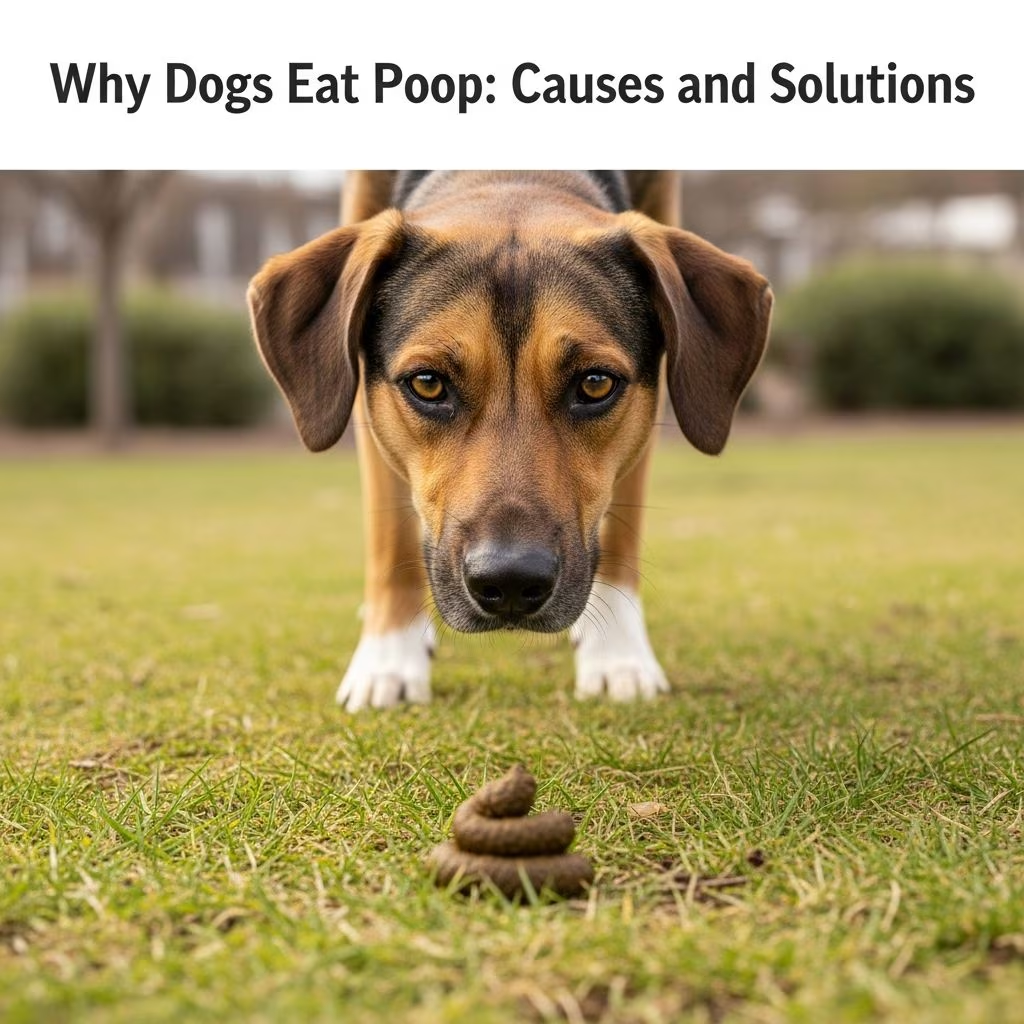
Dogs eating feces, known scientifically as coprophagia, is a widespread behavior affecting up to 24% of dogs at least occasionally and 16% habitually. This habit stems from a mix of evolutionary instincts, nutritional deficiencies, medical conditions, and behavioral factors. Understanding these roots helps owners address it effectively without overreacting.
The Evolutionary Roots of Coprophagia
Coprophagia likely traces back to wolves, dogs’ wild ancestors, who consumed fresh feces to maintain den hygiene and avoid parasites. Mother wolves eat puppy waste to prevent intestinal parasites from infecting vulnerable young, a practice called den sanitation. This instinct persists in domestic dogs, where nursing mothers clean dens by ingesting pup feces for the first few weeks post-birth.
Puppies often exhibit autocoprophagia (eating their own poop) or allocoprophagia (others’ poop) as part of natural exploration and mimicry. As they mature, this fades unless reinforced by other factors. Research from the University of California, Davis, links this to an innate predisposition protecting packs from fecal-borne threats in ancestral environments.
Nutritional Factors Driving Feces Consumption
Some dogs turn to poop when diets fail to meet needs. Undigested proteins, fats, and vitamins in feces act like a ‘second-hand’ supplement. Herbivore manure, such as from horses or geese, appeals due to antioxidants and semi-digested plants.
Stray dogs in food-scarce areas eat varied feces for survival, hinting at nutritional seeking. Modern high-fat, high-protein kibble may leave residues attractive to incomplete digesters. Vitamin B deficiencies, like thiamine, have been implicated, with studies showing fecal microbes synthesize these.
| Nutrient Type | Potential Source in Feces | Dog Benefit |
|---|---|---|
| Proteins & Fats | Undigested from high-quality diets | Energy boost |
| Vitamin B (e.g., Thiamine) | Microbial synthesis | Metabolic support |
| Antioxidants | Herbivore poop | Cellular protection |
| Minerals & Enzymes | Residual gut contents | Digestion aid |
Owners should evaluate diets: underfeeding, unbalanced meals, or poor absorption (e.g., from parasites) prompts scavenging.
Medical Conditions Linked to Poop Eating
Sudden coprophagia signals health issues. Parasites steal nutrients, driving compensatory eating. Enzyme deficiencies or inflammatory bowel disease impair digestion, leaving dogs nutrient-starved.
- Diabetes or Infections: Increase thirst/hunger, leading to urine/poop consumption.
- Exocrine Pancreatic Insufficiency (EPI): Reduces digestive enzymes; feces become nutrient-rich.
- Steroid Use: Boosts appetite abnormally.
- Stress/Disease Response: Feces provide water, microbes for gut health.
Vets recommend fecal exams, bloodwork for abrupt changes. Rabbits exemplify benefits—cecotropes supply B-vitamins—but dogs risk pathogens.
Behavioral and Psychological Triggers
Boredom, anxiety, or attention-seeking fuel habitual coprophagia. Punishment during housetraining creates a cycle: dogs eat evidence to avoid scolding, worsening behavior.
Exploratory mouthing, common in puppies, targets smelly feces. Mimicry of other dogs or compulsion from isolation reinforces it. Multi-dog homes see spread via copying.
Health Risks of Dogs Eating Poop
Beyond disgust, risks include parasite transmission (roundworms, giardia), bacteria (salmonella), and toxins from medicated animals. Frequent eaters face gastrointestinal upset or allergies. Monitor for vomiting, diarrhea post-incident.
Proven Strategies to Stop Coprophagia
Addressing root causes yields best results. Start with vet check for medical issues.
Dietary Adjustments
Switch to highly digestible food; add probiotics/enzymes. Supplements like B-vitamins help if deficient, but test first. Feed smaller, frequent meals to improve absorption.
Training Techniques
- Supervise Closely: Leash-walk; interrupt with ‘leave it’ command, reward compliance.
- Positive Reinforcement: Treat for ignoring poop; avoid punishment.
- Desensitization: Scatter feces, practice commands at distance.
- Muzzle Training: Basket muzzles allow panting/breathing for unsupervised time.
Environmental Management
Immediate yard cleanup prevents access. For multi-pet homes, separate waste. Enrichment toys reduce boredom.
Deterrents and Products
Forage-based diets or commercial additives (e.g., pumpkin, citrus sprays) make poop unpalatable. Use cautiously; effectiveness varies.
| Method | Pros | Cons | Success Rate (Est.) |
|---|---|---|---|
| Training | Long-term fix, builds skills | Time-intensive | High (70-90%) |
| Diet Change | Addresses cause | May not suit all | Moderate |
| Deterrents | Quick | Temporary, dog adapts | Low-Moderate |
| Management | Prevents habit | Not a cure | High with consistency |
When to Consult a Veterinarian
Seek help if: behavior starts suddenly in adults, persists despite interventions, accompanies weight loss/lethargy, or involves non-dog poop frequently. Rule out EPI, Cushing’s, or malignancies.
Common Myths About Coprophagia Debunked
- Myth: Always nutritional. Rarely sole cause in well-fed pets.
- Myth: Only puppies do it. Adults common too.
- Myth: Punish to stop. Worsens anxiety cycle.
- Myth: Harmless. Risks pathogens.
Frequently Asked Questions (FAQs)
Why do puppies eat their own poop?
Instinct for cleanliness and exploration; usually outgrown by 9 months with training.
Is it normal for dogs to eat cat poop?
Common due to high-protein appeal, but risky for parasites; secure litter boxes.
Can supplements alone stop it?
Only if deficiency proven; combine with behavior mods.
What if my dog eats horse poop on walks?
Nutritional draw; train ‘leave it’, shorten walks if persistent.
How long to see improvement?
Weeks to months with consistency; track progress.
Coprophagia, while off-putting, is manageable. Patience, vet input, and tailored strategies restore normalcy.
References
- WHY DO DOGS EAT POOP? – The Dish on Science — Stanford University. 2023. https://thedishonscience.stanford.edu/articles/rvuid1mxx6u1wkdlk1o6u40xv1zfga
- Why Do Dogs Eat Poop? – PetMD — PetMD. 2024. https://www.petmd.com/dog/behavior/why-do-dogs-eat-poop
- Why do Dogs Eat Their Poop? – Patton Veterinary Hospital — Patton Veterinary Hospital. 2023. https://pattonvethospital.com/blog/1105264-why-do-dogs-eat-their-poop
- Why Dogs Eat Poop And How To Stop It – American Kennel Club — American Kennel Club. 2024. https://www.akc.org/expert-advice/health/why-dogs-eat-poop/
- Why Do Animals Eat Poop? (And Why It Might Be a Good Thing) — Smithsonian National Zoo. 2023. https://nationalzoo.si.edu/center-conservation-genomics/news/why-do-animals-eat-poop-and-why-it-might-be-good-thing



