

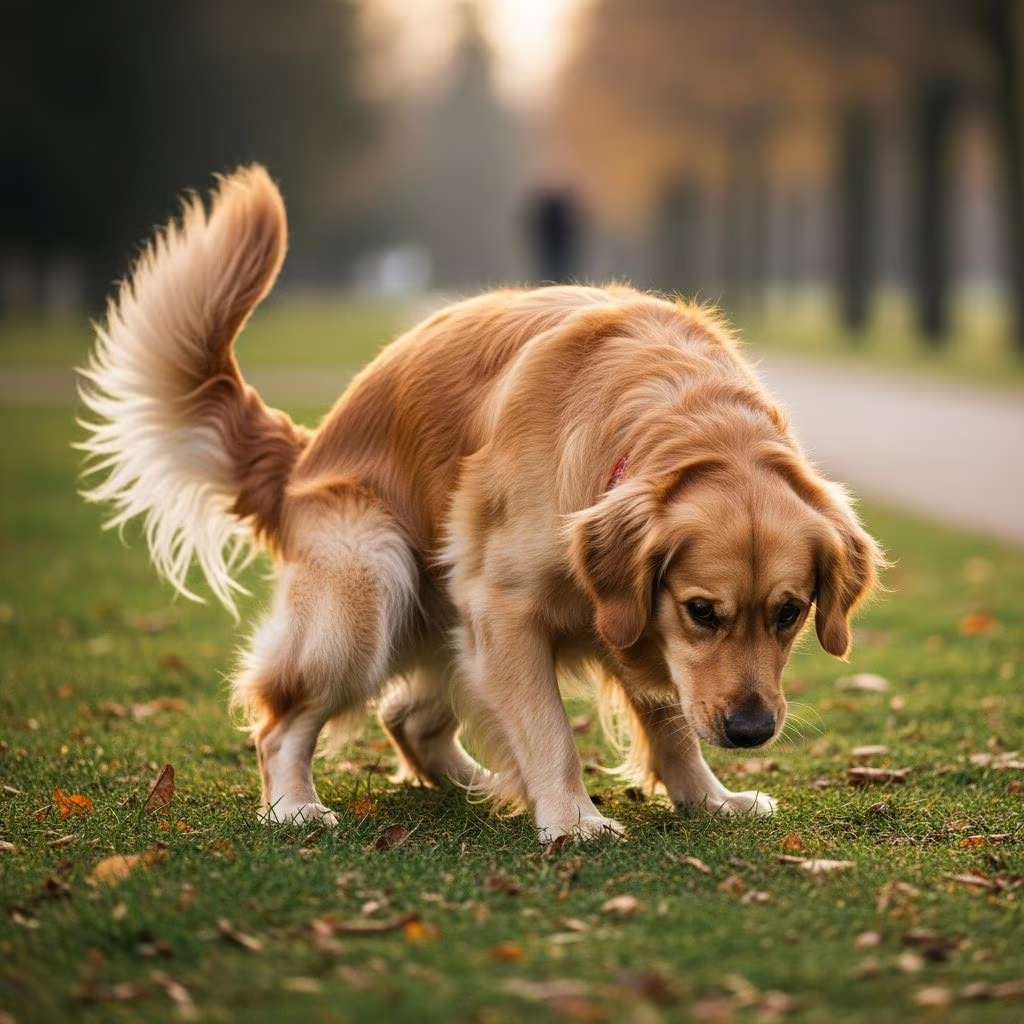
Most dog parents have watched their pup do a little potty dance before or after pooping: circling, sniffing, kicking grass, or proudly trotting away from the scene. It looks funny and random, but this behavior is driven by deep instincts, communication signals, and sometimes even health issues.
This guide breaks down why dogs dance when they poop, why they kick afterward, when the behavior is perfectly normal, and when it can indicate something is wrong.
What Is the Dog Potty Dance?
The potty dance is a loose term for all the little rituals many dogs perform right before or after they poop. It can look different from dog to dog, but usually includes some combination of:
- Circling or spinning before squatting
- Sniffing the ground intensely
- Light scratching or digging at the surface
- Kicking backwards with the hind legs after pooping
- Trotting or bounding away from the poop spot, sometimes with visible excitement
To us, it may look like a celebration, a victory lap, or even an attempt at cleanliness. In reality, much of this ritual is driven by natural canine instincts that trace back to dogs’ wild ancestors.1
Why Do Dogs Circle Before They Poop?
Circling before elimination is common and usually normal. While not all dogs do it, those that do tend to repeat the same pattern every time.
Experts suggest several key reasons:
1. Getting Into the Right Position
One straightforward explanation is that circling helps a dog align their body so it is easier and more comfortable to poop.
- Movement stimulates the digestive tract and may encourage a smooth bowel movement, similar to how walking can help humans with constipation.2
- Turning in a circle lets the dog test footing and balance before squatting, especially on uneven or slippery surfaces.
2. Scanning the Environment for Safety
In the wild, elimination is a vulnerable moment. Dogs need to lower their bodies and focus on the act of pooping, which reduces their ability to respond quickly to threats.
- Circling gives the dog a 360-degree view of the area before they squat.
- This behavior likely evolved as a way to check for predators or rival animals before entering a vulnerable position.3
Even though most pet dogs live in safe homes and yards, this instinct often persists.
3. Scent and Territory Considerations
Dogs use scent as their primary communication system. Feces contain a wealth of chemical information about the dog that produced them.
- By circling, a dog may be choosing the exact spot that best communicates their presence to other dogs.
- They might prefer areas already marked by themselves or by other dogs, or choose neutral ground depending on their personality and confidence level.
Research shows dogs rely heavily on scent marking to communicate social status, reproductive readiness, and territorial boundaries.4
Why Do Dogs Kick After They Poop?
One of the most dramatic parts of the potty dance is the backwards kicking many dogs do after they finish their business. It can look like they are trying to cover the poop like a cat, but the underlying purpose is usually different.
Scent Glands in the Paws
Dogs have scent glands in their paw pads that release pheromones when the paws rub or scratch against the ground.4 These pheromones are unique to each dog and carry detailed information about identity and possibly social status.
- When a dog kicks backward through grass, dirt, or gravel, they spread these pheromones over a wider area.
- This creates a combined scent mark: both the feces and the chemical messages from the paws.
Veterinary behaviorists describe this as a form of scent marking and a normal, instinctive behavior.4
Territory Marking and Communication
The kicking behavior is not only about cleanliness; it is a kind of territorial broadcast.
- By scratching and kicking, the dog visually disturbs the ground and spreads scent, signaling “I was here.”
- This may also serve as a subtle display of confidence or status, particularly in multi-dog households or areas frequented by many dogs.4
Some dogs are enthusiastic kickers, while others never kick at all. Both can be perfectly normal.
Is It About Covering the Mess?
It is tempting to assume that dogs are copying cats by trying to cover their feces. In some cases there may be a partial hygiene component, but most veterinary sources emphasize scent marking and communication over cleanliness.5
Even when a dog seems to fling dirt toward the poop, they are typically scattering their own scent rather than trying to hide the stool.
Instincts Behind the Potty Dance
Many parts of the potty dance can be traced to ancestral canine behavior.
| Potty Dance Behavior | Likely Instinctive Purpose |
|---|---|
| Circling before pooping | Scanning for threats and finding safe footing before entering a vulnerable posture |
| Sniffing the ground | Checking scent marks of other animals, choosing where to leave a message |
| Kicking after pooping | Spreading paw pheromones and reinforcing territorial scent marks |
| Trotting proudly away | Possible relief, return to alert posture, and rejoining the social group |
These behaviors did not evolve to entertain humans; they helped wild canids stay safe, communicate clearly, and manage social relationships.
Is the Potty Dance a Sign of Dominance?
Dog owners often wonder whether a strong potty dance, especially intense kicking, means a dog is trying to be the “alpha.” The reality is more nuanced.
- Scent marking is certainly related to territorial behavior and can be influenced by a dog’s confidence.
- In multi-dog homes, the more assertive dog may mark or kick more often, but size and physical strength do not always predict who kicks the most.
- Modern behavior research tends to avoid oversimplified “alpha dog” labels and instead focuses on individual temperament and learned behavior.4
So, while the potty dance can reflect a dog’s comfort and confidence in a space, it is not a reliable measurement of dominance in the popular sense.
How the Potty Dance Varies Between Dogs
Just as dogs differ in play style and personality, their bathroom routines are unique too.
- Enthusiastic dancers may circle several times, kick vigorously, and run away joyfully every single time.
- Minimalists might simply sniff, squat, and walk away with little fanfare.
- Context-sensitive dogs may dance more in open areas (parks, fields) and less on tight leashes or in crowded places.
There is no single “correct” potty dance. The key is to know what is normal for your dog so that you can notice changes that may signal a problem.
When the Potty Dance Signals a Health Problem
Most of the time, circling and kicking are normal behaviors. However, certain patterns during bathroom time can indicate discomfort or illness. Veterinary organizations recommend watching for changes in elimination behavior because they are often early warning signs of disease.1
Warning Signs to Watch For
- Straining to poop or taking a long time to produce stool
- Repeated circling without successfully pooping
- Whining, yelping, or looking back at the rear end during or after elimination
- Visible blood, mucus, or very loose, watery stool
- New reluctance to squat, especially in older dogs (possible arthritis or pain)
- Sudden stop in a previously consistent kicking or potty dance routine with no obvious reason
These signs can be associated with issues such as constipation, diarrhea, intestinal parasites, painful anal glands, orthopedic pain, or other medical problems.1 If you notice them, contact your veterinarian promptly.
Age, Mobility, and the Potty Dance
As dogs age, arthritis and joint disease become more common and can change how they move and eliminate.
- Senior dogs may circle less because turning and squatting are uncomfortable.
- They may hesitate before pooping or seek softer, more stable surfaces.
- If an older dog suddenly refuses to squat or seems stiff afterward, a vet exam is advised.1
Managing Potty Dance Damage to Your Yard
While completely natural, the potty dance can be rough on lawns and gardens. Kicking dirt and grass may create bare patches or fling debris.
You do not need to train this instinct out of your dog, but you can reduce damage with a few strategies:
- Designate a potty area: Use a specific corner of the yard covered with pea gravel, mulch safe for pets, or other durable surface to absorb kicking.
- Use a leash: In destructive zones, keep your dog on a shorter leash and gently guide them to less fragile areas.
- Reinforce alternatives: Reward your dog when they use the designated potty spot, building a habit over time.
- Protect landscaping: Temporary fencing or plant barriers can shield vulnerable garden beds.
Because kicking is an instinctive marking behavior, it is often difficult to eliminate completely. Management is usually more realistic than full behavioral change.
Should You Stop Your Dog’s Potty Dance?
In most cases, the answer is no. The potty dance is typically:
- Normal and healthy
- A form of communication and self-expression
- Harmless aside from potential yard damage
You may want to intervene only when:
- Your dog is damaging property that cannot be protected or repaired.
- The dog seems distressed, in pain, or unable to complete a bowel movement.
- Obsessive circling persists for long periods without pooping.
In those cases, consult with your veterinarian first to rule out medical causes. If your vet finds no medical problem, a qualified dog trainer or veterinary behaviorist can help design a humane training plan.
How to Support Healthy Bathroom Habits
A comfortable, consistent bathroom routine helps your dog feel secure and can reduce anxiety-related behaviors around elimination.
- Stick to a schedule: Regular walk and potty times support digestive health and predictability.
- Provide a calm environment: Avoid rushing or scolding your dog while they sniff, circle, and choose a spot.
- Maintain a balanced diet: High-quality nutrition and adequate fiber support healthy stools; sudden diet changes can cause diarrhea or constipation.1
- Regular veterinary care: Fecal exams, deworming when indicated, and checkups help catch issues early.1
Frequently Asked Questions (FAQs)
Q: Why does my dog suddenly kick after pooping when they never did before?
A: A change in marking behavior can be related to confidence, environment, or social dynamics with other dogs. However, sudden changes in any elimination habit should be mentioned to your veterinarian to rule out pain, injury, or other medical issues.
Q: Is it bad if my dog never circles or kicks at all?
A: Not at all. Some dogs have very simple bathroom routines and skip most of the classic potty dance behaviors. As long as your dog poops comfortably, consistently, and without signs of distress, the absence of circling or kicking is usually normal.
Q: Can I train my dog to stop tearing up the grass after pooping?
A: You can manage where and how often your dog kicks by using a designated potty area, supervising closely, and rewarding them for using that spot. Completely eliminating the instinctive kicking behavior is difficult, so management is more realistic than total prevention.
Q: Does the potty dance mean my dog is dominant or trying to be the alpha?
A: While scent marking is related to territory and confidence, modern behavior science does not interpret these actions as simple “alpha” displays. The potty dance is better understood as a mix of instinctive marking and safety behaviors rather than a power move.
Q: When should I worry about my dog’s bathroom behavior?
A: Contact your veterinarian if you see straining, blood or mucus in the stool, repeated circling without pooping, obvious pain, sudden accidents in a housetrained dog, or any major change in your dog’s normal potty routine.
References
- Dog Behavior Problems: House Soiling — American Veterinary Medical Association. 2021-08-10. https://www.avma.org/resources/pet-owners/petcare/dog-behavior-problems-house-soiling
- Constipation in Dogs — VCA Animal Hospitals (M. David, DVM). 2020-11-01. https://vcahospitals.com/know-your-pet/constipation-in-dogs
- Diarrhea in Dogs — Cornell University College of Veterinary Medicine. 2022-03-15. https://www.vet.cornell.edu/departments-centers-and-institutes/cornell-feline-health-center/health-information/diarrhea-dogs
- Social Communication in Dogs — The Domestic Dog: Its Evolution, Behavior and Interactions with People, 2nd ed. Cambridge University Press (J. Serpell, ed.). 2016-05-26. https://doi.org/10.1017/CBO9781139161800
- Five Odd Dog Behaviors, Explained — UrgentVet. 2021-06-01. https://urgentvet.com/five-odd-dog-behaviors-explained/



