

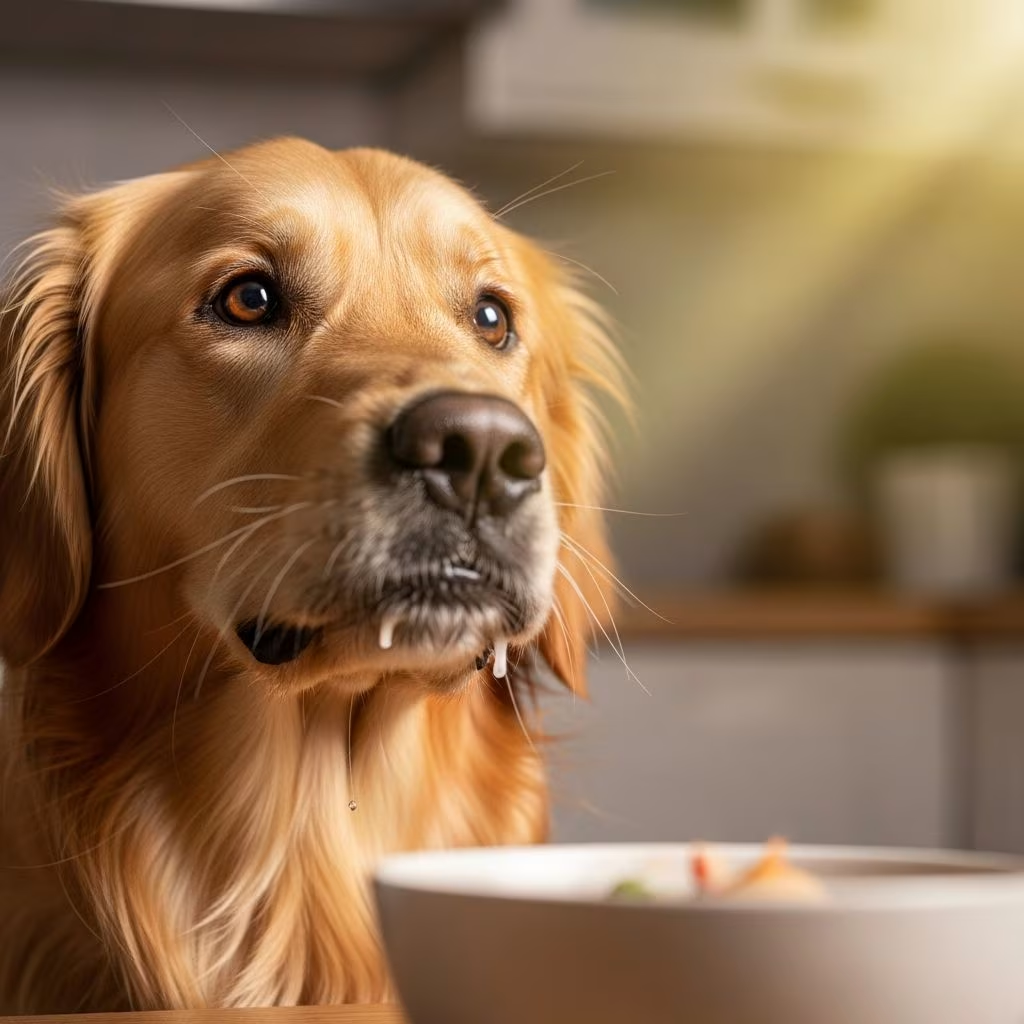
Dogs exhibit a remarkable drive for food that influences their behavior, training success, and overall health. This instinct stems from evolutionary survival mechanisms, neurological reward systems, and individual factors like breed and environment.
The Evolutionary Roots of Canine Food Drive
From their wolf ancestors, dogs inherited a survival imperative to seek and consume food whenever available. In the wild, meals were unpredictable, fostering an opportunistic eating strategy that persists in modern pets. This primal urge ensures energy conservation but can lead to overeating in homes with consistent food access.
Neurological pathways amplify this drive. When dogs anticipate or receive food, their brains release dopamine, generating pleasure and reinforcing associated actions. This response creates strong behavioral links, explaining why food excels as a training motivator over praise or petting.
How the Brain Processes Food Rewards
Dopamine surges in a dog’s brain not just from eating but from expecting food, heightening motivation. Timing is crucial: rewards delivered within seconds of a behavior forge the clearest connections, enhancing learning efficiency.
Treat value hierarchies emerge based on aroma, novelty, and rarity. High-value options like novel proteins trigger stronger responses than everyday kibble. Dogs even adjust effort levels, running faster for premium rewards like sausage compared to standard ones, regardless of calorie count.
- Aroma-driven appeal: Strong scents stimulate appetite instantly.
- Novelty factor: Uncommon flavors maintain excitement.
- Texture variety: Soft, chewy, or crunchy options suit different preferences.
Breed and Genetic Influences on Appetite
Not all dogs share equal food motivation. Studies using the Dog Obesity Risk and Appetite (DORA) questionnaire reveal significant breed variations. Sporting breeds like Labradors often score highest, linked to genetic mutations such as proopiomelanocortin deletions that boost hunger signals.
These genetics promote indiscriminate eating and higher obesity risks. Owners of high-motivation breeds report more intensive feeding management, including portion control and treat restrictions, to maintain healthy weights.
| Breed Group | Food Motivation Level | Key Traits |
|---|---|---|
| Sporting (e.g., Labrador) | High | Strong genetic drive, obesity prone |
| Hound | Moderate-High | Scavenging instincts |
| Toy | Variable | Less intense, age-dependent |
| Working | Moderate | Balanced by activity needs |
Environmental and Lifestyle Factors
Context dramatically alters food’s motivational power. Distractions, hunger levels, stress, and social settings modulate appeal. A treat irresistible in a quiet home may be ignored amid park excitement.
Household dynamics play a role too. Multi-pet homes or urban environments can heighten competition, amplifying food-seeking behaviors. Owners’ practices, like free-feeding versus scheduled meals, influence satiety and drive.
- Hunger timing: Train before meals for peak motivation.
- Stress reduction: Calm settings boost eating willingness.
- Exercise integration: Activity enhances post-workout appetite.
Training Strategies Leveraging Food Motivation
Food rewards harness natural drives for effective training. Pair high-value treats with desired actions to build positive associations. For counter-conditioning, link food’s pleasure to neutral or scary stimuli, like doorbells, reshaping emotional responses.
Anticipation builds eagerness. Consistent patterns teach dogs that effort yields rewards, sustaining motivation even without visible treats. Vary rewards to prevent boredom and manage contrast effects, where recent high-value treats diminish lesser ones’ appeal.
Cycle through value levels strategically:
- Start with high-value for new skills.
- Transition to medium for maintenance.
- Use low-value in low-distraction proofing.
Individual Variations in Food Response
Dogs differ in reward processing due to age, health, personality, and history. Puppies often show boundless enthusiasm, while seniors may prefer softer textures. Anxious dogs ignore food under stress, signaling emotional thresholds.
Medical issues like dental pain or gastrointestinal problems reduce interest. Past experiences shape preferences—trauma-linked foods get avoided. Tailor approaches: test preferences via choice trials to identify top motivators.
Health Risks of Excessive Food Drive
High motivation correlates with overweight risks, mirroring uncontrolled diets’ effects. DORA scores link elevated food motivation to obesity, urging vigilant management. Owners of affected dogs implement stricter controls, yet longitudinal tracking is needed for prevention efficacy.
Balance training calories against daily intake. Use portioned meals, limiting treats to 10% of diet. Monitor body condition scores regularly to catch issues early.
Overcoming Low Food Motivation
Not all dogs gobble treats eagerly. Common culprits include overfeeding, reducing hunger; stress overriding appetite; or mismatched value. Medical checks rule out underlying conditions.
- Boost value: Upgrade to rarer, smellier options.
- Optimize timing: Train when hungry, not post-meal.
- Reduce arousal: Calm the dog first for focus.
- Build enthusiasm: Pair with celebratory energy.
Refusal often indicates emotional discomfort—fear or overstimulation blocks eating and learning. Address root causes with force-free methods before resuming food work.
Practical Tips for Everyday Use
Incorporate food motivation daily without excess. Reserve special treats for achievements, fostering pride. Meal-based training turns kibble into currency, maximizing value without added calories.
Progressive challenges keep engagement high: simple sits graduate to heeling amid distractions. Enthusiastic delivery amplifies rewards, embedding joy in the process.
Frequently Asked Questions
Is food motivation genetic?
Yes, certain breeds carry mutations enhancing appetite, but environment and training history also shape it significantly.
Can I train without treats?
Possible but slower; food accelerates learning by tapping biological drives, outperforming praise alone in effort and speed.
Why does my dog ignore treats sometimes?
Likely stress, fullness, low value, or health issues—assess context and emotional state first.
Do all dogs prefer food rewards?
Most do, running faster for better ones, but toys or play suit some high-drive individuals better in specific scenarios.
How do I prevent obesity from treat training?
Account for treats in total calories, use meal kibble, monitor weight, and vary high/low-value to sustain motivation.
Advanced Techniques for Expert Trainers
Employ variable reward schedules mimicking wild unpredictability to build resilience. Track individual hierarchies via preference assessments, adjusting for context. Integrate with play for hybrid motivators, especially for toy-driven breeds.
Monitor DORA-like metrics at home to predict obesity risks and refine management. Longitudinal logging reveals patterns, optimizing long-term health and performance.
References
- Food motivation and owner feeding management practices are … — PMC/NCBI. 2024. https://pmc.ncbi.nlm.nih.gov/articles/PMC12326197/
- The Psychology of Dog Treat Rewards: Timing, Value, and Motivation — Lucky Premium Treats. 2025-09-19. https://www.luckypremiumtreats.com/blogs/news/the-psychology-of-dog-treat-rewards-timing-value-and-motivation-1
- Dogs Are Food Motivated – They Need It for Survival — Pet Professional Guild. 2023. https://www.petprofessionalguild.com/pet-owners/pets-and-their-people/pets-and-their-people-blog/dogs-are-food-motivated-they-need-it-for-survival/
- In Training, Pay Your Dog with the Food or Foods They Love … — Companion Animal Psychology. 2019-05. https://www.companionanimalpsychology.com/2019/05/dogs-preferred-training-rewards.html
- Busting Myths About Training Your Dog With Food Rewards — Pawsitive Futures. 2023. https://www.pawsitivefutures.com/single-post/busting-myths-about-training-your-dog-with-food-rewards



