

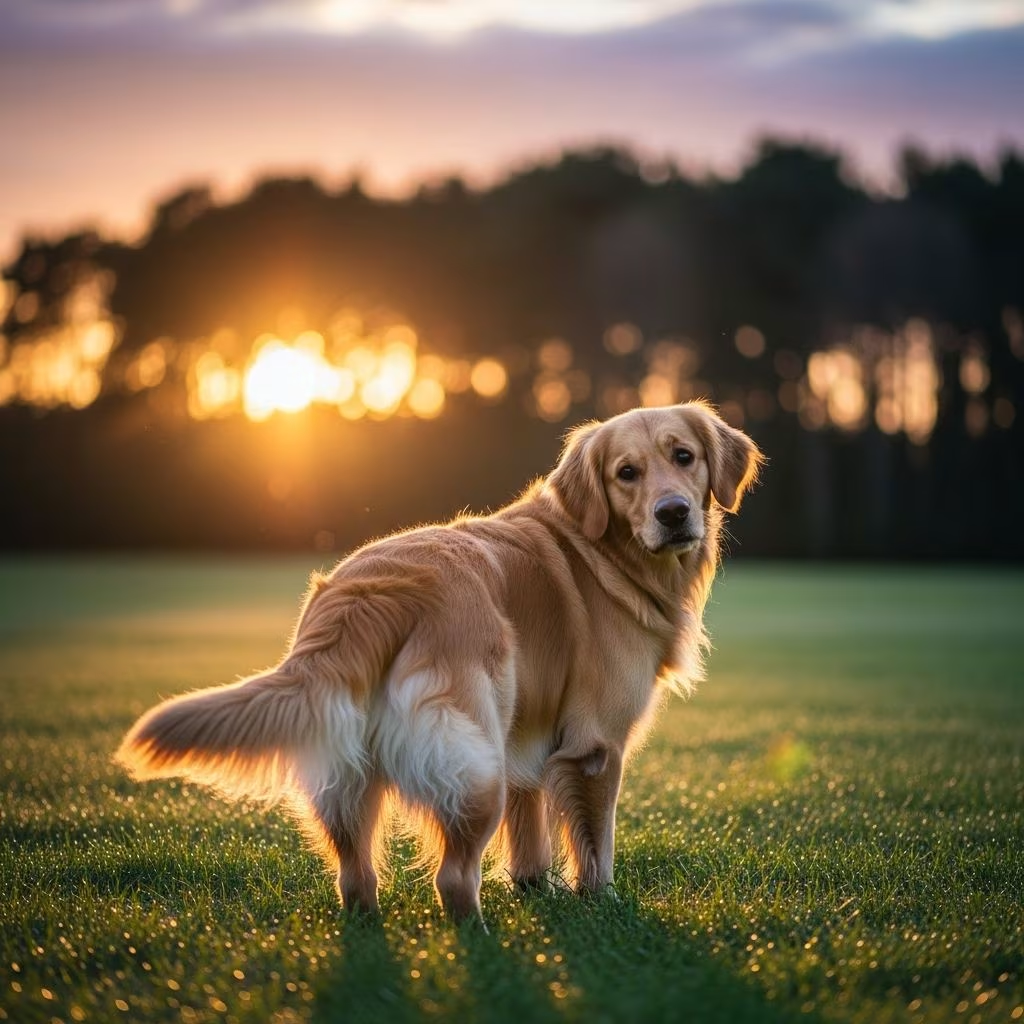
Dogs exhibit a fascinating pre-sleep ritual: spinning in circles before finally curling up. This behavior, observed across breeds and ages, stems from deep-rooted instincts passed down from wild ancestors, serves practical purposes like comfort and safety, and can sometimes indicate health concerns.
The Evolutionary Roots of Canine Circling
In the wild, a dog’s ancestors such as wolves, foxes, and coyotes faced constant threats from predators and harsh environments. Circling before lying down was not mere quirkiness but a survival mechanism. By turning in place, wild canids flattened tall grass, leaves, or snow to create a level, comfortable nest tailored precisely to their body size.
This action also drove away potential dangers like snakes, insects, or small animals hiding in the underbrush. Wildlife experts note that such preparation ensured a safer resting spot, reducing vulnerability during vulnerable sleep periods. Additionally, circling allowed pack animals to orient themselves with the wind direction, positioning their noses to detect approaching threats via scent.
- Grass flattening: Creates a smooth, insulated bed from natural materials.
- Predator check: Scans the area one last time for dangers.
- Wind alignment: Positions the body for optimal scent detection.
- Pack awareness: Helps leaders survey for lagging members in group settings.
Domestic dogs, though removed from wilderness life by thousands of years of selective breeding, retain these genetic behaviors. Even on plush pet beds or couches, the circling persists as an innate, hardwired response.
Practical Benefits: Comfort and Nest-Making
Beyond survival, circling aids in creating the ideal sleeping environment. Dogs pat down blankets, rearrange cushions, or even dig lightly at surfaces to “fluff” their spot, mimicking wild bed-making. This is akin to humans adjusting pillows or sheets for maximum comfort.
In varied climates, the behavior regulated temperature. In hot weather, circling and scratching exposed cooler soil beneath sun-warmed top layers. In cold conditions, it packed snow or allowed tucking into a tight ball to conserve heat, often shared among pack mates. Modern indoor dogs may circle to align with air currents from vents or simply to find the coziest angle.
| Environment | Circling Purpose | Modern Equivalent |
|---|---|---|
| Hot climates | Expose cooler ground | Adjust to AC flow |
| Cold climates | Pack snow, curl tightly | Burrow into blankets |
| Grassy areas | Flatten vegetation | Smooth pet bed |
Studies in canine ethology confirm that this ritual promotes physical comfort by distributing body weight evenly and testing positions before full commitment to rest.
Circling as a Relaxation Ritual
Circling doubles as a calming routine, signaling the transition from activity to rest. The repetitive motion releases tension, much like a human stretching or deep breathing before bed. Behaviorists describe it as a self-soothing mechanism that quiets the nervous system and prepares the mind for sleep.
For puppies and young dogs, this can be play-like, extending the ritual playfully. In anxious dogs, it may intensify as a stress-reliever, helping them feel secure in their chosen spot.
When Circling Signals Health Concerns
While usually benign, excessive or altered circling warrants attention, especially in seniors. Pain from conditions like arthritis, hip dysplasia, or injuries prompts dogs to circle repeatedly while seeking relief. They may rise and resettle multiple times, vocalize, or appear restless.
Neurological issues present differently: aimless, disoriented spinning rather than purposeful circling. Canine cognitive dysfunction (doggy dementia), vestibular disease (inner ear imbalance), brain tumors, or spinal problems can cause this. Early signs include:
- Circling more than 5-10 times per settle.
- Difficulty standing after circling.
- Head tilting or stumbling.
- Changes in appetite or coordination.
Veterinarians recommend monitoring duration and frequency. For instance, healthy dogs typically circle 2-4 times; excess may indicate orthopedic or neurological evaluation needs.
Breed and Age Variations in Circling Habits
Not all dogs circle identically. Herding breeds like Border Collies may spin more due to innate rounding instincts from corralling livestock. Sighthounds like Greyhounds circle less, preferring to flop down quickly. Puppies circle energetically to burn residual energy, while seniors do so gingerly if joint pain limits mobility.
| Breed Type | Typical Circling Style | Reason |
|---|---|---|
| Herding | Frequent, tight spins | Ancestral herding motion |
| Sighthound | Minimal or none | Adapted for quick rests |
| Senior dogs | Slow, repetitive | Pain avoidance |
How to Support Your Dog’s Circling Ritual
Embrace the behavior by providing conducive bedding. Orthopedic foam beds support joints, reducing excessive circling in arthritic dogs. Elevated cots aid cooling in warm climates, while donut-shaped beds satisfy nesting instincts.
Avoid interrupting mid-ritual to prevent stress. For destructive diggers, offer puzzle toys or designated dig pits. Regular exercise curbs hyperactivity-fueled circling.
FAQs on Dog Circling Behavior
Is it normal for dogs to circle 10 times before lying down?
Occasional longer sessions are fine, but consistent excess (over 10 turns) may signal discomfort; consult a vet.
Why do some dogs dig after circling?
Digging extends nest-making, pushing away debris or fluffing material for insulation.
Can training stop circling?
Not advisable—it’s instinctual. Discourage only if destructive; redirect to appropriate beds.
Does circling indicate anxiety?
Possibly in new environments; pair with calming aids if persistent.
When should I see a vet for circling?
If sudden onset, paired with limping, confusion, or appetite loss.
Expert Insights from Veterinary Sources
Veterinary hospitals emphasize that while evolutionary, circling’s changes reflect health status. Routine check-ups catch issues early, ensuring the ritual remains a joyful quirk.
References
- Why Dogs Turn Around Before Lying Down — VCA Animal Hospitals. Accessed 2026. https://vcahospitals.com/know-your-pet/why-dogs-turn-around-before-lying-down
- Why Do Dogs Circle Before Laying Down? — St. Vital Veterinary Hospital. 2020-01. https://www.stvitalveterinaryhospital.com/resources/blog/january-2020/why-do-dogs-circle-before-lying-down
- PHILosophy 101 | why do dogs circle before lying down? — Life with Malamutes (YouTube). 2019-09-27. https://www.youtube.com/watch?v=g-SaZq41UyM
- Dog Circling Before Sleeping Explained — Stevenson Village Veterinary Hospital. Accessed 2026. https://www.stevensonvillagevet.com/why-dogs-walk-in-circles-before-sleeping/
- Why Do Dogs Turn in Circles Before Lying Down? — Psychology Today. 2016-01. https://www.psychologytoday.com/us/blog/canine-corner/201601/why-do-dogs-turn-in-circles-lying-down



