

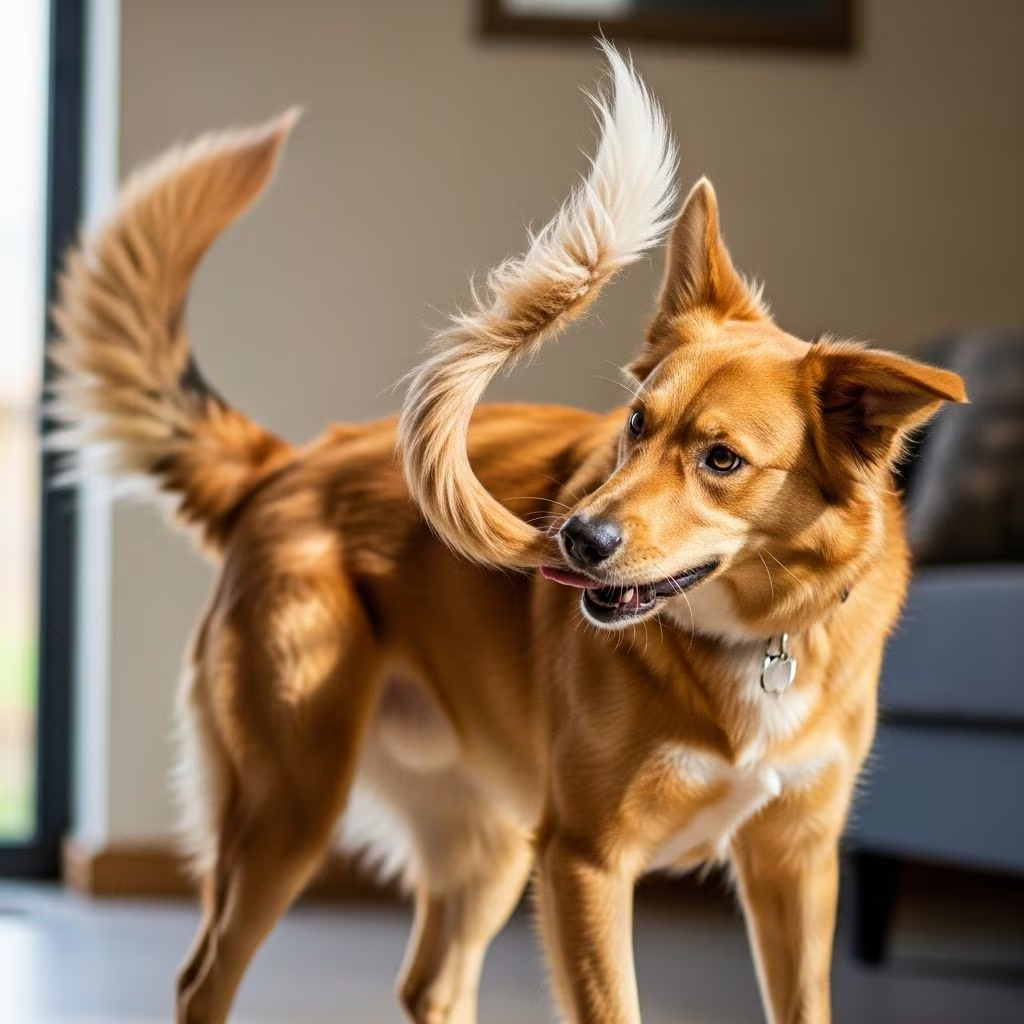
Dogs chasing their tails is a captivating sight that can amuse owners, but it often signals more than just playful antics. This behavior stems from a mix of natural instincts, environmental factors, and potential health concerns. Understanding the root causes helps pet owners decide whether to encourage the fun or intervene with professional help.
The Instinctive Roots of Tail Chasing
From a young age, puppies discover their bodies through exploration, and the tail becomes an enticing moving target. This self-directed play mimics hunting instincts, where circling prey was once a survival skill. In adult dogs, occasional spins preserve this innate drive, especially during high-energy moments.
Breeds like Bull Terriers, German Shepherds, and Shiba Inus show higher tendencies, possibly linked to genetics such as the CDH2 gene influencing stress responses. Puppies outgrow it naturally as they gain body awareness, but persistent habits warrant observation.
Playfulness and Energy Release in Young Dogs
Puppies frequently engage in tail chasing as a form of entertainment and exercise. Lacking full coordination, they treat their tail like a toy, spinning in joyful circles. This peaks during teething or growth phases when excess energy needs an outlet.
- Puppy-specific triggers: New motor skills development.
- Duration: Typically fades by 6-12 months without intervention.
- Benefits: Builds agility and relieves zoomies.
Owners can channel this into fetch or tug games to satisfy the urge constructively.
Boredom and Under-Stimulation as Key Drivers
A common culprit in adult dogs, insufficient mental and physical activity leads to repetitive actions like tail chasing. High-energy breeds kenneled for long periods or left alone develop this as self-stimulation.
Distinguish true boredom from low exercise: Dogs with unmet aerobic needs spin to burn calories. Increase daily walks, introduce puzzle toys, or enroll in agility classes to redirect focus.
| Activity Level | Solution | Expected Outcome |
|---|---|---|
| Low (under 30 min/day) | Two 20-min walks + toys | Reduced spinning in 1-2 weeks |
| Moderate | Interactive play sessions | Improved focus and calm |
| High (working breeds) | Obedience training + runs | Eliminated habit |
Attention-Seeking Tactics
Dogs quickly learn that tail chasing draws human interaction—even scolding counts as engagement. What starts as play escalates when owners laugh or intervene, reinforcing the cycle.
Break it by ignoring spins completely and rewarding calm behavior with praise or treats. Consistency prevents mixed signals, turning attention to desired actions like sitting quietly.
Health Issues Triggering Tail Focus
Not all chases are behavioral; physical discomfort often initiates the habit. Fleas, ticks, or allergies cause itching at the tail base, prompting bites that may persist post-resolution.
- Anal gland problems: Impacted sacs lead to scooting and chasing; vet expression relieves pressure.
- Parasites: Tapeworms exiting the rectum irritate, mimicking tail targeting.
- Injuries: Trauma from doors or fights causes pain-chewing that conditions into routine.
Skin conditions or allergies manifest as hot spots near the hindquarters, demanding flea preventives and hypoallergenic diets.
Neurological and Age-Related Factors
Senior dogs may chase due to Canine Cognitive Dysfunction (CDS), akin to dementia, reducing spatial awareness. Symptoms include disorientation and sleep changes alongside spins.
Young and old extremes contrast: Pups play innocently, elders repeat compulsively. Neurological exams rule out spine issues or pain.
Compulsive and Anxiety-Driven Behaviors
Canine Compulsive Disorder (CCD) mirrors human OCD, where tail chasing becomes obsessive, often tied to anxiety from changes like new pets or moves.
Triggers include separation, overstimulation, or early weaning. Serotonin imbalances exacerbate it in predisposed breeds. Initial irritation evolves into soothing ritual, resisting extinction.
Monitor intensity: Occasional fun versus incessant, injurious chasing signals CCD. Vets prescribe behavior meds alongside therapy.
When to Consult a Veterinarian
Seek help if chasing leads to bald patches, wounds, or occurs daily. Rule out medical causes first via exams, fecal tests, and gland checks before behavioral fixes.
- Hair loss or bleeding tails.
- Sudden onset in adults.
- Accompanied by limping or whining.
- Failure to respond to enrichment.
Early intervention prevents chronicity, combining vet care with training.
Practical Management Strategies
Address root causes holistically:
- Enrich environment: Rotate toys, use food puzzles.
- Exercise regimen: 60+ minutes daily, breed-appropriate.
- Training techniques: Positive reinforcement for alternatives.
- Ignore and redirect: No reaction to spins.
- Professional aid: Behaviorists for CCD.
Cone collars temporarily protect injured tails during healing.
Breed Predispositions and Prevention
Terriers and herders chase more due to genetics and work drives. Prevent by early socialization and routine vet checks.
| Breed Group | Prone Breeds | Risk Factors |
|---|---|---|
| Terriers | Bull Terrier, Jack Russell | High prey drive |
| Herders | German Shepherd | Energy surplus |
| Others | Doberman, Shiba Inu | Stress sensitivity |
FAQs on Dog Tail Chasing
Is tail chasing always a problem?
No, occasional play is normal, especially in puppies. Worry when excessive or injurious.
Can diet influence this behavior?
Yes, allergies from food cause itching; switch to novel proteins under vet guidance.
How long does puppy tail chasing last?
Usually resolves by adulthood, but monitor for persistence.
Does neutering help?
Not directly, but reduces anxiety in some cases.
What toys stop tail chasing?
Interactive ones like treat balls or flirt poles divert energy effectively.
Long-Term Outlook and Owner Tips
Most dogs balance out with lifestyle tweaks, but vigilance ensures health. Track episodes in a journal noting triggers, aiding vets. Strong owner-dog bonds amplify success in curbing unwanted spins.
Embrace the quirk when harmless, but prioritize welfare. Informed action keeps tails wagging happily.
References
- Why Do Dogs Chase Their Tails? 6 Reasons Why — Purina. 2020-11-26. https://www.purina.co.uk/articles/dogs/behaviour/understanding-dogs/why-dogs-chase-tails
- Why Dogs Chase Their Tails — VCA Animal Hospitals. N/A. https://vcahospitals.com/know-your-pet/why-do-dogs-chase-their-tails
- Why Do Dogs Chase Their Tail? — American Kennel Club. N/A. https://www.akc.org/expert-advice/advice/why-do-dogs-chase-their-tail/
- Tail chasing in dogs: When it’s normal and when to worry — Vetster. N/A. https://vetster.com/en/wellness/tail-chasing-in-dogs-when-it-s-normal-and-when-to-worry
- Does your dog chase their tail? — Vetwest Veterinary Clinics. N/A. https://www.vetwest.com.au/pet-library/tail-chasing-does-your-dog-chase-their-tail/



