

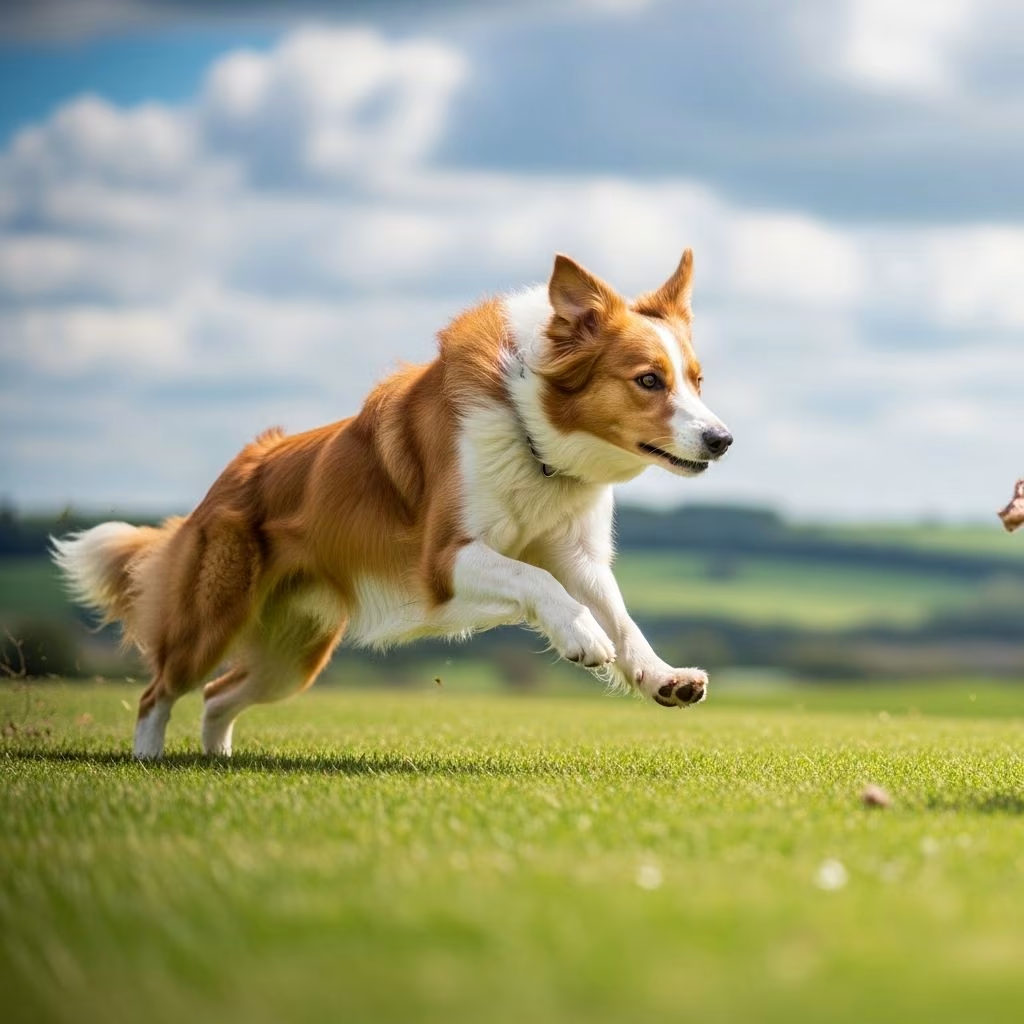
Dogs chase moving objects as a core instinct tied to their predatory heritage, territorial protection, and playfulness, often triggered by anything from squirrels to bicycles.
The Evolutionary Roots of Canine Pursuit
At the heart of a dog’s chasing behavior lies **prey drive**, an innate survival mechanism inherited from wild ancestors. This drive compels dogs to detect, stalk, chase, and sometimes capture moving targets, mimicking the hunt for food in the wild. Even domesticated dogs retain this sequence: spotting motion, fixating, pursuing with explosive speed.
Historically, wolves and early dogs chased prey to eat, sharpening senses for quick movements. Today, this manifests in domestic settings where a fluttering leaf or passing jogger activates the same neural pathways. Research from canine behaviorists notes that this is not aggression but a self-rewarding thrill, making it highly reinforcing and challenging to suppress without redirection.
Common Triggers: What Sets Off the Chase?
Dogs pursue a wide array of stimuli, each sparking the instinct differently. Understanding these helps owners anticipate and intervene.
- Small Animals: Squirrels, rabbits, birds, and cats top the list due to their erratic, fleeing patterns that scream ‘prey.’ Urban dogs may fixate on neighborhood cats, driven purely by motion.
- Vehicles and Wheels: Cars, bikes, skateboards, and motorcycles trigger chases because their wheels simulate running legs, combined with noise and speed.
- People in Motion: Joggers, cyclists, or strangers running away often incite pursuit, blending prey drive with herding or territorial responses.
- Inanimate Objects: Balls, frisbees, or blowing debris offer safe outlets during play, fulfilling the chase without harm.
- Self-Chasing: Tail-chasing can signal play, boredom, or rarely, medical issues like allergies or neurological problems.
Beyond instincts, emotional states amplify chasing: boredom leads to thrill-seeking, stress prompts displacement activity, and frustration from confinement fuels outbursts.
Breed-Specific Tendencies in Chasing
Not all dogs chase equally; genetics play a pivotal role. Breeds bred for specific jobs exhibit heightened drives.
| Breed Group | Examples | Chasing Style |
|---|---|---|
| Sighthounds | Greyhound, Whippet, Afghan Hound | High-speed pursuit of small game using superior vision. |
| Herding | Border Collie, Australian Shepherd | Chasing to ‘herd’ runners, bikes, or livestock. |
| Hunting/Terriers | Jack Russell, Foxhound | Tenacious stalking and digging after vermin. |
| General | Labrador, Mixed Breeds | Moderate play-chasing, less intense prey focus. |
Sighthounds were selectively bred over millennia for chasing prey across open terrain, making them nearly impossible to ignore fast-moving wildlife. Herding breeds view bicycles as wayward sheep, nipping heels to control movement.
Risks and Real-World Dangers of Unchecked Chasing
While exhilarating for dogs, chasing poses serious hazards. A dog bolting after a car risks collision with traffic, leading to injury or death. Chasing joggers can cause trips, falls, or bites if the person panics and defends themselves.
Legally, owners face liability for unleashed dogs harassing people or livestock. Neighborhood disputes arise from repeated cat or stranger chases, straining community relations. Moreover, reinforcing chase through play without boundaries escalates the behavior, turning fun fetch into dangerous pursuits.
Proven Training Techniques to Curb Chasing
Managing chase requires proactive training, focusing on impulse control, recall, and redirection. Start in low-distraction environments and build up.
- Build Rock-Solid Recall: Use high-value treats for ‘come’ commands during mild temptations. Practice with a long line for safety.
- Teach ‘Leave It’ and ‘Stay’: Reward ignoring distractions. Pair with emergency stops like ‘sit’ on cue.
- Desensitize to Triggers: Expose gradually to joggers or bikes at distance, rewarding calm focus on you.
- Impulse Control Games: ‘Wait’ at doors, ‘drop it’ for toys—transfer to real scenarios.
- Professional Help: For high-drive dogs, consult certified trainers using positive reinforcement.
Tools like harnesses with front clips reduce pulling, while head halters offer gentle control during walks.
Channeling Energy: Safe Outlets for Chase Instincts
Suppressing prey drive entirely is unnatural and frustrating. Instead, redirect into structured activities.
- Fetch and Toy Play: Use flirt poles or automatic launchers for endless chases without risks.
- Canine Sports: Agility, flyball, or lure coursing satisfy speed and pursuit legally.
- Mental Enrichment: Puzzle toys, scent work, and obedience drills tire the mind, reducing boredom chases.
- Exercise Regimen: Daily runs, hikes, or treadmill sessions burn physical energy.
A fatigued dog chases less. Aim for 60-90 minutes of varied activity daily, tailored to breed needs.
Addressing Underlying Causes Beyond Instinct
Sometimes chasing signals deeper issues. Fear-based pursuit of strangers stems from sensing owner anxiety or territorial defense. Medical checks rule out vision problems, pain, or thyroid imbalances mimicking hyperactivity.
Boredom in understimulated dogs leads to compulsive chasing. Enrich environments with Kongs, snuffle mats, and rotation of toys to prevent frustration-fueled outbursts.
FAQs: Common Questions on Dog Chasing
Is chasing always a sign of aggression?
No, it’s typically playful or instinctual, not aggressive. True aggression involves stiff posture and growling, unlike excited chasing.
Can you train out prey drive completely?
No, but you can manage it through consistent training and outlets. It’s genetic, like a human’s adrenaline rush.
Why does my dog only chase certain things?
Triggers vary by past experiences, breed, and environment. Fast, small movers often hit hardest.
What if my puppy chases everything?
Puppies have developing impulse control. Early training prevents lifelong habits. Use positive methods from 8 weeks.
How do I stop car-chasing?
Secure fencing, leashed walks, and desensitization. Never punish, as it increases fear and reactivity.
Long-Term Management for a Balanced Life
Successful chase management blends understanding biology with daily habits. Track progress in a journal: note triggers, successes, and setbacks. Consistency across family members reinforces rules.
High-drive dogs thrive with routines: morning exercise, midday puzzles, evening training. Socialization exposes them to stimuli safely, reducing novelty appeal.
Owners report calmer walks after 4-6 weeks of dedicated work. Patience yields a dog that’s thrilled by tug toys, not traffic.
References
- Why Do Dogs Chase Strangers — WagWalking. 2023. https://wagwalking.com/behavior/why-do-dogs-chase-strangers
- Why Does My Dog Chase Anything That Moves? — Adaptil UK. 2024-05-15. https://www.adaptil.co.uk/blogs/news/why-does-my-dog-chase-anything-that-moves-a-poochs-point-of-view
- Why Is My Dog Chasing Everything? — American Kennel Club. 2025-03-10. https://www.akc.org/expert-advice/advice/why-is-my-dog-chasing-everything/
- Predatory Behavior — Positively.com. 2022-11-01. https://positively.com/dog-training/article/dog-science-predatory-behavior
- 5 Most Common Dog Behavior Problems: Chasing — PetSafe. 2023-07-20. https://www.petsafe.com/blog/5-most-common-dog-behavior-problems-chasing/



