

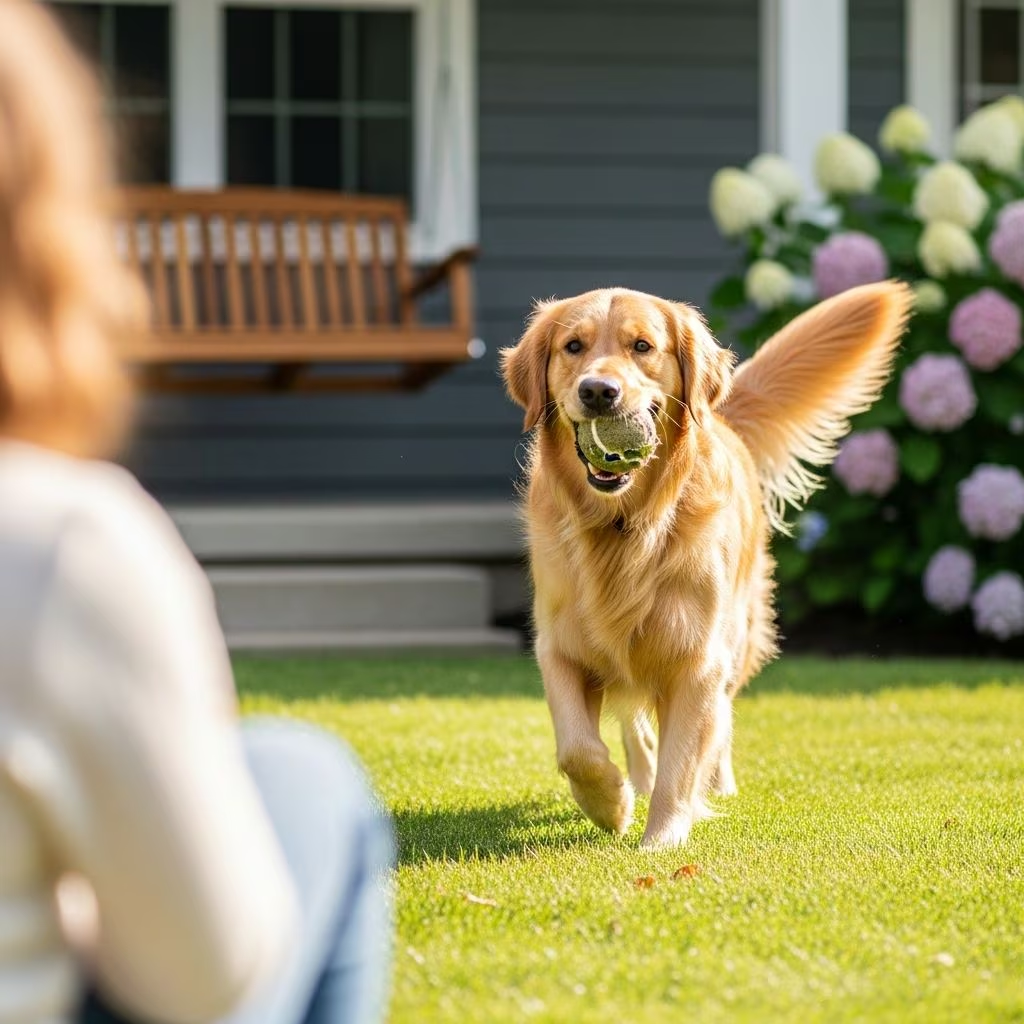
Dogs often surprise their owners by presenting “gifts” such as toys, socks, shoes, or even sticks from the yard. This behavior, while sometimes messy or unexpected, is a profound expression of their instincts, emotions, and bond with you. Far from random, these offerings stem from evolutionary traits, learned responses, and a deep desire to connect. Understanding **why dogs bring gifts** can deepen your appreciation for your furry companion and guide how you respond to strengthen your relationship.
The Instinctual Roots of Gift-Giving
At its core, a dog’s tendency to bring gifts traces back to their wild ancestors. Wolves and wild canines carry prey or food back to their dens to feed the pack, particularly offering portions to the alpha or nursing mothers. In your home, you are the pack leader, so your dog views you as the deserving recipient of their “hunt.” This act symbolizes **submission, respect, and sharing resources**.
Selective breeding has amplified this in many breeds. Retrievers, for instance, were developed to gently carry game birds without damage, turning a survival skill into a cherished trait. Terriers, bred to hunt vermin, proudly retrieve their “kills.” Even non-hunting breeds may exhibit this due to shared canine genetics combined with human encouragement.
- Hunting simulation: Domestic dogs “hunt” household items like socks or toys, mimicking prey carry.
- Pack hierarchy: Gifts affirm your alpha status, reinforcing social order.
- Resource sharing: In the wild, this ensures pack survival; at home, it’s pure devotion.
Excitement and Greeting Rituals
One of the most common scenarios is your dog greeting you at the door with a toy or object in their mouth. This is often a burst of **excitement upon your return**. After being alone, endorphins flood their system, and grabbing the nearest item channels that energy positively—preventing jumping or excessive barking.
For highly energetic dogs, holding something in their mouth has a calming effect, similar to how chewing reduces anxiety. It’s their way of saying, “I’m thrilled you’re home—let’s play!” This ritual turns greetings into structured, joyful interactions.
| Greeting Behavior | Why They Do It | How to Respond |
|---|---|---|
| Toy at the door | Excitement overflow | Praise calmly, initiate play |
| Sock or shoe | Improvised “prey” | Redirect to toy, reward gently |
| Nothing ideal | Learned attention bid | Ignore unwanted, reinforce good |
Seeking Attention, Play, and Praise
Dogs are masters of reading human cues. If past gifts elicited squeals of delight, pets, or playtime, they’ve learned it’s a **fast track to positive reinforcement**. Your high-pitched excitement signals happiness, encouraging repetition. What starts as instinct becomes a **learned behavior** for quality time.
Sharing a favorite toy is especially meaningful—dogs can be possessive, so entrusting it to you shows **deep trust**. It’s not just about play; it’s an invitation to bond, turning everyday moments into shared joy.
“Dogs bring gifts because it makes us happy, and their greatest joy is our approval.”
Affection, Trust, and Emotional Bonds
Beyond instincts, gift-giving is a pure sign of **love and security**. By offering treasures, dogs express, “You’re family—I share my best with you.” This vulnerability strengthens your emotional connection, making you feel like the center of their world.
For anxious or overexcitable dogs, gifts serve as self-soothing tools. A toy in the mouth redirects hyper energy, promoting calm during high-emotion moments like arrivals. Encouraging this can reduce unwanted behaviors like nipping.
Should You Encourage or Discourage Gifts?
Not all gifts are welcome—a dead bug or your favorite slipper can test patience. Decide based on context:
- Encourage if: Gifts are safe (toys), calm your dog, or build positive rituals.
- Discourage if: Items are dangerous (sharp objects), destructive (chewed shoes), or signal anxiety.
To manage: Provide appealing alternatives like durable toys near the door. Praise desired gifts lavishly; ignore or redirect unwanted ones. Consistency teaches boundaries while preserving the affection.
If gifts accompany excessive excitement or seem compulsive, consult a vet to rule out anxiety or medical issues. Most cases, however, are harmless expressions of devotion.
Breed Predispositions to Gift-Giving
Genetics play a starring role. Breeds with retrieving heritage are prime gifters:
- Labrador and Golden Retrievers: Born carriers, they “fetch” anything as love offerings.
- Border Collies: Herding instincts morph into toy deliveries.
- Terriers (e.g., Jack Russell): Simulate vermin hunts with socks.
- Hounds: Vocalize and present finds proudly.
Mixed breeds often inherit these traits, blending instincts across lineages.
Fun Facts About Canine Gift-Givers
- Dogs rarely gift those they dislike—it’s a respect marker.
- Puppies learn from mothers carrying food, starting young.
- Some dogs “gift” during walks, dropping sticks as invitations.
- Female dogs may gift more to pups or owners during heat cycles, echoing maternal care.
Frequently Asked Questions (FAQs)
What does it mean when my dog brings me gifts?
It signifies affection, respect, excitement, or a play invitation, rooted in instincts and learned positivity.
Why does my dog bring me socks specifically?
Socks mimic prey size/scent; they’re soft, accessible “hunts” for attention.
Is gift-giving a sign of dominance?
No—it’s submission to you as pack leader, sharing humbly.
How can I stop my dog from bringing gross gifts?
Offer better toys, train “leave it/drop it,” and reward alternatives consistently.
Do all dogs bring gifts?
No, but breeds with retrieving genes and those reinforced by owners do most.
Conclusion: Cherish the Gifts
Your dog’s gifts, wanted or not, are heartfelt tokens of their world. Responding with understanding fosters trust and joy. Next time Fido drops a slobbery toy at your feet, remember: it’s not just an object—it’s their way of saying, “I love you.” Embrace it, guide it, and revel in the unbreakable bond.
References
- Why Do Dogs Bring Gifts — WagWalking. 2023-05-15. https://wagwalking.com/behavior/why-do-dogs-bring-gifts
- Why does your dog bring you random objects? — ElleVet Sciences. 2024-02-10. https://www.ellevetsciences.com/blog/why-does-your-dog-bring-you-random-objects/
- Why Do Dogs Bring Gifts to Us When We Arrive Home? — Wisconsin Petcare. 2023-11-20. https://wisconsinpetcare.com/dogs-bring-gifts-us-arrive-home-katelyn-schutz-cpdt/
- Why Do Dogs Bring You Toys When You Get Home? — PetMD. 2024-08-05. https://www.petmd.com/dog/behavior/why-do-dogs-bring-you-toys-when-you-get-home
- Why Does My Dog Bring Me His Treats? — Houndsy. 2023-12-01. https://www.houndsy.com/blogs/modern-tails/why-does-my-dog-bring-me-his-treats-understanding-this-endearing-behavior



