

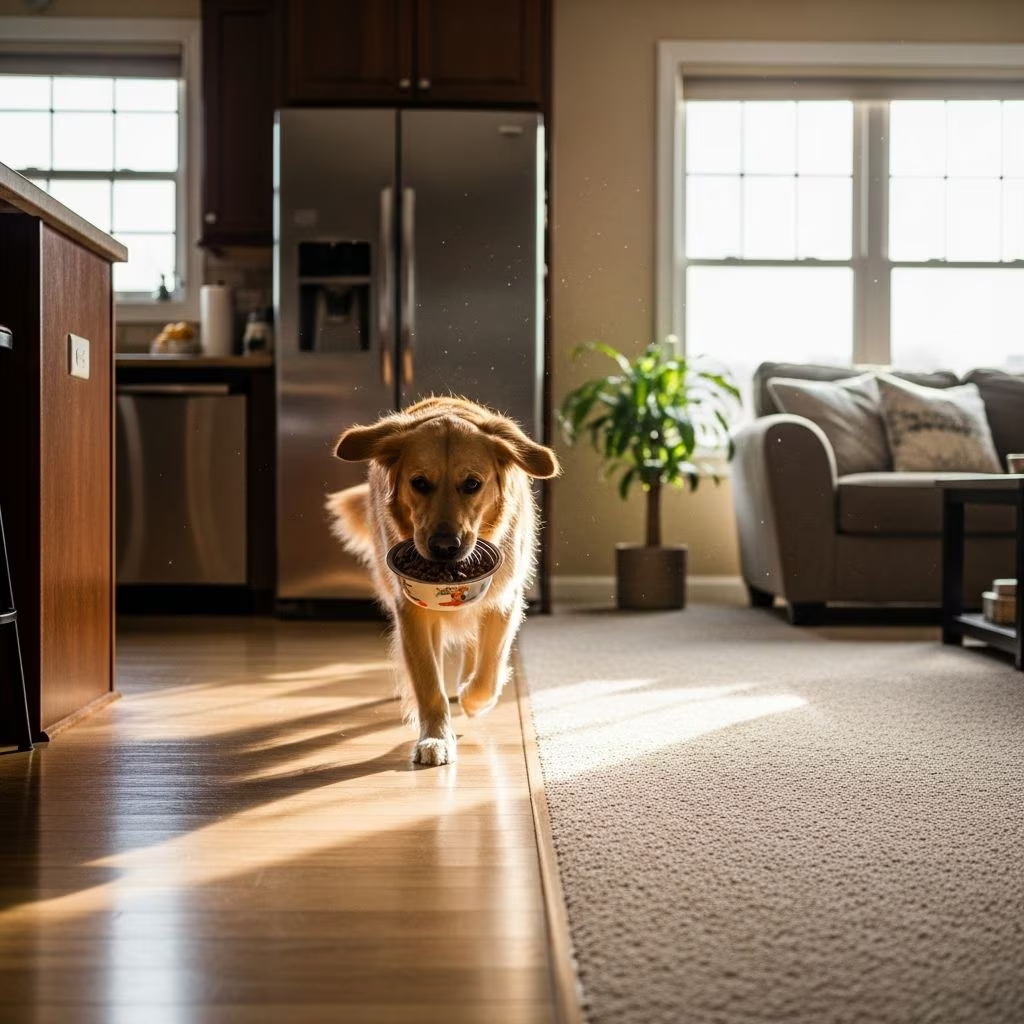
Dogs often exhibit quirky eating habits, such as carrying kibble or wet food from their bowls to a nearby carpet. This behavior, while endearing to some pet owners, can lead to messes and potential health risks. Understanding the root causes—ranging from ancient instincts to modern household dynamics—helps owners address it effectively.
Instinctual Behavior from Wild Ancestors
One primary reason dogs bring food to the carpet stems from their evolutionary instincts. Wild canines, like wolves, rarely eat at the kill site. Instead, they drag prey to a secure location, such as a den, to avoid threats from dominant pack members or predators. Domestic dogs retain this ‘carry-and-hide’ impulse, treating their bowl as ‘prey’ and the carpet as a safe den.
Dr. Julie Albright Keck, a board-certified veterinary behaviorist, explains that this mirrors wild dogs capturing food and relocating it for relaxed consumption. In homes, dogs fill their mouths with kibble and head to soft carpets, mimicking this survival strategy despite abundant safety.
- Pack protection: Avoids perceived competition from other pets.
- Secure feasting: Carpet feels like a private, enclosed space.
- Relocation ritual: Even single dogs perform it habitually.
Security and Resource Guarding
Many dogs view mealtime as high-stakes, fearing theft by household pets or even family members. Carrying food to the carpet allows better guarding—growling or positioning their body over it. Dogs that growl over bowls often relocate to carpets for easier defense.
In multi-pet homes, this intensifies. A dog might take food away when another eats nearby, signaling submission or caution. This pack mentality positions the carpet as a neutral, defensible territory away from the ‘dominant’ eater.
Signs of insecurity include:
- Stiff posture while carrying food.
- Audible growls or lip lifts at the bowl.
- Quick retreats to isolated carpet spots.
Submission in Multi-Dog Households
In homes with multiple dogs, subordinate animals often relocate food during the dominant dog’s meal. Eating simultaneously near the alpha can provoke aggression, so they seek carpeted areas for submissive dining. This preserves pack harmony, echoing wild hierarchies where lower-ranked members eat last or apart.
Owners report big dogs yielding bowls to smaller ones, then carpet-feasting nearby. It’s not weakness but smart social navigation.
Vision and Sensory Challenges
Older dogs or those with vision decline struggle if kibble blends with bowl colors (e.g., brown food in a brown dish). Contrasting carpets make pieces pop visually, easing location and consumption.
Joint issues also play a role: Hard floors cause slips for arthritic pups, prompting moves to cushioned carpets for stability and comfort.
| Issue | Symptom | Solution |
|---|---|---|
| Vision Impairment | Food color matches bowl | Switch to high-contrast bowls |
| Joint Pain | Slipping on hard floors | Add non-slip mats or elevated feeders |
Noise Aversion from Bowls
Metal bowls clatter annoyingly with tags or teeth, driving sensitive-eared dogs to silent carpets. Ceramic echoes similarly. Soft surfaces muffle sounds, creating peaceful meals.
Test by swapping to plastic, paper plates, or slow-feed mats—many dogs stay put.
Anxiety, Hyperactivity, and Comfort Seeking
Restless or anxious dogs pace while eating, dropping pieces en route to carpets. Hyper pups treat relocation as stimulation, akin to humans snacking on the go.
Carpets appeal for texture: Soft, warm under paws and jaws, unlike cold tiles. Some dogs seek human company, hauling food to family areas for pack bonding.
- Comfort preference: Lying down to eat feels natural.
- Social eating: Mimics family meals.
- Burying instinct: Nudges kibble into fibers for ‘storage’.
Seeking Companionship or Isolation
Contradictorily, some dogs carry food to owners for shared meals, preferring company over solitude. Others hide in corners, ‘burying’ for later amid plenty—pure instinct.
Observe patterns: Toward people signals affiliation; away indicates privacy needs.
Risks of Eating on Carpet
Though harmless short-term, carpet dining poses issues:
- Health Hazards: Ingested fibers cause blockages, vomiting, or surgery. Colored kibble dyes stain permanently.
- Mess and Maintenance: Daily scrubbing wastes time; crumbs attract pests.
- Behavioral Reinforcement: Permitting strengthens the habit.
How to Stop Dogs from Eating on Carpet
Gently redirect without punishment, especially for food-aggressive dogs—consult vets/trainers first.
- Bowl Tweaks: Use plastic/silicone, color-contrasted, elevated, or puzzle feeders.
- Environment Changes: Feed in carpet-free zones (kitchen), gate rugs, or crate privately.
- Behavioral Cues: Return dropped food to bowl calmly; praise bowl-eating.
- Diet Adjustments: Try wet food (harder to carry); transition gradually (80/20 rule over days).
- Training Aids: Non-slip mats, slow feeders reduce frustration.
Monitor for underlying issues like anxiety (vet behaviorist) or dental pain.
Frequently Asked Questions (FAQs)
Is it normal for dogs to eat on the carpet?
Yes, it’s a common, usually benign habit rooted in instincts and preferences. Most dogs outgrow or adapt with tweaks.
Why does my dog only do this with kibble, not wet food?
Dry kibble is portable; wet food sticks and is messier to relocate.
Does this mean my dog is food aggressive?
Not always—guarding overlaps but watch for growls/snaps. Professional assessment helps.
Can puppies develop this habit?
Yes, from litter dynamics or instincts. Early training prevents entrenchment.
What if my senior dog started this suddenly?
Check vision, joints, or teeth—vet visit rules out medical causes.
This behavior reveals your dog’s inner world: part wild survivor, part comfort-seeker. With patience and adjustments, mealtimes stay mess-free and happy.
References
- Why Do Dogs Take Their Food to the Carpet? — PAW UP. 2023. https://paw-up.com/blogs/news/why-do-dogs-take-their-food-to-the-carpet
- Why Do Dogs Put Food On Carpet — WagWalking. 2023. https://wagwalking.com/behavior/why-do-dogs-put-food-on-carpet
- Why Dog Carries Food Away: 6 Common Reasons — Petful. 2023. https://www.petful.com/behaviors/why-dog-carries-food-away/
- Why Do Dogs Bring Pieces of their Food Back to Owners? — American Kennel Club (AKC). 2024-01-14. https://www.akc.org/expert-advice/training/ask-akc-dog-brings-food-to-owners/
- Why Do Dogs Eat Food on Carpet? — Houndsy. 2023. https://www.houndsy.com/blogs/modern-tails/why-do-dogs-eat-food-on-carpet-understanding-your-pups-quirky-eating-habits



