

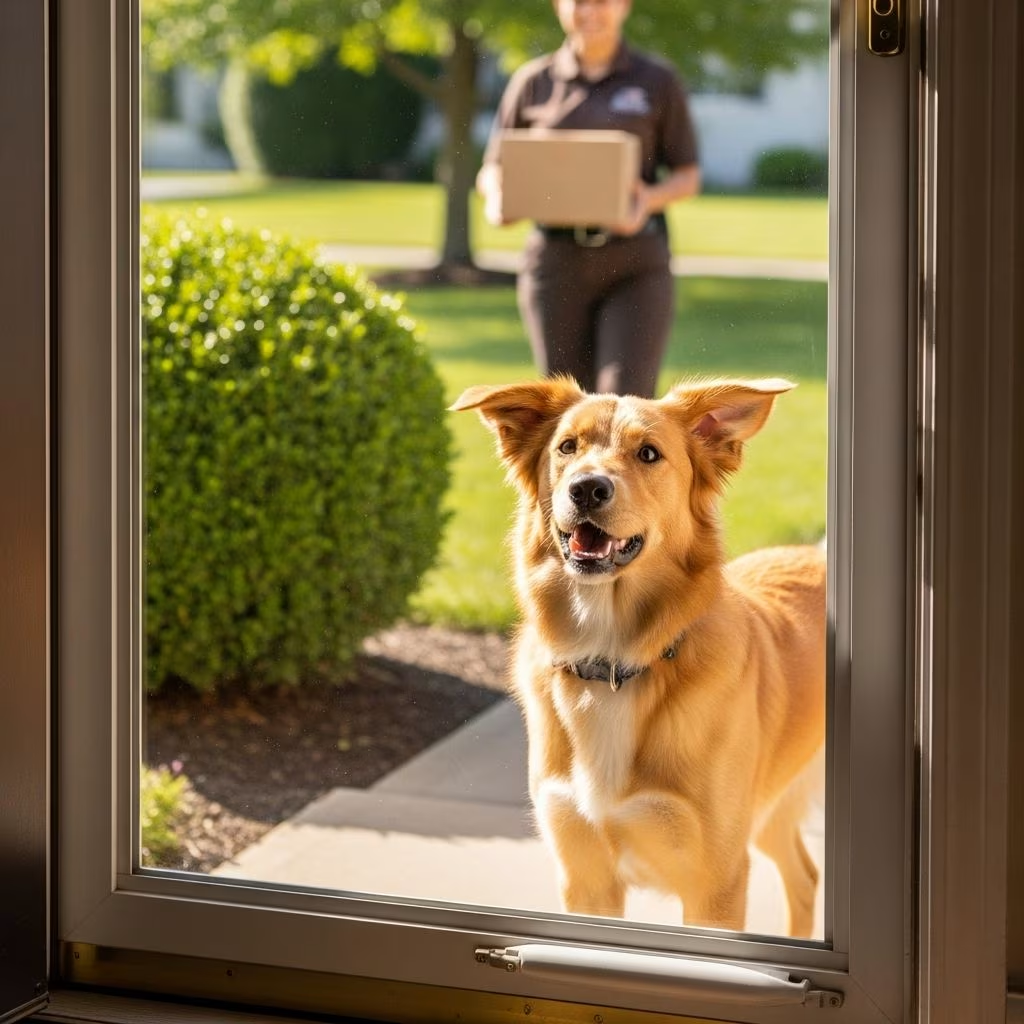
Dogs frequently exhibit intense barking when delivery workers or mail carriers approach the home, driven primarily by territorial protection instincts and reinforced behavioral patterns. This response stems from their evolutionary role as guardians, perceiving these regular visitors as repeated intruders who must be repelled.
The Instinctual Roots of Protective Barking
Canine territorial behavior originates from wild ancestors who defended dens and resources against outsiders. Modern dogs view their home as their territory, and the predictable arrival of a delivery worker triggers an alarm response. The worker’s approach to the door without invitation signals a boundary violation, prompting vocal warnings to deter the perceived threat.
This reaction intensifies with breeds selectively bred for guarding, such as German Shepherds or Rottweilers, which show heightened vigilance compared to less protective companion breeds like Labrador Retrievers. Environmental cues amplify this: uniforms stand out as unfamiliar markers, doorbells serve as conditioned alerts, and owner tension during visits can signal danger to the dog.
How Barking Becomes a Self-Perpetuating Cycle
A key psychological mechanism is negative reinforcement, where the delivery worker’s departure following the barking episode convinces the dog that its vocalization successfully eliminated the intruder. Veterinary behaviorist Dr. Karen Overall notes that dogs interpret mail carriers as recurring trespassers rather than benign visitors, solidifying this belief over repeated encounters.
This cycle escalates as the dog anticipates the trigger from afar, barking preemptively at distant sights or sounds. Fear or anxiety may compound territorial drives, especially in dogs with prior negative stranger experiences, transforming routine deliveries into high-stress events.
Distinguishing Barking Motivations in Dogs
Not all barking shares the same origin. Use this table to identify your dog’s primary driver:
| Motivation | Signs | Common Triggers |
|---|---|---|
| Territorial Protection | Deep, repetitive barks; stiff posture; focused on intruder | Approach to property boundary |
| Fear/Anxiety | High-pitched, frantic barks; cowering or fleeing | Stranger proximity; past trauma |
| Excitement | Playful yips; wagging tail; jumping | Routine visitor arrival |
Accurate identification guides effective intervention, as territorial cases respond best to boundary management while anxious ones benefit from confidence-building.
Core Strategies to Curb Delivery-Induced Barking
Effective management combines prevention, gradual exposure, and reward-based learning. Consistency across family members ensures progress.
- Secure the Environment: Confine the dog to a quiet indoor area during delivery times using baby gates or crates, preventing direct engagement and breaking the reinforcement loop.
- Implement Distractions: Provide puzzle toys or chew items timed to worker arrivals, redirecting focus to rewarding activities.
- Teach Alternative Commands: Train ‘place’ or ‘go to bed’ cues, directing the dog to a designated mat with treats for compliance during triggers.
Desensitization: Building Tolerance Step-by-Step
Desensitization reduces reactivity by exposing the dog to low-level stimuli below its threshold for barking, incrementally increasing intensity while maintaining calm. Begin with distant worker sightings paired with praise; advance only upon success. This rewires the automatic alarm response over weeks.
For auditory cues like doorbells, play recordings at low volume during relaxed meals, gradually raising levels as tolerance builds. Patience prevents setbacks from overexposure.
Counter-Conditioning: Transforming Triggers into Positives
Counter-conditioning associates the delivery event with desirable outcomes, overriding negative perceptions. Toss high-value treats whenever the worker appears, regardless of barking—over time, anticipation shifts to excitement for rewards. Combine with desensitization for optimal results.
Positive reinforcement amplifies this: Mark and reward quiet moments with ‘yes!’ followed by treats, strengthening calm as the default response.
Enhancing Overall Canine Well-Being
Barking often signals unmet needs. Daily exercise (30-60 minutes aerobic activity) expends energy, while mental stimulation via obedience drills or scent games reduces frustration. A tired, engaged dog barks less reactively.
Professional intervention suits severe cases: certified trainers or veterinary behaviorists offer tailored plans, especially if anxiety underlies the behavior.
Real-World Success: Case Studies
Consider Max, a territorial Labrador whose owner used desensitization starting 50 feet from the gate, progressing to doorstep calm over four weeks with counter-conditioned treats. Barking dropped 90%.
Bella, an anxious Chihuahua, benefited from a ‘safe space’ routine: retreated to her bed with a stuffed Kong during visits, reinforced positively. Her frantic outbursts ceased within a month.
Common Pitfalls and How to Avoid Them
- Punishment Fails: Yelling or corrections heighten anxiety, worsening reactivity. Focus on rewards.
- Inconsistency Undermines: Varied responses confuse dogs; enforce rules uniformly.
- Rushing Progress: Premature exposure provokes relapse; advance gradually.
Frequently Asked Questions
Will my dog ever fully ignore the mail carrier?
Complete indifference is rare due to instincts, but reliable calm is achievable with sustained training.
How long until I see results?
Noticeable change typically emerges in 2-6 weeks with daily practice; full resolution may take months.
Is breed a factor I can’t change?
Genetics influence proneness, but training overrides tendencies in any breed.
What if barking persists despite efforts?
Consult a veterinary behaviorist to rule out medical issues or deep anxiety.
Can I involve the mail carrier in training?
Yes, with permission: Toss treats from afar to foster positive links, under owner supervision.
Long-Term Maintenance for Lasting Peace
Post-training, generalize cues across contexts like guests or repair workers. Annual refreshers prevent regression. A harmonious home benefits dog, owner, and community alike.
References
- Why Your Dog Barks at the Mailman: Unpacking Canine Behavior — Orea Te AI. 2024. https://www.oreateai.com/blog/why-your-dog-barks-at-the-mailman-unpacking-canine-behavior/c96acf05fe47988b6f30ceaaed0e7b74
- Why Do Dogs Bark at the Mailman? — My Woof. 2024. https://mywoof.com/blogs/articles/why-do-dogs-bark-at-the-mailman
- How do I stop my dog from barking at the mailman? — American Breeder. 2024. https://www.americanbreeder.com/resources/american-breeder-blog/dogs/stop-dog-from-barking-at-mailman



