

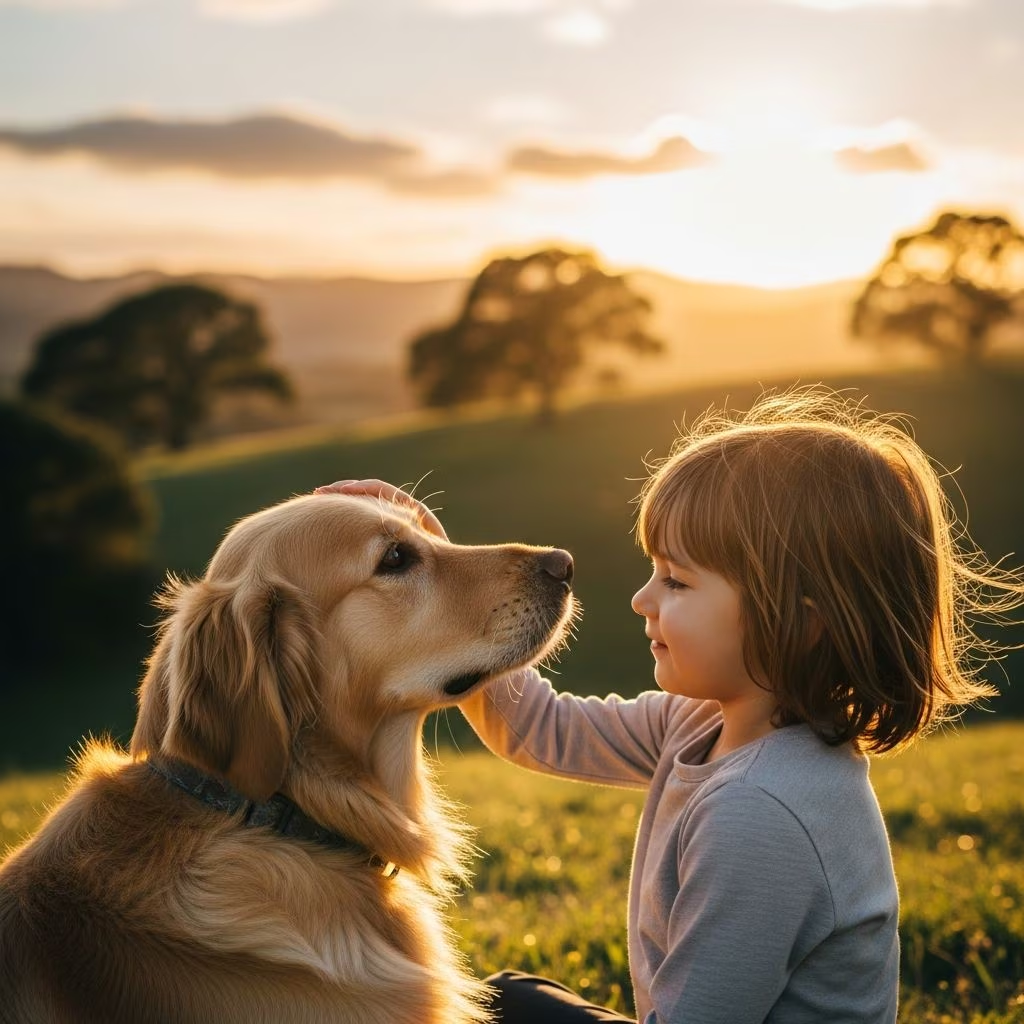
Dogs have earned the title of “man’s best friend” through their profound loyalty, a trait that sets them apart in the animal kingdom. This devotion stems from a combination of evolutionary adaptations, biological mechanisms, and deep social connections forged over millennia of companionship with humans.
Evolutionary Roots of Canine Devotion
The loyalty of dogs traces back to their wolf ancestors, who thrived in structured packs where cooperation was essential for survival. Domestic dogs retain this pack mentality, viewing their human families as surrogate packs. Wolves depend on group dynamics for hunting, protection, and rearing young, fostering strong social bonds that prioritize loyalty to pack members.
During domestication, which began around 15,000 to 40,000 years ago, humans selectively bred wolves that showed less aggression and more sociability. Those individuals who approached human settlements for food scraps were more likely to survive and reproduce, passing on traits like tameness and attachment to people. This process amplified loyalty, turning wild predators into devoted companions.
The Biological Chemistry of Loyalty
At the heart of a dog’s loyalty lies oxytocin, often called the “love hormone.” When dogs and their owners gaze into each other’s eyes, pet, or play, both experience a surge in oxytocin levels. This hormone strengthens social bonds, similar to those between human mothers and infants, promoting trust and attachment.
Studies show that higher oxytocin correlates with closer dog-owner relationships and better emotional well-being in dogs. For instance, dogs with frequent positive interactions display elevated oxytocin, enhancing their responsiveness to human cues.
Pack Dynamics in Modern Homes
Dogs instinctively seek leadership and structure, treating their owners as pack leaders. This hierarchy motivates them to please, protect, and stay close to their human “alpha.” In a home setting, dogs adjust behaviors to maintain harmony, such as alerting to strangers or comforting distressed family members.
- Dogs prioritize owner needs, often forgoing personal comfort to stay by their side.
- They defend their pack against perceived threats, showcasing protective loyalty.
- Social structure encourages deference, like waiting for permission before eating.
Emotional Intelligence and Empathy
Dogs possess remarkable emotional intelligence, reading human facial expressions, tones, and body language with precision. They respond empathetically—cuddling when you’re sad or wagging tails during joy—reinforcing mutual bonds.
Research from Yale’s Canine Cognition Center reveals dogs engage in prosocial helping, opening doors faster for owners in need than strangers or in control scenarios. This suggests they strategically maintain loyalty through helpful actions.
Scientific Evidence from Key Studies
Experiments demonstrate dogs’ bias toward helpful humans. In a Kyoto University study, dogs watched strangers interact with their owners: those who refused help were snubbed when offering treats, while helpful or neutral strangers were favored. This “snub effect” highlights dogs’ understanding of human social dynamics and allegiance to owners.
Another investigation at Yale tested prosocial behavior across conditions: dogs helped owners most readily, followed by strangers, with least in controls. Latency to assist was shortest for owners (p=0.08), indicating targeted loyalty maintenance.
| Study | Key Finding | Implication for Loyalty |
|---|---|---|
| Kyoto University (2015) | Dogs avoid treats from unhelpful strangers | Takes owner’s side in conflicts |
| Yale Canine Cognition (Thesis) | Faster helping for owners (X²=8.08, p=0.02) | Prosocial strategy for bond security |
| PMC Study on French Bulldogs | Interaction quality boosts gesture understanding | Strong relationships enhance cognition |
How Dogs Demonstrate Loyalty Daily
Beyond science, loyalty manifests in everyday actions:
- Guarding:** Vigilant watch over home and family.
- Comforting:** Sensing stress and offering physical closeness.
- Obedience:** Following commands to earn approval.
- Reunions:** Joyful greetings after short separations.
These behaviors evolve from their innate drive to belong and reciprocate care.
Factors Influencing Loyalty Strength
Not all dogs show loyalty equally; upbringing plays a role. Early socialization, consistent training, and positive reinforcement build secure attachments. Breeds like French Bulldogs show interaction-linked cognitive gains, underscoring relationship quality’s impact.
Neglect or inconsistent care can erode trust, but most dogs rebound with patience, reaffirming their forgiving nature.
Building and Nurturing Loyalty
To foster loyalty:
- Establish routines for security.
- Use reward-based training.
- Provide exercise and mental stimulation.
- Spend quality one-on-one time.
- Respect their emotional needs.
Mutual respect deepens bonds, as dogs mirror human investment.
FAQs
Are all dog breeds equally loyal?
Breed traits vary, but loyalty is universal, enhanced by breeding for companionship. Working breeds may show protective loyalty.
Can loyalty be trained?
Yes, through positive methods that build trust, not fear.
Why do dogs follow owners everywhere?
Velcro dog syndrome reflects pack attachment and separation anxiety prevention.
Do dogs prefer owners over other dogs?
Often yes, prioritizing human bonds due to domestication.
How does age affect loyalty?
Puppies bond quickly; seniors remain devoted if health is maintained.
Conclusion: A Timeless Companionship
Dogs’ loyalty is a tapestry of evolution, biology, and shared history, making them irreplaceable. By understanding these roots, owners can cultivate even stronger connections.
References
- New Study Shows Dogs Might be More Loyal than We Ever Knew — Pet Health Network. 2015. https://www.pethealthnetwork.com/news-blogs/a-pets-life/snub-effect-new-study-shows-dogs-might-be-more-loyal-we-ever-knew
- Prosocial Helping in Dogs: A Strategy to Secure Loyalty? — Yale University Psychology (Madeleine Marino Senior Thesis). N/A. https://psychology.yale.edu/sites/default/files/files/MadeleineMarino_SeniorThesis_ProsocialHelpingInDogs.pdf
- The Science Behind a Dog’s Loyalty — MyWoof. N/A. https://mywoof.com/blogs/articles/the-science-behind-a-dogs-loyalty
- Dog–Owner Relationship and Its Association with Social Cognition — PMC (NCBI). 2024. https://pmc.ncbi.nlm.nih.gov/articles/PMC11718994/
- Why Are Dogs So Loyal? — Encyclopaedia Britannica. 2025-08-27. https://www.britannica.com/science/Why-Are-Dogs-So-Loyal
- Dogs’ True Loyalty is Real — Hill’s Pet Nutrition. N/A. https://www.hillspet.com/dog-care/behavior-appearance/how-dogs-show-loyalty



