

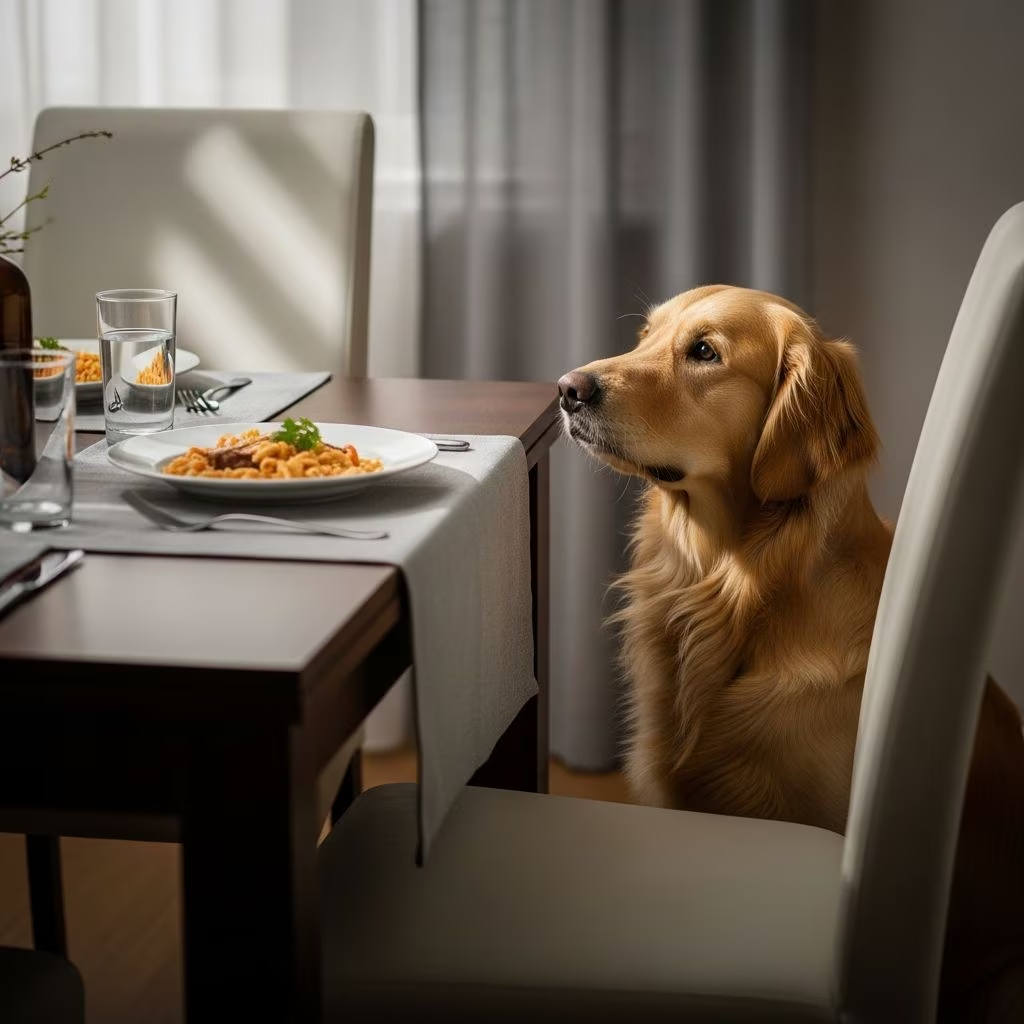
Your dog stares at their bowl but won’t touch it until you sit down nearby. This common scenario puzzles many pet owners, but it’s rooted in deep canine instincts, emotional bonds, and learned habits. Understanding these dynamics can transform mealtimes into positive experiences that strengthen your relationship and boost your dog’s well-being.
The Emotional Bond: Security in Your Presence
Dogs are pack animals by nature, and their wild ancestors relied on group safety during vulnerable moments like eating. In modern homes, you become that trusted pack member. Research shows that a dog’s owner presence significantly enhances feeding behaviors, making them feel secure enough to eat.
When alone, some dogs exhibit heightened anxiety, leading to passive behaviors or avoidance of food. A study comparing feeding scenarios found dogs spent more time near their owners during meals and consumed more food in their company compared to being left alone. This isn’t manipulation; it’s a sign of emotional dependence, where your proximity signals safety from perceived threats.
- Attachment signals: Tail wagging, approaching the bowl faster, and increased eating speed when owners are present.
- Anxiety indicators: Pacing, whining, or ignoring food when isolated.
For dogs with separation issues, mealtime becomes a test of comfort. They may hold off eating until you return, associating your presence with relaxation.
Learned Associations: How Routines Shape Appetites
Daily habits play a massive role in why dogs time their eating to match your schedule. If you’ve ever hand-fed treats or sat with them during meals, they’ve learned that your involvement equals better outcomes. Owners unwittingly condition this by changing foods or offering table scraps when a dog refuses a meal, teaching them persistence pays off.
Free-feeding—leaving food out all day—worsens this. Dogs learn they can eat anytime, reducing hunger-driven motivation and leading to pickiness. Scheduled meals create structure, but pairing them with your presence reinforces the pattern. Studies link inconsistent owner behaviors, like feeding during family dinners, to begging and food guarding.
| Feeding Practice | Impact on Dog Behavior | Research Insight |
|---|---|---|
| Owner present at meals | Increased food intake, active engagement | Dogs ate more with owners nearby |
| Free-feeding all day | Pickiness, begging, obesity risk | Leads to overfeeding and low food value |
| Treats during owner meals | Begging, aggression | Promotes problematic rewards |
| Scheduled alone time | Initial reluctance, builds independence | Reduces passive behaviors over time |
Enrichment Tools: Mimicking Natural Foraging
To break the ‘only eats with me’ cycle, introduce feeding toys that tap into a dog’s predatory instincts. Scatter kibble in puzzle toys or use slow-feeders to extend mealtime, simulating hunting. This not only occupies them solo but boosts welfare by lowering stress hormones like cortisol.
Evidence confirms toys elicit more interest than plain bowls, especially sans owner. Dogs showed shorter passive times and higher activity with enrichment, regardless of companionship. Combine this with gradual alone-feeding: start short, praise from afar, and build tolerance.
- Benefits of toys: More food consumed, longer engagement, reduced stress.
- Implementation tip: Fill with regular kibble to maintain nutrition.
Health Checks: Ruling Out Medical Causes
Before assuming behavioral roots, consult a vet. Dental pain, gastrointestinal issues, or age-related changes can suppress appetite independently of your presence. Senior dogs or those with anxiety disorders may amplify reliance on you for comfort.
Observe for signs like weight loss, vomiting, or lethargy. Once cleared, behavioral tweaks shine. Owner perceptions often align with true palatability—quick eating and enthusiasm signal genuine hunger met with security.
Training Strategies for Independent Eaters
Transition your dog to solo confidence with these steps:
- Set a routine: Feed at fixed times, remove uneaten food after 15-20 minutes.
- Stay neutral: Avoid coaxing or extras; walk away calmly.
- Gradual desensitization: Sit nearby initially, then step out briefly, returning with praise post-meal.
- Incorporate play: Use toys to make alone time rewarding.
- Monitor progress: Track intake; adjust if refusal persists beyond a week.
Consistency counters learned fussiness. Dogs adapt quickly when owners hold firm, preventing long-term issues like aggression.
Owner Influence: Your Role in Mealtime Dynamics
Your actions amplify everything. Displaying interest in food sways choices—dogs pick owner-favored bowls even with less kibble. Anxiety from your worry transfers too; stay relaxed to model calm.
Household dynamics matter: Multi-dog homes benefit from separate feeding to curb competition. Avoid mealtime treats, as they spike guarding risks and dilute meal value.
Advanced Insights from Canine Research
Peer-reviewed studies reveal nuances. Owner-accompanied toy feeding spiked activity over solo bowls, underscoring social facilitation. Behavior metrics like vocalizing or displacement didn’t vary much, but proximity to owners did—60% of time in one setup.
Palatability cues—speed eating, tail wags—correlate moderately with owner reports, validating observations. Enrichment curbs stereotypes from boredom, vital for indoor dogs.
Common Myths Debunked
- Myth: Dogs manipulate for attention. Reality: It’s instinctual security-seeking, not cunning.
- Myth: More food types fix pickiness. No—creates cycles; stick to quality basics.
- Myth: Presence always helps. Short-term yes, but independence fosters resilience.
FAQs
Is it bad if my dog only eats when I’m home?
Not inherently, but it signals potential anxiety. Gradual training builds confidence.
How long to leave food down?
15-20 minutes max; fosters hunger and routine.
What if my dog skips meals entirely?
Vet check first, then enforce schedule. Healthy dogs won’t starve.
Do puppies outgrow this?
Often, with consistent training from early on.
Can toys replace owner presence?
They bridge the gap, enhancing solo engagement.
Long-Term Benefits of Balanced Feeding
Addressing this habit yields calmer dogs, better training responsiveness, and stronger bonds. Independent eaters show fewer stress signs, aligning with welfare goals. Your steady leadership turns mealtime from dependency to delight.
References
- Effect of feeding toy and the presence of a dog owner during feeding on the behavior and welfare of dogs — Animals (PMC). 2023-09-27. https://pmc.ncbi.nlm.nih.gov/articles/PMC10521181/
- How owner behaviour affects how dogs eat their food — Pure Pet Food. 2023. https://www.purepetfood.com/blog/how-owner-behaviour-affects-how-dogs-eat-their-food
- How Dog Behavior Influences Pet Owner’s Perceptions of Palatability — Animals (PMC). 2023-06-21. https://pmc.ncbi.nlm.nih.gov/articles/PMC10295224/
- The Relationship Between Feeding Routines of Dog Owners in the Domestic Environment and Dog Behavior Problems — IAABC Journal. 2020. https://journal.iaabcfoundation.org/feeding-behaviour/
- Dog Eats, Then Avoids You? It’s NOT What You Think — YouTube (Dog Training Channel). 2023. https://www.youtube.com/watch?v=pBd4jRwQHkU



