

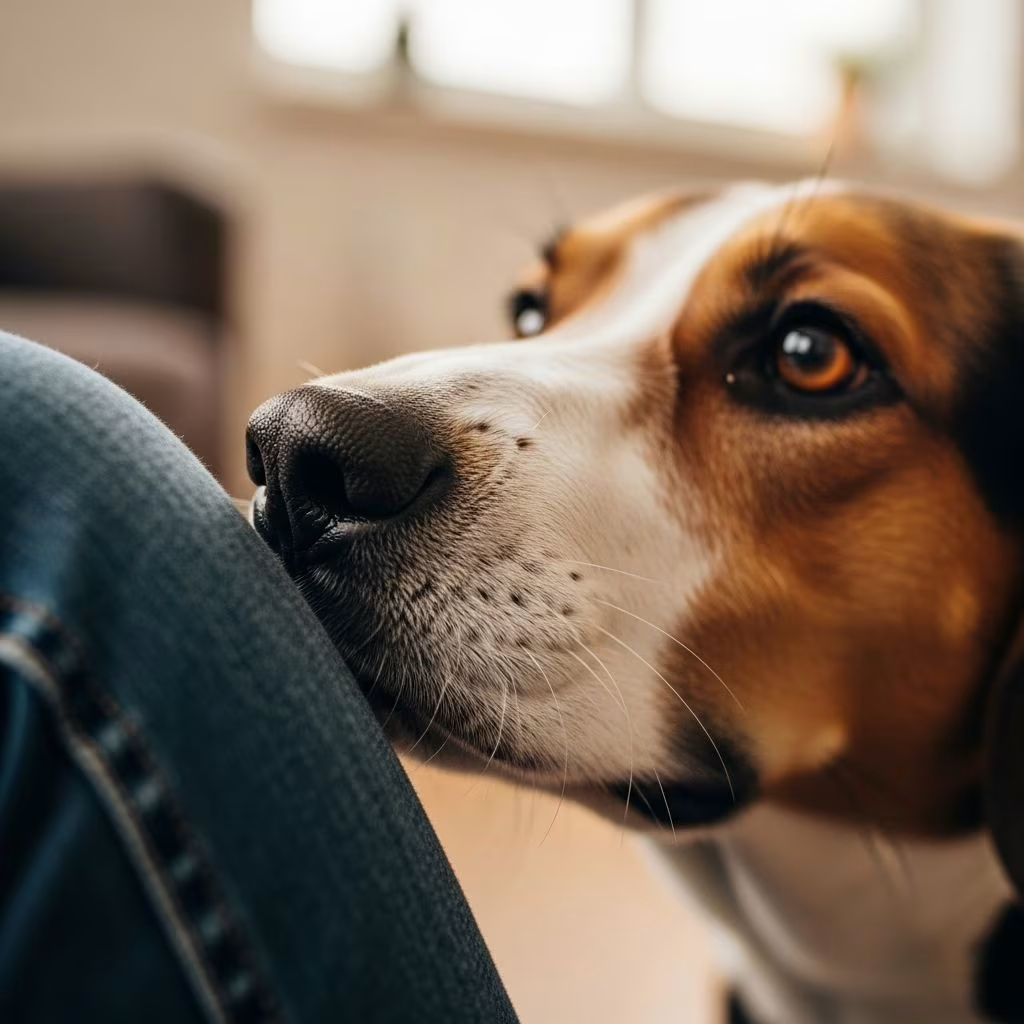
Walking through the door and being met by a nose-first greeting is one of the most familiar parts of living with a dog. Some dogs give a quick sniff and move on, while others investigate you from head to toe, nudging your clothes, inhaling your shoes, and circling you like a four-legged detective. This behavior can feel funny, flattering, or even overwhelming, but for your dog it is a deeply natural and information-rich ritual.
This article explores why dogs sniff you when you get home, what your scent tells them, when sniffing may signal anxiety or overexcitement, and how you can respond in a way that supports your dog’s emotional needs and keeps everyone safe.
The Power of a Dog’s Nose
To understand your dog’s greeting ritual, you first need to appreciate just how powerful their sense of smell is. Research suggests that dogs have around 220 million or more olfactory receptors in their noses, compared with about 5–6 million in humans. Their olfactory bulb, the brain region that processes smells, is also proportionally much larger than ours.
In practical terms, this means that scent is your dog’s primary way of gathering information. Where humans rely heavily on vision, dogs rely on smell to understand who is present, what has happened, and how safe or interesting a situation might be.
Scientists have shown that dogs can use their noses to:
- Distinguish between individual people based solely on scent.
- Detect certain diseases, such as some cancers and infections, by smelling human breath, sweat, or other samples.
- Track and follow odor trails over long distances and across complex environments.
When you come home, you are essentially bringing your dog a storybook written entirely in smells—your dog simply opens the book and starts reading.
What Your Dog Learns by Sniffing You
From your dog’s perspective, your body, clothes, and belongings are covered in microscopic odor clues. By sniffing you when you arrive home, your dog can gather an impressive variety of information.
| Type of Information | What Your Dog May Learn |
|---|---|
| Where you’ve been | Scents from outdoors, other homes, public places, and vehicles can reveal your recent locations. |
| Who you met | Other humans’ perfumes, skin odors, and pet odors hint at the people and animals you’ve interacted with. |
| What you did | Food residues, environmental smells (like grass, soil, or cleaning products), and sweat all help your dog piece together your day. |
| How you feel | Changes in your body odor associated with stress, illness, or hormonal shifts can give your dog clues about your physical and emotional state. |
Even if you have only been gone for a short time, your dog’s nose can detect subtle changes in your scent. This is why they may still give you a thorough sniff after a quick errand—there are always new details to discover.
Reasons Dogs Sniff You When You Get Home
While every dog is an individual, there are several common reasons they are so focused on sniffing you as soon as you step inside.
1. Gathering Information About Your Day
Sniffing is your dog’s way of asking, “Where have you been and what did you do?” Even though they know who you are, they do not know what happened while you were away until they smell you. Your scent tells them whether you visited another animal, spent time outdoors, exercised, or encountered unfamiliar environments.
This behavior is not about checking up on you; it is your dog using their strongest sense to close the gap created while you were apart.
2. Reconnecting and Reassuring Themselves
Your personal odor is often deeply comforting to your dog. Studies suggest dogs can distinguish their guardian’s scent from that of strangers and may react with positive anticipation when they smell their favorite person. After a period of separation, sniffing you can help your dog confirm that you are truly back and safe.
For some dogs, this is similar to a person hugging a loved one after a long absence. Smelling you intensely may be their way of re-establishing the bond and calming themselves with a familiar, beloved scent.
3. Checking for Food, Treats, or Interesting Smells
Dogs quickly learn patterns. If you often come home carrying groceries, snacks, or a treat just for them, they may develop a habit of thoroughly sniffing your hands, pockets, and bags in search of something tasty.
Even when you do not have food, your clothing may carry lingering food odors from restaurants, friends’ houses, or your workplace. To your dog, these smells are irresistible clues worth investigating.
4. Emotional Responses: Excitement, Relief, or Anxiety
For dogs who find alone time stressful, your return can trigger a burst of emotion—relief, joy, and sometimes lingering anxiety. Some dogs express this by:
- Frantic, full-body sniffing.
- Circling you repeatedly while sniffing.
- Whining, pacing, or jumping while they investigate you.
In these cases, sniffing may be partly about gathering information and partly a coping behavior, helping them discharge pent-up energy and confirm that the separation is finally over.
When Sniffing Becomes Too Much
For most households, a brief sniffing session is a harmless and even sweet greeting ritual. However, there are times when the behavior can feel overwhelming, disruptive, or even unsafe.
Signs the Sniffing Is Problematic
- Intense jumping or pawing at you while sniffing, putting you at risk of being knocked over.
- Fixation on a specific area of your body or clothing, with difficulty redirecting the dog’s attention.
- Hysterical behavior such as constant whining, barking, or pacing while sniffing.
- Sniffing guests or children so insistently that it causes fear or discomfort.
- Signs of separation anxiety, such as destructive behavior, vocalization, or house soiling when you are gone, combined with frantic greeting sniffing when you return.
In these situations, the greeting is no longer just a curious check-in; it may be linked to stress, lack of impulse control, or anxiety that deserves attention.
Potential Risks and Safety Concerns
Even a friendly dog can create hazards if they get carried away with sniffing at the door. Common examples include:
- Tripping you when you enter with bags, packages, or uneven footing.
- Scratching your legs or clothes if they jump up to reach your face or pockets.
- Bumping into small children or older adults, increasing the risk of falls.
- Blocking the doorway when you need to move in or out quickly.
Addressing these issues does not mean stopping your dog from sniffing altogether. Instead, the goal is to put some simple structure around the greeting so everyone stays safe and relaxed.
How to Respond to Intense Sniffing
With patience and consistency, you can teach your dog to greet you politely while still allowing them to enjoy sniffing as part of the reunion.
Step 1: Manage the Environment
Before changing behavior, make the physical setup work in your favor:
- Use a baby gate or playpen near the entrance so your dog cannot rush you at the door.
- Ask family members to bring the dog on leash to greet you, especially if they are large or very excitable.
- Keep the area around the doorway clear of clutter to reduce tripping hazards.
These simple changes reduce risk while you work on training.
Step 2: Teach a Calm Greeting Routine
Basic obedience cues can be very helpful at the door. Veterinary and training resources commonly recommend cues such as “sit,” “stay,” and “leave it” to manage overly enthusiastic sniffing or jumping.
A simple routine might look like this:
- Before you open the door, ask your dog (or have another person ask) for a sit a few steps back from the entry.
- Step inside calmly. If your dog stays seated, reward them with a quiet greeting and a treat.
- If they rush forward or jump, step back out or turn away briefly, then try again.
- Once your dog offers a calmer approach, allow a brief, controlled sniff, then cue another behavior like “sit” or “down” before giving additional attention.
Over time, your dog learns that calm behavior makes sniffing and greeting happen faster, whereas wild behavior makes everything pause.
Step 3: Reinforce Calm Sniffing
You do not need to eliminate sniffing; instead, reinforce how you want it to look:
- Keep your hands low and relaxed so your dog can sniff without jumping up.
- Offer your sleeve, hand, or knee for a brief sniff, then follow with gentle petting.
- Use a soft voice and slow movements to avoid escalating excitement.
- If your dog starts to get frantic, pause the interaction, ask for a simple cue like “sit”, reward it, and then resume the greeting in a calmer way.
This teaches your dog that sniffing is welcome, but over-the-top behavior is not.
When to Seek Professional Help
There are times when intense sniffing and greeting behavior points to deeper emotional challenges.
Separation Anxiety or High Stress
If your dog shows signs such as destructive behavior, constant barking, excessive drooling, or house soiling when left alone, combined with frantic sniffing or clinging behavior when you get home, they may be experiencing separation-related problems.
In these cases, it is best to consult:
- Your primary veterinarian, to rule out medical issues and discuss behavior options.
- A veterinary behaviorist or certified behavior professional, who can design a gradual training and management plan.
Treatment often includes changing routines, teaching independence skills, and sometimes using medication alongside behavior modification under veterinary guidance.
If You Feel Unsafe or Overwhelmed
If your dog’s greeting routinely leaves you feeling unsafe, anxious, or physically at risk, seek help regardless of the underlying cause. A qualified trainer who uses reward-based, humane methods can help you:
- Teach a reliable stationing behavior (such as going to a mat when the door opens).
- Practice calm greetings using controlled setups and structured rewards.
- Reduce overall arousal through enrichment and appropriate exercise.
Supporting Your Dog’s Need to Sniff
Sniffing is not just a greeting behavior; it is a core part of canine wellbeing. Allowing your dog regular opportunities to use their nose can make them calmer and more satisfied overall.
Build Scent Time into Daily Life
- Allow extra time on walks for slow, exploratory sniffing instead of rushing from point A to point B.
- Offer sniff-based games at home, such as hiding treats or toys for your dog to find.
- Rotate safe, interesting scents (like cloths exposed to different outdoor areas) as enrichment items.
Many trainers and behavior experts note that scent-based enrichment helps dogs relax and can reduce frustration, making them easier to live with and often less intense at the door.
Frequently Asked Questions (FAQs)
Q: Why does my dog sniff me all over when I walk in, even if I was gone for only a few minutes?
A: Your scent changes constantly based on where you have been, what you have touched, and how your body is functioning. Even short trips add new smells to your clothes, shoes, and skin, and your dog is simply updating their information about you.
Q: Is it normal for my dog to focus on sniffing my shoes and feet?
A: Yes. Feet and shoes pick up a wide variety of odors from every surface you walk on, making them especially interesting to dogs. This is usually normal unless the behavior becomes obsessive or interferes with daily life.
Q: Can my dog tell if I am sick or stressed just by smelling me?
A: Research indicates that dogs can detect certain diseases and may sense changes associated with stress or illness through subtle chemical changes in human body odor. While not every dog will react in a noticeable way, some may sniff more, stay closer, or act differently when you are unwell.
Q: Should I stop my dog from sniffing me when I come home?
A: In most cases, you do not need to stop the behavior entirely. Sniffing is a natural, important part of how dogs gather information and reconnect. Focus on setting gentle boundaries—like asking for a sit before greeting—and managing the environment so the behavior stays safe and comfortable.
Q: When is my dog’s sniffing a reason to talk to a professional?
A: If the sniffing is part of a frantic or distressed greeting, if your dog shows signs of separation anxiety when you are gone, or if anyone in the home feels unsafe, consult your veterinarian or a qualified behavior professional for guidance.
References
- Dog Sense of Smell — American Kennel Club. 2023-01-10. https://www.akc.org/expert-advice/nutrition/dog-sense-of-smell/
- How Dogs Use Smell to Perceive the World — Oregon State University Extension. 2021-06-15. https://extension.oregonstate.edu/ask-expert/featured/how-dogs-use-smell-perceive-world
- Separation Anxiety in Dogs — RSPCA (Royal Society for the Prevention of Cruelty to Animals). 2022-07-05. https://www.rspca.org.uk/adviceandwelfare/pets/dogs/behaviour/separationrelatedproblems
- Medical Detection Dogs: How Dogs Detect Human Disease — Medical Detection Dogs (UK Charity). 2023-03-01. https://www.medicaldetectiondogs.org.uk/medical-alert-assistance-dogs/
- Basic Dog Training — American Veterinary Medical Association. 2020-09-20. https://www.avma.org/resources/pet-owners/petcare/basic-dog-training



