

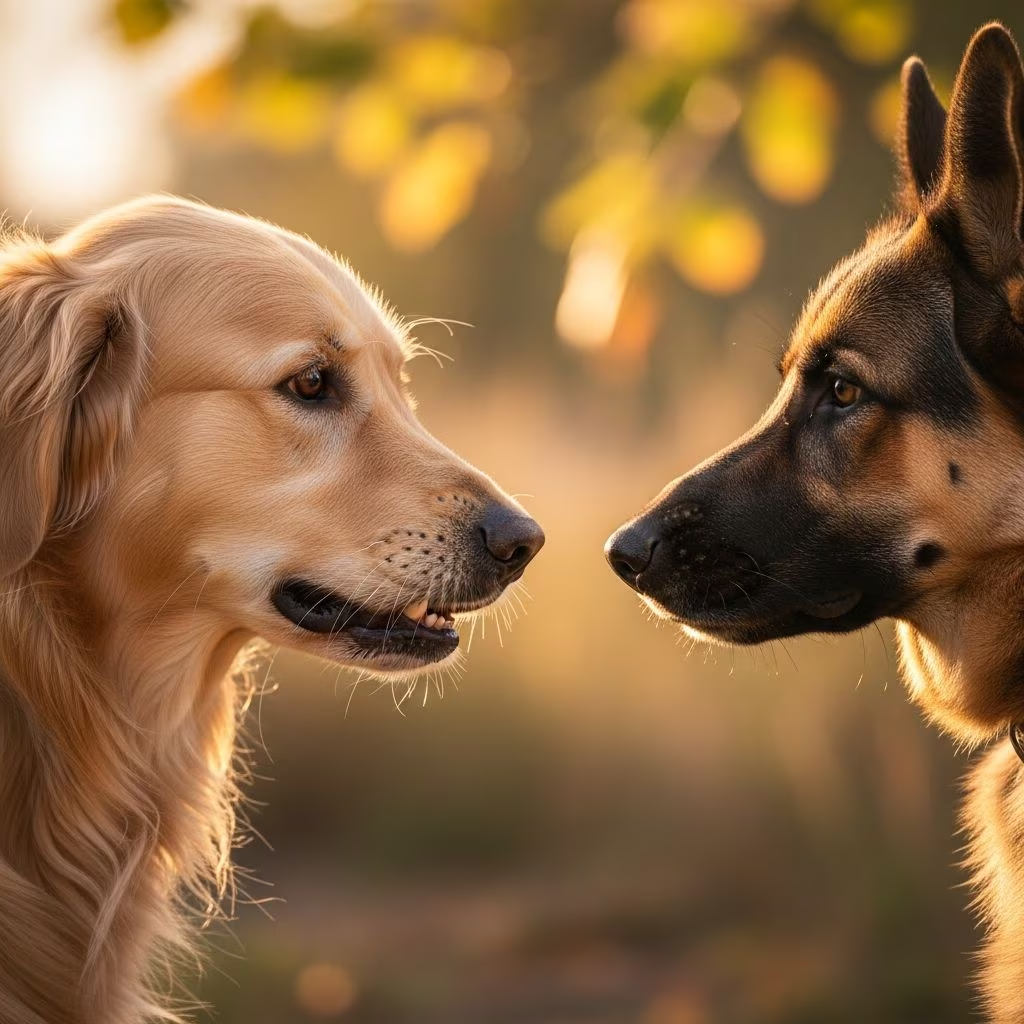
Dogs growl to express a spectrum of emotions and intentions, from joy in play to warnings of discomfort, making it an essential part of canine communication that owners should value rather than fear. Interpreting these vocalizations correctly fosters trust and prevents escalation to bites, as growling often serves as a polite alert before more serious actions.
The Science Behind Canine Vocalizations
Research shows that dog growls carry contextual and emotional information that humans can discern with reasonable accuracy, particularly women and those experienced with dogs. In a study analyzing growls from food-guarding, threatening, and playful scenarios, listeners rated playful growls as less aggressive and more joyful, while food-guarding growls scored highest on aggression scales. Acoustic features like growl length, pulsing speed (inter-growl interval or IGI), pitch, and formant dispersion (indicating apparent body size) influence these perceptions: shorter, slower growls signal playfulness, whereas longer, faster ones convey threat or fear.
These findings suggest dogs communicate honestly in high-stakes situations like resource defense but may exaggerate signals in playful or uncertain contexts to manipulate outcomes without real conflict. For instance, threatening growls with higher pitch were deemed more fearful, highlighting how vocal nuances reveal inner states.
Common Types of Dog Growling
Dogs produce distinct growl varieties tied to specific triggers, each with unique body language cues for accurate interpretation.
- Playful Growling: Occurs during tug-of-war or chase games, featuring a relaxed body, wagging tail, and bouncy posture. These are short, rhythmic, and joyful, rated high on happiness scales.
- Possessive or Resource Guarding Growling: Triggered by food, toys, or space; deep, prolonged rumbles with stiff posture and direct stares signal ‘back off’. Food-guarding growls top aggression ratings.
- Fearful or Defensive Growling: Low, trembling tones with tucked tail, ears back, and avoidance behaviors indicate anxiety; higher pitch correlates with greater fear.
- Frustration Growling: Arises from barriers to desires, like leashes or fences; mixes play and threat elements with tense but not fully aggressive body language.
- Pleasure or Affectionate Growling: Soft, chatty rumbles during petting or cuddling, often with loose wags, misinterpreted as threats by novices.
- Pain or Stress Growling: Sharp warnings when touched on sore spots or overwhelmed, accompanied by lip-licking or yawning.
Recognizing these through composite signals—vocal plus visual—enhances understanding, as dogs rarely rely on sound alone.
Why Suppressing Growls Backfires
Punishing growls, via yelling, shocking, or physical corrections, heightens fear and erodes trust, potentially leading to silent bites—a far greater danger. Dogs growl to de-escalate by warning others to retreat, buying time for intervention; a dog that skips this step attacks unpredictably. Studies confirm punishment fails long-term, damaging bonds and boosting aggression toward handlers.
Instead, view growls as gifts: they reveal thresholds, allowing proactive management. Modern behaviorists emphasize redirection over suppression, preserving the dog’s voice in your relationship.
Decoding Growls: A Practical Guide
| Growl Type | Sound Characteristics | Body Language | Appropriate Response |
|---|---|---|---|
| Playful | Short, fast pulses; mid-pitch | Play bow, wag, relaxed | Continue play if mutual; pause if one-sided |
| Guarding | Long, low, sustained | Stiff, forward lean, resource focus | Retreat calmly; manage resources separately |
| Fearful | Trembling, high pitch | Tail tuck, ears back, retreat | Give space; reduce triggers gradually |
| Frustration | Erratic, building intensity | Tense, lunging pulls | Redirect to calm activity; train tolerance |
| Pleasure | Soft, rumbling mutters | Loose, leaning in | Respond positively; reinforce bond |
This table summarizes key distinctions, aiding quick assessments in real-time.
Safe Responses to Build Positive Associations
When hearing a growl, prioritize safety: increase distance without panic, avoid eye contact or looming. Redirect to incompatible behaviors like ‘sit’ for treats, or remove triggers like high-value items during training. Counter-conditioning pairs former triggers with rewards, shifting emotional responses over time.
For frequent growling, consult certified behaviorists (e.g., DACVB vets) for tailored plans, avoiding outdated dominance myths. Never use aversives; they amplify reactivity.
Contextual Factors Influencing Growls
Age, breed, and socialization shape growling: puppies vocalize playfully early, while under-socialized adults may default to fear. Females and dog-savvy humans better identify growl contexts, aiding communication. Environmental stress, health issues, or past trauma can intensify growls, warranting vet checks.
Training Tips to Encourage Honest Communication
- Observe Patterns: Log growl incidents with notes on context, aiding predictions.
- Desensitize Gradually: Expose to triggers at sub-threshold levels with rewards.
- Use Positive Reinforcement: Reward calm alternatives to build confidence.
- Multi-Dog Homes: Supervise interactions; separate resources to prevent guarding.
- Professional Help: For persistent issues, seek force-free experts early.
These strategies promote a dialogue where dogs feel safe voicing needs, reducing bite risks.
FAQs on Dog Growling
Is all growling dangerous?
No—most is communicative, not aggressive. Context and body language differentiate safe play from warnings.
Should I ignore growls?
Never ignore; acknowledge by respecting space and addressing roots to prevent suppression.
Why do puppies growl more?
Puppies test boundaries playfully; teach through redirection to mature appropriate signals.
Can growling indicate pain?
Yes—sudden onset with touch sensitivity signals vet visits for hidden injuries.
How to stop resource guarding growls?
Trade-up values, feed separately, and hand-feed meals to associate humans positively.
Do certain breeds growl more?
No breed is inherently ‘growly’; genetics influence intensity, but training trumps all.
Long-Term Benefits of Valuing Growls
Embracing growls deepens mutual respect, yielding safer, happier companionship. Owners who heed these signals intervene effectively, curbing escalation and enhancing welfare. As research evolves, understanding vocal bioacoustics empowers better human-dog dynamics, reducing shelter surrenders from misunderstood behaviors.
References
- Dog growls express various contextual and affective content … – PMC — Faragó et al., Proceedings of the Royal Society B. 2017-05-31. https://pmc.ncbi.nlm.nih.gov/articles/PMC5451822/
- What Dog Growling Means and What To Do – PetMD — Wailani Sung, MS, PhD, DVM, DACVB. Accessed 2026. https://www.petmd.com/dog/behavior/why-do-dogs-growl
- Why Dogs Growl and How to Handle It – American Kennel Club — AKC Staff. Accessed 2026. https://www.akc.org/expert-advice/training/why-dogs-growl-and-how-to-handle-it/
- Why Dogs Growl | Psychology Today — Marc Bekoff. 2018-11-01. https://www.psychologytoday.com/us/blog/animal-emotions/201811/why-dogs-growl
- The 6 Types of Growling – Thriving Canine — Thriving Canine. Accessed 2026. https://www.thrivingcanine.com/blog/6-types-growling/



