

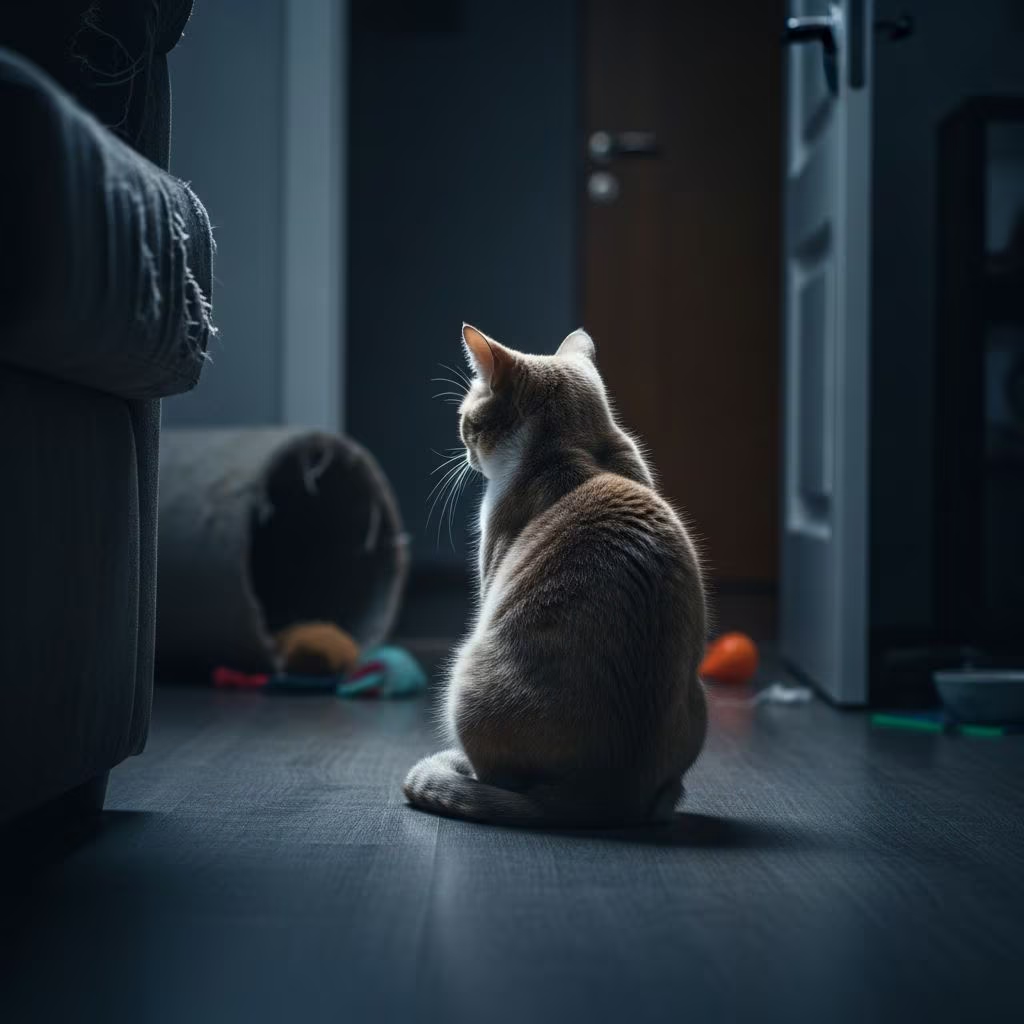
Why Doesn’t My Cat Like Me Anymore: Understanding Changes in Your Cat’s Behavior
If you’ve noticed that your cat seems distant, aggressive, or unaffectionate compared to before, you’re not alone. Many cat owners experience sudden or gradual changes in their pet’s behavior, and it can feel heartbreaking when a once-affectionate cat seems to no longer want your company. The good news is that this shift in behavior rarely means your cat has stopped liking you entirely. Instead, it typically indicates an underlying issue that needs to be addressed. Understanding the reasons behind these behavioral changes is the first step toward rebuilding the bond you share with your feline companion.
The Impact of Behavioral Changes on Your Relationship
Owner-directed feline aggression and avoidance are significant behavior concerns because they negatively affect the bond between cats and owners and the welfare of both animals and humans. When a cat becomes aggressive or distant, the emotional toll on the owner can be substantial, and the cat’s quality of life may also suffer. In addition to physical injury that might occur from aggressive encounters, owner-directed aggression can deteriorate the human-animal bond, potentially leading to serious consequences like the cat being abandoned or relinquished to shelters. Even when those outcomes are avoided, feline aggression often indicates underlying stress that can negatively affect the cat’s overall welfare and longevity.
Main Causes of Behavioral Changes in Cats
Cats direct aggression and avoidance toward their owners for various reasons, and identifying the specific cause is essential for effective treatment. The primary causes of owner-directed feline aggression and behavioral distancing include fear, petting-induced responses, redirected aggression, and misdirected play.
Fear-Related Aggression and Avoidance
Fear-related aggression is a common problem, often driven by a cat’s need to establish distance from a perceived threat. Cats can resort to aggression or avoidance when they feel trapped without the option to hide or escape from a situation they perceive as threatening. Before a cat that exhibits fear-related aggression can form a positive relationship with its owners, it needs to learn that the owner is not a potential threat.
Signs of a fearful cat include ears pulled back, tense body posture, lowered body and tail, dilated pupils, and piloerection (fur standing on end). In addition to these physical cues, cats may vocalize fear by hissing, growling, or screaming. If your cat displays these behaviors, the owners might have to increase the distance from their cat and reduce contact time to help them feel safer.
Petting-Induced Aggression and Withdrawal
Petting-induced aggression is one of the most common reasons cats suddenly seem to dislike their owners, accounting for up to 40% of cases of aggressive behavior seen by veterinary referral services. Not all cats are equally tolerant of being stroked, and some cats may demand attention only to bite and run away after a certain amount of physical contact.
This behavior occurs when an owner pets their cat for too long, extending beyond the cat’s tolerance threshold. The aggression might also result from conflicting motivations between approaching and withdrawing—the cat might want to sit close to the owner but not want active physical touch. Alternatively, the cat might solicit the owner’s attention for a short stroke but wants to end the interaction as the owner’s petting becomes more extended than the cat wants.
It has been theorized that the owner may be petting areas of the body other than the head or neck, where cats generally groom each other. The tolerance level for touch in these areas before aggression is exhibited varies significantly between individual cats. Another theory suggests that the neurologic pathway for pain and touch are shared, and therefore prolonged touch could cause arousal, pain, and excitement.
Although the attacks during petting-induced aggression are usually described by owners as being unpredictable, cats may show subtle changes in their body language before the aggressive reaction. For instance, cats may become tense, rotate and flatten their ears, and/or whip their tail. Learning to recognize these warning signs can help you intervene before aggression occurs.
Redirected Aggression
Cats redirect their aggression when aroused by a trigger that they cannot access directly. In this situation, the cat turns its aggressive behavior toward a secondary but accessible target nearby—often their owner. Any type of aggression could become redirected, but fear is reported as the most common underlying motivation.
Possible triggers for redirected aggression vary widely, including loud or unusual noises, the smell of other cats or dogs, or an unfamiliar person or environment. Common triggers reported by owners are outdoor stray cats and the owner’s intervention during fights between household cats. The most common triggers include loud noises, the presence of other cats, and the presence of unknown people.
After a cat has been aroused by a trigger, it may remain in a highly aroused state for a prolonged time, ranging from hours to days. Identifying the primary trigger can be challenging for owners, especially if they were not present during the cat’s initial arousal. Moreover, cats tend to strongly associate the primary trigger with the secondary target, which can solidify the motivation for aggressive behavior to the secondary target and can cause aggressive behaviors to be persistently directed to the new target when the primary trigger is no longer present.
Misdirected Play Aggression
Play aggression could be linked to early weaning, limited interaction with littermates, young cats without other household cats, lack of suitable play opportunities, inappropriate play patterns with owners (such as rough foot and hand play), and experiencing physical restraint or confrontation during play. Cats who engage in this type of behavior are not actually being aggressive in a traditional sense; rather, they’re expressing play behaviors that haven’t been properly socialized or directed appropriately.
Risk Factors for Behavioral Changes
Certain cats and situations are more prone to developing aggression or behavioral distancing toward their owners. Understanding these risk factors can help you prevent issues from developing:
- Young cats — Kittens and young cats are more likely to develop behavioral issues
- Early weaned individuals — Cats separated from their mothers too early may struggle with behavioral regulation
- Cats that do not receive enough stimulation — Indoor cats without adequate enrichment are at higher risk
- Cats living in single-cat households — Cats without feline companions may develop behavioral problems
- Cats with owners who play roughly — Inappropriate play patterns from owners can reinforce aggressive behavior
- Indoor cats — Cats kept exclusively indoors face higher stress levels
- Specific breeds — Some breeds, such as Bengal cats, show higher predispositions to behavioral issues
Medical Conditions That Affect Cat Behavior
It’s crucial to rule out medical issues before assuming behavioral problems are purely psychological. Any sudden change in your cat’s behavior could be an indication of an underlying medical condition. Cats who are stressed or in pain may attack their owners or avoid them entirely. Arthritis, dental disease, trauma, and infections are just some of the conditions that can cause pain and subsequent aggression or behavioral withdrawal.
Before pursuing behavioral interventions, schedule a veterinary examination to ensure your cat doesn’t have an underlying health condition. This assessment should be completed before behavior modification is attempted, as treating the medical issue may resolve the behavioral problem entirely.
A Comprehensive 5-Step Treatment Plan
Addressing owner-directed feline aggression and behavioral distancing requires implementation of a comprehensive treatment plan. The following five-step approach addresses aggression and improves the wellbeing of both cats and their owners:
Step 1: Avoid Triggers
The first step in treating feline behavioral problems is to identify and avoid known triggers. If your cat becomes aggressive when being petted, avoid petting them for now. If redirected aggression is the issue, prevent access to the trigger—for example, by pulling down a window shade if your cat becomes aggressive after seeing outdoor cats, or using deterrents to keep stray cats away from the window.
Step 2: Rebuild the Owner-Cat Relationship
The first goal in rebuilding your relationship is to change the perception of the cat, pairing the presence of the owner with a reward. For instance, owners can place bits of food within the cat’s reach and walk away, allowing the cat to come to eat as it chooses. After some time, the cat stops seeing the person as a potential threat and, instead, begins to associate them with a positive stimulus (food or treat).
Once the cat has become habituated to the presence of the owner, the cat should be rewarded by the owner when it comes closer. For example, the owner can sit on the floor (to appear less threatening) and throw a treat some distance away from themselves, then a second one closer and so on. The last reward should always be thrown some distance away again so the cat returns to its comfort zone, away from the threatening stimulus (the owner).
Step 3: Enrich the Cat’s Environment
Environmental enrichment is crucial for reducing stress and preventing behavioral problems. Provide adequate play opportunities, vertical spaces for climbing and hiding, scratching posts, window perches for visual stimulation, and interactive toys. The more stimulation your cat receives, the less likely they are to develop behavioral issues or direct frustration toward you.
Step 4: Implement Behavior Modification
Once you’ve established a safer environment and begun rebuilding trust, implement specific behavior modification techniques tailored to your cat’s particular issue. For petting-induced aggression, owners should try shorter petting sessions in areas under the cat’s threshold. Learn to recognize your cat’s body language warning signs and stop petting before aggression occurs.
Step 5: Add Behavior Medication if Necessary
In some cases, particularly severe behavioral issues may benefit from pharmacological intervention. Work with your veterinarian or a certified animal behaviorist to determine whether medication might help your cat manage underlying anxiety or stress that’s driving the behavioral problem.
Petting Your Cat Successfully
If petting-induced aggression is your primary concern, several strategies can help:
- Keep petting sessions short and sweet
- Focus on the head, cheeks, chin, and neck areas—cats generally prefer these zones
- Watch for warning signs such as tail twitching, ear flattening, or skin rippling
- Let your cat initiate contact and end interactions on their terms
- Avoid petting sensitive areas like the belly, paws, or base of the tail unless your cat explicitly enjoys it
- Use gentle strokes rather than firm, repetitive motions
When to Seek Professional Help
If your cat’s behavioral changes persist despite your efforts, or if aggression is severe and poses a safety risk, consult with a certified animal behaviorist or your veterinarian. These professionals can provide personalized assessments and treatment plans tailored to your specific situation. They may also identify triggers or patterns you’ve missed and recommend specialized interventions.
Frequently Asked Questions (FAQs)
Q: Is my cat’s sudden aggression a sign they don’t love me anymore?
A: Not necessarily. Behavioral changes typically indicate underlying stress, pain, or unmet needs rather than a loss of affection. By identifying and addressing the root cause, you can often restore a positive relationship with your cat.
Q: Can petting-induced aggression be completely resolved?
A: Yes, with patience and consistent behavior modification. Many cats learn to tolerate longer petting sessions once their tolerance thresholds are respected and trust is rebuilt with their owners.
Q: How long does it take to rebuild a cat’s trust after behavioral issues?
A: The timeline varies depending on the severity of the issue and the individual cat, but most cats show improvement within several weeks to a few months of consistent, patient behavior modification efforts.
Q: Could my cat’s behavior change indicate a medical problem?
A: Yes, absolutely. Any sudden change in behavior warrants a veterinary evaluation to rule out underlying health conditions such as pain, infections, or other medical issues before pursuing purely behavioral interventions.
Q: Should I avoid all physical contact if my cat shows signs of aggression?
A: Initially, yes. Increasing distance and reducing contact time helps the cat feel safer and allows them to rebuild positive associations with your presence before reintroducing physical touch gradually.
Conclusion: Rebuilding Your Bond
When your cat seems to no longer like you, it’s a challenging and emotional experience. However, understanding the underlying causes—whether fear, overstimulation, redirected aggression, or redirected play—empowers you to take meaningful action. By implementing a comprehensive treatment plan that addresses triggers, rebuilds trust, enriches the environment, and modifies behavior, you can restore the loving relationship you once shared. Remember that patience, consistency, and professional guidance when needed are key to success. Your cat likely hasn’t stopped liking you; they’re simply communicating that their needs aren’t being met in the current situation.
References
- Owner-Directed Feline Aggression — Today’s Veterinary Practice. 2025. https://todaysveterinarypractice.com/behavior/owner-directed-feline-aggression/
- Common Feline Problem Behaviours: Owner-Directed Aggression — PubMed Central. 2024. https://pmc.ncbi.nlm.nih.gov/articles/PMC11373754/
- Feline Behavior Problems: Aggression — Cornell University College of Veterinary Medicine. 2025. https://www.vet.cornell.edu/departments-centers-and-institutes/cornell-feline-health-center/health-information/feline-health-topics/feline-behavior-problems-aggression
- Causes of Sudden Aggression in Cats — PetMD. 2025. https://www.petmd.com/cat/behavior/causes-sudden-aggression-cats
- Aggression Between Cats in Your Household — ASPCA. 2025. https://www.aspca.org/pet-care/cat-care/common-cat-behavior-issues/aggression-between-cats-your-household



