

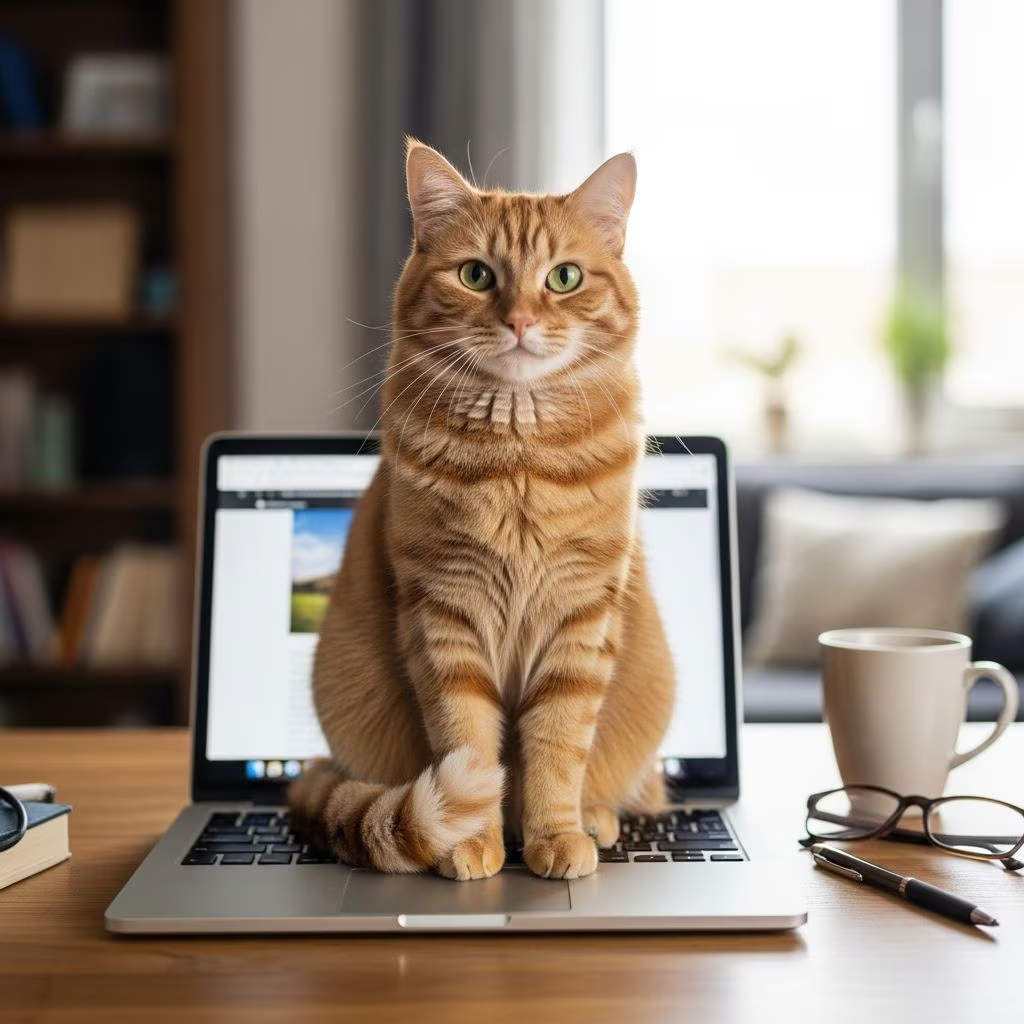
Cats have a knack for inserting themselves into our daily activities, often plopping down right on the laptop keyboard, open book, or freshly sorted mail. This behavior, while endearing to some and frustrating to others, is deeply rooted in feline instincts. Far from random mischief, it reveals much about how cats perceive their world, bond with owners, and assert their presence. In this comprehensive guide, we’ll explore the four primary reasons—backed by veterinary insights—why your cat chooses to sit on the very items you’re using, along with practical tips to coexist harmoniously.

This habit is incredibly common among cat owners. Online forums and veterinary reports confirm that cats target “in-use” objects with remarkable precision, turning work sessions into impromptu cuddle fests. Understanding these motivations can transform annoyance into appreciation for your cat’s clever communication.
The 4 Reasons Why Your Cat Sits on Things You Are Using
Veterinarians and cat behaviorists consistently identify four core drivers behind this paws-on behavior. Each ties back to a cat’s evolutionary needs for comfort, security, and social connection. Let’s break them down in detail.
1. It Smells Like You
Cats possess an extraordinary sense of smell—up to 14 times stronger than humans, with around 200 million odor receptors compared to our 5 million. Items you’ve recently handled, like your phone, notebook, or glasses, are saturated with your unique scent. This olfactory signature acts as a beacon, drawing your cat to snuggle up and feel closer to you even when you’re not directly interacting.
Dr. Nita Vasudevan, a veterinary consultant, notes that objects like warm laundry or a dusting cloth carry lingering human pheromones, making them irresistible resting spots. Similarly, behaviorist Stephen Quandt highlights how these scents signal safety and trust. Your cat isn’t just lounging; they’re enveloping themselves in your essence, reinforcing the human-feline bond.
This scent preference explains why cats prefer your current task over nearby alternatives. The fresher the handling, the stronger the draw. In multi-cat households, this can also be a way to mingle scents, creating a shared family aroma that promotes household harmony.
- Freshly touched items amplify appeal: Phones, keyboards, and books top the list.
- Scent glands activate: Cats rub cheeks or paws to blend their pheromones with yours.
- Emotional comfort: Mimics the security of sleeping near pack members in the wild.
2. Your Cat Is Being Territorial
Domestic cats descend from solitary wildcats, retaining a strong territorial instinct. When your cat sits (and rubs) on your belongings, they’re not being possessive out of spite—they’re claiming ownership through scent marking. Specialized glands in their paws, cheeks, foreheads, and even tail base secrete pheromones that declare, “This is mine—and by extension, you are too.”
Veterinary advisor Dr. Geri Katz explains that this behavior provides comfort and security, turning neutral objects into extensions of their domain. Stephen Quandt likens it to placing territorial markers, akin to a feline AirTag. In your home, this might target high-value items like remotes or work documents because they represent your focus and thus warrant inclusion in their territory.
Observe the rubbing motion: it’s a clear sign of marking. This is especially common in new environments or with visiting guests, where cats reaffirm boundaries. Far from aggression, it’s a sign of confidence in their space.
| Body Part | Scent Gland Location | Marking Behavior |
|---|---|---|
| Paws | Pad surfaces | Kneading or pressing down |
| Cheeks/Face | Sides of head | Rubbing against edges |
| Forehead | Brow area | Bunting (head-butting) |
| Tail/Butt | Base and anal glands | Dragging or backing up |
This table illustrates key marking zones, helping you decode your cat’s actions.
3. Your Cat Wants Your Attention
Attention-seeking reigns as the top reason cited by experts. Cats are observant and learn quickly that inserting themselves between you and your task guarantees interaction. Whether you’re typing, reading, or sorting papers, your cat perceives the object as a rival for your affection.
Dr. Katz observes that cats interrupt focused activities like reading or writing, plopping down precisely where your eyes or hands are engaged. Dr. Vasudevan adds that they track your gaze and body language, strategically blocking your line of sight. It’s purposeful: by claiming the item, they redirect focus to themselves.
This behavior peaks during prime play times or when routines change, like working from home. In bonds where cats view owners as primary social partners, it’s a plea for pets, play, or lap time. Ignoring it might escalate to pawing or vocalizing, but positive redirection works wonders.
- Timing is key: Happens most when you’re absorbed elsewhere.
- Learned strategy: Reinforced by any reaction, even scolding.
- Solution tip: Use a “decoy” like a scented blanket nearby.
4. A Warm Place to Land
Cats are masters of thermoregulation, preferring temperatures between 86–97°F (30–36°C), warmer than human comfort zones. Objects in use absorb your body heat: laptops generate warmth from internals, books from hands, laundry from drying cycles. This creates toasty micro-environments your cat can’t resist.
Dr. Vasudevan points to phones, laptops, and towels as prime examples. Quandt shares how his cat transfers from his lap to warmed spots, prioritizing heat sources. Sunlit patches or electronics amplify this, blending warmth with your scent for ultimate appeal.
In cooler seasons, this spikes, as cats seek passive heating without effort. It’s efficient: no need to sunbathe when your keyboard provides instant coziness.
How to Stop Your Cat from Sitting on Things You Are Using (Or At Least Discourage It)
While charming, this habit disrupts work and chores. Here’s a step-by-step guide to gentle redirection:
- Provide alternatives: Place warm, scented decoys like old T-shirts or heated pads nearby. Reward with treats for using them.
- Enrich environment: Add cat trees, shelves, and toys to meet needs for height, scent, and play.
- Schedule interactions: Daily play sessions (15–20 mins) reduce attention bids. Use wand toys to mimic hunting.
- Ignore & redirect: Briefly withdraw attention when they sit, then lure to approved spots with toys or food.
- Block access: Use double-sided tape on keyboards or close laptops during breaks.
- Check health: Sudden increases may signal stress, pain, or anxiety—consult a vet.
Consistency is crucial; cats learn quickly. Positive reinforcement builds trust without punishment, which can worsen anxiety-driven marking.
Frequently Asked Questions (FAQs)
Why does my cat sit on my laptop specifically?
Laptops combine warmth (from the processor), your scent (from typing), and a flat surface—triple appeal. The keyboard texture also invites kneading.
Is this behavior a sign of separation anxiety?
Possibly, if accompanied by excessive meowing, destructiveness, or clinginess. Provide puzzle feeders and pheromone diffusers for relief.
What if my cat sits on important documents?
Scan or photograph docs digitally. Use clipboard covers or elevated desks to limit access.
Do all cats do this?
Most do occasionally, but confident, bonded cats exhibit it more. Kittens and young adults are particularly persistent.
Should I punish my cat for this?
No—punishment erodes trust and escalates stress. Redirect positively for lasting change.
Conclusion
Your cat’s penchant for sitting on your stuff is a testament to their affection, instincts, and cleverness. From craving your scent and warmth to staking territory and seeking pets, these actions bridge their wild heritage with domestic life. Embrace it as love in furry form, armed with strategies to balance your needs. Next time Fluffy claims your keyboard, remember: it’s their way of saying you’re the center of their world.
See also:
- Why Do Cats Hang Out in Weird Places? 4 Common Reasons
- Why Is My Cat Sitting Like a Person? Is That Normal?
References
- International Cat Care: Feline Scent Marking and Communication — International Cat Care. 2023-05-15. https://icatcare.org/advice/scent-marking-in-cats/
- Journal of Feline Medicine and Surgery: Thermoregulation in Cats — Sage Journals (Peer-reviewed). 2022-11-01. https://doi.org/10.1177/1098612X221125492
- ASPCA: Understanding Feline Behavior – Attention Seeking — ASPCA. 2024-03-20. https://www.aspca.org/pet-care/cat-care/common-cat-behavior-issues
- Kinship: Why Your Cat Always Has to Sit on Whatever You’re Using — Kinship (Vet-reviewed). 2023-08-10. https://www.kinship.com/cat-behavior/why-does-my-cat-sit-on-household-items
- Catster: Why Does Your Cat Sit on Things You Are Using? — Catster (Vet-reviewed). 2024-01-12. https://www.catster.com/cat-behavior/why-does-your-cat-sit-on-things-you-are-using/



