

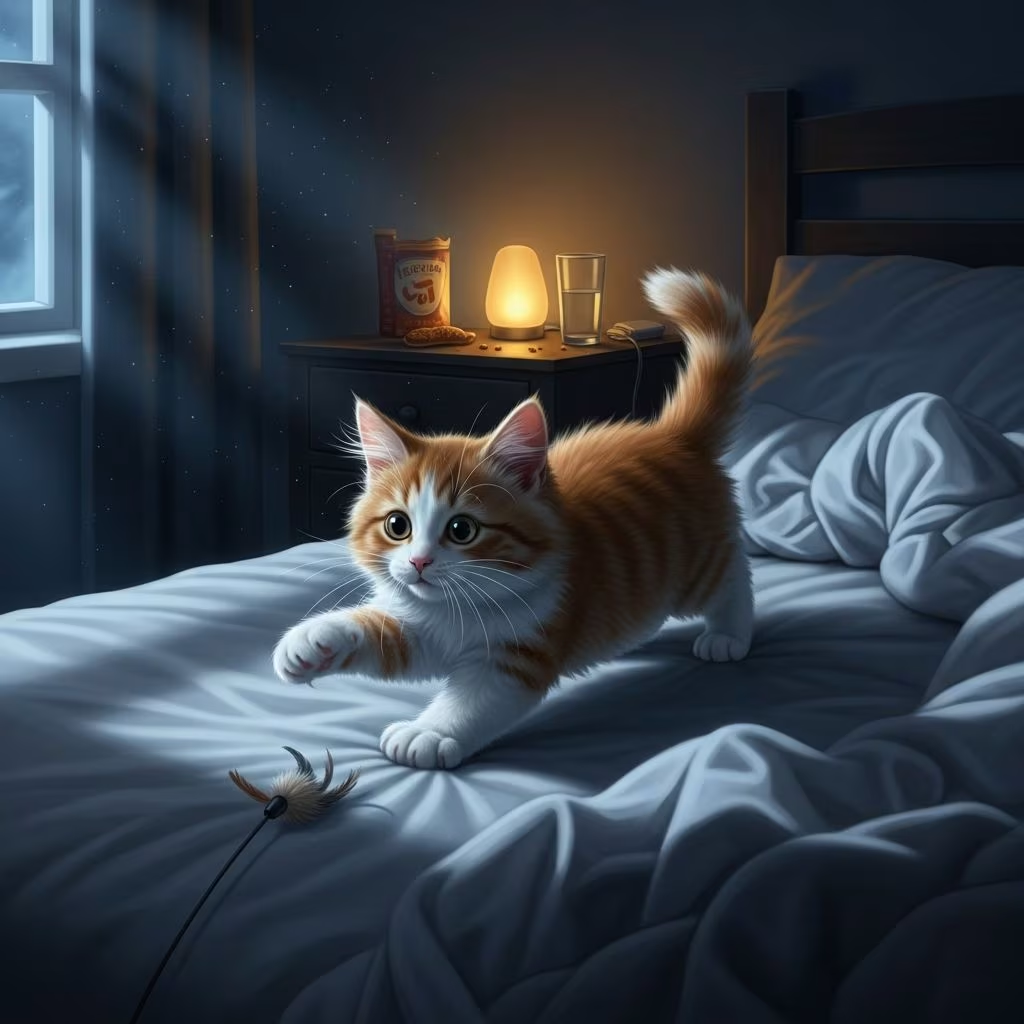
Nighttime play is very common, especially amongst youthful cats. Their cycles are much different from ours, and nighttime is part of a cat’s waking hours. Kittens often zoom around, pouncing on shadows and knocking over objects when the house is quiet, leaving owners exhausted and frustrated. We’ll explain more about why your little kitten is so rambunctious at night and how to handle it effectively.
Understanding these behaviors rooted in biology and environment can help you create harmony. Cats aren’t being defiant; they’re following deep-seated instincts honed over thousands of years as skilled hunters. By aligning their routine with yours, you can reduce disruptions while keeping your kitten happy and healthy.
The 3 Reasons Your Kitten May Prefer Nighttime Play
Understanding cats’ sleep cycles can help you pinpoint exactly why your kitten might be supercharged at night. Here are the primary culprits behind this energetic nocturnal behavior.
1. Cats Are Crepuscular
Many people think cats are nocturnal because they seem up all night, clambering around your home and creating a ruckus at all hours. However, this is a common misconception. Cats are crepuscular, meaning they are most active at dawn and dusk—the twilight periods when light is low.
In the wee hours of the morning or when the sun first starts to set in the evening, this is when cats are the most active, and their instincts usually kick in, driving their predatory responses. After all, the cat’s natural prey—small rodents and birds—is also most active at these times, making perfect sense of why your cat’s circadian rhythm is the way it is.
Wild ancestors like the African wildcat, from which domestic cats descend, evolved this pattern to hunt efficiently during safer, cooler low-light hours, avoiding peak daytime heat and predator competition. Housecats retain this trait genetically, even in cozy indoor environments. Kittens, with their boundless energy, amplify it, turning your living room into a savanna at midnight.
This crepuscular nature explains why your kitten might nap all day only to explode into activity as you wind down. It’s not personal; it’s biology. Young cats under one year are especially vigorous, blending kittenish exuberance with adult hunting drives.
2. Boredom
Think about it: your kitten is in a home where they want to burn off some energy, but everybody in the house is sleeping, including the family dog. What else will they do except create their own madness? Boredom is a major trigger for nighttime antics, particularly in single-cat homes or when owners are away during the day.
Kittens spend up to 16-20 hours a day sleeping as adults, but juveniles need outlets for pent-up energy. Without stimulation, they self-entertain destructively—racing across counters, batting at curtains, or vocalizing loudly. Indoor-only kittens face amplified boredom since they lack outdoor exploration.
Signs include repetitive zooming (also called “zoomies”), attacking inanimate objects, or meowing plaintively. This isn’t hyperactivity disorder; it’s unmet needs for play that mimics hunting. A cat’s athletic prowess demands action, and without it, nights become their prime release time.
3. A Mouse in the House!
Maybe you have a mouse or other small, exciting critter running around your house, and you don’t even know it. But your kitten’s ultra-sharp senses can detect it. If that’s the case, you might hear them banging into cabinets or skidding across the floor at night trying to chase it.
Pests like roaches, rats, or mice are nocturnal, scuttling when humans sleep. Your kitten’s superior smell (14x humans’) and hearing (up to 64kHz vs. our 20kHz) pick up these intruders easily. Recent moves to older buildings heighten risks, triggering intense prey drive.
Don’t be afraid; they’re just trying to rid you of a pest problem—by maybe being a bit of a pest themselves. Check for droppings, gnaw marks, or unusual sounds. Addressing infestations calms both kitten and home.
How to Handle Nighttime Play
If you are concerned or losing sleep over your kitten knocking over everything in the house at night, you might wonder how you’re supposed to handle it. Every cat will be different. Some are easily maintained, while others can be hard to calm down. Here are suggestions that work for various cats, but don’t be surprised if you have to try a few methods before you find one that works.
Change Feeding Schedule
Most cats and kittens fall asleep soundly after their tummies are full. Changing their eating schedule throughout the day might help them sleep longer into the night. For example, you can switch your feeding times or invest in an automatic feeder.
Schedule a hearty play session 1-2 hours before your bedtime to engage their heart rate, then delay dinner until after—making it their largest, high-protein meal. This mimics the hunt-eat-sleep cycle: play simulates hunting, food satisfies, fullness induces sleep.
Automatic feeders with timers ensure consistency, even if you’re out. Spread meals: breakfast on schedule, skip midday if possible, bulk evening post-play. Quality protein calms prey drive effectively.
Provide Entertainment
One good way to keep your cat occupied at night is to just give them a little quieter entertainment. Give them some plushies, pom poms, and other silent toys that they can play with at night if they’re going to be awake anyway.
- Solo toys: Crinkle balls, soft kickers, battery-free mouse toys.
- Vertical spaces: Cat trees, shelves for climbing.
- Window perches: Bird feeders outside for visual stimulation.
- Puzzle feeders: Slow-release treats to occupy mind.
Ensure toys are safe—no strings that could ingest and block intestines. Rotate to prevent boredom.
Tucker Your Cat Out
If you really want your cat to be calmer, maybe they just need a little more exercise. Play interactive games to really get them worn out before bedtime. That way, when you go in your room with the door shut to get some shut-eye, they can do the same instead of turning your house into a WWE arena.
Use wand toys, laser pointers (end with catchable toy), or balls to simulate chase. Let them ‘win’ occasionally to satisfy without frustration. Aim for 15-30 minutes evening vigor. Multi-cat homes? Extra sessions curb troublemakers.
Daytime play when possible reinforces your schedule. Spay/neuter reduces hormonal energy spikes.
What to Avoid
While you might not be able to avoid this behavior at night completely, there are steps you can take to minimize the ruckus.
Antagonizing
Try not to get your cat wound up right before bedtime. You will leave them wanting and then they will have to create mischief all their own. So when you hear rattles and bangs, know that you probably did something to instigate it.
Avoid rough play near lights-out; it revs them up. Respond to night wakings with calm ignore—attention reinforces.
Catnip
If your cat gets quite frisky on catnip, you should eliminate it before bedtime. It can be a fun thing to do when everybody is awake and active, but it can be quite different when your cat is roaming around like a zombie in the night.
For sensitive cats, store catnip toys away evenings. Not all react; observe yours.
Frequently Asked Questions (FAQs)
Q: Is it normal for kittens to be active at night?
A: Yes, kittens are crepuscular, peaking at dawn/dusk, amplified by youthful energy. Adjust routines to sync.
Q: How much playtime does my kitten need before bed?
A: 15-30 minutes vigorous play 1-2 hours before bedtime, followed by dinner.
Q: Will my kitten outgrow nighttime play?
A: Often yes, as they mature and routines align, but crepuscular trait persists.
Q: What if play changes don’t help?
A: Vet check for medical issues first, then consider companion cat or enrichment.
Q: Are automatic feeders worth it?
A: Yes, for timed meals syncing sleep cycles reliably.
References
- Why do cats go batshit crazy in the middle of the night? — WhyCatWhy. Accessed 2026. https://www.whycatwhy.com/why-do-cats-go-crazy-at-night/
- Understanding Why Your Cat is Active at Night — Seattle Humane. Accessed 2026. https://www.seattlehumane.org/resource-library/understanding-why-your-cat-is-active-at-night/
- Why Does My Kitten Want to Play at Night? Vet-Approved Reasons — Catster. Accessed 2026. https://www.catster.com/cat-behavior/why-does-my-kitten-want-to-play-at-night/
- Kitten Behavior and Training – Play and Investigative Behaviors — VCA Animal Hospitals. Accessed 2026. https://vcahospitals.com/know-your-pet/kitten-behavior-and-training-play-and-investigative-behaviors
- Cat keeping you awake? How to manage night activity — Animal Humane Society. Accessed 2026. https://www.animalhumanesociety.org/resource/cat-keeping-you-awake-how-manage-night-activity



