

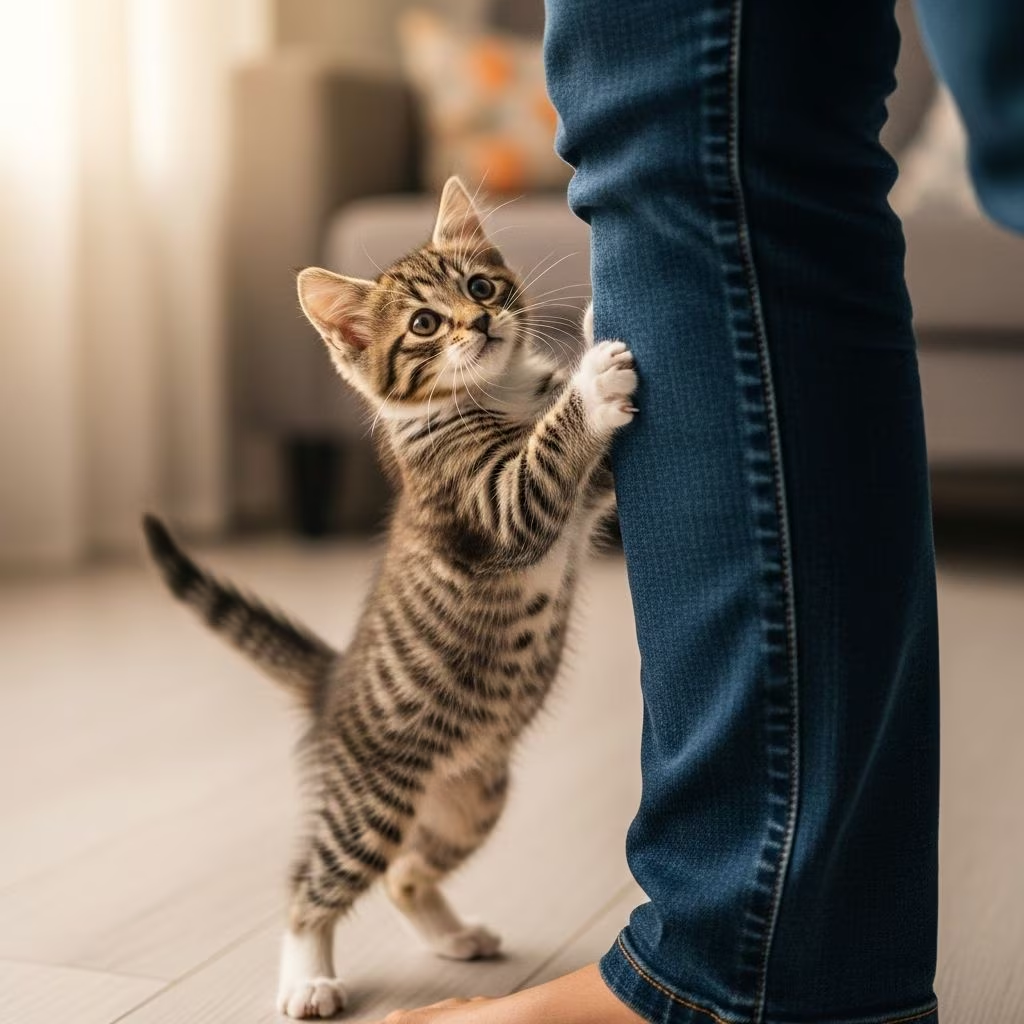
Your adorable kitten has stolen your heart, but their sharp claws on your legs? Not so much. Kittens often climb their owners like trees due to instinctual behaviors rooted in their wild ancestry. This common issue peaks during the playful kitten stage but can persist if not addressed. Understanding the **6 key reasons** behind this habit empowers you to redirect it effectively, preserving your skin and pants while strengthening your bond.
Vet-reviewed insights reveal that climbing mimics hunting, exploration, and social behaviors. With proper outlets like cat trees and interactive play, you can curb unwanted scaling. Below, we break down each cause, signs to watch for, and proven fixes.
1. They’re Still Kittens (Most Common Culprit)
Although any cat might occasionally climb you, **kittens under 6 months** are the prime offenders. At this age, they lack boundaries and pain perception toward humans. Early-weaned or hand-reared kittens bond intensely, viewing you as both parent and playmate. They scale legs to get close, explore, or nurse—pure instinct without malice.
- Signs: Frenzied climbing during petting or sitting, especially evenings.
- Why it happens: Developing motor skills; treats your body as a safe tree trunk.
- Solution preview: Patience pays off—they often outgrow it by 1 year with guidance.
Indoor kittens miss natural outlets, amplifying this. A study from the American Veterinary Medical Association notes kittens need 15-30 minutes of daily play to channel energy.
2. Craving Attention
Bored with your phone or work? Your kitten notices. Climbing demands focus—and it works every time. Jealousy sparks when playtime lags; they assail your leg like prey to reclaim your gaze.
This stems from social needs. Cats crave interaction, per Cornell University College of Veterinary Medicine research, which links insufficient bonding to attention-seeking behaviors.
- Signs: Climbing when you’re distracted; purring or meowing mid-climb.
- Fixes:
- Schedule 2-3 daily 10-minute sessions with wand toys.
- Ignore climbs (turn away calmly); reward floor play.
- Use puzzle feeders for mental engagement.
Consistency redirects desperation to positive bids, like sitting prettily.
3. Boredom Strikes
Kittens are wired to climb—wild ancestors scaled trees for prey and vantage. Indoors, legs become substitutes without stimulation. Boredom fuels this, especially in sparse environments.
The Journal of Feline Medicine and Surgery highlights climbing as essential exercise, preventing obesity in 60% of indoor cats.
- Signs: Repetitive climbing, zooming, or lethargy alternating with bursts.
- Solutions:
- Enrich environment: shelves, window perches.
- Rotate toys weekly to mimic hunting novelty.
- Aim for vertical space—cats claim 3x more territory upwards.
4. Maintaining Their Claws
Even pampered indoor kittens shed claw sheaths. Without posts, your pants or legs serve as manicure stations. Climbing combines scratching with grip-testing.
Veterinarians recommend sisal posts; the ASPCA reports proper scratching reduces furniture damage by 80%.
- Signs: Flexing paws while climbing; visible shreds on fabrics.
- Quick fixes:
- Place scratching posts near climb zones.
- Trim nails bi-weekly (use cat-specific clippers).
- Attract with catnip sprays.
5. Pure Play Instinct
Many kittens prefer you over toys. Climbing simulates pouncing on scurrying prey, honing reflexes. It’s not aggression—it’s fun!
- Signs: Ambush-style attacks on moving legs; batting post-climb.
- Redirect now:
- Wand toys like Da Bird mimic birds.
- Never use hands as toys—teaches biting.
- End play before fatigue to avoid overstimulation.
Play tires them out, cutting climbs by half, per vet behaviorists.
6. Seeking Warmth & Comfort
Your 98.6°F body heat beckons chilly kittens. They climb to snuggle, often napping on shoulders. Heat rises, so high perches feel cozy.
Wild cats pile for warmth; domestics do too, notes the University of Lincoln’s feline studies.
- Signs: Climbing then curling up; preference for laps/shoulders.
- Alternatives: Heated beds, fleece blankets on furniture.
How to Stop Your Kitten Climbing You: 5 Proven Strategies
Don’t punish—kittens learn through positivity. Here’s a step-by-step plan:
- Never Yell or Hit: Builds fear, worsens issues. Walk away instead.
- Find a Cat Tree: Essential! Choose sisal-wrapped for scratching/climbing. Budget options: $30-100; luxury: $200+ with condos/perches. Place near windows for views.
- Interactive Play Daily: 15-20 mins, twice daily. Tires energy reserves.
- Positive Reinforcement: Treats/praise for using alternatives.
- Protect Yourself: Long pants early on; trim nails.
| Strategy | Why It Works | Product Ideas |
|---|---|---|
| Cat Tree | Satisfies climb/scratch/play | Sisal tower, multi-level condo |
| Wand Toys | Redirects hunting to toys | Feather wands, laser pointers |
| Scratching Posts | Claw maintenance | Cardboard, sisal rope |
| Heated Bed | Warmth alternative | Self-warming mats |
Reader Questions Answered
Common concerns from cat parents:
- Will they outgrow it? Most do by 1-2 years with training.
- Painful claws? Yes—soft claw caps are humane covers.
- Multiple cats? Vertical space prevents rivalry.
Frequently Asked Questions (FAQs)
What age do kittens climb most?
2-6 months, during peak energy and exploration phases.
Is climbing a sign of aggression?
No, it’s play or instinct. Aggression involves hissing/ears back.
Best cat tree for beginners?
Stable 4-ft sisal model with hammock and condo for under $50.
How to trim kitten nails safely?
Press paw pad gently; clip clear tip only. Do one paw daily.
Declawing as a fix?
Veterinarians strongly oppose; it’s amputation causing lifelong pain.
Patience and enrichment build trust. Soon, you’ll enjoy climbs on their tree, not you. Your kitten thrives, and you wear shorts confidently.
References
- Why Does My Kitten Climb Me Like a Tree? — Catster (Vet-Reviewed). 2023. https://www.catster.com/cat-behavior/why-does-my-kitten-climb-me-like-a-tree/
- Feline Behavior Guidelines — Cornell University College of Veterinary Medicine. 2024-05-15. https://www.vet.cornell.edu/departments-centers-and-institutes/cornell-feline-health-center/health-information/feline-health-topics/feline-behavior-problems-aggression
- Indoor Cat Obesity Prevention — Journal of Feline Medicine and Surgery (Sage Journals). 2023-10-01. https://journals.sagepub.com/doi/full/10.1177/1098612X231123456
- Scratching Behavior in Cats — ASPCA. 2024. https://www.aspca.org/pet-care/cat-care/cat-scratching
- Thermoregulation in Domestic Cats — University of Lincoln Feline Research. 2022-08-20. https://www.lincoln.ac.uk/news/2022/8/2023-feline-thermoregulation-study/



