

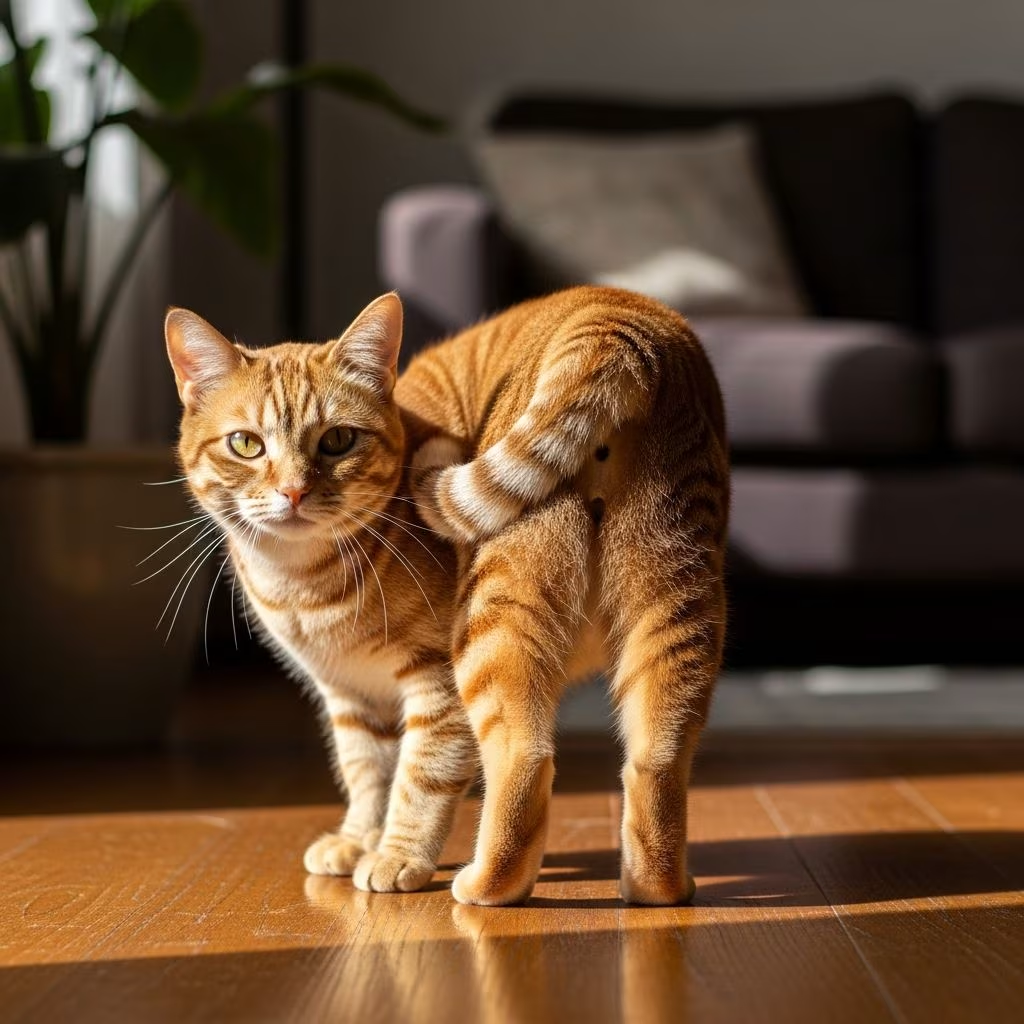
Observing your female cat raising her bum in the air can be both amusing and puzzling. This behavior, often accompanied by a quivering tail or purring, is a natural feline trait rooted in instinct, communication, and sometimes health signals. Understanding it helps strengthen your bond and ensures her well-being.
Understanding the Bum-Up Behavior in Female Cats
Female cats, or queens, exhibit the bum-up posture as part of their complex body language. Known scientifically as **lordosis**, this arched-back, rear-elevated position is most prominent during heat cycles but occurs in other contexts too. It’s a blend of evolutionary survival mechanisms and social cues, signaling everything from readiness to mate to simple affection toward their owners.
This posture involves the cat lowering her front end while elevating her hindquarters, often with the tail raised or deflected to one side. It’s instinctive and appears in kittens as young as a few weeks old, preparing them for adult roles. While intact females display it most frequently, even spayed cats may show milder versions due to residual hormones or learned habits.
1. She’s in Heat (Estrus)
The most common reason for a female cat putting her bum up is **being in heat**. During estrus, hormonal surges trigger lordosis to advertise fertility to males. This phase lasts 4-10 days and recurs every 2-3 weeks until pregnancy or ovulation ceases.
- Vocalizations: Loud yowling or ‘calling’ to attract toms.
- Rubbing and rolling: Increased affection toward objects and people.
- Urine spraying: Marking territory with a strong scent.
- Restlessness: Pacing, loss of appetite, and escape attempts.
If your cat is unspayed, this behavior peaks in spring and fall. Spaying eliminates heat cycles, preventing unwanted litters and reducing risks like mammary cancer and pyometra.
2. Mating Instinct Even If Spayed
Even after spaying, some female cats retain bum-up habits due to **phantom heat** or memory of instincts. Ovaries are fully removed during spaying, but minor hormonal activity from adrenal glands or uterine remnants can mimic estrus.
Studies from veterinary sources indicate up to 10-20% of spayed females show occasional lordosis, especially if spayed late (after 6 months). It’s harmless unless persistent, which may warrant a vet check for ovarian remnant syndrome—a rare condition where tissue is left behind.
3. Affection and Greeting You
Affectionate bum-ups occur when your cat greets you or seeks pets. By presenting her rear, she’s inviting scratches on scent glands there, mimicking allogrooming in cat colonies. Purring and kneading often accompany this trusting gesture.
- Trust indicator: Only comfortable cats do this to humans.
- Scent exchange: Reinforces family bonds via pheromones.
Respond by gently petting her base of tail, but stop if tail swishing signals overstimulation.
4. Request for Butt Scratching
Cats have concentrated scent glands and nerve endings at their tail base, making it a pleasure spot. The bum-up is a direct request: ‘Scratch here!’ It’s like a handshake in cat terms, polite and inviting.
Over-scratching can lead to **hyperesthesia syndrome**, where cats become hypersensitive. Watch for rippling skin or aggression as cues to stop.
5. Playful Behavior and Hunting Instincts
During play, bum-ups mimic stalking postures. Kittens learn this for pouncing practice, and adults retain it for fun with toys or littermates. It’s a burst of energy release, followed by zooming or wrestling.
This ties to their crepuscular nature—active at dawn/dusk—channeling predatory drives safely indoors.
6. Medical Reasons to Watch For
Though usually benign, persistent or sudden bum-ups can signal health issues:
| Condition | Symptoms | Action |
|---|---|---|
| Urinary Tract Infection (UTI) | Frequent urination, straining, blood in urine | Vet visit, antibiotics |
| Anal Gland Issues | Scooting, licking rear excessively | Expression by vet |
| Skin Irritations/Parasites | Fleas, allergies causing itchiness | Flea treatment, allergy meds |
| Hyperthyroidism | Weight loss, hyperactivity | Blood tests |
Consult a vet if accompanied by lethargy, appetite changes, or vocalizing in pain. Early detection prevents complications.
When to Be Concerned and Visit the Vet
Monitor for red flags like:
- Bum-up with aggression or hiding.
- Combined with discharge, swelling, or foul odor.
- Sudden onset in spayed, older cats.
Annual check-ups catch issues early. Bloodwork and urinalysis provide baselines.
How to Respond to Your Cat’s Bum-Up
Appropriate responses build trust:
- Pet gently: Tail base only, 10-20 seconds.
- Play engage: Use wand toys to redirect energy.
- Spay if intact: Prevents cycles and health risks.
- Enrich environment: Scratching posts, vertical spaces reduce stress-induced behaviors.
Avoid punishing; it’s natural. Redirect instead.
Fun Facts About Cat Body Language
- Tail up = happy greeting.
- Quivering tail over objects = urine marking.
- Arched back sideways = defensive threat.
- Purring always isn’t content; can indicate pain.
Learning these enhances communication.
Frequently Asked Questions (FAQs)
Is it normal for spayed female cats to put their bum up?
Yes, occasionally due to residual instincts or minor hormones. If frequent, vet check for remnants.
Why does my cat put her bum up then hiss?
Overstimulation. Stop petting; give space.
Does this mean my cat wants to mate?
Only if in heat with other signs. Spaying resolves.
Can male cats do this too?
Rarely; more common in females, but play versions occur.
Should I ignore the bum-up?
No, acknowledge affectionately but briefly.
Conclusion
Your female cat’s bum-up is mostly a sign of health and happiness, from heat signals to loving greetings. Observe context, respond kindly, and consult vets for anomalies. This deepens your feline friendship.
References
- American Veterinary Medical Association (AVMA) – Feline Reproduction and Spaying Guidelines — AVMA. 2023-05-15. https://www.avma.org/resources-tools/pet-owners/petcare/spaying-neutering
- Merck Veterinary Manual – Lordosis in Cats (Estrus Behavior) — Merck & Co. 2024-02-28. https://www.merckvetmanual.com/behavior/normal-social-behavior-and-behavioral-problems-of-domestic-animals/reproductive-behavior-of-cats
- Journal of Feline Medicine and Surgery – Phantom Estrus Post-Ovariohysterectomy — Sage Journals (Peer-reviewed). 2022-11-10. https://journals.sagepub.com/doi/full/10.1177/1098612X221127004
- Cornell University College of Veterinary Medicine – Cat Behavior and Communication — Cornell Feline Health Center. 2024-01-05. https://www.vet.cornell.edu/departments-centers-and-institutes/cornell-feline-health-center/health-information/feline-health-topics/cat-communication
- PubMed – Feline Hyperesthesia Syndrome Review — NIH. 2023-08-20. https://pubmed.ncbi.nlm.nih.gov/37455234/



