

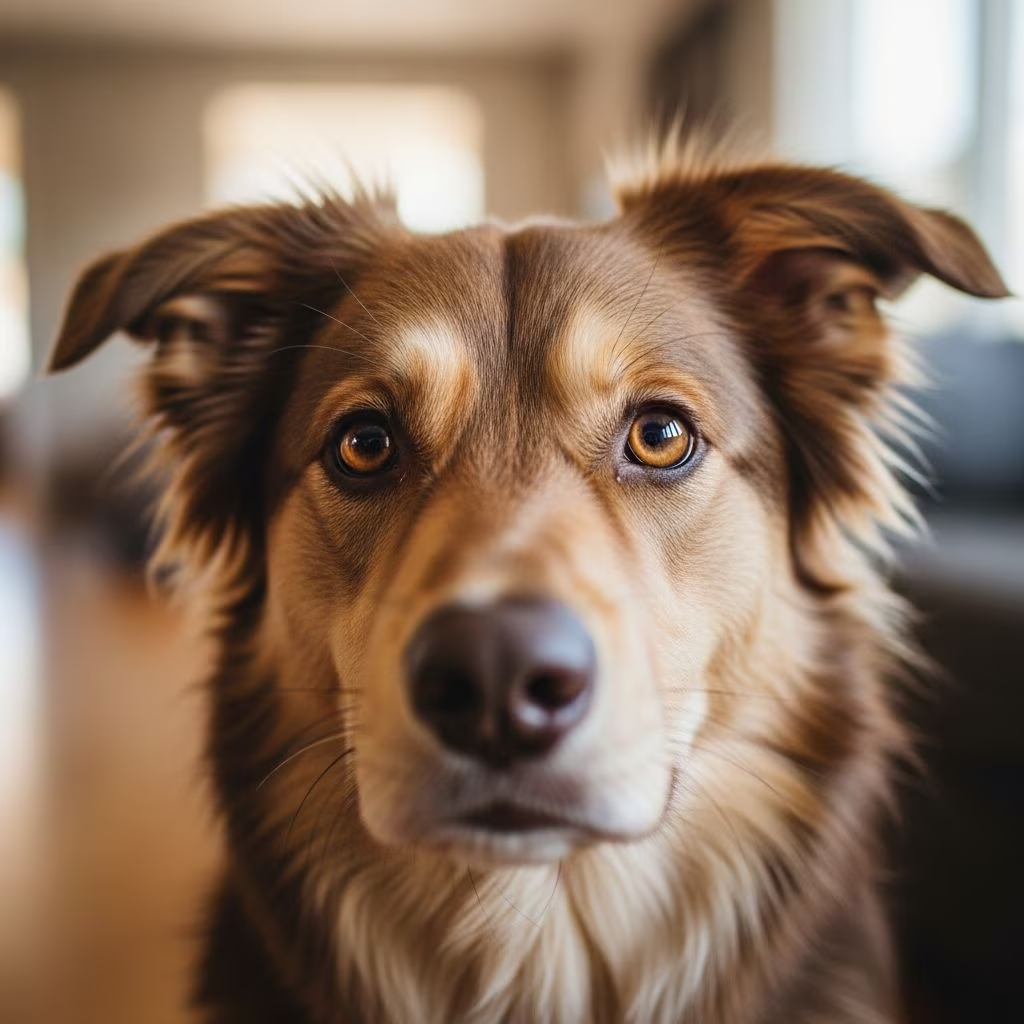
Your canine companion’s unwavering gaze can feel both endearing and puzzling. This behavior, deeply rooted in their evolutionary history and emotional world, serves multiple purposes from expressing devotion to signaling needs. Understanding it fosters a stronger connection and helps spot potential issues early.
The Science of Canine Gazing: Oxytocin and Bonding
Dogs have evolved unique ways to connect with humans, and prolonged eye contact plays a central role. Research reveals that when dogs and owners maintain mutual gaze, both experience a surge in oxytocin, the hormone associated with trust and affection. This creates a positive feedback loop unique to domesticated dogs, absent in wolves.
For instance, studies demonstrate that dogs’ gazing triggers oxytocin release in owners, enhancing affiliation, which in turn boosts oxytocin in the dogs themselves. This interspecies mechanism mirrors human infant-parent bonding, underscoring thousands of years of coevolution.
Common Reasons Behind the Stare
Dogs communicate non-verbally, and staring is their primary tool. Here are the most frequent motivations:
- Affection and Love: A soft, relaxed stare often means ‘I adore you.’ Reciprocating strengthens emotional ties through oxytocin release.
- Anticipation of Needs: Watching while you eat or hold a leash signals hope for food, walks, or play. It’s a learned association from daily routines.
- Seeking Guidance: In unfamiliar situations, dogs look to owners for cues, relying on your face for emotional and directional signals.
- Attention Request: Bored or understimulated dogs stare to initiate interaction, tilting heads for extra charm.
Reading Body Language: Friendly vs. Concerning Stares
Not all stares are equal. Context and posture provide crucial clues. Use this table to differentiate:
| Stare Type | Body Signals | Meaning |
|---|---|---|
| Relaxed/Affectionate | Soft eyes, loose body, wagging tail, open mouth smile | Love, contentment, or polite request |
| Alert/Anticipatory | Ears forward, tense but not rigid, slight lean | Waiting for food, walk, or permission |
| Hard/Aggressive | Stiff posture, raised hackles, direct unblinking eyes, growling | Threat, fear, or dominance—avoid eye contact |
| Blank/Spacey | No focus, staring at walls, disoriented movement | Possible cognitive decline or medical issue |
Observe ears, tail, and overall tension. A friendly stare invites engagement; a hard one demands space.
When Staring Signals Health or Behavioral Concerns
While often benign, persistent or unusual staring warrants attention. In senior dogs, vacant gazes at nothing may indicate Canine Cognitive Dysfunction (CCD), akin to dementia, with symptoms like disorientation and sleep changes. OCD can manifest as fixated staring, requiring veterinary intervention.
Aggression-linked stares, paired with stiffening or lip curling, suggest fear or pain. Sudden changes? Consult a vet to rule out vision loss, neurological issues, or anxiety.
Building a Healthier Bond Through Understanding
Recognizing your dog’s stare enhances training and welfare. Socially attuned dogs, those engaging in frequent gazing, excel at reading human cues, making them responsive learners. Respond calmly: acknowledge with a gentle word or pet, reinforcing trust without always rewarding with treats to avoid dependency.
In pack dynamics, allowing dogs to watch you eat first affirms leadership, teaching patience. This ritual builds emotional resilience, benefiting everything from house training to stress management.
Practical Tips for Responding to Your Dog’s Gaze
- Maintain Calm Leadership: Ignore begging stares during meals; eat first to set boundaries.
- Reciprocate Affectionately: Hold soft eye contact briefly to boost oxytocin bonds.
- Enrich Environment: Provide toys and exercise to reduce attention-seeking stares.
- Monitor Changes: Log stare frequency and context; note shifts for vet discussions.
- Train Alternatives: Teach ‘look away’ commands to curb unwanted staring.
Breed and Individual Variations in Staring
Genetics influence gazing tendencies. Herding breeds like Border Collies stare intensely for work cues, while companion breeds like Cavaliers use it for affection. Age matters too: puppies stare for learning, seniors for comfort or confusion.
Personal history shapes behavior—rescues may stare from past uncertainty, seeking reassurance.
FAQs: Answering Common Questions About Dog Staring
Is it okay to stare back at my dog?
Yes, for relaxed, loving gazes. It deepens bonds via oxytocin. Avoid with tense or aggressive stares to prevent escalation.
Why does my dog stare at me while eating?
It’s a mix of pack ritual (you eat first as leader) and hope for scraps, combined with bonding through observation.
Does staring mean my dog is dominant?
No, mutual gazing in dogs is affiliative, showing trust. True dominance involves avoidance or challenge, unlike wolves.
What if my dog stares into space?
This could signal CCD, OCD, or vision issues. Watch for other signs like pacing and see a vet promptly.
Can I train my dog to stop staring?
Yes, redirect with commands like ‘sit’ or ‘place.’ Reward non-staring calm to shape better habits.
Strengthening Your Emotional Partnership
Your dog’s stare is a window into their world—affection, need, or alert. By interpreting it accurately, you nurture a profound, science-supported partnership. Celebrate this silent dialogue; it’s what makes dogs humanity’s best friend.
References
- Social evolution. Oxytocin-gaze positive loop and the coevolution of human-dog bonding — Nagasawa M et al. Science. 2015-04-17. https://pubmed.ncbi.nlm.nih.gov/25883356/
- Dogs and people bond through eye contact — CBS News. 2015-04-16. https://www.cbsnews.com/news/dogs-and-people-bond-through-eye-contact/
- Why Does My Dog Stare at Me? — American Kennel Club (via referenced studies). Ongoing. https://www.akc.org/expert-advice/advice/dog-stares-at-me/



