

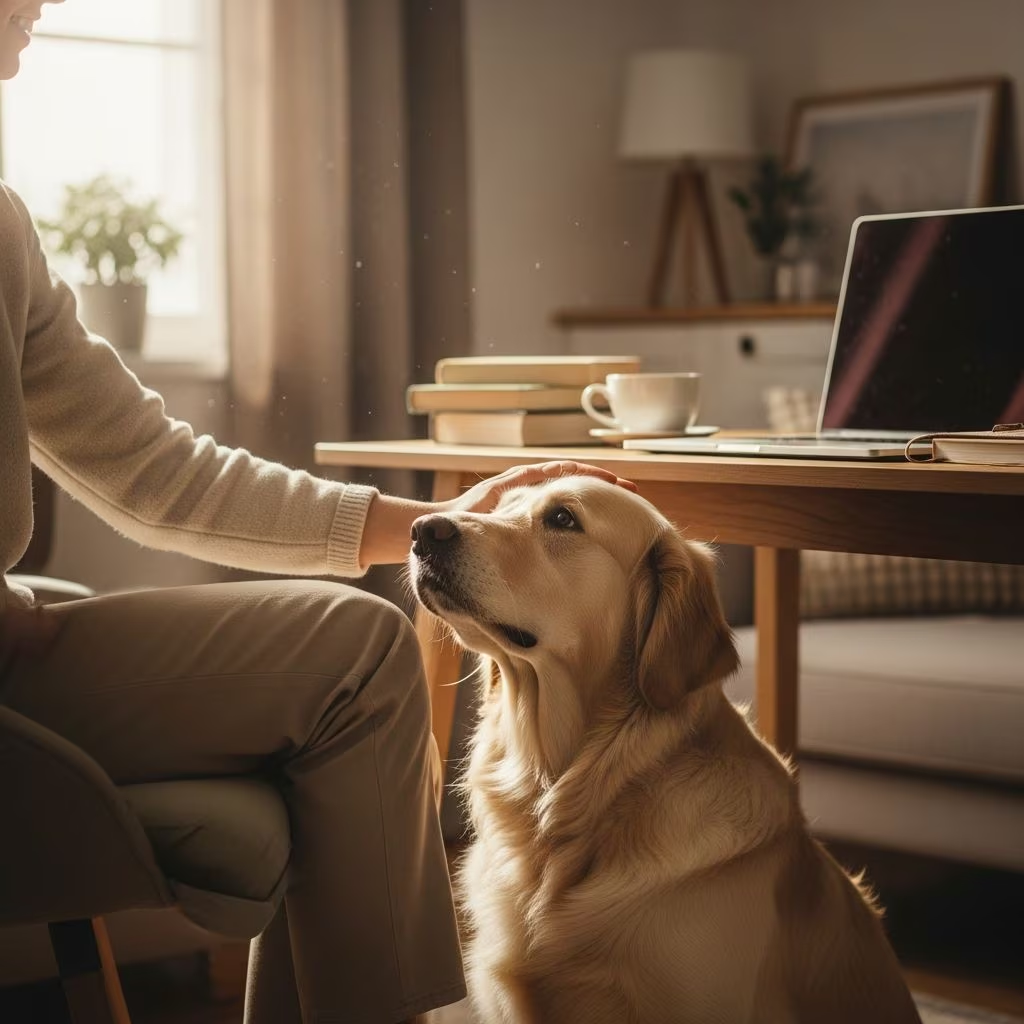
Why Does My Dog Follow Me Around? A Complete Guide to Canine Behavior
If you’ve ever wondered why your dog seems to follow you from room to room—even into the bathroom—you’re not alone. This behavior, often called being a “Velcro dog,” is incredibly common and can mean many different things. Understanding what drives your dog’s need to stay close to you is essential for strengthening your bond and recognizing when professional help might be needed.
The Genetic Instinct Behind Following Behavior
One of the most fundamental reasons dogs follow their owners everywhere is deeply rooted in their genetics. Dogs are descendants of wolves, and in the wild, sticking close to the pack is essential for survival. Your home represents your dog’s new pack, and you are the pack leader. This instinctual behavior makes them want to stay near you because they view you as their protector and provider. Throughout history, dogs have been bred to work alongside humans, reinforcing this natural tendency to remain in close proximity.
This pack mentality is so ingrained in canine behavior that even domesticated dogs exhibit these ancestral patterns. Your dog’s constant presence isn’t just a quirk—it’s a fundamental part of who they are as a species.
The Science of Love and Attachment
Beyond genetics, there’s actual biochemistry at work when your dog is near you. When your dog is close to you, their brain releases oxytocin—the “love hormone”—which is the same hormone that strengthens bonds between humans. This means there’s scientific evidence that your dog might genuinely be in love with you. The attachment dogs form with their owners is a real, measurable phenomenon driven by brain chemistry.
Dogs express their love and admiration by wanting to be around their owners all the time. Some dog breeds are more notorious for being Velcro dogs than others, but the underlying mechanism is the same: a genuine emotional bond and attachment to their human family members.
Common Reasons Your Dog Follows You
While love and genetic instinct explain much of this behavior, there are several other practical reasons your dog might be shadowing your every move:
1. Your Dog Loves You and Wants Attention
The most straightforward reason is simply that your dog loves you and enjoys your company. Dogs that follow their owners everywhere are demonstrating trust and affection. They feel safe and secure in your presence and want to maintain that connection.
2. Mealtime Magnetism
If your dog follows you into the kitchen, don’t be surprised. The kitchen is where the food is, after all. Your dog knows that you’re the ticket to their next tasty meal, so it’s natural for them to keep tabs on you. This learned behavior becomes especially pronounced if your dog has been rewarded with treats or food while following you in the past.
3. Seeking Attention and Reinforcement
Dogs pick up quickly on what gets them attention from their owners. If you react to your dog following you around with petting, praise, or play, then this reinforces the behavior. While this can be a difficult habit to break, understanding that your dog is essentially asking for engagement can help you manage it more effectively.
4. Curiosity and Fear of Missing Out
Dogs are naturally inquisitive animals and love to know what’s going on. They follow you around because, to them, you’re the person in the know and the gateway to all things exciting. Your dog’s nosy nature, combined with a serious case of FOMO (fear of missing out), means they’re often under your feet and sticking their nose into everything.
5. Natural Social Behavior
Following you everywhere is part of your dog’s natural social behavior, a phenomenon called “allelomimetic behavior.” This behavior serves multiple purposes: it creates and sustains social bonds, provides self-preservation benefits, and allows dogs to learn by copying your actions.
When Following Behavior Signals Deeper Issues
While most cases of constant following are harmless, sometimes this behavior can indicate that something else is going on with your dog.
Anxiety and Stress
Anxiety and stress are possible causes for dogs following their owners around excessively. This is mainly caused by separation anxiety, though generalized anxiety can also trigger this behavior. Dogs occasionally stick close to your side if they are nervous, frightened, uncertain of strangers, or not feeling well. This is especially common during thunderstorms and fireworks, when dogs see their owners as protectors during these frightening events.
In extreme cases, some dogs become so anxious if separated from their owner that they panic—a situation that’s not healthy for either party. If your dog exhibits excessive anxiety when you leave, consulting with a veterinary behaviorist is recommended.
Health and Aging Concerns
If your older dog suddenly starts following you more closely, it may indicate that things are changing for them, making them less confident. Your dog might be starting to lose their hearing or vision, have developed joint problems that make them less independent, or experience cognitive decline similar to Alzheimer’s in humans, which can make them become clingy.
Any significant change in following behavior should warrant a conversation with your veterinarian to rule out underlying health issues.
Why Does Your Dog Follow Only You?
Many dog owners notice that their dog follows one family member more than others. Dogs are smart animals and will often single out one person to follow, sometimes even to the exclusion of others. This usually indicates that this person fulfills whatever the dog is looking for.
The person your dog chooses to follow is often the primary caregiver who feeds, walks, and plays with them. Sometimes it’s the person who gives out snacks most frequently, or it could simply be the “most fun” person. Dogs get everything they need from people, and they will generally follow the person who takes them to the things they want most. Additionally, dogs typically pick one person in the family that they like to be around more than others, and this person usually matches their personality and energy level.
Special Cases: Puppies and Older Dogs
Why Puppies Follow You Everywhere
Puppies are a special case when it comes to following people around. Young dogs rely on their mother to show them the ways of the world, and when removed from her and their siblings, their new family becomes their “imprinted” parents. As a result, puppies will follow you, often closely, to learn what they need to know about their environment.
Puppies are often less confident than older dogs and haven’t learned proper social skills yet. These following behaviors tend to lessen as puppies mature and become more confident in their surroundings and social abilities.
Why Older Dogs Follow You Everywhere
Older dogs may follow their owners purely out of familiarity and habit. However, if this is a new behavior in your senior dog, it may indicate that things are changing for them, making them less confident. Always monitor your aging dog closely for signs of health issues that might explain changes in behavior.
Understanding Your Dog’s Protective Instinct
Some dogs follow their owners around when they feel the need to guard them. This is most common in dog breeds with a guarding instinct and usually occurs when one of these dogs feels uneasy about a person or situation. This isn’t necessarily a bad thing, especially if you want your dog to guard you and your family members.
Your dog may also follow you for protection, instinctively wanting to safeguard you even during private activities like using the toilet or taking a shower. This protective behavior is a sign that your dog is a loyal companion, always wanting to be by your side.
The Bathroom Question: Why Does Your Dog Follow You There?
One of the most peculiar aspects of having a Velcro dog is their insistence on following you into the bathroom. When your dog follows you into the bathroom, they’re simply acting on instinct. Your pup sees you as the pack leader, and sticking close by means safety, comfort, and connection. When you close that door behind you, your dog might feel left out of the “pack activity” and rush to join you.
Additionally, if your dog shadows you everywhere, including the bathroom, it could be a sign of trust and attachment to you. Dogs look to their humans for emotional reassurance, and bathrooms—being small, enclosed spaces—can even feel like cozy dens to them. Your dog may associate being near you with safety, especially during moments of vulnerability.
It’s important to note that if your dog receives attention, treats, or affection when they follow you to the bathroom, they quickly learn that this behavior leads to positive outcomes. Over time, this can reinforce the habit, especially in Velcro dogs with strong bonds to their owners.
Managing Your Dog’s Following Behavior
While following behavior is generally harmless and often endearing, there are times when you might want to manage or reduce it:
- Avoid rewarding the behavior excessively with attention, treats, or play
- Create safe spaces where your dog can rest independently
- Gradually acclimate your dog to alone time through positive reinforcement
- Maintain consistent routines to reduce anxiety
- Consult a veterinarian if the behavior is new or accompanied by other symptoms
- Work with a professional dog trainer if you suspect separation anxiety
Frequently Asked Questions
Q: Is it normal for my dog to follow me everywhere?
A: Yes, it’s completely normal for dogs to follow their owners. This behavior is rooted in their genetic instinct to stay close to their pack leader and is often a sign of trust and affection.
Q: Why does my dog only follow me and not other family members?
A: Dogs often pick a favorite person, typically their primary caregiver or the person who provides food, play, and attention. This person usually matches the dog’s personality and energy level.
Q: When should I be concerned about my dog’s following behavior?
A: Be concerned if the behavior is new, accompanied by anxiety symptoms, appears during a specific age period, or is combined with other behavioral changes. A sudden shift in following behavior can indicate health issues or anxiety disorders that warrant veterinary attention.
Q: Can I stop my dog from following me everywhere?
A: While you can reduce the behavior through training and positive reinforcement, you likely can’t eliminate it entirely if it’s rooted in attachment. Focus instead on managing it and creating healthy independence boundaries.
Q: Does my dog following me mean they have separation anxiety?
A: Not necessarily. Most dogs that follow their owners everywhere do so out of love and habit. Separation anxiety is diagnosed when dogs exhibit distress or destructive behavior when separated from their owners.
Q: Why do puppies follow their mothers and then their owners?
A: Puppies naturally follow their mother to learn about their environment and survive. When separated, they imprint on their human family as surrogate parents and continue this following behavior as part of their learning process.
References
- Why Does My Dog Follow Me Everywhere? — PetMD. https://www.petmd.com/dog/behavior/4-reasons-your-dog-follows-you-everywhere
- 5 Reasons Why Your Dog Follows You Around Everywhere — VHA Vets. https://vhavets.com/blog/5-reasons-why-your-dog-follows-you-around-everywhere/
- Loyal Companions: Why Your Dog Follows You Everywhere — MVA Vets. https://mvavets.com/blog/dog-follows-me-everywhere/
- Dog Following You Into the Bathroom? Here’s What It Really Means — Scenthound. https://www.scenthound.com/dogblog/why-does-my-dog-follow-me-into-the-bathroom-understanding-this-quirky-canine-behavior
- Why Does My Dog Follow Me Everywhere? — The Kennel Club. https://www.royalkennelclub.com/health-and-dog-care/health-dog-care/health/health-and-care/a-z-of-health-and-care-issues/why-does-my-dog-follow-me-everywhere/



