

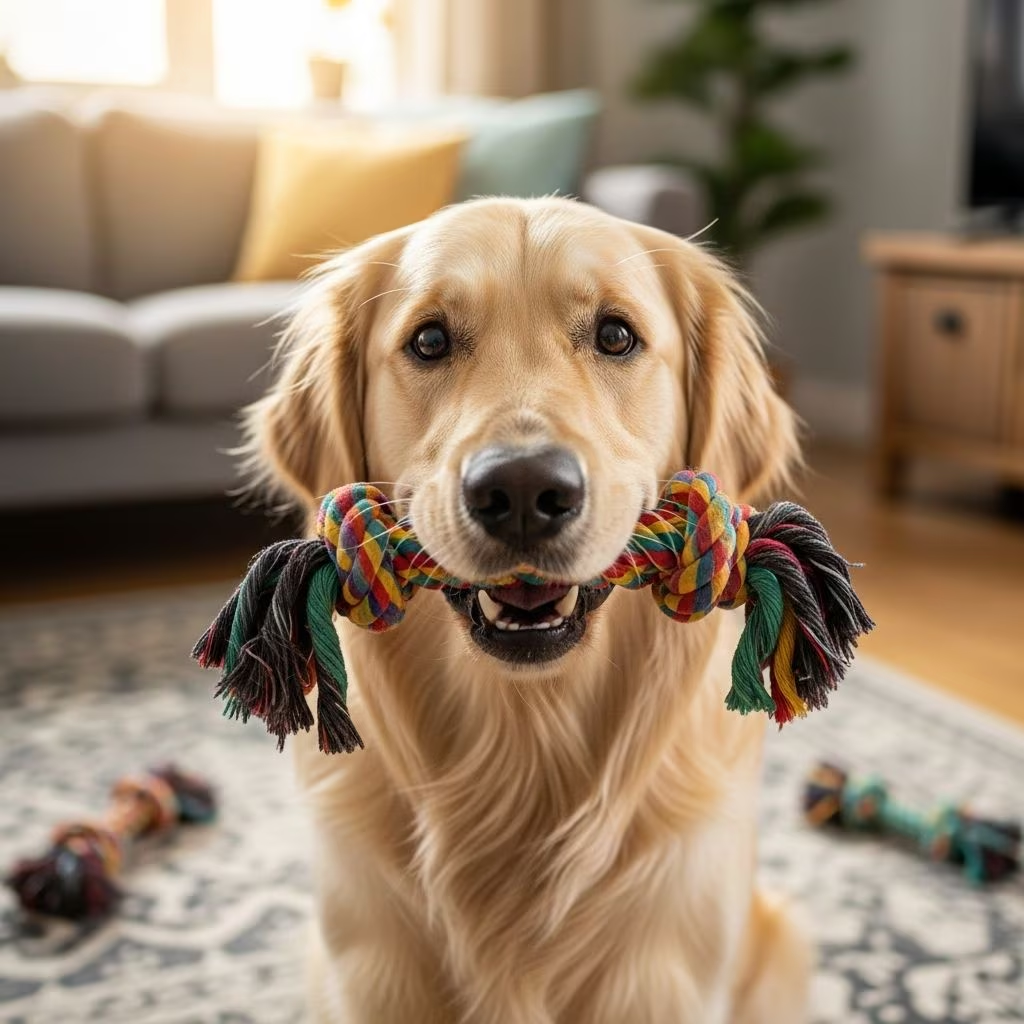
Dogs frequently approach their owners with a toy in their mouth, tail wagging furiously, as if offering a precious gift. This endearing behaviour puzzles many pet parents, but it reveals much about canine psychology, instincts, and emotions. From ancient pack dynamics to modern play invitations, understanding why dogs bring toys fosters stronger relationships and enhances daily interactions.
This comprehensive guide delves into the primary motivations behind this habit, drawing from veterinary insights and behavioural studies. Whether your dog drops a squeaky ball at your feet after work or nudges a plush toy during quiet evenings, these actions communicate needs, joys, and bonds in ways words cannot.
Instinct and Pack Mentality
At the core of many dog behaviours lies their evolutionary heritage from wolves. In wild packs, canines shared resources like food and objects to reinforce social bonds and hierarchy. Bringing a toy to a human family member mirrors this ‘gift-giving’ ritual, symbolising trust and inclusion in the ‘pack’.
Modern dogs view their owners as pack leaders or companions. Presenting a toy signifies ‘Here, this is for us to share’, strengthening group cohesion. This is especially prevalent in breeds with strong retrieving instincts, such as Labradors and Golden Retrievers, where carrying objects is hardwired.
- Resource Sharing: Wolves regurgitate food for pups or pack mates; toys represent a safe, playful equivalent.
- Social Bonding: Offering valuables demonstrates submission and affection to higher-ranking members.
- Territorial Comfort: Dogs may carry toys to new spaces, like greeting you at the door, to make environments feel secure.
Research from the American Kennel Club notes that such behaviours persist because they elicit positive responses from humans, reinforcing the cycle.
Invitation to Play
The most visible reason dogs bring toys is to spark playtime. High-energy pups, bored after a day alone, use toys as a direct ‘Let’s go!’ signal. Dropping it at your feet or holding it teasingly invites fetch, tug-of-war, or chase.
This is amplified in working breeds like Border Collies or Spaniels, bred for retrieving game. Even non-sporting dogs adopt it for mental and physical stimulation. If your dog prances with a toy upon your return home, they’re channeling pent-up energy.
| Breed Type | Play Style with Toys | Example Breeds |
|---|---|---|
| Retrievers | Fetch and drop | Labrador, Golden Retriever |
| Herders | Tug and chase | Border Collie, Australian Shepherd |
| Terriers | Shake and tease | Jack Russell, Staffordshire Bull Terrier |
Encouraging this builds exercise routines. Toss the toy briefly before settling into calmer activities to prevent overstimulation.
Seeking Attention and Affection
Dogs are masters of human psychology. If bringing a toy previously earned pets, laughs, or play, they’ll repeat it for attention. When ignored—say, during work calls—they escalate with their favourite toy, nudging insistently.
Beyond attention, it’s affection. Sharing a cherished toy means ‘You’re special’. In canine terms, possessions are personal; gifting one shows vulnerability and love. Vets observe this in secure, well-socialised dogs forming deep emotional ties.
- Learned Behaviour: Positive reinforcement trains dogs to associate toys with interaction.
- Emotional Outlet: Toys comfort during separation anxiety, presented upon reunion.
- Breed Influence: Companion breeds like Cavalier King Charles Spaniels excel at this ‘love language’.
Comfort and Security
Toys often serve as emotional pacifiers, akin to a child’s security blanket. Dogs bring them during stress, thunderstorms, or loneliness, seeking owner’s reassuring presence. The toy’s familiarity combines with human scent for double comfort.
Puppies especially carry toys everywhere, mimicking denning instincts where mothers provide objects for soothing. Adult dogs revert to this in new homes or during changes like moves. Observing body language—relaxed ears, soft eyes—distinguishes comfort-seeking from play.
Learned or Trained Responses
Training amplifies natural tendencies. Games like fetch teach ‘bring it back’, extending to greetings. Treat-rewarded toy presentation becomes habitual. Some owners unknowingly train this by excitingly accepting toys, creating a joyful loop.
Resource guarding opposites exist: dogs may hold toys without releasing, turning it into tease-play. Gentle training with two-toy swaps resolves this, promoting healthy sharing.
When It’s Not Just Play: Other Reasons
Not all toy-bringing is fun-driven. Boredom leads to dumping toys everywhere, seeking novelty. Anxiety prompts hoarding outdoors, treating yards as ‘ dens’. Medical issues like cognitive dysfunction in seniors mimic this—consult vets if sudden or obsessive.
Gender differences appear: females often ‘nest’ with toys maternally; males display conquest-style. Context matters: greeting toys signal joy; bedtime ones seek cuddle.
How to Respond Positively
Embrace the behaviour mindfully:
- Play Briefly: Engage 5-10 minutes to satisfy, then transition.
- Praise Verbally: ‘Good bring!’ reinforces without over-arousal.
- Rotate Toys: Prevent boredom with varied textures/sounds.
- Train Releases: Use trades for tuggers.
- Address Excess: Puzzle toys for solo time if constant.
Provide ample exercise (30-60 min daily walks) and mental games to curb attention-only motives.
Frequently Asked Questions (FAQs)
Why does my dog bring me a toy but not let me take it?
This playful ‘keep-away’ invites tug-of-war or chase. It’s control-fun, common in terriers/retrievers. Trade with another toy to teach release.
Why does my dog bring toys when I’m busy?
Attention bid! They’ve learned toys prompt response. Acknowledge quickly, then redirect to a bed with a chew.
Is toy-bringing a sign of dominance?
Rarely. Usually affection/trust. True dominance shows stiff posture/growling—train positively if concerned.
What if my dog brings random objects, not toys?
Exploration/pride display. Praise, then swap for safe toy to channel instinct.
Does breed affect this behaviour?
Yes—retrievers natural carriers; hounds less. All dogs adapt via environment/training.
Conclusion: Celebrate the Communication
Your dog’s toy offerings bridge species, conveying love, needs, and joy. By understanding and reciprocating thoughtfully, you nurture a profound, instinct-honouring bond. Stock quality toys, observe cues, and play—their wagging gratitude says it all.
References
- Why do dogs bring you toys? — Happy Staffy Co. 2023-05-15. https://www.happystaffyco.com/blogs/news/why-do-dogs-bring-you-toys
- Why Do Dogs Bring You Toys When You Get Home? — RIFRUF. 2023-08-20. https://rifrufqueens.com/blogs/blog/why-do-dogs-bring-you-toys
- Why Does My Dog Take All His Toys Outside? — Zach’s Pet Shop. 2024-02-10. https://zachspetshop.com.au/blogs/guides-advice/why-does-my-dog-take-all-his-toys-outside
- Why Does My Dog Bring Me Toys? — Outward Hound. 2023-11-05. https://outwardhound.com/furtropolis/dogs/why-do-dogs-bring-you-toys
- Why does your dog bring you random objects? — ElleVet Sciences. 2024-01-12. https://www.ellevetsciences.com/blog/why-does-your-dog-bring-you-random-objects/



