

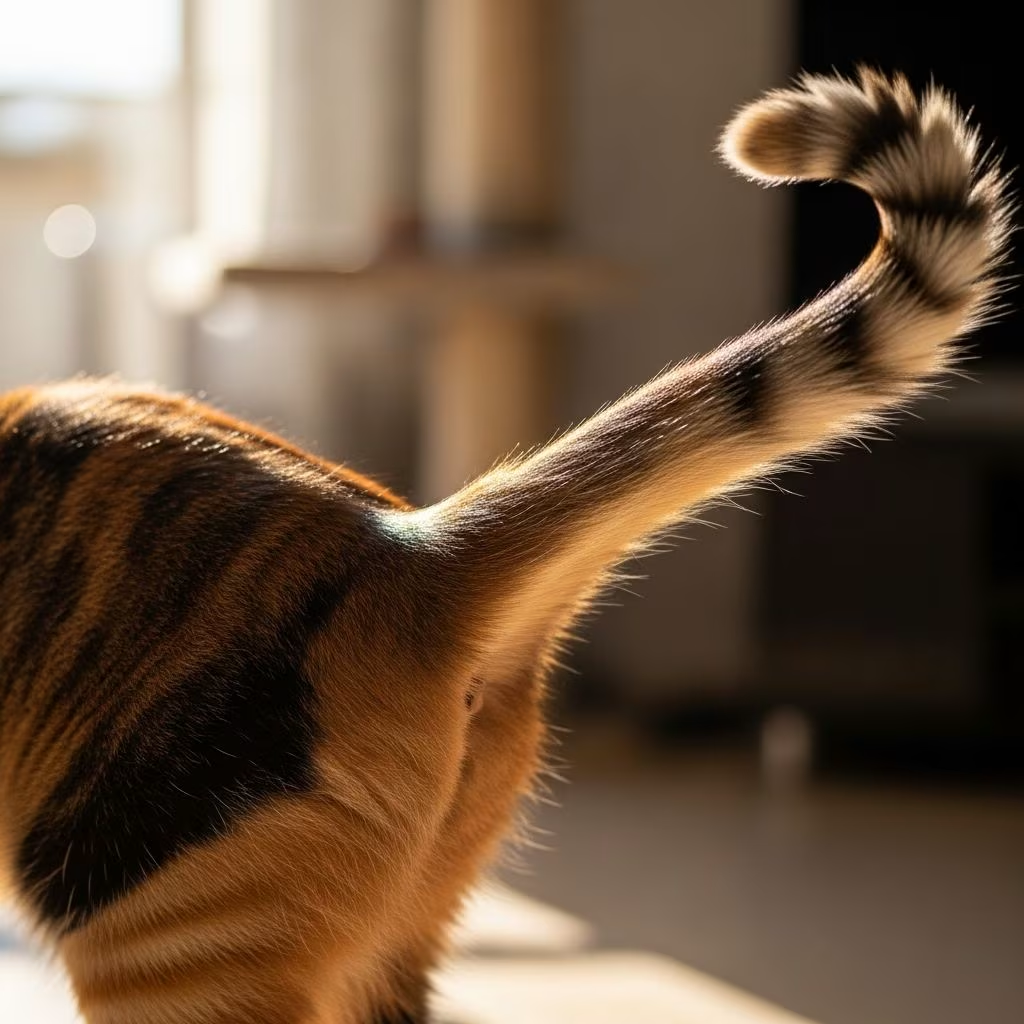
Why Does My Cat’s Tail Vibrate? Understanding Feline Body Language
Cats communicate in subtle and sophisticated ways, often expressing their emotions through body language rather than vocalizations. One particularly intriguing behavior that puzzles many cat owners is tail vibration—that distinctive quivering or trembling of the tail that resembles the rapid fluttering of a hummingbird’s wings. When you observe your feline friend’s tail vibrating, it can raise important questions about what your cat is truly feeling in that moment. Understanding this behavior is key to deepening your connection with your pet and responding to their needs appropriately.
What Is Tail Vibration and How Does It Differ From Other Tail Movements?
Tail vibration is a specific type of tail movement that deserves careful distinction from other common feline tail behaviors. Unlike slow swishing or aggressive lashing, which clearly signal irritation or agitation, tail vibration is a gentle quivering motion that typically occurs at the tip of the tail and lasts just a few seconds. This movement arises from quick muscle contractions controlled by the nervous system, making it one of the most honest signals in cat communication.
It’s important to recognize how tail vibration differs from related movements:
- Tail shaking—An uncontrolled movement similar to body shivering, often more pronounced and rapid than vibration
- Tail twitching—A slight movement typically of just the tip of the tail, often seen during hunting or mild irritation
- Tail swishing—A slow, deliberate side-to-side motion indicating focused attention or concentration
- Tail thrashing—An aggressive, energetic movement signaling irritation, annoyance, or anger
The vibration specifically appears as a quiver with the tail standing tall, distinguishing it from these other tail movements and indicating a very different emotional state in your cat.
The Science Behind Tail Vibration
From a physiological perspective, tail vibration is triggered by intense emotions—both positive and negative—that activate the cat’s nervous system. The tail contains numerous muscles and nerve endings, making it an incredibly expressive part of a cat’s body. When a cat experiences strong feelings, whether excitement, anticipation, focused hunting energy, or even distress, these emotions trigger rapid, involuntary muscle contractions in the tail. This neurological response bypasses vocal communication entirely, making tail vibration one of the purest expressions of a cat’s inner state.
Common Reasons Your Cat’s Tail Vibrates
Understanding the context in which your cat vibrates their tail is essential for interpreting its meaning accurately. Several distinct scenarios trigger this behavior, each revealing something different about your cat’s emotional state:
1. Excitement and Anticipation
One of the most common and positive reasons for tail vibration is sheer excitement and happy anticipation. You’ll frequently observe this behavior when you return home after being away, or during moments of joyful expectation like feeding time. Picture your cat standing beside its food bowl with wide eyes while its tail trembles eagerly—this isn’t merely hunger but genuine affection and joy bubbling over into physical expression.
During these moments of greeting behavior, your cat is displaying genuine happiness and affection toward you. The vibrating tail, combined with behaviors like head bunting, slow blinks, and vocalization, creates a complete picture of a content and loving feline companion. When greeted with such enthusiasm, respond calmly with gentle petting or soothing words to avoid overwhelming your sensitive cat.
2. Hunting Mode and Predatory Focus
Before your cat pounces on a toy—or perhaps an unsuspecting bug or insect—you may notice their tail begin to vibrate as if charged with energy. This vibration signals intense focus and concentration on their target. This isn’t aggression; instead, it’s your cat’s natural predatory instinct fully activated and locked onto prey.
What distinguishes hunting-related tail vibration from aggressive behavior is important to recognize:
- Hunting vibrations remain localized at the tail tip while the rest of the body maintains an upright, ready posture
- The cat’s ears remain forward and alert, focused on the target
- There is no hissing, flattened ears, or other signs of aggression or fear
- The cat is in a crouched or ready position, prepared to pounce
In contrast, aggressive tail behavior is characterized by full-tail lashing accompanied by flattened ears, hissing, or growling. Encouraging your cat to engage in this predatory play is actually beneficial enrichment, helping them exercise their natural instincts in a safe, controlled environment.
3. Overstimulation and Sensory Overload
Interestingly, tail vibration sometimes indicates discomfort despite occurring during seemingly positive interactions like petting sessions. If prolonged stroking leads to quivering tails, pay close attention to your cat’s other body language signals. This could mean your cat is nearing their sensory limit and needs a break from interaction.
Cats have sensitive areas where overstimulation occurs easily—particularly the base of their tails and their bellies. When these areas receive too much stimulation, cats may first signal their discomfort through tail vibration. If you ignore these warning signs, your cat may escalate to more obvious defensive behaviors like biting or scratching out of frustration. Learning to recognize this early warning sign helps you maintain a positive interaction with your cat and prevents unpleasant outcomes.
4. Territory Marking and Scent Spreading
Cats also display tail vibration during territorial marking behaviors, particularly when spraying to distribute scent and pheromones. During these moments, a cat’s tail stands up tall and quivers rapidly while the cat backs up to a surface. Some cats may also paddle their feet during this behavior. This is completely normal feline behavior and is not cause for concern, though it may be worth discussing with your veterinarian if your indoor cat is frequently spraying, as this can sometimes indicate stress or medical issues.
Real-Life Example: Understanding Your Cat’s Vibrating Tail
Consider the case of Bella, a five-year-old domestic shorthair, and her owner Mark. Each morning, Bella greets Mark with what initially appeared to be concerning behavior. As soon as Mark stepped out of his bedroom, Bella would run toward him sporting an upright vibrating tail, chirping excitedly while rubbing against his legs. Occasionally, she would nip lightly at his ankles.
Initially, Mark worried that Bella was angry or aggressive. However, after consulting with a feline behavior specialist, he learned that her tail vibration combined with her other behaviors meant nothing more than pure joy coupled with playful affection—the type of loving nips typical among kittens playing together. This realization transformed Mark’s understanding of his cat’s morning ritual, allowing him to appreciate the depth of his cat’s attachment and respond with appropriate warmth and gentleness.
When Tail Vibration Might Indicate a Problem
While most instances of tail vibration are benign and even positive, certain circumstances warrant attention. Understanding when tail vibration might signal a problem helps you identify when veterinary consultation becomes necessary:
Sudden and Persistent Shaking
A sudden onset of urgent tail shaking, especially if unexplained, could indicate that your cat is experiencing pain. This can occur if your cat has caught their tail in a door, been bitten by another cat, or developed another injury.
Signs of Pain or Discomfort
If tail vibration is accompanied by crying out, sensitivity to touch, limping, or any indication of pain, veterinary evaluation is warranted. Additionally, if your cat loses normal tail movement or if the tail hangs limp, this suggests potential nerve damage from injury.
Skin Irritation and Parasites
Cats with skin diseases affecting the rump and tail, such as flea allergy dermatitis, may tremble and shake their tails as they cope with intense itchiness. You may also observe short fur and scabby skin on the affected areas.
Neurological Concerns
Less commonly, uncontrolled shaking can indicate neurological issues. When this is the case, you’d expect to see additional symptoms such as ataxia (wobbly walking), fainting, lethargy, or seizure activity rather than isolated tail vibration.
Stress and Fear-Related Responses
Some cats may shake or quiver their tails when uncertain or worried. If you can identify a specific trigger—such as fireworks, a fox in the garden, or other environmental stressors—the vibration is likely a stress response rather than excitement.
When to Contact Your Veterinarian
You should seek professional veterinary advice if:
- Tail shaking is new and persistent without an obvious positive cause
- It occurs alongside pain signs such as crying out, sensitivity to touch, or limping
- Your cat experiences loss of tail movement or the tail becomes limp
- There are changes in toileting behavior, including straining, frequent trips to the litter box, or blood in urine
- The vibration is accompanied by other neurological symptoms
- Skin irritation or hair loss appears around the tail area
When in doubt, consulting your veterinarian can help rule out any medical concerns and provide peace of mind about your cat’s health.
Tips for Responding to Your Cat’s Tail Vibration
Once you understand what your cat’s tail vibration means, you can respond appropriately to support their wellbeing:
- During excitement and greeting: Respond calmly with gentle petting and soothing words to reinforce the positive bond between you and your cat
- During hunting play: Allow your cat to continue engaging in this natural and beneficial enrichment activity
- During petting sessions: Watch for tail vibration as an early warning sign of overstimulation and be prepared to stop before your cat escalates to biting or scratching
- During stressful situations: Identify and remove the stressor when possible, or provide safe spaces where your cat can retreat
- When uncertain: Observe other body language cues—ear position, eye dilation, body posture—to get a complete picture of your cat’s emotional state
Frequently Asked Questions About Cat Tail Vibration
Q: Is my cat’s vibrating tail always a sign of happiness?
A: No, while vibrating tails often indicate positive emotions like excitement and anticipation, they can also signal hunting focus, overstimulation, territorial marking, or stress depending on the context. Look at your cat’s overall body language and the situation to interpret the meaning accurately.
Q: How can I tell if my cat is overstimulated versus happy?
A: Happy vibrations typically occur during greeting, feeding time, or play with a relaxed body posture and forward ears. Overstimulation vibrations happen during petting sessions and may be accompanied by skin rippling on the back, dilated pupils, or attempts to move away. When in doubt, pause petting to see if your cat retreats or stays for more.
Q: When should I worry about my cat’s tail vibration?
A: Concern is warranted if the vibration is sudden, persistent, accompanied by signs of pain, associated with loss of tail movement, linked to changes in toileting behavior, or combined with other neurological symptoms. In these cases, contact your veterinarian promptly.
Q: Is tail vibration during hunting normal behavior?
A: Yes, tail vibration during hunting or stalking is completely normal predatory behavior. It indicates your cat is focused and engaged, and allowing this play provides valuable enrichment and exercise. There’s no need to discourage this behavior unless safety is a concern.
Q: Can stress cause tail vibration in cats?
A: Yes, some cats display tail vibration when experiencing stress or fear. If your cat’s vibrating tail is accompanied by hiding, flattened ears, or a puffed-up tail, they may be stressed. Identify and address the stressor, and provide safe spaces for your cat to retreat.
References
- Understanding Your Cat’s Tail Vibration: What It Means — Oreate AI. 2025. https://www.oreateai.com/blog/understanding-your-cats-tail-vibration-what-it-means/
- Cat Tail Shaking: Is it an Emergency? — Veteris UK. 2025. https://veteris.co.uk/petcare-advice/cat-tail-shaking
- How to Read Your Cat’s Tail Language and Meaning — PetMD. 2025. https://www.petmd.com/cat/behavior/cat-tail-language



