

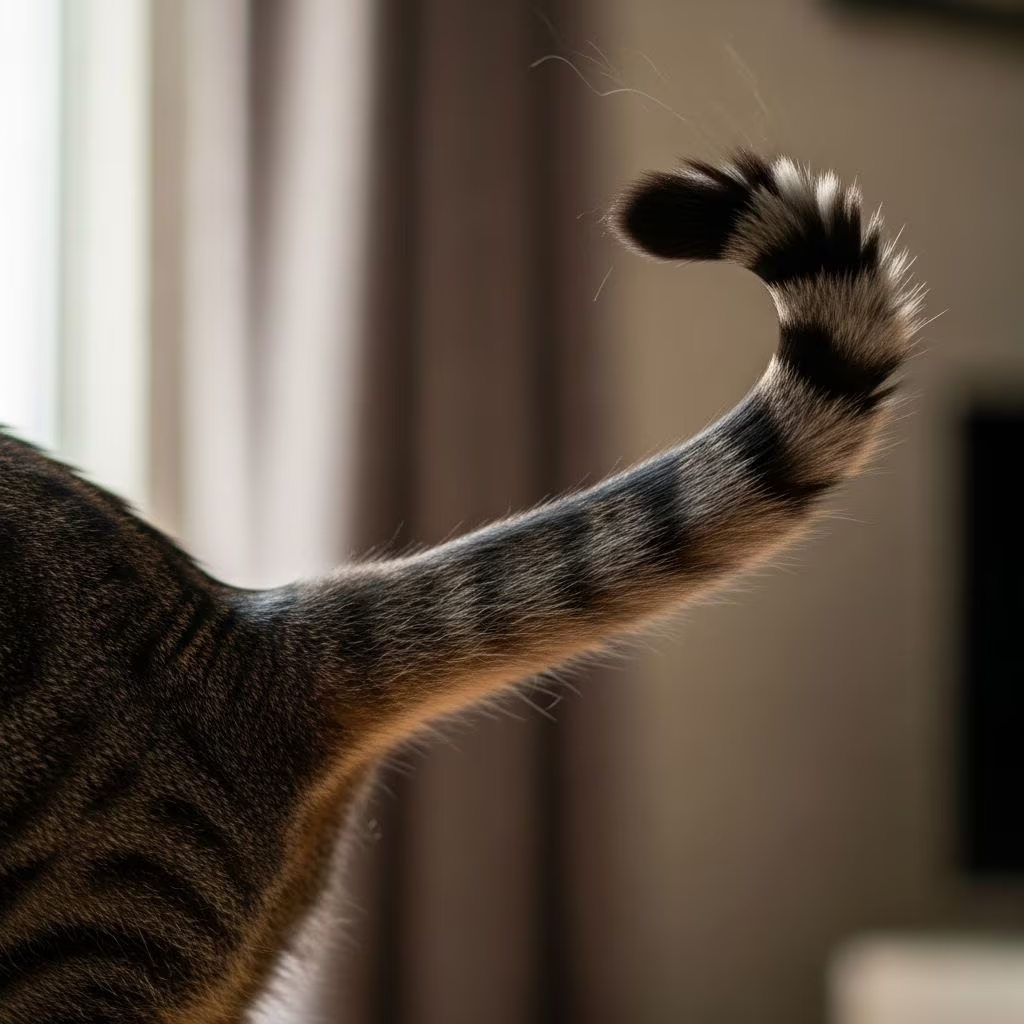
If you’ve noticed your cat holding its tail straight up while it vibrates or quivers, you’re not alone. This behavior, often called a “shaky tail” or “tinkle tail,” is a common form of feline communication. Cats vibrate their tails primarily to signal excitement, anticipation, or arousal, such as during greetings or territorial marking.
This natural reflex stems from rapid muscle contractions in the tail, controlled by the nervous system. It typically occurs when the tail is held vertically and quivers at the tip for a few seconds. Understanding this helps you better interpret your cat’s emotions and respond appropriately.
Reasons Why Cats Vibrate Their Tails
A vibrating tail doesn’t happen randomly; it’s triggered by specific situations like petting, seeing a loved one, or mealtime. While most instances indicate positive emotions like excitement, other contexts reveal different meanings. Below, we explore the primary reasons, drawing from veterinary behavior insights.
Excitement and Greeting Behavior
The most frequent cause is pure joy or anticipation, especially when your cat greets you after an absence or anticipates food. Picture your cat trotting toward you with tail upright and tip quivering—it’s their way of saying, “I’m thrilled to see you!” This vertical tail with vibration mimics how cats greet each other amicably in multi-cat households.
Veterinary behaviorists note this as a sign of affection and trust. Even senior cats display it daily, like during dinner prep, confirming it’s a reliable happiness indicator. Respond with calm petting to reinforce the bond without overwhelming them.
Urine-Spraying and Phantom Spraying
One unmistakable context is territorial marking. When spraying urine, cats back up to a surface, raise their tail vertically, and quiver it vigorously while releasing a stream backward. This communicates ownership to other cats via scent.
Interestingly, cats sometimes perform the same tail vibration without urine—a phenomenon called “phantom spraying” or “tinkle tail.” Triggers mirror actual spraying: stress from new pets, household changes, or insecurity. If you see quivering near furniture without wetness, observe for anxiety signs like hiding or excessive vocalization.
- Triggers for spraying/phantom spraying: New animals, rearrangements, or outdoor intruders.
- Differentiation: Accompanied by backing posture and targeting vertical surfaces.
- Solution: Provide more litter boxes, pheromone diffusers, or consult a vet for stress relief.
Anxiety and Insecurity
While less common, anxiety can prompt tail quivering, often as phantom spraying or general tail motion. An anxious cat might vibrate its tail amid restlessness, without clear excitement. This differs from calm states; look for dilated pupils, flattened ears, or pacing.
Environmental stressors like loud noises, visitors, or routine changes trigger this. Channel the energy positively: engage in play with wand toys to release pent-up tension. If persistent, rule out medical issues with a vet visit.
Anger, Irritation, or Overstimulation
Anger typically shows as rapid swishing or thumping, not pure vibration. However, subtle quivering can precede escalation if the cat feels overstimulated during petting. Sensitive areas like the tail base or belly cause this “warning quiver” before swatting or biting.
Distinguish by context: upright quivering with relaxed body signals positivity; low, twitching tail with tense posture means back off. Rapid side-to-side thrashing indicates high irritation—rectify the trigger immediately.
Hunting Mode and Focus
Before pouncing on prey or toys, cats often vibrate their tail tip while crouched and focused. This isn’t aggression but intense concentration, with the tail acting as a balance aid. Upright posture differentiates it from defensive behaviors.
Encourage this instinct with interactive toys to satisfy their predatory drive, preventing boredom-related issues.
Other Potential Causes: Medical Concerns
Rarely, excessive or uncontrolled tail shaking signals health problems. Neurological issues like seizures cause rhythmic, repetitive quivers, often with wobbling (ataxia), lethargy, or fainting.
Bladder obstruction in males prompts frantic tail flicking amid straining. This is an emergency—seek immediate vet care if urination fails. Allergies or muscle spasms during sleep can mimic twitching, but context clarifies.
| Behavior | Meaning | Body Language Cues | Response |
|---|---|---|---|
| Vibrating upright tail | Excitement/greeting | Relaxed ears, purring | Pet gently |
| Quivering while backing up | Spraying/phantom | Targeted at surfaces | Address stress |
| Twitching tip in crouch | Hunting focus | Stalking posture | Provide toys |
| Low quiver + swish | Irritation/anxiety | Tense body, dilated eyes | Give space |
| Uncontrolled shaking | Possible medical | Ataxia, lethargy | Vet visit |
Understanding Cat Tail Language Overall
Tails are felines’ emotional barometers. Beyond vibration:
- Slow swish: Content observation.
- Fast lash: Agitation—stay away.
- Puffed tail: Fear or aggression.
- Wrapped around body: Insecurity.
- Thumping: Annoyance or hunting prep.
Context is key: combine tail with ears, whiskers, and vocalizations for full reads. Multi-cat homes amplify these signals for social harmony.
Frequently Asked Questions (FAQs)
Is it normal for a cat’s tail to vibrate?
Yes, it’s completely normal and part of standard cat body language. Many cats use it daily for happiness, greetings, or marking. Monitor if paired with distress signs.
What does a vibrating cat tail mean?
It signals excitement, anticipation, arousal, anxiety, or spraying intent. Upright with friendliness means joy; other postures suggest caution.
Why is my cat twitching its tail while sleeping?
Sleep twitching often reflects dreaming, muscle relaxation, or warding off disturbances. Excessive cases may indicate allergies or seizures—consult a vet if concerning.
Should I worry about my cat’s quivering tail?
Usually not, if contextual (e.g., greetings). Worry if uncontrolled, with illness symptoms like straining or wobbling—emergency vet needed.
How can I stop phantom spraying?
Reduce stress via play, pheromones, more resources. Spay/neuter helps; vet check for UTIs.
By attuning to your cat’s tail vibrations, you’ll deepen your bond and catch issues early. Observe patterns, respect signals, and enjoy the nuanced world of feline expression.
References
- Why Do Cats Vibrate Their Tails? Reading Your Cat’s Body Language — Kinship.com. 2023. https://www.kinship.com/cat-behavior/why-does-my-cats-tail-vibrate
- Understanding Your Cat’s Tail Vibration: What It Means — Oreate AI (Veterinary behaviorist insights). 2024. https://www.oreateai.com/blog/understanding-your-cats-tail-vibration-what-it-means/8caf8c8095dda47c0b2b0e504a6d0aa5
- Cat Tail Shaking: Is it an Emergency? — Veteris Veterinary Centre. 2024. https://veteris.co.uk/petcare-advice/cat-tail-shaking
- Why Do Cat Tails Shake and Quiver? — Cats.com. 2023. https://cats.com/why-do-cat-tails-shake-or-quiver
- How to Read Your Cat’s Tail Language and Meaning — PetMD. 2024-01-14. https://www.petmd.com/cat/behavior/cat-tail-language



