

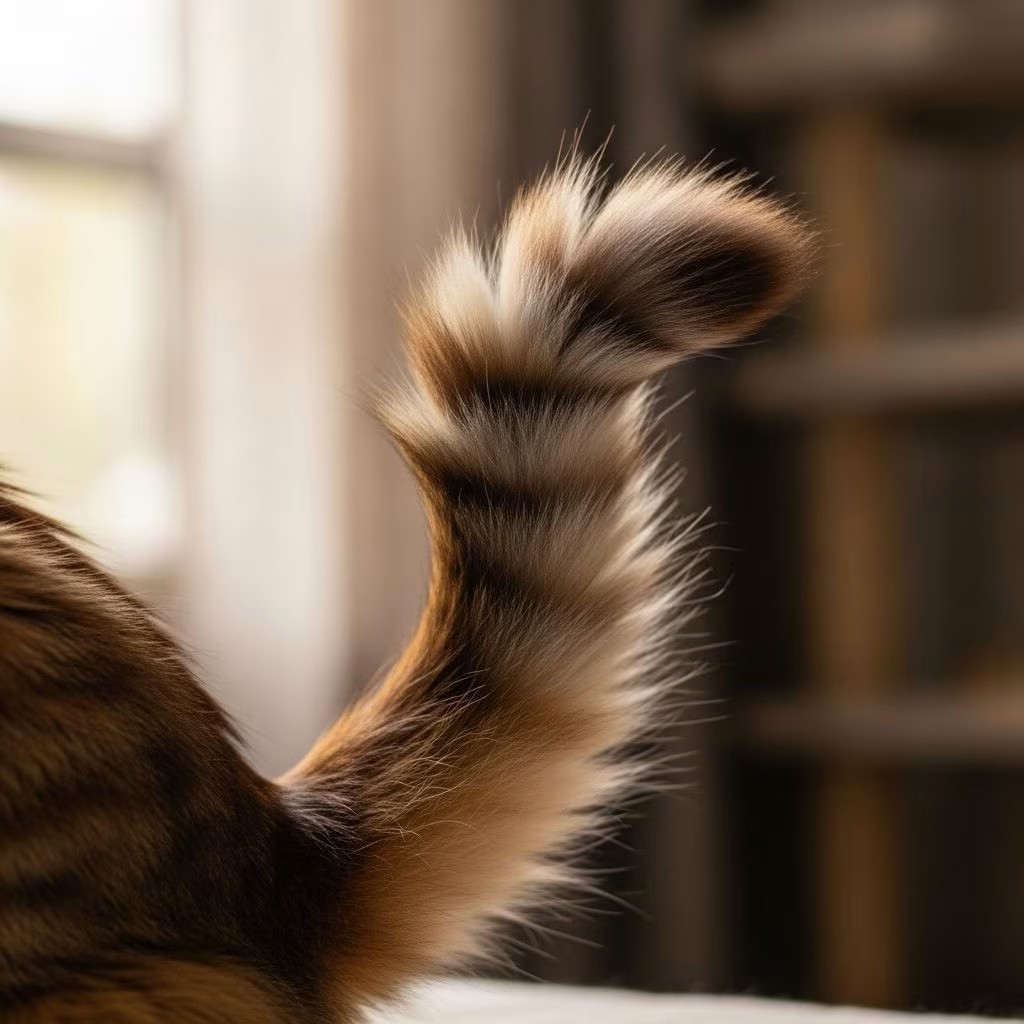
Cats communicate volumes through their tails, and twitching is one of the most common signals. A twitching tail can indicate excitement during play, irritation needing space, happiness upon greeting, or even stress-related spraying. While most twitches are normal, persistent or painful ones may signal health issues like feline hyperesthesia syndrome or spinal problems, warranting a vet visit.
Table of Contents
- Hunting or Playing
- Annoyance or Overstimulation
- Spraying
- Excitement or Happiness
- Tail Twitching While Sleeping
- Medical Causes of Tail Twitching
- When to Worry About Cat Tail Twitching
- Frequently Asked Questions
Hunting or Playing
Cats are natural predators, and tail twitching plays a key role in their hunting instincts, even during play. When focused on prey like a bird, insect, or toy, cats exhibit tail flicks and quivers as an involuntary response to adrenaline and concentration.
Observe these signs during hunting mode:
- Rapid quivering at the tail tip, resembling a rattlesnake’s rattle, just before a pounce.
- Low crouch with intense staring at the target.
- Side-to-side flicks indicating alertness and focus.
This behavior helps balance and signals heightened arousal. Provide interactive toys like feather wands or catnip toys to channel this energy safely, preventing boredom-related issues.
For instance, when a cat spots movement outside a window—such as a squirrel or falling leaf—the tail twitches side-to-side, fast or slow, showing undivided attention. Indoor cats often display this with laser pointers or wand toys, mimicking wild hunts. Understanding this prevents misinterpreting it as agitation.
Annoyance or Overstimulation
One of the most frequent reasons for tail twitching is annoyance or overstimulation. A thrashing or rapidly flicking tail tip warns that your cat has had enough petting or interaction.
Certified cat behaviorist Joey Lusvardi notes, “A cat that’s annoyed will have a tail that’s moving a lot,” often escalating to swats or hisses if ignored. Key indicators include:
- Thrashing motion from the base of the tail.
- Quick tip twitches during petting sessions.
- Paired with flattened ears, dilated pupils, or growling.
During stroking, if twitching starts, stop immediately—it’s an early conflict signal. Cats under stress from other pets or loud noises may also thrash tails, demanding space. Respect these cues to avoid bites and build trust.
Overstimulation builds gradually; watch for subtle shifts from purring to tense posture. Short, gentle sessions followed by breaks keep interactions positive.
Spraying
Spraying involves a tall, quivering tail as cats release urine to mark territory, dispersing pheromones. Veterinarian Daniel Dixon explains it’s often stress-induced, especially from other cats.
Recognize spraying by:
- Upright tail with rapid quivers or vibrations.
- Small urine stream on vertical surfaces like walls or furniture.
- Occurs in intact or stressed cats, indoors or out.
Rule out medical causes first, then address stressors like new pets or changes. Spaying/neutering reduces this behavior significantly. Clean marked areas with enzymatic cleaners to erase scents.
Excitement or Happiness
Contrasting irritation, some twitches signal joy. An upright tail with quick vibrations often accompanies greetings or mealtime anticipation, dubbed “mock spraying.”
Lusvardi describes it as a “happy dance,” with rubbing against legs. Signs include:
- Vertical tail shake upon your return home.
- Paired with purring, kneading, or head-butts.
- Straight-up quiver for friendly curiosity.
This vibrissae-assisted movement releases excess energy, like a pressure valve. Celebrate these moments with play or treats to reinforce bonding.
Tail Twitching While Sleeping
Gentle tail flicks during sleep are harmless, indicating dreaming—often of hunts. Rapid eye movement (REM) sleep triggers muscle twitches, including the tail, as cats relive chases in dreamland.
No need for concern unless accompanied by distress vocalizations or unusual rigidity. It’s a sign of deep, healthy sleep cycles.
Medical Causes of Tail Twitching
Though rare, abnormal twitching points to health issues. Feline hyperesthesia syndrome (FHS) causes bursts of twitching, skin rippling, and tail-chasing due to neurological sensitivity.
| Condition | Symptoms | Possible Causes |
|---|---|---|
| Feline Hyperesthesia Syndrome (FHS) | Sudden twitches, rippling skin, excessive grooming | Neurological disorder, genetics, stress |
| Spinal Cord Impingement | Involuntary twitching, pain on touch | Masses, infections, inflammation |
| Trauma | Twitching, reduced control, sensitivity | Injuries to spine/pelvis/tail |
| Skin Conditions | Itchy twitching, scratching | Fleas, allergies |
| Infections | Twitching with lethargy | Viral/parasitic/fungal |
These mimic normal behaviors but persist or intensify. Early vet diagnosis via exams or imaging is crucial.
When to Worry About Cat Tail Twitching
Normal twitching is contextual and brief; worry if:
- Persistent, intense, or painful-looking.
- Paired with back sensitivity, rippling, or chasing.
- Excessive vocalizing or spraying indoors.
- Sudden onset in calm settings.
Context matters: thrashing during petting means stop; constant quivers may need checks. Monitor alongside ears, whiskers, and posture for full body language read.
Frequently Asked Questions (FAQs)
Do cat tails twitch when they’re happy?
Yes, some cats twitch their tails when happy or excited, like a quick upright quiver during greetings.
Why does my cat twitch its tail while sleeping?
Tail twitching during sleep is normal, signaling dreams, often of hunting.
Is tail twitching a sign of pain in cats?
It can be if persistent or with sensitivity; consult a vet for intense cases.
What does a thrashing tail mean?
Thrashing indicates irritation or anger—give space to avoid escalation.
Can stress cause tail twitching?
Yes, stress triggers twitching, spraying, or agitation signals.
References
- Why Is My Cat’s Tail Twitching? Is This Normal? — Chewy. 2023-05-15. https://www.chewy.com/education/cat/training-and-behavior/cat-tail-twitching
- Cat Tail Twitching: What Does it Mean? — Whitney Veterinary Hospital. 2024-02-10. https://whitneyvet.com/cat-tail-twitching/
- How to Read Your Cat’s Tail Language and Meaning — PetMD. 2025-01-05. https://www.petmd.com/cat/behavior/cat-tail-language
- Quivering, Wagging, Puffed Up: What is Your Cat’s Tail Trying to Tell You? — YouTube (Jackson Galaxy). 2023-08-20. https://www.youtube.com/watch?v=JLi3Z_Mlshk
- What is your cat’s tail telling you? — Blue Cross. 2024-11-12. https://www.bluecross.org.uk/advice/cat/behaviour-and-training/what-is-your-cats-tail-telling-you



