

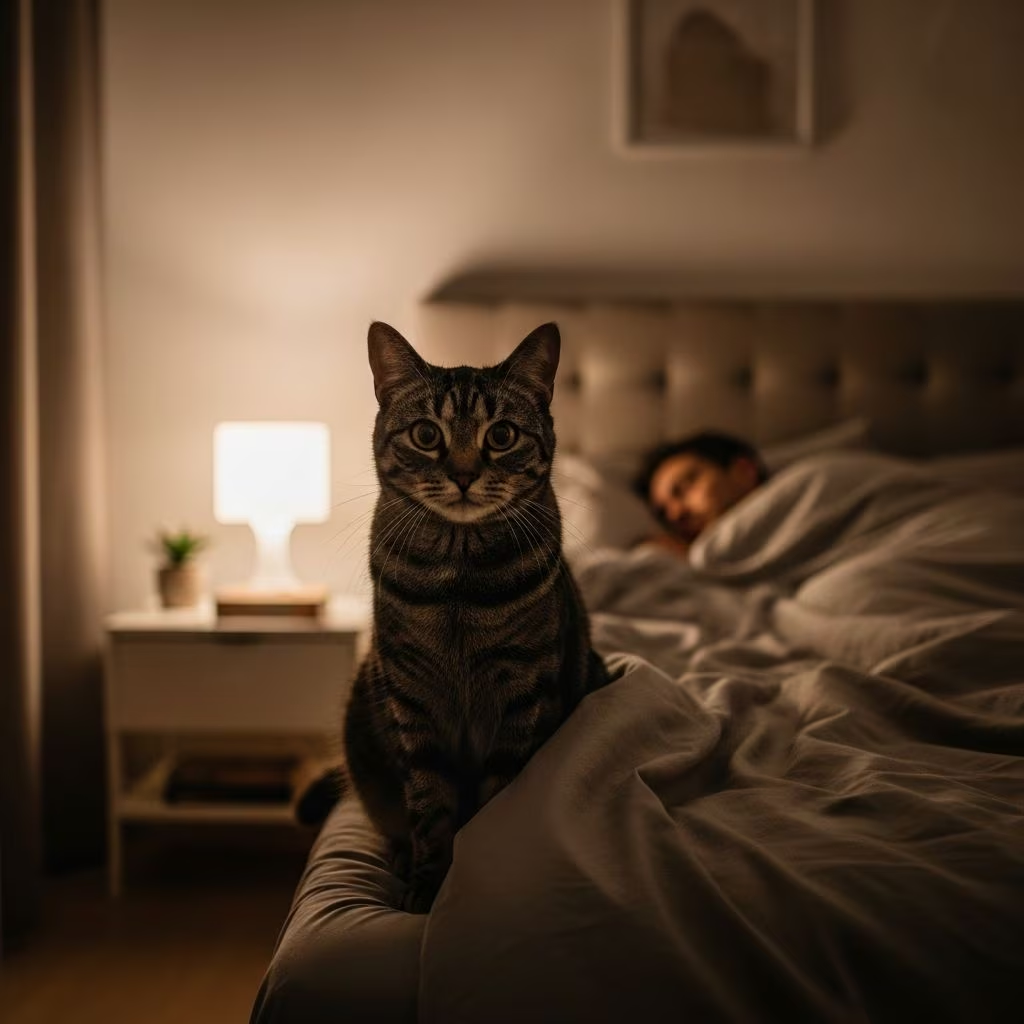
Cats often stare at their sleeping owners due to a combination of affection, natural instincts, curiosity, and environmental factors. This common behavior, explained by veterinarians, reflects their crepuscular nature, bonding, or needs like hunger, rather than anything sinister.
Is it normal for cats to watch you sleep?
Yes, it is completely normal for cats to watch you while you sleep. Veterinarian Dr. Clara Whitmore notes that cats are naturally observant creatures who enjoy monitoring movements and sounds in their surroundings, including their human companions. This vigilance helps them assess their environment and ensures the safety of their family. While it might feel unsettling to wake up to intense feline eyes, this behavior typically indicates your cat feels safe and comfortable in your presence.
Cats’ keen senses make them hyper-aware during rest periods. As crepuscular animals—most active at dawn and dusk—they align their peak alertness with human sleep times, leading to this watchful routine. Studies on feline behavior confirm that such observation is rooted in evolutionary instincts for territory monitoring and social bonding, not malice.
7 reasons why your cat is watching you sleep
Understanding the motivations behind your cat’s nighttime staring can deepen your bond and help address any underlying needs. Here are the seven primary reasons, supported by veterinary insights:
- Your cat loves you. The simplest and most heartwarming explanation: your cat associates you with safety, security, and comfort. Dr. Whitmore explains that watching you sleep allows them to feel connected and reassured by your presence. Domesticated cats form strong attachments to caregivers, blending instinct with emotional bonding.
- Your cat is hungry. Cats are highly food-motivated and nocturnal in activity. If staring occurs in early morning hours, it may be a subtle plea to refill their bowl. Nighttime vigilance often coincides with feeding routines. Providing an automatic feeder can mitigate this.
- Your cat is bored and wants to wake you. A sleeping human offers little entertainment. Your cat may stare intently, hoping to rouse you for play, pets, or interaction. This escalates if they paw or meow, signaling boredom during their active hours.
- Your cat is anxious. Less commonly, persistent staring indicates anxiety from environmental changes, new pets, or disruptions. Accompanied by restlessness or vocalization, it reflects unsettled emotions. Dr. Deepraj Prajapati advises checking for stress triggers.
- Your cat is curious. Cats’ innate curiosity draws them to your sleeping quirks—tossing, turning, snoring. These human behaviors intrigue them, prompting close observation without deeper intent.
- Your cat is crepuscular. Naturally active at twilight, cats peak during human sleep. Dr. Whitmore highlights this mismatch explains their watchfulness, wondering at your ‘laziness’ while they prowl. Veterinary sources confirm crepuscular patterns drive much feline nocturnality.
- Your cat is protective or vigilant. Some cats exhibit mild guarding, patrolling territories including you. This stems from instincts to monitor for threats, though less pronounced than in dogs. It’s often affection disguised as caution.
Can this behavior indicate emotional needs or health issues?
Staring often signals emotional security, with cats seeking quiet reassurance or anticipating routines like feeding. In bonded households, it’s a non-vocal communication of closeness. However, context matters.
Intense, repetitive staring with restlessness, excessive meowing, altered sleep, or aggression may indicate stress, anxiety, or health problems. Dr. Prajapati notes environmental shifts, new pets, or routine disruptions heighten this. In older cats, it could link to cognitive decline, hyperthyroidism, pain, or sensory loss.
| Normal Staring Signs | Concerning Staring Signs |
|---|---|
| Relaxed posture, occasional blinking, during usual sleep times | Intense unblinking stare, pacing, vocalizing, new behavior |
| Followed by purring or cuddling upon waking | Paired with aggression, weight loss, or lethargy |
| Consistent with cat’s routine | Sudden onset after life changes |
If symptoms persist, consult a vet to rule out issues. Routine checks ensure your cat’s well-being.
Bottom line
Cat staring while you sleep is generally harmless and positive, signifying trust and affection unless distressed signs appear. Dr. Whitmore reassures it’s not unnatural; enjoy it as a compliment to your companionship. Enhance their comfort with play sessions before bed, puzzle feeders, or cozy spots nearby to align schedules.
Frequently Asked Questions (FAQs)
Is my cat guarding me while I sleep?
Not typically guarding like dogs, but showing curiosity or love. Dr. Whitmore clarifies cats sleep near favorites for proximity, not protection duty. Vigilance may mimic guarding, rooted in territory checks.
Why is my cat so clingy when I sleep?
Cats crave closeness during your vulnerability. Independent yet attached, they seize asleep opportunities for bonding without disturbance. This amplifies at night when you’re still.
Is it normal for my cat to check on me while I’m sleeping?
Yes, it’s a sign of affection and vigilance. Cats patrol territories, including you, due to curiosity. Environmental checks are common.
Could my sleeping environment cause this behavior?
Possibly—new scents, noises, or lights attract attention. Ensure stability; a warm bed spot may satisfy needs.
When should I worry about my cat’s nighttime staring?
Worry if paired with distress, unusual aggression, or physical changes. Vet evaluation rules out anxiety or illness.
Tips to Manage Your Cat’s Nighttime Watching
To reduce staring if bothersome:
- Establish evening play routines to tire them out.
- Use timed feeders for hunger cues.
- Provide elevated perches for observation without bed invasion.
- Maintain consistent schedules for security.
- Enrich environment with toys and scratching posts.
These align human-cat rhythms, fostering harmony.
References
- Does your cat watch you sleep? A vet explains what it really means — The Indian Express. 2025-01-10. https://indianexpress.com/article/lifestyle/pets-animals/does-your-cat-watch-you-sleep-a-vet-explains-what-it-really-means-10432789/
- Why Does My Cat Watch Me Sleep? The Behavior Explained — Kinship. 2024-11-15. https://www.kinship.com/cat-behavior/why-does-my-cat-watch-me-sleep
- Why does my cat keep coming to check on me while I’m sleeping? — Dial a Vet. 2025-05-20. https://www.dialavet.com/vet-answers/cat-watching-sleeping-behavior-27639
- Why Does My Cat Stare at Me While I Sleep? 6 Vet-Reviewed Reasons — Catster. 2025-03-12. https://www.catster.com/cat-behavior/why-does-my-cat-stare-at-me-while-i-sleep/



