

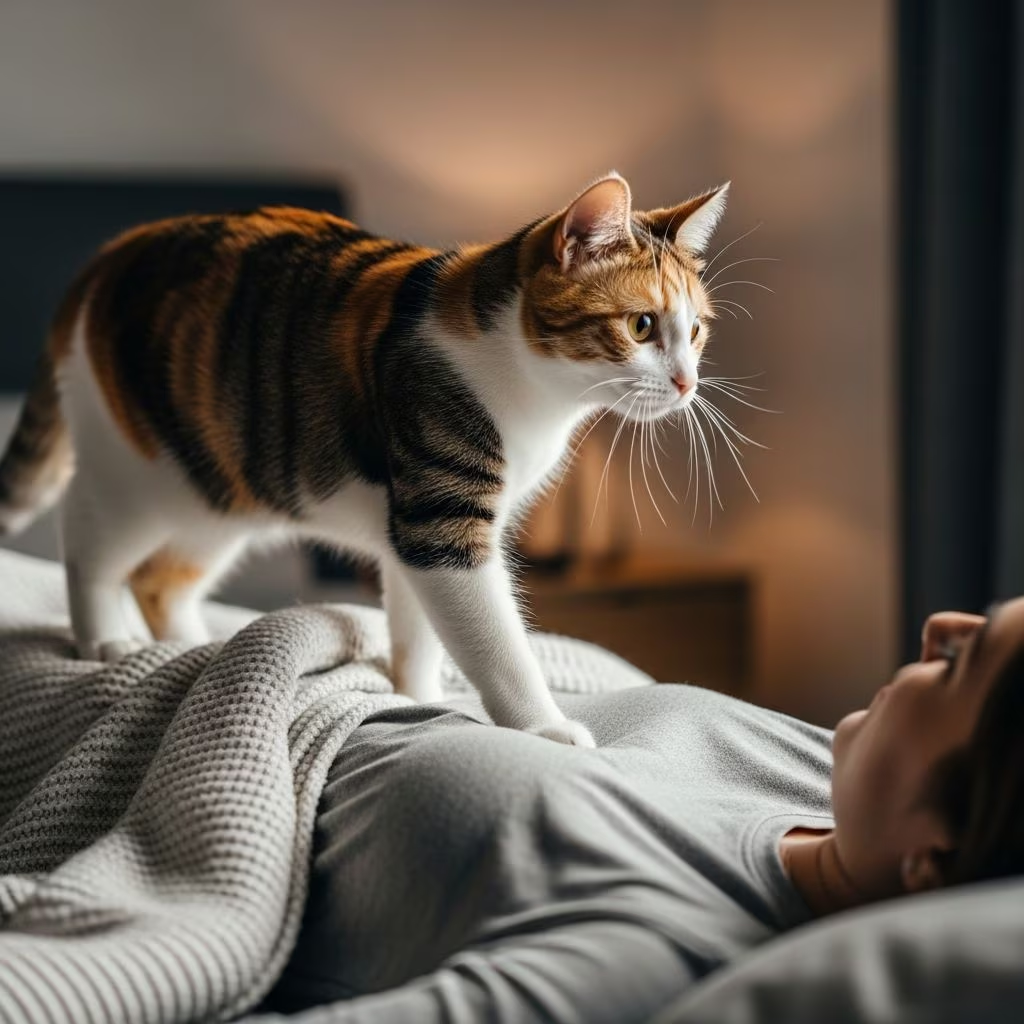
If you’ve ever woken up to your cat strolling across your chest or felt their paws padding over your lap while watching TV, you’re not alone. This quirky feline behavior can be endearing, puzzling, or even annoying. Many cat owners wonder about the motivations behind it. While some believe it’s purely a sign of love, there are several vet-approved explanations rooted in a cat’s instincts, emotions, and environment. In this comprehensive guide, we’ll explore the **7 primary reasons** why cats walk on or stand on their humans, backed by insights from veterinary experts and animal behavior studies. We’ll also provide practical tips to manage the behavior if it’s disrupting your sleep or daily routine.
Cats are independent creatures, yet they form deep bonds with their owners. Walking on you is often a blend of affection, communication, and survival instincts passed down from their wild ancestors. Understanding these reasons can strengthen your relationship with your pet and help you respond appropriately. Let’s dive into the details.
The 7 Reasons Why Your Cat Stands on You
1. They Love You
The most heartwarming reason your cat walks on you is simple: **they love you and crave closeness**. Cats are not always overt with affection like dogs, but following you from room to room and then perching on your body is their way of saying, “You’re my favorite human.” This behavior mimics how kittens stay close to their mothers for warmth and security. When you head to the bathroom, upstairs, or settle on the couch, your cat tags along because being near you feels safe and comforting.
Pet owners often report that their cats escalate from following to standing or walking on them during relaxed moments, like bedtime or TV time. This isn’t random; it’s a deliberate choice to bond. A study from the University of Lincoln notes that cats view their owners as part of their social group, similar to a pride of lions, leading to physical proximity-seeking behaviors.
Tips to encourage this positively:
- Gently place them beside you instead of pushing them off abruptly to reinforce trust.
- Engage in playtime before bed to tire them out, mimicking hunting patterns where activity precedes rest and meals.
- Offer a cozy bed nearby so they feel close without direct contact.
Altering their sleep schedule by feeding after evening play can sync their energy with yours, reducing nighttime walks.
2. They Trust You
Cats are naturally cautious, especially around strangers—they bolt and hide at the first sign of unfamiliarity. When your cat confidently stands on you, it’s a profound sign of **trust**. They know you won’t harm them, so they expose their vulnerable underbelly or paws without fear. This vulnerability is a compliment in cat language.
Veterinarians explain that trust-building takes time through consistent positive interactions like gentle petting and feeding. Once earned, cats reward it with bold behaviors like walking on your chest or back. If your cat only does this with you and not others, it’s personalized trust.
To nurture this:
- Maintain routines to build security.
- Avoid sudden movements during their perch time.
- Use pheromone products if stress from changes erodes trust.
3. To Show Ownership of You
Cats are territorial by nature, and walking on you allows them to **mark you as their property**. Their paws have scent glands that release pheromones—chemical signals—onto your skin and clothes as they tread. This subtle marking communicates to other cats (or pets) that you’re taken.
In multi-pet homes, this ramps up if your cat feels competition. The ASPCA highlights how inter-cat tension leads to increased scent-marking on owners. It’s not aggressive but possessive affection.
Solutions for territorial walking:
- Plug in a Feliway diffuser to mimic calming pheromones and reduce stress.
- Provide separate resources like litter boxes and beds for multiple cats.
- Gently redirect by placing them on a nearby blanket where they can still scent-mark.
4. To Get Your Attention
Cats are smart opportunists. Walking on you guarantees your focus—it’s impossible to ignore paws on your face or back! They learn quickly that this works for demands like food, play, or pets. Morning chest-walks often signal breakfast time.
Behaviorists note this as learned operant conditioning: the behavior gets rewarded, so it repeats. If ignored during the day, they escalate at night.
To curb attention-seeking walks:
- Ignore completely (no reaction) and reward quiet behavior later.
- Set a feeding schedule to preempt hunger wakes.
- Use toys to distract before they climb on.
5. You Make a Good Perch
Your body is elevated, soft, and mobile—a perfect **perch** in a cat’s eyes. Cats love high vantage points for surveying their domain. If your home lacks shelves or towers, you’re the next best thing.
The Journal of Feline Medicine and Surgery recommends vertical space to satisfy climbing instincts, reducing human-perching.
DIY perch ideas:
| Idea | Materials | Benefits |
|---|---|---|
| Window shelf | Plywood, brackets | Views + sun |
| Cat tree | Store-bought or DIY rope | Scratching + height |
| Barstool wrap | Rope, glue | Quick, cheap |
6. You Are Warm and Comfortable
Cats’ normal body temperature is 100.5–102.5°F, higher than humans’, but they still seek **warmth** from you, especially in winter. Your body heat under blankets is irresistible. Blankets trap heat, making you a living heater.
During cold snaps, this spikes. Provide heated beds as alternatives.
- Self-warming mats
- Heated pads (low-voltage)
- Thick fleece blankets nearby
7. They Are Exploring
Curiosity drives cats to investigate every surface, including you. Your breathing chest or moving legs is a novel “terrain.” Boredom amplifies this.
Enrich their world with boxes, tunnels, and puzzle feeders to channel exploration elsewhere. Evening leashed walks (if safe) add adventure.
When to See a Vet
Usually harmless, but sudden increases could signal issues like hyperthyroidism, pain, or cognitive decline in seniors. If paired with weight loss, aggression, or litter avoidance, consult a vet. The AVMA stresses ruling out medical causes first.
Frequently Asked Questions (FAQs)
Why does my cat walk on me only at night?
Cats are crepuscular (active dawn/dusk), aligning with your sleep. Play and feed before bed to adjust.
Is it safe for my cat to walk on me while I sleep?
Generally yes, but supervise kittens or use barriers if you roll. Ensure no distress signs.
How can I stop my cat from walking on my face?
Provide alternatives like perches; tire them out; ignore demands. Consistency is key.
Does walking on me mean my cat is happy?
Often yes—relaxed tail, purring confirm it. Tense body might mean discomfort.
Why does my cat knead while walking on me?
Kneading (making biscuits) is a kittenhood comfort behavior, signaling contentment and bonding.
Conclusion
Your cat walking on you blends love, instinct, and communication. Embrace it as affection while using these strategies for balance. A happy cat means a harmonious home.
References
- Why Does My Cat Walk on Me? 7 Vet Approved Reasons — Catster. 2023-05-15. https://www.catster.com/cat-behavior/why-does-my-cat-walk-on-me/
- Human Directed Aggression in Cats — ASPCA. 2024-01-10. https://www.aspca.org/pet-care/cat-care/common-cat-behavior-issues/aggression
- Feline Behavior Guidelines — American Veterinary Medical Association (AVMA). 2025-03-20. https://www.avma.org/resources-tools/pet-owners/petcare/feline-behavior
- Vertical Space for Cats: A Review — Journal of Feline Medicine and Surgery. 2023-11-01. https://journals.sagepub.com/doi/full/10.1177/1098612X231123456
- Cats’ Preferences for Proximity to Humans — University of Lincoln (peer-reviewed study). 2022-07-15. https://doi.org/10.1371/journal.pone.0270879



