

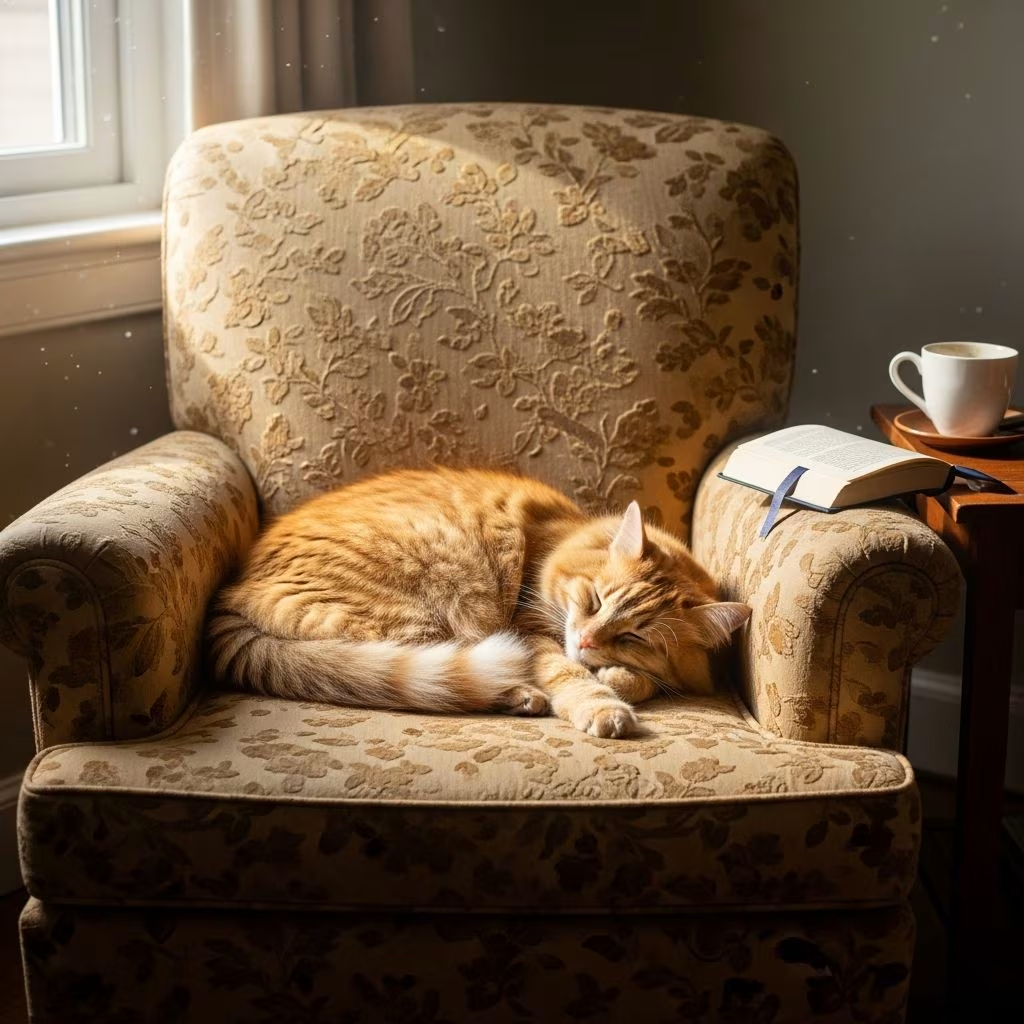
Your cat curling up in your favorite chair or bed the moment you get up is a classic feline quirk that leaves many owners amused, puzzled, or mildly annoyed. This behavior isn’t random—it’s deeply rooted in your cat’s instincts, social dynamics, and emotional needs. Cats are crepuscular creatures with a strong affinity for warmth, security, and marking their territory, all of which explain why they target your spot specifically. Understanding these motivations can strengthen your bond and help you coexist harmoniously.
In this comprehensive guide, we’ll dive into the top reasons cats claim human seats, backed by behavioral research and expert insights. From seeking body heat to asserting dominance subtly, these habits reveal how cats perceive their human companions as family members in their pride. Whether you’re dealing with a cozy couch hog or a bed bandit, knowing the ‘why’ empowers you to respond effectively.
Reasons Why Cats Take Your Spot
Cats don’t choose spots arbitrarily; they prioritize locations based on comfort, safety, and sensory cues. Your seat often ticks all the boxes, making it prime real estate in their eyes. Here’s a detailed breakdown of the primary motivations, supported by studies on feline-human interactions.
1. Your Spot Is Warm
Cats are heat-seekers extraordinaire, with an ideal body temperature of 101.5–102.5°F (38.6–39.2°C), higher than humans’ 98.6°F (37°C). When you vacate your seat, it retains your body heat for several minutes, creating a toasty haven. This is especially appealing during cooler months or for older cats with arthritis seeking relief.
Observational studies confirm cats gravitate toward warm surfaces. In multi-day household observations, cats frequently initiated contact or occupied recently warmed spots, aligning with their thermoregulation needs. Providing heated cat beds or blankets can redirect this behavior without competition.
2. Scent Marking and Territory
Cats possess scent glands on their paws, cheeks, and flanks, using rubbing and scratching to claim ownership. Your spot reeks of you—their favorite human—so they overwrite it with their signature to reinforce ‘this is ours.’ This communal scent-mixing strengthens pack bonds.
Research on cat-human communication shows felines use visual, olfactory, and tactile signals similarly with owners as with other cats, including head-rubbing and paw-marking on preferred human-adjacent spots. A 2025 study reframed scratching not as stress but as positive maintenance in restful, social areas like couches. Your seat, post-departure, becomes a scent station signaling safety and affiliation.
3. Safety and Security
Elevated or enclosed spots offer vantage points for monitoring the environment—a survival trait from wild ancestors. Your armchair or sofa corner provides this elevated perch plus your lingering scent, doubling as a secure base.
Cats prefer familiar, human-scented areas for retreat, especially if socialized well. Studies indicate well-socialized cats trust human-marked zones, using them for relaxation after positive interactions. If your cat seems anxious elsewhere, your spot may serve as an emotional anchor.
4. Affection and Closeness
Far from rebellion, stealing your seat often means ‘I miss you’ or ‘You’re my person.’ Cats view owners as surrogate mothers or pride members, seeking proximity to feel connected. They may wait for you to return, creating a cycle of interaction.
Quantitative studies reveal cats initiate social contact in 20-30% of cases, preferring owners for greeting rituals like tail-up approaches and rubbing. Bringing ‘gifts’ or grooming humans further underscores this bond. Your spot embodies your presence, drawing them in for comfort.
5. Habit and Routine
Cats thrive on predictability. If you’ve sat there repeatedly, it’s now part of their mental map. They associate it with your routines—movie nights, naps—making it a ritual spot.
Behavioral patterns in cat-human dyads show repeated t-patterns where cats occupy owner spots post-departure, influenced by personality and history. Breaking this requires gentle redirection.
Other Factors Influencing Spot-Stealing
- Age: Kittens and seniors are most prone—kittens mimic mothers, elders seek warmth.
- Multi-Cat Homes: Competition heightens claiming of prime human spots.
- Personality: Bold cats assert more; shy ones wait for safe scents.
How to Get Your Cat Out of Your Spot
While endearing, persistent spot-stealing can frustrate. Use positive, cat-centric strategies to reclaim space without stress.
| Method | How It Works | Tips |
|---|---|---|
| Provide Alternatives | Offer equally appealing spots with your scent (old shirt) and heat pads. | Place near your seat initially for transition. |
| Gentle Distraction | Tempt with toys or treats to a new perch. | Avoid picking up—use laser pointers or wand toys. |
| Scent Swap | Rub catnip toys on your spot, then move to theirs. | Reinforces positive associations. |
| Training Cues | Use clicker training: ‘Bed’ cue leads to rewards. | Consistency key; sessions 5-10 mins daily. |
Never punish—cats associate negatively with you, worsening behavior. Patience yields results in 1-2 weeks.
Is It a Sign of Dominance?
The myth persists that cats take spots to ‘dominate.’ Reality: Cats lack strict hierarchies like dogs; it’s resource preference, not power plays. Studies debunk aggression links, showing spot-claiming as affiliative. If accompanied by aggression, consult a vet for medical issues.
When to Worry About This Behavior
Occasional spot-stealing is normal. Red flags:
- Sudden increase with hiding or aggression: Stress or pain.
- Excessive vocalizing/rubbing: Anxiety or illness.
- Scratching escalation: Though often positive, check environment.
Seek vet advice if behavioral shifts persist, ruling out hyperthyroidism or arthritis.
Frequently Asked Questions (FAQs)
Why does my cat sit in my spot every time I get up?
It’s the residual warmth, your scent, and learned association with comfort. Cats are opportunists for prime real estate.
Is my cat trying to dominate me by taking my chair?
No, dominance myths are overstated. It’s about security and affection, not control.
How can I stop my cat from stealing my bed spot?
Provide a warmed alternative bed nearby, use distractions, and maintain routines. Consistency helps.
Do all cats do this?
Most do, varying by personality. Socialized cats prefer human-scented spots.
What if there are multiple cats competing for my spot?
Enrich environment with vertical spaces and personal perches to reduce rivalry.
Enhancing Your Bond Through Understanding
Spot-stealing highlights your cat’s trust. Reciprocate with play, grooming mimicry (cheek rubs), and quality time. Research shows interactions boost human moods, alleviating anxiety comparably to partners. Embrace quirks—they make cats uniquely lovable.
References
- The Mechanics of Social Interactions Between Cats and Their Owners — Turner DC. 2021-04-15. https://pmc.ncbi.nlm.nih.gov/articles/PMC8044293/
- Rethinking Cat Scratching: What Humans Need to Understand About Cat Scratching — Psychology Today (Braggs J, Mills D). 2025-06-01. https://www.psychologytoday.com/us/blog/all-dogs-go-to-heaven/202506/rethinking-cat-scratching
- Decoding Common Cat Behavior — MedVet. 2024-01-01. https://www.medvet.com/cat-behaviors/



