

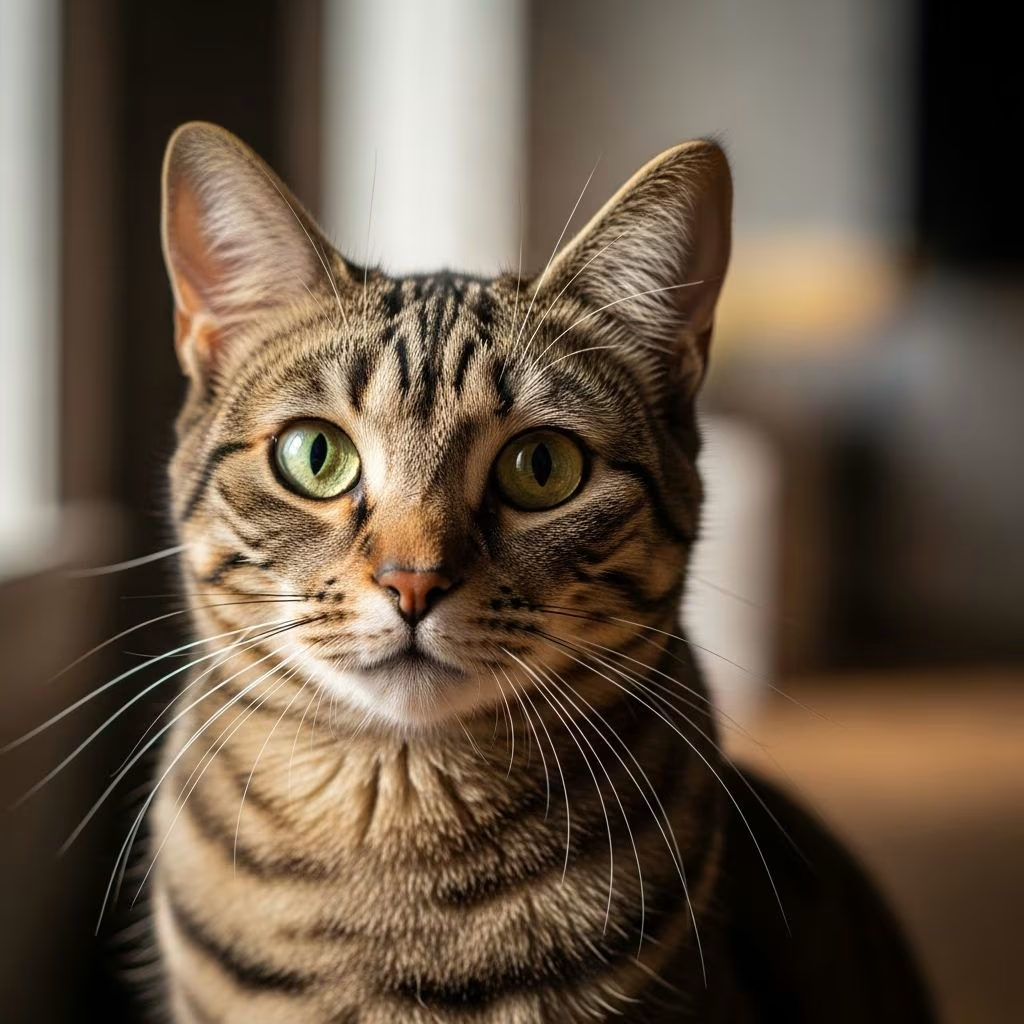
Why Does My Cat Stare at Me? Is This Normal?
If you’ve ever caught your cat staring at you from across the room, you might have wondered what’s going through their mind. Cat staring is a common behavior that can mean many different things, ranging from expressions of affection to signs of curiosity or even concern. Understanding what your cat’s stare means can help you strengthen your bond and recognize when something might be wrong.
The truth is, cat staring is completely normal in most cases. Cats use their eyes as a primary form of nonverbal communication, and a prolonged gaze can convey various emotions and intentions. However, not all stares are created equal. The context, body language, and eye appearance all play crucial roles in decoding what your feline friend is trying to communicate.
The Science Behind Cat Vision
Before diving into the reasons why cats stare, it’s important to understand how cats perceive the world differently than humans. Cats have evolved with extraordinary visual capabilities that make staring part of their natural behavioral toolkit.
Cats possess a reflective layer behind their retinas called the tapetum lucidum, which acts like nature’s mirror and amplifies available light. This specialized structure allows cats to see in light levels approximately six times lower than what humans require, making them exceptional hunters in low-light conditions. Additionally, cats have a field of vision that covers roughly 200 degrees compared to humans’ 180 degrees, giving them a significantly wider peripheral view. This expanded field of vision allows them to detect subtle movements happening far outside your area of focus.
Another remarkable feature of cat vision is their ability to perceive ultraviolet light, a part of the light spectrum completely invisible to humans. Many materials in modern homes, from certain fabrics to cleaning products, reflect UV light in patterns we cannot perceive. This means what appears as an empty wall to you might look like an intricate, animated display to your cat, explaining why they seem so intently focused on seemingly empty spaces.
Cats also have exceptional sensitivity to light and movement. Their pupils dilate far more dramatically than human pupils, allowing them to adjust to subtle changes in ambient light. They can detect even the most microscopic movements—a gnat’s flutter, a speck of dust, or a shifting air current—making staring a form of visual surveillance and investigation.
Five Main Reasons Why Cats Stare
Understanding the primary reasons behind your cat’s staring behavior can help you respond appropriately and strengthen your relationship with your feline companion.
1. They’re Being Affectionate
One of the most positive reasons your cat stares at you is to show affection and trust. A steady gaze, especially when paired with a slow blink, is often a cat’s way of communicating safety and comfort. When cats feel secure and bonded with their owners, they maintain gentle eye contact as a form of nonverbal affection. This behavior indicates that your cat feels safe enough to maintain vulnerability around you.
Researchers have found that slow blinks can indicate positive emotional communication between cats and humans. If your cat stares at you while slowly closing and opening their eyes, they’re essentially saying, “I feel safe with you.” You can reciprocate this affection by slow blinking back at them—this simple gesture reinforces your bond and communicates love in feline language.
When your cat is being affectionate through staring, you’ll typically notice a relaxed body posture, possibly getting close to you or snuggling while maintaining eye contact. Their ears are usually in a natural or forward position, and their overall demeanor appears calm and content.
2. Your Cat Wants Your Attention
Cats are intelligent animals that quickly learn cause-and-effect relationships. If your cat has discovered that staring at you results in your attention, they may employ this strategy to get what they want. Some cats will stare directly at their owners while blocking their path, meowing loudly, or exhibiting other attention-seeking behaviors simultaneously.
This type of staring often indicates that your cat needs something from you—whether it’s food, water, playtime, or simply interaction. Cats that engage in this behavior have learned that staring is an effective communication method. If your cat sits at your feet and stares at you, they’re most likely trying to capture your attention and tell you they need something.
While this behavior isn’t usually problematic, some owners find it disruptive. If you’d like to gently discourage excessive attention-seeking stares, you can try moving your cat to a different location or redirecting their attention to a toy or activity.
3. They’re Hunting or Displaying Predatory Behavior
Behind every purring lump on your bed lies a fierce predator, and staring is an integral part of your cat’s hunting behavior. When cats focus intently on prey—whether it’s a bug, toy, or even something invisible to you—they enter a state of hyper-focus that involves prolonged staring. This behavior allows them to track movement with precision and prepare for pouncing.
During a stare-down with prey, you’ll notice your cat may flinch with each small movement, displaying the intensity of their concentration. Their body language during predatory staring differs significantly from affectionate staring. You might observe a low crouch, tail twitching, dilated pupils, and ears swiveled forward in complete attention mode. Some cats even wiggle their hindquarters slightly, preparing their muscles for the pounce.
This type of staring is completely normal and healthy. It allows cats to engage their natural instincts even in domestic settings. Providing appropriate outlets for these hunting behaviors, such as interactive toys and play sessions, can help satisfy these instincts and keep your cat mentally stimulated.
4. They’re Curious About You or Their Environment
Cats are inherently curious creatures, and staring is often their way of investigating and understanding something that interests them. Your cat might stare at you simply because they want to understand what you’re doing, where you’re going, or what you might do next. This curiosity-driven staring is a sign of normal feline intelligence and engagement with their environment.
Your cat might stare at the window observing birds, at a doorway where they heard a sound, or at you as you move around the house. This type of stare is typically casual and doesn’t come with the intense focus of predatory staring or the gentle softness of affectionate staring. Instead, it’s an observational gaze where your cat is gathering information about their surroundings.
Cats with higher intelligence and more interactive personalities tend to stare more frequently out of curiosity. If your cat is staring at various things throughout your home, they’re likely an engaged and mentally active pet who’s interested in understanding their world.
5. Fear or Aggression
While most cat staring is benign or positive, sometimes intense staring can indicate fear or aggressive intentions. In these cases, you’ll notice additional body language cues that clarify the stare’s meaning. A fearful cat may have eyes set in a fixed state accompanied by an arched back, tense posture, and fur standing on end.
When a cat stares out of aggression or dominance, their pupils are typically dilated, and they maintain an unwavering, intense gaze. This is different from the soft, slow-blinking affectionate stare. Aggressive staring is often accompanied by growling, hissing, or other threatening vocalizations. It’s important to respect these signals and give your cat space when they display this type of body language.
If you notice your cat frequently staring with signs of fear or aggression, it’s worth examining what’s triggering this response. Is something in their environment causing stress? Are they unwell? Consulting with a veterinarian or feline behaviorist can help identify the underlying cause.
Understanding Cat Eye Characteristics
Cats have unique eye features that affect how they stare and what you see when observing their eyes.
The Third Eyelid and Its Function
Cats possess three eyelids rather than two—a feature many people don’t realize. The third eyelid is called the nictitating membrane, a term derived from the Latin word “nictare,” meaning “to blink.” This transparent membrane extends across the eyeball to provide moisture and an extra protective layer. When your cat stares, you might not see visible blinking because the nictitating membrane is doing much of the work. This membrane allows your cat to maintain focus on prey or on you while still keeping their eye adequately moisturized and protected.
Dilated Pupils and What They Mean
When your cat has big, dilated pupils while staring, this typically signals that they’re feeling nervous or frightened. In these situations, cats may become defensive. It’s crucial to be cautious about engaging with your cat when they exhibit defensive body language like dilated pupils combined with other warning signs. Give them space and time to feel safe again.
However, dilated pupils don’t always mean fear. Low light conditions naturally cause pupil dilation to allow more light into the eye. Excitement and high alertness can also cause pupil dilation. Always consider the full context and accompanying body language before interpreting what dilated pupils mean.
Why Cats Stare at Nothing
One of the most mystifying aspects of cat behavior is when they stare intently at what appears to be absolutely nothing. There are several scientific explanations for this seemingly mysterious behavior.
Detecting Movement Beyond Human Perception
What appears as empty space to you might actually be full of activity from your cat’s perspective. Cats can detect microscopic movements and subtle shifts in their environment. An insect on the ceiling that’s too small for you to notice, a shift in light through a window, or even the movement of dust particles in a sunbeam can captivate your cat’s attention and trigger intense staring.
Your cat’s wider field of vision and superior ability to detect movement means they notice things happening far outside your focus area. They might be tracking a tiny moth on the wall while you’re completely oblivious to its presence.
Light Reflections and Shadows
Even small movements of sunlight across a wall can catch your cat’s attention and hold it. Reflective surfaces like watches, phones, or windows create animated patterns from your cat’s perspective. A shadow passing across a surface or the subtle shift of light throughout the day creates visual stimulation that fascinates cats. To your cat, these patterns are far more interesting and dynamic than they appear to you.
Ultraviolet Light Visibility
Remember that cats can see ultraviolet light, which opens up an entirely different visual landscape. Many common household materials, from certain fabrics to cleaning products, reflect UV light in patterns invisible to human eyes. This means a seemingly blank wall might display intricate UV patterns that make it an interesting focal point for your cat’s extended stare.
Sounds from Walls and Floors
Cats don’t just stare at visual stimuli; they also investigate sounds. Cats have remarkable hearing capabilities, detecting high-frequency sounds far beyond human perception. They might stare at a wall not because they see something, but because they hear sounds you cannot detect—rodent movements, pipes expanding or contracting, or HVAC systems humming through the walls. Your cat’s stare is their way of investigating the source of these mysterious sounds.
Scent Trails and Pheromones
Cats rely heavily on scent to navigate and understand their environment. A wall, doorway, or window might carry residual scent from you, another pet, or even wildlife outside. When your cat stares at these locations, they’re processing invisible chemical “messages” left behind by scent and pheromones. Staring is part of their investigation process as they gather olfactory information.
When Cat Staring Signals Health Issues
Although most staring behavior is perfectly normal, sometimes it can indicate an underlying health problem that requires veterinary attention.
Vision Problems
Certain eye conditions like cataracts, glaucoma, or retinal issues can cause changes in staring behavior. If your cat develops vision problems, they might stare differently or appear confused about their environment. Look for warning signs including bumping into furniture, dilated pupils, cloudiness in the eyes, or excessive tearing and discharge. Any signs of eye discharge, redness, or watering warrant a veterinary visit.
Cognitive Dysfunction in Senior Cats
Older cats may develop feline cognitive dysfunction, a condition similar to dementia in humans. This condition can lead to disoriented staring, pacing, or unusual sleep patterns. If your senior cat is staring more frequently and seems “out of it” or confused, a veterinary evaluation is wise. Cognitive dysfunction typically appears in cats over 15 years old and may require medication or lifestyle adjustments to manage.
Neurological Concerns
Unusual or prolonged staring, especially when paired with other neurological symptoms like twitching, head tilting, or balance issues, can indicate serious neurological problems. These conditions require immediate veterinary attention to rule out seizure disorders or other brain-related issues.
Behavioral Red Flags
If your cat is suddenly staring at walls accompanied by hiding, appetite loss, aggression, or other behavioral changes, it’s time to consult a veterinarian. Behavior changes are often early health indicators in cats and shouldn’t be ignored. A sudden shift in staring patterns combined with other symptoms suggests something may be amiss health-wise.
How Your Home Environment Affects Cat Staring
Your home plays a surprisingly significant role in how and where your cat stares. Several environmental factors can influence your cat’s staring behavior.
Lighting and Flicker Sensitivity
Some LED lights emit subtle flickers that humans cannot detect but that cats can perceive clearly. These micro-changes in brightness hold your cat’s attention and may cause them to stare at light sources. Understanding that your cat is responding to something genuinely present in their visual field can help you appreciate their sophisticated visual system.
Sound Transmission Through Walls
Modern homes amplify subtle sensory triggers that cats find fascinating. Pipes, vents, and insulation carry vibrations and sounds that your cat hears clearly, even though everything seems silent to you. Hollow walls can carry distant sounds, turning seemingly empty spaces into sensory hubs full of interesting stimuli for your feline companion. Your cat might stare at a wall for extended periods while investigating these invisible “soundscapes.”
Frequently Asked Questions
Q: Is it normal for my cat to stare at me for long periods?
A: Yes, prolonged staring is normal cat behavior. As long as your cat shows other signs of good health and well-being, staring is typically nothing to worry about. Context matters—staring accompanied by slow blinks and a relaxed posture indicates affection, while staring with dilated pupils and tense body language might indicate fear or aggression.
Q: What does it mean when my cat does a slow blink while staring?
A: A slow blink during staring is one of the clearest signs of cat affection. This behavior indicates that your cat trusts you and feels safe. You can reciprocate by slow blinking back at them, which reinforces your emotional bond.
Q: Should I be concerned if my cat stares at nothing?
A: Usually not. Cats stare at nothing from their perspective all the time because they’re detecting movements, sounds, scents, or light patterns that are invisible to humans. However, if accompanied by other behavioral changes or signs of confusion, consult your veterinarian.
Q: Why does my cat stare at me with dilated pupils?
A: Dilated pupils typically indicate that your cat is feeling nervous, frightened, or highly alert. Combined with other body language cues, dilated pupils can signal fear or defensive aggression. Give your cat space if they’re displaying these signs.
Q: When should I see a veterinarian about my cat’s staring?
A: Contact your veterinarian if staring is accompanied by behavioral changes, signs of disorientation, vision problems, neurological symptoms, appetite loss, or if your cat seems “out of it.” Sudden changes in staring behavior warrant professional evaluation.
References
- Why Do Cats Stare at Nothing and What They Actually See — The Refined Feline. 2024. https://www.therefinedfeline.com/reasons-behind-cats-staring-at-nothing-and-what-they-actually-see/
- Cat Staring: Decoding Your Cat’s Behavior — Pumpkin Pet Insurance. 2024. https://www.pumpkin.care/post/why-does-my-cat-stare-at-me
- Why Does My Cat Stare at Me? — Montgomery Veterinary Associates. 2024. https://mvavets.com/blog/why-does-my-cat-stare-at-me/



