

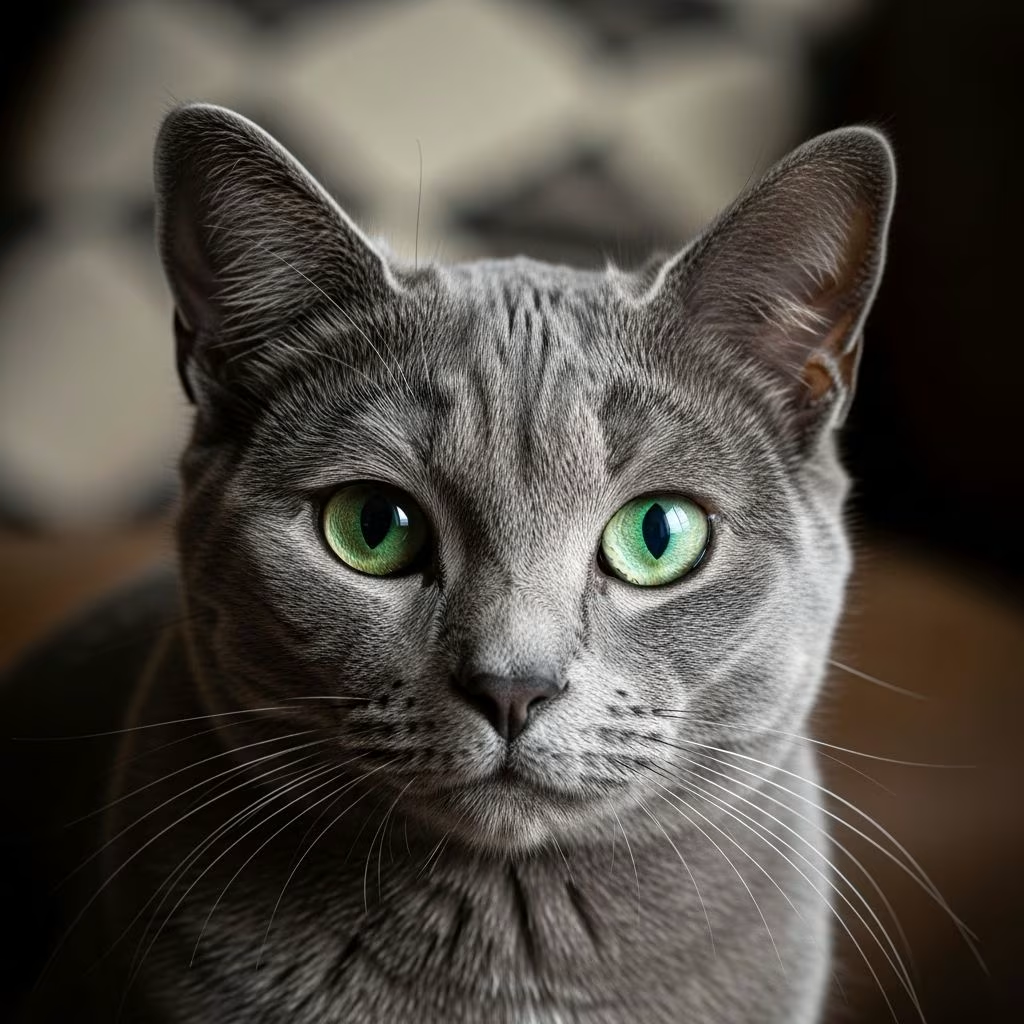
Why Does My Cat Stare at Me Without Blinking?
When your cat locks eyes with you for extended periods without blinking, it’s natural to wonder what they’re trying to communicate. Cats use body language as a primary form of expression, and a steady, unblinking gaze can mean many different things depending on the context and accompanying behaviors. Understanding what your feline friend is telling you through their eyes is key to strengthening your bond and ensuring their wellbeing.
Understanding Cat Vision and Blinking
Before diving into the reasons why your cat stares, it’s important to understand how cat vision differs from human vision. Cats don’t need to blink as frequently as humans do because they possess a special biological feature: a third eyelid, also known as the nictitating membrane. This transparent membrane allows cats to lubricate and clear their eyes in a split second without the need for a full blink. In the wild, this adaptation means cats can keep their eyes on potential prey without interruption, making them more effective hunters.
Because of this anatomical advantage, it’s completely normal for cats to maintain a steady gaze for extended periods. However, the reason behind their stare varies significantly depending on their emotional state, health, and what’s happening in their environment.
5 Reasons Why Your Cat Stares at You
1. They Are Trying to Tell You That They Are in Pain or Ill
One of the most concerning reasons for prolonged staring is that your cat may be experiencing discomfort or illness. If your cat exhibits unusual staring behavior that represents a change from their normal habits, it’s worth paying close attention to other symptoms.
Cats are notorious for hiding their pain and discomfort, so subtle changes in body language and demeanor may be the first—and sometimes only—clue that something is wrong. When evaluating whether your cat’s staring might indicate illness, look for these accompanying signs:
- Dilated pupils combined with tense body posture
- Excessive or frequent hiding
- Restlessness or inability to settle
- Unusual vocalizations or signs of confusion
- Glassy or unfocused eyes
- Changes in eating or litter box habits
Several specific medical conditions can cause abnormal staring in cats:
Key Gaskell Syndrome (Feline Dysautonomia): This is a rare but serious disorder affecting the autonomic nervous system. It can impact a cat’s ability to regulate involuntary functions and is often fatal if not treated promptly.
Cognitive Decline: Senior cats may experience failing eyesight as they age. As their vision deteriorates, they may stare more frequently as they work to adapt to their changing sensory abilities. This is typical in older felines.
Hypertension (High Blood Pressure): This condition can be caused by kidney disease or other ailments limiting your cat’s internal functions. It can be a symptom of something more serious and should be evaluated by a veterinarian.
Other Serious Conditions: Vision problems, seizures, and neurological issues can also manifest as excessive staring, particularly with unfocused or glassy eyes and lack of blinking.
If your cat suddenly begins staring excessively or combines this behavior with other unusual symptoms, schedule a veterinary appointment promptly. Your vet can help identify whether the staring is behavioral or medical in nature.
2. They Are Attentive and Interested in What You Are Doing
Cats are highly observant creatures, and their curiosity is one of their defining characteristics. If your cat is staring at you intently, they may simply be fascinated by what you’re doing. Whether you’re folding laundry, typing on your computer, doing yoga, or having a video call, your cat is likely nearby, silently watching with rapt attention.
This type of staring often comes with a tilted head, relaxed body posture, and sometimes a hint of confusion or mild judgment. Your cat doesn’t want to miss a moment of whatever has captured their interest—they might blink and miss something important!
In the wild, cats rely on keen observation to assess their environment and the creatures in it. This same instinct carries over to domestic life, where your cat observes your daily activities to understand their world better. If you’re doing something out of the ordinary, this is likely the reason for your kitty’s unwavering attention.
3. They Are Trying to Exert Their Dominance Over You
Like most animals, cats use staring as a means of asserting dominance. A long, unblinking stare can be a sign of territorial behavior or an attempt to establish hierarchy. If your cat is staring at you with a tense body, flattened ears, or dilated pupils, they may be communicating that they’re in control.
This is why it’s best not to engage in a staring competition with your cat. While it might seem like a harmless game to you, staring contests have a very different meaning to your feline companion. If you stare straight back into your cat’s eyes, they might interpret it as a sign of hostility or a challenge to their authority, rather than playful interaction.
To show your cat respect and avoid misunderstandings, it’s better to break eye contact first and use slow blinks instead, which communicate trust rather than confrontation.
4. They Are Afraid or Seeking Reassurance
While staring often indicates aggression or dominance, it can also signal the opposite emotion: fear. Cats may stare when they’re anxious, scared, or seeking comfort from their trusted human. Just as humans go wide-eyed when frightened, cats do the same.
When a cat is afraid and staring at you, they’re often looking to you for reassurance or comfort to ease their anxiety. This type of stare typically comes with physical signs of stress, including:
- Dilated pupils
- Flattened or pinned-back ears
- Tense muscles or crouched posture
- Tail tucked between legs or thrashing
- Whiskers pulled back
If your cat is staring and displaying these fear-related behaviors, try to identify what’s causing their anxiety. Common triggers include loud noises, unfamiliar people or animals, changes in their environment, or new experiences. Providing a safe space, speaking in calm tones, and offering comfort can help ease your cat’s distress.
5. They Are Showing You Affection and Trust
Perhaps the most heartwarming reason for your cat’s stare is affection. A steady gaze, especially when paired with a slow blink, is often a cat’s way of showing trust and comfort. When your cat stares at you calmly and appears relaxed, they’re essentially saying, “I feel safe with you.”
This behavior is sometimes called a “cat kiss,” and it’s one of the most meaningful ways cats communicate their feelings. In the wild, closing their eyes makes cats vulnerable to predators, so when your cat slowly blinks while looking at you, they’re demonstrating that they trust you enough to lower their guard.
You can speak your cat’s language right back by mimicking the slow blink. When you notice your cat giving you this affectionate stare, slowly close your eyes for a second or two and then gently open them. By doing this, you’re returning the sentiment and reinforcing your bond.
Distinguishing Between Different Types of Stares
| Type of Stare | Physical Signs | Meaning | Your Response |
|---|---|---|---|
| Relaxed/Affectionate | Slow blink, relaxed body, soft eyes | Trust and comfort | Return the slow blink |
| Curious | Tilted head, forward ears, alert posture | Interest in your activity | You can engage with your cat |
| Dominant/Aggressive | Intense eyes, pinned ears, stiff body | Asserting control | Break eye contact and look away |
| Fearful | Dilated pupils, tense muscles, ears back | Anxiety or distress | Provide comfort and safe space |
| Meditative/Daydreaming | Glassy eyes, unfocused gaze, relaxed | Deep relaxation and security | Leave your cat alone to relax |
When Your Cat Is Simply Daydreaming
Sometimes, a cat’s stare means nothing at all. Just like humans, cats zone out and enter a meditative or daydreaming state. When your cat displays what some people call a “thousand-yard stare”—a glassy, unfocused gaze—they’re simply lost in thought with relaxed body language and mind elsewhere.
This type of stare is actually evidence that your cat feels secure in its environment. Your cat isn’t afraid, threatened, or even particularly alert. Instead, they’re letting their guard down, which is a major sign of trust and comfort. When your cat does this at home, it means they feel completely at ease in your presence and in their surroundings.
In this case, the stare isn’t directed at you with any particular intention—you just happen to be in their line of sight. This relaxed behavior is nothing to worry about and is actually a positive indicator of your cat’s emotional wellbeing.
When to Contact Your Veterinarian
While most instances of cat staring are harmless or even positive, certain situations warrant professional veterinary attention. Contact your vet if your cat’s staring behavior is accompanied by:
- Sudden changes from their normal behavior patterns
- Excessive hiding or avoidance of interaction
- Signs of pain, such as limping or sensitivity to touch
- Aggressive behavior or excessive hissing
- Vision problems or apparent confusion about their surroundings
- Loss of appetite or changes in litter box habits
- Unusual vocalizations or behavioral changes
- Glassy, unfocused, or dilated eyes that don’t respond to light
If you’re concerned about your cat’s health or wellbeing, it’s always better to err on the side of caution and schedule a veterinary checkup. Your vet can perform a thorough examination and help determine whether the staring is behavioral or symptomatic of an underlying medical condition.
Frequently Asked Questions
Q: Is it normal for cats to stare without blinking?
A: Yes, it’s completely normal for cats to maintain a steady gaze without blinking frequently. Cats have a third eyelid that allows them to keep their eyes lubricated without visible blinking, unlike humans who blink multiple times per minute.
Q: What should I do if my cat stares at me?
A: The appropriate response depends on your cat’s body language. If your cat appears relaxed and gives a slow blink, return the gesture. If your cat looks tense or aggressive, break eye contact and look away. If you’re unsure about the meaning, observe other body language cues and the context of the situation.
Q: Should I stare back at my cat?
A: Direct staring back at your cat can be interpreted as aggression or a challenge. Instead, use slow blinks to communicate affection and trust. This is a safer and more meaningful way to interact with your cat.
Q: Can staring indicate that my cat is sick?
A: Yes, in some cases, unusual staring can be a sign of illness or pain. If your cat’s staring behavior represents a change from their normal habits and is accompanied by other symptoms, contact your veterinarian for evaluation.
Q: What does it mean when a cat slowly blinks at me?
A: A slow blink from your cat is a sign of affection and trust. It means your cat feels safe and comfortable with you. You can respond with your own slow blink to deepen your bond.
Q: Why does my senior cat stare more than usual?
A: Older cats may stare more as their vision begins to fail. They take time to adapt to declining eyesight and may stare as they work to understand their surroundings through other senses.
Understanding Your Cat’s Communication
Cats communicate through a complex system of body language, vocalizations, and behaviors. The unblinking stare is just one piece of this communication puzzle. By learning to read your cat’s eyes, ears, tail, and overall body posture, you can better understand what your feline friend is trying to tell you.
Pay attention to the context in which the staring occurs, the accompanying body language, and any changes from your cat’s normal behavior patterns. Most of the time, your cat’s stare is harmless and often indicates curiosity, affection, or simple relaxation. However, when combined with other unusual behaviors or symptoms, it’s worth investigating further or seeking professional veterinary guidance.
The more attuned you become to your cat’s unique communication style, the stronger your relationship will be. Your cat uses body language to tell you they’re happy, irritated, grumpy, scared, or in pain. By responding appropriately to these signals, you demonstrate that you understand and respect your feline companion’s needs and emotions.
References
- Why Does My Cat Stare at Me Without Blinking? 5 Vet-Reviewed Reasons — Catster. 2024. https://www.catster.com/cat-behavior/why-does-my-cat-stare-at-me-without-blinking/
- Why Does My Cat Stare at Me? Is This Normal? — Chewy. 2024. https://www.chewy.com/education/cat/training-and-behavior/why-does-my-cat-stare-at-me
- Why Does My Cat Stare at Me? 7 Reasons Explained — Birds Be Safe. 2024. https://www.birdsbesafe.com/blogs/news/why-does-my-cat-stare-at-me
- How Long Can Cats Go Without Blinking? — Cats.com. 2024. https://cats.com/how-long-can-cats-go-without-blinking



