

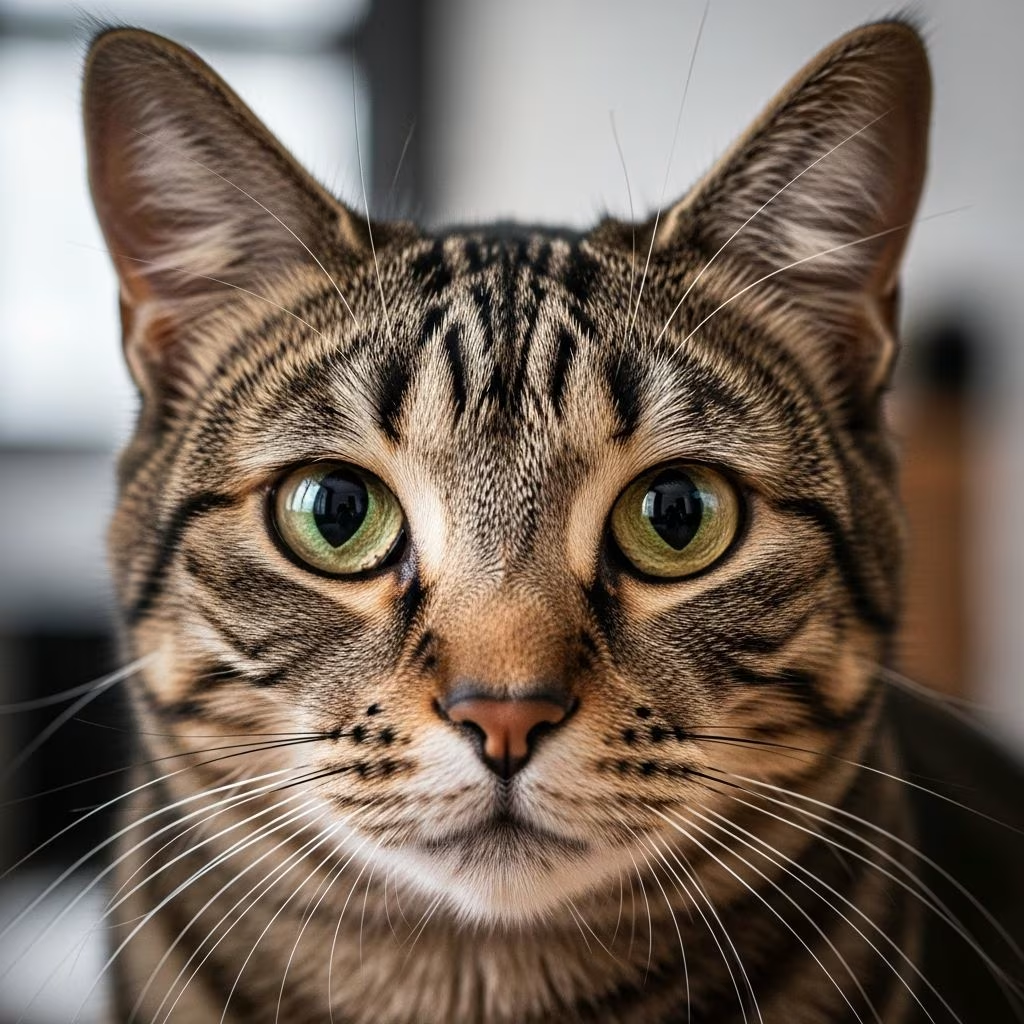
Your cat’s unwavering gaze can feel both endearing and unsettling. Cats stare at their owners for various reasons rooted in their instincts, emotions, and senses. This article breaks down the top 10 reasons, drawing from feline behavior experts and veterinary insights, to help you understand and strengthen your bond with your pet.
10 Reasons Your Cat Stares at You
Cats communicate primarily through body language, and staring is a key part of their repertoire. Unlike dogs, who use direct eye contact more freely, cats’ stares carry nuanced meanings. Here’s a detailed look at the most common explanations.
1. Your Cat Loves You
One of the sweetest reasons your cat stares is pure affection. When accompanied by slow blinks, half-closed eyes, and a relaxed body, this stare signals trust and love. Research shows slow blinking mimics a cat’s “cat kiss,” fostering positive human-feline interactions. Cats who snuggle close while staring are essentially saying, “You’re family.” Reciprocate by slow-blinking back to reinforce the bond.
2. Your Cat Wants Something (Usually Food)
Hunger is a primal motivator. Cats often stare intently at mealtime, their eyes locked on you as a reminder of who provides the goods. This behavior stems from their predatory instincts, where focus precedes the hunt. If the stare happens around feeding times or near the kitchen, a quick check of their bowl usually resolves it.
3. Your Cat Is Communicating With You
Staring serves as a non-verbal cue for needs like play, pets, or access to a room. Cats lack expressive facial muscles like humans, so they rely on prolonged eye contact to convey messages. Pay attention to context: a stare followed by a meow amplifies the request.
4. Your Cat Is Being Curious
Cats are natural observers, and your activities fascinate them. Whether you’re working on a computer, cooking, or exercising, your cat’s stare reflects curiosity about the unfamiliar. Their wide field of vision (about 200 degrees) and superior motion detection make them hyper-aware of your movements.
5. Your Cat Is Hunting Instinct Kicking In
Domestic cats retain wild hunter traits. They stare to focus on potential “prey,” which could be you twitching a finger or a shadow on the wall. You’ll notice muscle tension or flinching, signaling hyper-focus. Provide toys like feather wands to channel this energy safely.
6. Your Cat Is Showing Dominance
In multi-cat homes, staring asserts territory. A direct, unblinking gaze with dilated pupils or a stiff posture indicates dominance or challenge. This is normal feline hierarchy but monitor for escalating tension like hissing.
7. Your Cat Is Protecting Its Territory
Cats vigilantly monitor their domain, including you. Staring at doors, windows, or you ensures no threats encroach. Their acute hearing picks up subtle sounds (like neighbors or wildlife) invisible to us, prompting watchful eyes.
8. Your Cat Is Feeling Anxious or Fearful
An intense, wide-eyed stare with flattened ears, arched back, or puffed fur signals fear or anxiety. New environments, loud noises, or strangers trigger this defensive mode. Offer safe spaces and pheromone diffusers to ease stress.
9. Your Cat Has Superior Senses
Cats perceive the world differently. They see ultraviolet light, detect microscopic movements via hyper-sensitive peripheral vision, and hear ultrasonic sounds. A “blank” stare might track dust motes, insects, or scents we miss. Their tapetum lucidum enhances low-light vision six times better than humans.
10. Medical Reasons
Occasionally, staring indicates health issues. Vision problems (cataracts, glaucoma), cognitive dysfunction in seniors, or neurological conditions cause vacant or excessive staring. Watch for bumping into objects, dilated pupils, disorientation, or appetite loss—consult a vet promptly.
How to Respond When Your Cat Stares at You
Understanding the stare’s context guides your response:
- For affection: Slow-blink back and offer gentle pets.
- For food/requests: Address the need calmly to avoid reinforcing demanding behavior.
- For curiosity/hunting: Engage with interactive toys.
- For anxiety/dominance: Give space and observe body language.
- Suspected medical: Schedule a veterinary exam.
Always avoid prolonged direct staring, as cats interpret it as a threat. Instead, use soft gazes and blinks to build trust.
Why Do Cats Stare at Walls or Nothing?
Stares at seemingly empty spaces puzzle owners but often tie to enhanced senses. Cats track:
- Insects, dust, or shadows via microscopic motion detection.
- UV reflections on fabrics or floors.
- High-frequency sounds from pipes, rodents, or HVAC.
- Scent trails or pheromones lingering on surfaces.
Modern homes amplify these with LED flickers or hollow walls. Normal unless paired with other symptoms.
Cat Staring at Night: What’s Going On?
Nocturnal by nature, cats stare more at night due to peak hunting instincts and superior night vision from the tapetum lucidum. Light shifts, reflections, or critters outside windows captivate them. Ensure a dark, quiet space if disruptive.
Should You Worry About Your Cat Staring at You?
Most stares are benign, reflecting normal behavior. Worry if:
- Sudden increase or change in pattern.
- Accompanied by lethargy, hiding, aggression, or eye discharge.
- Staring into space with twitching, head tilting, or imbalance.
Annual vet checkups catch issues early, as cats hide pain well.
Cat Stare Meaning Chart
| Stare Type | Body Language | Meaning | Response |
|---|---|---|---|
| Slow blink, relaxed | Half-closed eyes, purring | Affection | Blink back, pet |
| Intense, unblinking | Dilated pupils, tense | Hunger/Hunting | Feed or play |
| Wide-eyed, stiff | Flattened ears, arched back | Fear/Aggression | Give space |
| Vacant, prolonged | Disoriented, bumping objects | Possible medical | Vet visit |
Frequently Asked Questions (FAQs)
Why does my cat stare at me and then blink slowly?
This is a sign of affection, equivalent to a “cat kiss.” Return the blink to communicate back.
Why does my cat stare at me without blinking?
It could be focus (hunting/communication) or their nictitating membrane providing moisture without visible blinks. Context matters.
Is it bad to stare back at my cat?
Direct staring challenges cats; it can provoke defensiveness. Use slow blinks instead.
Why does my cat stare at me while meowing?
They’re vocalizing a request, like food or attention.
When should I take my staring cat to the vet?
If staring changes suddenly, pairs with odd behaviors, or involves eye issues.
Final Thoughts
Your cat’s stare is a window into their rich inner world. By decoding it, you enhance communication and catch potential issues early. Embrace these moments—they’re signs of a connected companionship.
References
- Why Do Cats Stare at Nothing and What They Actually See — The Refined Feline. 2023. https://www.therefinedfeline.com/reasons-behind-cats-staring-at-nothing-and-what-they-actually-see/
- Cat Staring: Decoding Your Cat’s Behavior — Pumpkin Pet Insurance. 2023. https://www.pumpkin.care/post/why-does-my-cat-stare-at-me
- Why Does My Cat Stare at Me? 7 Reasons Explained — Birdsbesafe. 2023. https://www.birdsbesafe.com/blogs/news/why-does-my-cat-stare-at-me
- Why Does My Cat Stare at Me? — Montgomery Veterinary Associates. 2023. https://mvavets.com/blog/why-does-my-cat-stare-at-me/
- Why Do Cats Stare at Nothing? — VCA Animal Hospitals. 2023. https://vcahospitals.com/resources/behavior-cat/why-do-cats-stare-at-nothing



