

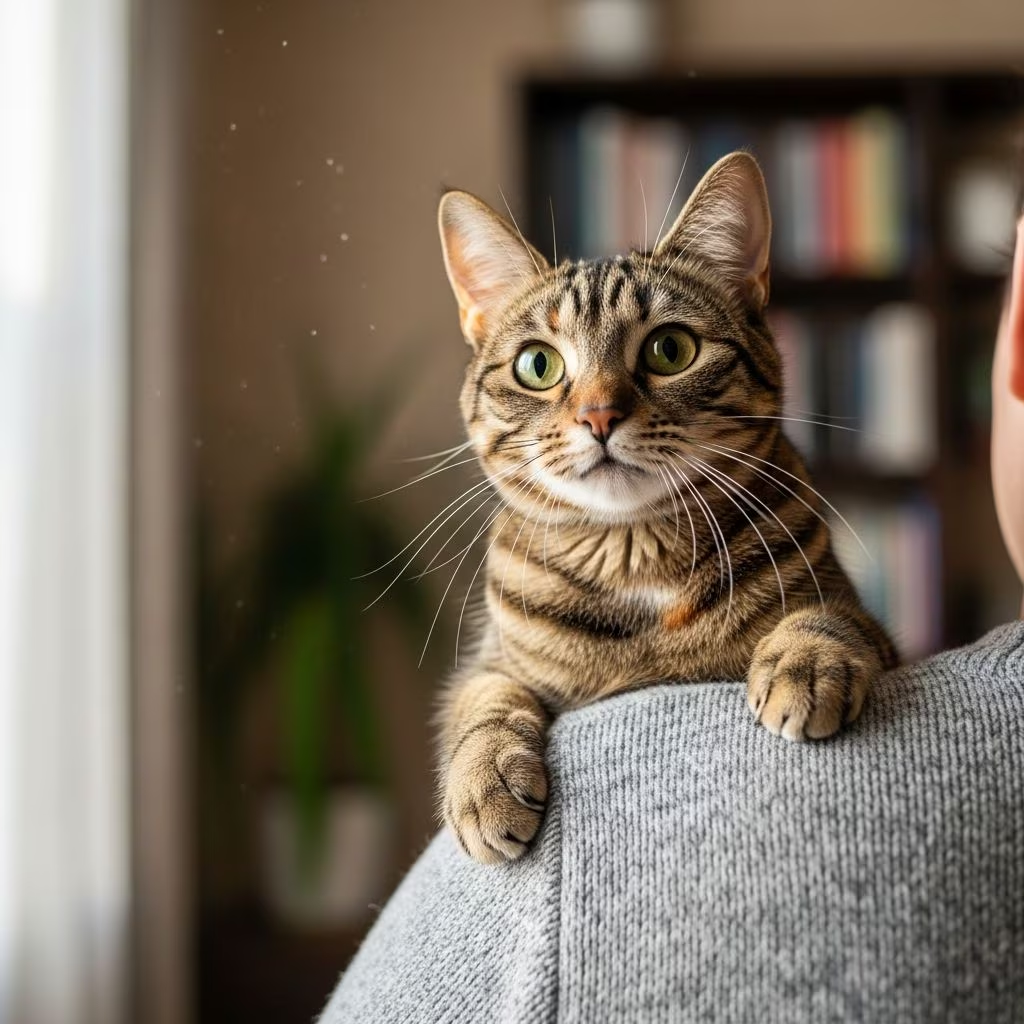
Many cat owners experience the delightful surprise of their feline friend leaping onto their shoulder, perching there like a living parrot. This behavior, often called a “shoulder cat,” stems from deep-seated instincts and individual personality traits. Cats gravitate toward elevated spots for security, much like their wild ancestors who climbed trees to evade predators or spot prey. Domesticated cats retain this love of heights, viewing your shoulder as a convenient, mobile perch that offers both vantage and closeness to their favorite human.
Understanding why your cat chooses this spot can strengthen your bond and help address any underlying needs. Not all cats do this—factors like age, breed, energy levels, and training play roles. Young, agile cats like kittens or athletic breeds (e.g., Bengals, Abyssinians) are more prone, while older or less nimble ones may skip it. This guide breaks down the six primary reasons, drawing from veterinary insights and behavioral observations, and offers advice on whether to encourage or redirect the habit.
The 6 Possible Reasons Why Your Cat Sits on Your Shoulder
Cats communicate needs subtly, and shoulder-sitting is a prime example. Here’s a detailed look at the motivations behind this quirky conduct.
1. They Feel Safe
In the wild, elevation equals safety—cats climb high to escape threats and survey surroundings. Domestic cats inherit this instinct, feeling secure atop your shoulder, the highest accessible point. It’s not always about immediate danger; sudden noises, other pets, or household bustle can prompt a kitten or anxious cat to seek this refuge.
Your shoulder provides warmth, stability, and your protective presence, signaling trust. If your cat relaxes there, ears perked and body loose, it’s a sign of deep comfort. This behavior peaks in multi-pet homes or during thunderstorms, reinforcing their bond with you as a safe haven.
2. Your Cat Wants Your Attention
Cats are masters of manipulation, learning quickly that shoulder-perching demands focus. It’s hard to ignore a purring face at eye level! This positions them squarely in your line of sight, nudging for pets, play, or treats.
Observant felines notice patterns: if jumping up elicits scratches or laughter, they’ll repeat it. Praise reinforces the habit, turning it into a routine bid for interaction. Watch for post-perch cues like head-butts or meows—these confirm attention-seeking. Responding positively builds affection, but ignoring it gently discourages if unwanted.
3. Your Cat Needs Space
Independent by nature, cats crave personal territory. When overwhelmed—say, by kids, guests, or clutter—they seek solitude up high. Your shoulder doubles as a private perch when cat trees or shelves are absent.
This isn’t anti-social; it’s self-preservation. The elevation offers breathing room while staying near you, their trusted anchor. Provide alternatives like window perches or tall scratchers to give options, reducing reliance on your frame. Signs include a tucked tail or minimal interaction—they’re recharging, not cuddling.
4. They Like the Warmth and View
Cats are heat-seekers, drawn to body warmth radiating from your neck and shoulders. Your clothing, especially hoodies or thick fabrics, amplifies this cozy appeal for smaller cats and kittens. Simultaneously, the “bird’s-eye view” satisfies their curiosity, letting them scan the room like a living cat tree.
This combo explains why it happens during naps or lazy evenings. No pestering—just quiet enjoyment of panorama and radiator-like heat. Athletic breeds relish the climb, treating you as vertical playground.
5. Separation Anxiety
For clingy cats, your shoulder is a desperate cling-on during departure routines. Those with separation anxiety track your habits—grabbing keys? They’ll perch to stay close, dreading alone time.
Symptoms include vocalizing, pacing, or destructive behavior when left. This isn’t play; it’s distress rooted in attachment. Consult a vet for anxiety aids like pheromone diffusers or behavioral therapy. Gradually desensitize with short absences and toys to build confidence.
6. Showing Off Their Skills
Playful kittens and agile adults showcase prowess by leaping aboard. Breeds like Maine Coons or Ocicats love demonstrating jumps, especially if hair provides batting fun.
Praise encourages repeats, evolving into a trick. Young cats test limits, turning you into a springboard. If enjoyable, reward sparingly; otherwise, redirect to toys to prevent growth into a heavy habit.
Why Only Some Cats Sit on Shoulders
Not every cat attempts this feat. Physicality matters: lithe, energetic youngsters bound up effortlessly, while seniors or overweight cats lack mobility. Personality factors in—confident, extroverted cats embrace it, shy ones stick to furniture.
Training influences too; food-motivated felines learn quickly with treats. Breeds vary: climbers like Abyssinians thrive, Persians plod. Environment shapes habits—if heights abound, shoulders lose appeal. Each cat’s unique blend determines if you’re a perch.
Should I Let My Cat Sit on My Shoulder?
If mutual enjoyment reigns, embrace it—no harm in consensual perching. It fosters bonding and entertains. Caveats: watch claws on bare skin, balance during movement, and weight as they age (large breeds like Maine Coons pack pounds).
For anxiety-driven cases, intervene kindly. Vertical spaces (cat trees, shelves) offer alternatives, preventing dependency. Trim nails regularly and discourage if painful. Ultimately, read cues: happy cat, happy owner? Proceed.
| Pros of Shoulder-Sitting | Cons |
|---|---|
| Strengthens bond | Potential scratches |
| Fun interaction | Risk of falls |
| Meets cat’s needs | Unwanted habit |
| Adorable photos | Heavy for large cats |
Can I Train My Cat to Sit on My Shoulder?
Yes, with patience—ideal for foodies. Start low: kneel, lure with treats to hind-leg stance near shoulder. Praise lavishly, gradually elevate. Flatten back for stability; sessions last 5-10 minutes daily.
Weeks may pass; never force. Positive reinforcement: treats, clicks, affection. Receptive cats master it; others won’t. Combine with commands like “up” for control.
- Ground level lure.
- Reward standing.
- Increase height slowly.
- Full perch praise.
- Maintain with intermittent rewards.
Frequently Asked Questions (FAQs)
Q: Is it safe for my cat to sit on my shoulder?
A: Generally yes, if balanced and brief. Avoid if moving fast or with sharp claws. Provide stable perches to minimize risks.
Q: Why does my kitten do this more than my adult cat?
A: Kittens are playful and agile; adults may tire or prefer furniture. Energy fades with age.
Q: My large breed cat does this—should I stop it?
A: Yes, to spare your neck. Redirect to cat trees; their size amplifies strain.
Q: Does shoulder-sitting mean my cat loves me more?
A: It signals trust and comfort, but cats show love diversely. Enjoy the unique expression.
Q: How do I discourage it humanely?
A: Ignore calmly, offer alternatives like toys/perches. Consistency breaks the habit without punishment.
Shoulder-sitting reveals your cat’s world: instincts, emotions, needs. By addressing roots—be it safety, play, or anxiety—you enhance welfare and joy. Observe, adapt, cherish these feisty flights.
References
- Why Do Some Cats Like to Sit on Shoulders? — KittySpout. 2023. https://www.kittyspout.com/blogs/blog/why-do-some-cats-like-to-sit-on-shoulders
- Why Does My Cat Sit on My Shoulder? 6 Vet-Reviewed Reasons — Catster. 2024-01-15. https://www.catster.com/cat-behavior/why-does-my-cat-sit-on-my-shoulder/
- 5 Reasons Your Cat Sits on Your Shoulder — Hepper. 2023-05-20. https://articles.hepper.com/why-cat-sits-on-your-shoulder/
- Why Do Some Cats Like To Perch On Shoulders? — Cole and Marmalade. 2020-03-05. https://coleandmarmalade.com/2020/03/05/why-do-some-cats-like-to-perch-on-shoulders/
- Cat Behavior: Understanding Feline Instincts — ASPCA (via peer-reviewed summary). 2024. https://www.aspca.org/pet-care/cat-care/cat-behavior-basics



