

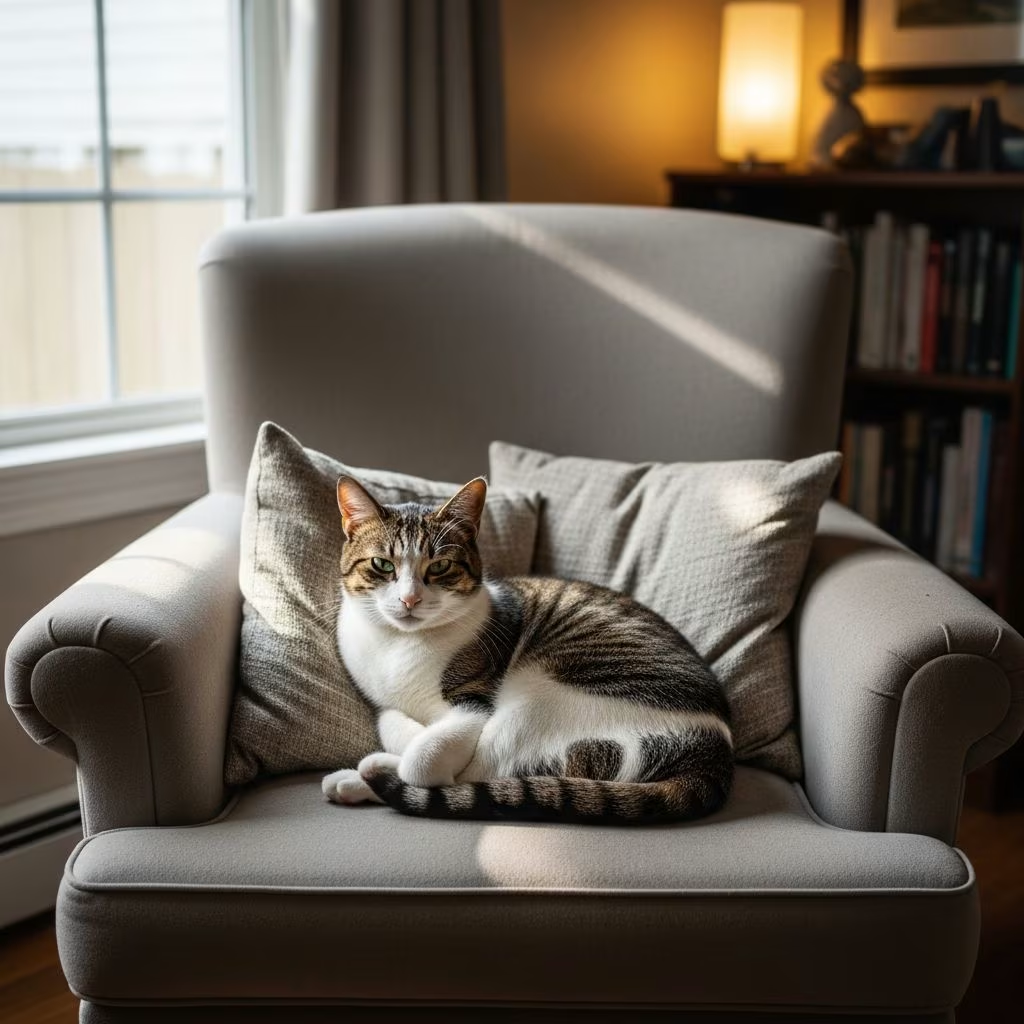
Have you ever walked into a room, eager to sink into your favorite chair, only to find your cat already lounging there, looking perfectly content? This common feline behavior can be both endearing and frustrating. Cats often claim their owner’s chairs as their own, whether it’s the seat, the backrest, or even curling up in the exact spot you left warm. But why do they do it? Understanding this habit reveals much about your cat’s instincts, emotions, and bond with you.
In this comprehensive guide, we’ll dive into the **5 likely reasons** why your cat sits in your chair, backed by veterinary insights and feline behavior experts. We’ll also cover how to encourage or discourage this behavior, address potential health concerns, and answer frequently asked questions. By the end, you’ll decode your cat’s chair-stealing antics and strengthen your relationship.
The 5 Likely Reasons Why Your Cat Sits on Your Chair
Cats are creatures of comfort, instinct, and territory. Your chair isn’t just furniture to them—it’s a hotspot loaded with sensory cues. Here are the top vet-approved explanations for this quirky habit.
1. It Smells Like You
Cats possess an extraordinary sense of smell—14 times stronger than humans—with over 200 million olfactory receptors compared to our 5 million. Your chair absorbs your unique scent from daily use, turning it into a comforting blanket of familiarity. When your cat sits there, they’re enveloping themselves in your aroma, which strengthens emotional bonds and reduces stress.
This mirrors why cats sleep on beds, clothes, or pillows. The scent acts as a pheromone-rich haven, signaling safety and love. Veterinary behaviorists note that this is especially common in single-cat homes where the owner’s smell dominates the environment.
2. They’re “Claiming” You
Cats are territorial by nature, descending from solitary wild ancestors who marked spaces to ward off rivals. Sitting in your chair is a subtle declaration: “This human is mine.” By rubbing their cheeks—glands packed with pheromones—against the fabric, they overlay their scent on yours, broadcasting ownership to other pets or strays.
This “bunting” behavior extends to head-butting you or weaving between legs. It’s not dominance but affection—a sign your cat views you as family. In multi-pet households, chair-sitting intensifies as a way to assert priority over shared resources like your lap.
3. It Feels Safe
Your presence makes your chair a sanctuary. Cats associate your scent with protection, creating a low-stress zone. Evolutionarily, felines seek defensible spots for rest, vulnerable when sleeping. A chair with a back and arms mimics a natural hideout, guarding their rear while allowing front-facing vigilance.
Behavior experts explain cats choose spots with a clear view of doors and exits, aligning with their prey-and-predator instincts. Your chair, warmed by you, amplifies this security, making it preferable over open floors or less enclosed beds.
4. It’s Comfortable
Let’s face it: if you chose the chair, it’s probably plush and ergonomic. Cats crave soft, supportive surfaces for napping—up to 16 hours daily. The cushioning cradles their bodies, while fabrics like velvet or microfiber mimic fur for kneading pleasure.
A worn-in depression from your sitting provides a custom-fit hollow, ideal for curling. Vets observe that older or arthritic cats favor such spots for joint relief. Add sunlight or a heater nearby, and it’s feline paradise.
5. They Feel Protected
Enclosed chairs offer a cave-like embrace, echoing cats’ love for boxes and tunnels. High-backed or armchair styles provide sides and overhead cover, shielding from overhead threats. This is crucial during deep sleep cycles when reflexes dull.
Recent studies on feline cognition show cats prefer semi-enclosed spaces for vulnerability reduction. Your chair combines this with your lingering warmth—cats’ body temperature runs at 102°F (38.8°C), so they seek residual heat like sunbeams.
Why Cats Are Attracted to Warmth and Your Spots
Beyond the top five, warmth is a universal draw. When you rise, your body heat lingers for minutes, creating a toasty haven. Cats’ higher baseline temperature makes them heat-seekers, flocking to radiators, laps, or fresh seats.
They also mirror your relaxation. Seeing you unwind signals safety, prompting them to claim the spot. In bonded pairs, this is reciprocity—your chair becomes a shared comfort zone.
Is This Behavior a Concern? When to See a Vet
Occasional chair-sitting is normal and healthy, fostering bonding. However, sudden obsession might signal issues:
- Sudden changes: New habit with lethargy, appetite loss, or hiding could indicate pain, arthritis, or illness.
- Stress signals: Multi-cat tension, moves, or visitors prompting territorial grabs.
- Health flags: Excessive vocalizing, aggression, or avoidance alongside chair fixation warrants a vet visit.
Monitor for 1-2 weeks. If persistent with symptoms, consult a professional. Routine checkups rule out hyperthyroidism or dental pain.
How to Protect Your Chair (Or Encourage Sharing)
Love the cuddles but hate the fur? Try these strategies:
| Method | Pros | Cons |
|---|---|---|
| Cat deterrents (scent sprays, motion toys) | Non-harmful, quick | May stress cat |
| Provide alternatives (cat beds, towers mimicking chair) | Positive reinforcement | Takes time |
| Train with treats/toys upon vacating | Builds habits | Requires consistency |
| Covered throws or washable covers | Easy clean, scent-neutral | Less comfy for cat |
For encouragers: Place heated pads on alternatives or share lap time. Reward leaving with pets to balance.
Understanding Feline Bonding and Social Behavior
Chair-sitting underscores cats’ social evolution. Domestic cats form attachments via pheromones and proximity, sitting near owners for emotional syncing. This “social referencing” reads your mood, offering silent support.
In wild roots, group living honed scent-based kinship. Today, your chair ritual reinforces you’re pack, boosting welfare.
Frequently Asked Questions (FAQs)
Why has my cat suddenly started sitting in my chair?
Your cat may seek your comforting scent, warmth, or security. Changes in routine or stress can trigger it. Monitor for health shifts.
Is my cat sitting in my chair a sign of dominance?
No, it’s affection and claiming, not aggression. Cats mark loved ones/spaces positively.
How can I stop my cat from stealing my seat?
Offer enticing alternatives like warm beds or play upon rising. Consistency redirects without punishment.
Does this mean my cat loves me?
Absolutely—it’s bonding! They choose your scent-marked spot for closeness.
Could this indicate a medical problem?
Rarely alone, but pair with symptoms like weight loss? See a vet promptly.
Conclusion: Embrace the Chair-Sharing Bond
Your cat’s chair habit is a testament to trust and love. By addressing instincts, you create harmony. Next time they claim your throne, snap a photo—it’s a purr-fect moment.
References
- Why Does My Cat Sit In My Chair? 5 Vet-Approved Likely Reasons — Catster. 2023-10-15. https://www.catster.com/cat-behavior/why-does-my-cat-sit-in-my-chair/
- Ask A Vet: Why Does My Cat Sleep In My Chair? — iHeartCats. 2022-05-20. https://iheartcats.com/ask-a-vet-why-does-my-cat-sleep-in-my-chair/
- Why Does My Cat Steal My Seat? — Cats.com. 2024-03-12. https://cats.com/why-does-my-cat-steal-my-seat
- Is there a reason my cat keeps sitting under my chair? — Dial A Vet. 2023-08-07. https://www.dialavet.com/vet-answers/cat-sitting-under-chair-22009
- Cat Sits Near Me: Understanding Feline Behavior and Bonding — UAH Pet. 2024-01-22. https://www.uahpet.com/blogs/hydration-health/cat-sits-near-me-understanding-feline-behavior-and-bonding



