

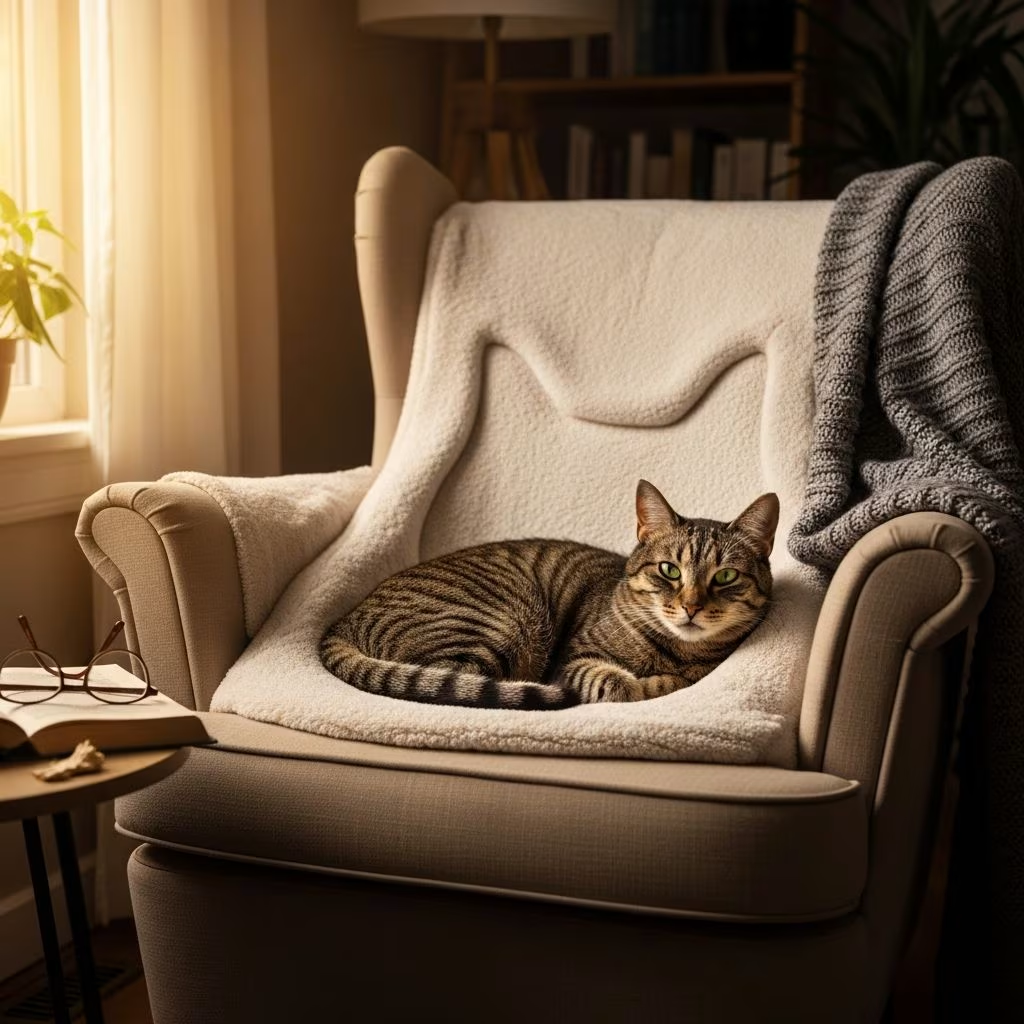
Your cat hopping into your chair the moment you stand up is a classic feline behavior that leaves many owners amused, puzzled, or even a bit annoyed. This quirky habit isn’t random—cats are deliberate creatures driven by instinct, comfort, and their deep connection to you. Whether it’s your office chair, recliner, or dining seat, your furry friend is drawn to it for compelling reasons rooted in their biology and psychology. In this comprehensive guide, we’ll explore the primary motivations behind why cats claim your spot, backed by veterinary insights and behavioral science. Understanding these reasons can strengthen your bond and help you respond appropriately to your cat’s needs.
It’s Warm and Comfortable
Cats are notorious for seeking out the coziest, warmest spots in the house, and your chair fits the bill perfectly. When you rise from your seat, you leave behind residual body heat that creates an inviting, pre-warmed cushion. Cats have a higher average body temperature than humans—around 100.5–102.5°F (38–39.2°C)—making them particularly drawn to these toasty areas.
This preference stems from their wild ancestors, who conserved energy by resting in sunlit or sheltered warm spots. In modern homes, your chair becomes that ideal thermal haven. The fabric often molds to your body over time, forming a slight depression that’s just right for a cat to curl into. Veterinary experts note that this warmth provides not just physical comfort but also a sense of relaxation, encouraging longer naps.
- Body heat retention: Chairs with cushions or thick upholstery hold heat longer, amplifying the appeal.
- Seasonal factor: In cooler months, this behavior intensifies as cats crave extra warmth.
- Material matters: Soft, plush chairs like recliners or armchairs are prime targets over hard surfaces.
If your cat prioritizes warmth, consider providing heated cat beds or placing blankets on alternative spots to redirect them without displacing your comfort.
Your Scent Makes It Feel Safe
Another major draw is your scent, which permeates your favorite chair through daily use. Cats have an acute sense of smell—14 times stronger than humans—and they associate your unique odor with safety and familiarity. By sitting there, your cat is essentially surrounding themselves with ‘you,’ reinforcing a sense of security.
Cats produce pheromones from glands on their cheeks, paws, and tail base, using them to mark ‘safe’ territories. When they rub against your chair (or you), they’re mingling their scents with yours, creating a communal ‘safe zone.’ This behavior echoes their social structure in feral colonies, where shared scents denote group membership.
Research from veterinary behaviorists highlights how this scent-marking reduces stress hormones like cortisol in cats, promoting relaxation. If your chair is near high-traffic areas, the backrest offers a defensive vantage point—your cat only needs to watch one direction while feeling ‘backed’ by the chair.
“Your favorite chair is covered in your own scent and your cat feels that you have personally marked it as ‘safe.'”
Territory Marking and Ownership
Cats are territorial by nature, viewing your home as their domain. Stealing your chair allows them to assert ownership by depositing their pheromones, effectively claiming it as part of their turf. This is especially common in multi-cat households, where seats become points of subtle competition.
Pheromones fade quickly, so cats frequently ‘refresh’ marks on high-value spots like your chair. This isn’t aggression toward you but a way to communicate to other cats (or themselves) that the area is secure. In single-cat homes, it still serves to reinforce their bond with you as the ‘alpha’ family member.
| Reason for Marking | Behavioral Sign | Household Context |
|---|---|---|
| Scent Reinforcement | Rubbing cheeks/paws | Any home |
| Territorial Claim | Repeated sitting | Multi-cat homes |
| Bonding Marker | Purring while seated | Strong owner bond |
Encourage positive marking by offering scratching posts or pheromone diffusers near alternative seats.
Attention-Seeking Shenanigans
Let’s address the cheeky side: many cats steal your seat precisely because it gets a reaction. The moment you approach to reclaim it, they get pets, playtime, or even a gentle nudge— all forms of interaction. Cats are smart; they learn that this behavior guarantees your focus, even if it’s to say, ‘Get off!’
Attention-seeking peaks in understimulated cats or those with strong attachments. Dr. Nita Vasudevan, a veterinary consultant, notes that cats target objects of your focus (like chairs during TV time) to redirect attention to themselves. This playful ‘theft’ strengthens your relationship, as any interaction reinforces the behavior.
- Timing: Often happens right after you stand, maximizing surprise.
- Escalation: May include meowing or rolling over for belly rubs.
- Solution: Ignore briefly, then redirect with toys to avoid reinforcing.
A Sign of Affection and Bonding
Beyond practicality, your cat’s chair-sitting is often pure love. By occupying your space, they stay connected to your presence via scent and warmth, mimicking closeness. This bonding behavior shows trust—you’re family, and your spot is an extension of you.
Behavioral studies indicate cats with secure attachments exhibit this more frequently, using it to self-soothe when you’re away. It’s their way of saying, ‘I miss you and feel safe here.’
Is It a Health or Stress Concern?
Usually harmless, but sudden changes warrant attention. If paired with lethargy, appetite loss, or hiding, it could signal pain, anxiety, or illness. Cats seek ‘secure’ spots under stress, like under chairs instead of on them. Consult a vet if behavior shifts abruptly.
How to Manage or Redirect the Habit
Love the quirk? Embrace it! Otherwise:
- Provide alternatives: Warm cat beds, window perches.
- Increase playtime: Tire them out to reduce mischief.
- Use deterrents: Double-sided tape or foil on seats.
- Positive reinforcement: Reward use of their own spots.
Maintain routine vet check-ups for holistic health.
Frequently Asked Questions (FAQs)
Why does my cat always steal my seat when I get up?
Your seat is warm, smells like you, and feels safe—prime real estate for a cat!
Is my cat marking territory by sitting in my chair?
Yes, via pheromones from scent glands, claiming it as safe and shared.
What if my cat suddenly changed spots to my chair?
Often normal, but monitor for stress/health signs like reduced eating.
How can I stop my cat from sitting in my chair?
Offer warm alternatives, ignore the behavior, and provide more interaction.
Does this mean my cat loves me?
Absolutely—it’s a sign of trust, bonding, and affection through scent and closeness.
References
- Is there a reason my cat keeps sitting under my chair? — Dial A Vet. 2023. https://www.dialavet.com/vet-answers/cat-sitting-under-chair-22009
- Ask A Vet: Why Does My Cat Sleep In My Chair? — iHeartCats. 2023. https://iheartcats.com/ask-a-vet-why-does-my-cat-sleep-in-my-chair/
- Why Some Cats Like to Steal Their Owner’s Seat When They Get Up — Fort Lauderdale Connex. 2023. https://www.fortlauderdaleconnex.com/pets/32840-why-some-cats-like-to-steal-their-owner-s-seat-when-they-get-up.html
- Why Your Cat Always Has to Sit on Whatever You’re Using — Kinship. 2023. https://www.kinship.com/cat-behavior/why-does-my-cat-sit-on-household-items
- Why Does My Cat Steal My Seat? — Cats.com. 2023. https://cats.com/why-does-my-cat-steal-my-seat



