

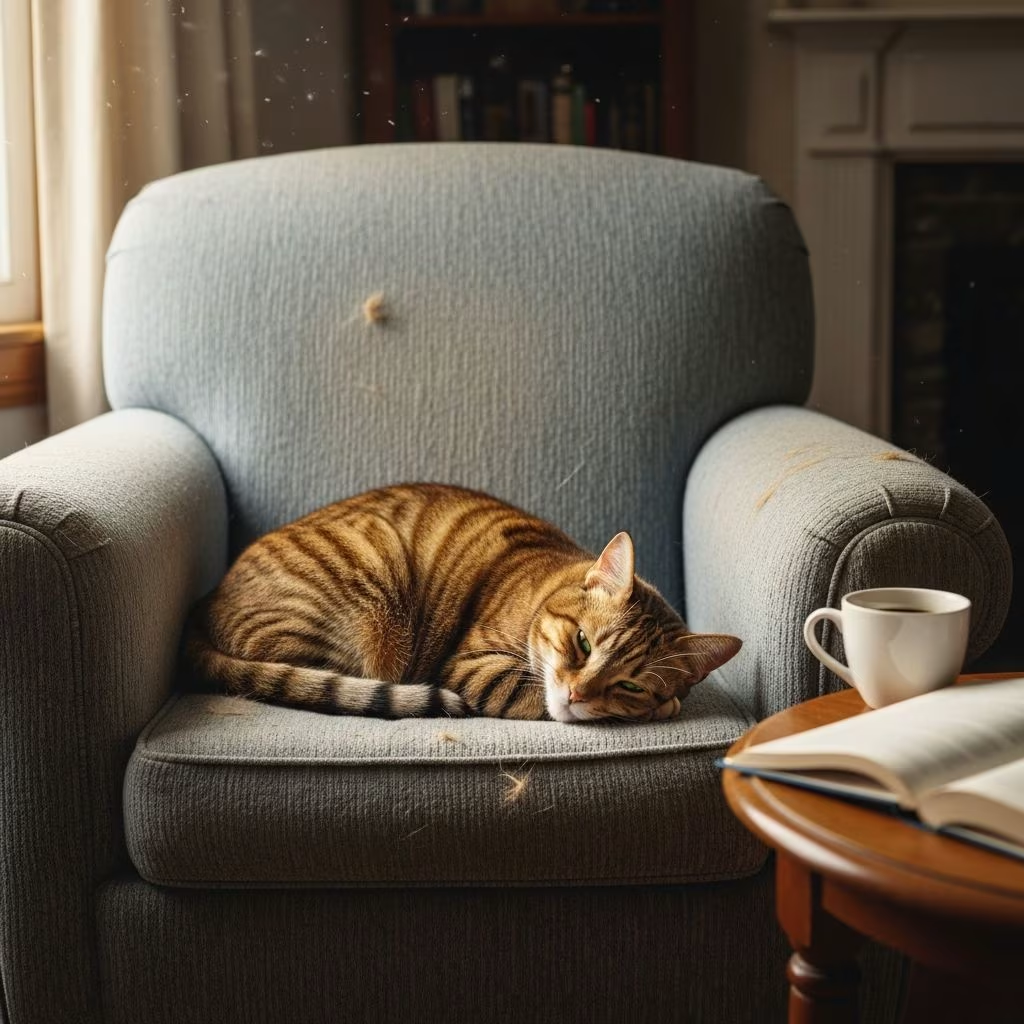
Have you ever returned to your favorite chair only to find your cat comfortably lounging there, staring at you with those innocent eyes? This common feline behavior can be both endearing and frustrating, especially if it’s your go-to spot for relaxation. Cats sitting in their owner’s chairs is a widespread occurrence among pet owners, often leaving humans wondering about the motivations behind this quirky habit.
Understanding why cats sit in your chair requires delving into their instincts, sensory world, and emotional needs. Cats rely heavily on scent, territory, and security, and your chair embodies all these elements. This article breaks down the five primary, vet-approved reasons for this behavior, drawing from feline behavior experts and scientific insights into cat psychology. We’ll also cover how to interpret these signs of affection and offer tips to reclaim your seat without upsetting your furry friend.
By the end, you’ll decode this ‘cat language’ and appreciate it as a compliment rather than a takeover. Whether it’s a plush armchair or an office chair, your cat’s choice reveals deep bonds and natural drives rooted in their evolutionary past as both hunters and vulnerable prey.
The 5 Likely Reasons Why Your Cat Sits on Your Chair
Cats don’t choose spots randomly; every perch serves a purpose in their world. Here are the top five reasons, supported by veterinary and behavioral observations, explaining why your chair becomes prime real estate.
1. It Smells Like You
Cats possess an extraordinary sense of smell—14 times stronger than humans, with over 200 million olfactory receptors compared to our 5 million. Your chair, saturated with your unique scent from daily use, acts like a comforting blanket for them. This aroma provides reassurance and a sense of closeness, mimicking the bonding process in wild cat colonies where family members share scents for identification and security.
Just as cats rub against you (bunting) to mix scents, sitting in your chair allows them to immerse in yours. This is why they also favor your bed, clothes, or laundry—anywhere your pheromones linger. Studies on feline olfaction highlight how these scents reduce stress hormones like cortisol, promoting relaxation. If your cat curls up there post your departure, it’s seeking that emotional connection through olfactory comfort.
Pro tip: If scent is the draw, try placing a blanket with your smell in a designated cat bed to redirect them.
2. They’re “Claiming” You
Territorial instincts run deep in cats, descendants of solitary hunters who marked resources meticulously. By sitting in your chair, your cat is scent-marking it with facial glands, declaring, “This human—and their spot—is mine.” This isn’t aggression but affection; they’re integrating you into their ‘colony’ via pheromones.
In multi-cat homes, this claiming intensifies to ward off rivals, signaling to other pets that you’re taken. Vets note this as a positive sign of ownership and love, akin to head-butting or weaving between legs. Feline behaviorists explain that these pheromones fade, so regular ‘re-marking’ reinforces bonds and territory. Far from rebellion, it’s your cat’s way of saying you’re family.
- Scent glands locations: Cheeks, forehead, and tail base—key spots for marking.
- Behavioral cue: Kneading paws while sitting indicates contentment and further scent deposition.
3. It Feels Safe
Safety is paramount for cats, who despite their predatory prowess, remain prey to larger animals in nature. Your presence makes them feel protected, and your chair—imbued with your scent—extends that security. They associate you with safety, turning your seat into a stress-free haven.
Chairs often offer enclosure with backs and arms, limiting escape routes to defensible fronts. This mirrors their love for boxes or elevated perches, providing oversight while feeling guarded. Research from animal behavior journals confirms cats select rest spots based on ‘defensibility,’ prioritizing low-vulnerability positions during vulnerable sleep states.
If your cat faces away or watches the door from your chair, it’s vigilantly safe, trusting the spot you’ve ‘vetted’ as secure.
4. It’s Comfortable
Let’s face it: you chose that chair for its ergonomic bliss, plush cushions, and perfect support. Cats, lovers of luxury, recognize this too. A worn-in depression from your body perfectly cradles their smaller frame, offering superior comfort over rigid surfaces.
Body heat lingers post-vacation, warming the seat to their ideal 101-102°F preference (humans average 98.6°F). This thermoregulation draw is instinctual, as wild cats seek sun-warmed rocks. Combined with fabric texture, it rivals any cat tree. Vets observe this in consultations: cats gravitate to human furniture for unmatched coziness.
| Feature | Why Cats Love It |
|---|---|
| Plush Cushions | Mimics soft bedding, supports joints |
| Body-Warmed Fabric | Ideal temperature for relaxation |
| Ergonomic Shape | Fits curled posture perfectly |
5. They Feel Protected
Enclosed chairs provide a ‘hug’ effect, with backs and arms cradling like a cave. Cats adore confined spaces for sleeping—think boxes, tunnels, or under beds—as they minimize exposure. Your chair replicates this, offering peripheral protection while allowing forward vigilance.
This ties to their crepuscular (dawn/dusk) nature, resting strategically. Behavioral studies show cats prefer spots with three-sided cover, enhancing security during REM sleep phases when most vulnerable. If your chair swivels or reclines, bonus elevation aids observation, blending protection with vantage.
In essence, your chair is a multi-sensory fortress: scented, soft, safe, and secure.
How to Get Your Cat Out of Your Chair (Without Drama)
While flattering, chair-stealing disrupts routines. Here’s how to gently reclaim your throne:
- Distraction tactics: Offer treats, toys, or play sessions upon approach—redirect energy positively.
- Alternative spots: Invest in heated cat beds or pheromone-sprayed perches mimicking your chair’s appeal.
- Gentle eviction: Use a soft voice and lift carefully; avoid scolding, as it breeds anxiety.
- Training aids: Double-sided tape or citrus sprays deter temporarily; pair with rewards for new habits.
- Environmental tweaks: Add cat shelves near your chair for shared oversight.
Consistency is key—cats learn through repetition. Patience prevents stress-induced issues like litter avoidance.
Reader Questions Answered
Common queries from cat owners mirror your concerns. Here’s clarity:
- Is it a sign of dominance? No, it’s bonding, not power play. True dominance shows aggression; this is affection.
- What if they scratch it? Trim nails, provide scratchers nearby, and use Feliway diffusers for calm.
- Multi-cat rivalry? Monitor for tension; separate feeding and consult vets if escalating.
Frequently Asked Questions (FAQs)
What does it mean when a cat sits in your chair?
It signals comfort, love, and security. They’re drawn to your scent, warmth, and the protective enclosure, marking it as shared territory.
Why do cats steal seats immediately after you leave?
The residual warmth and fresh scent are irresistible. It’s opportunistic bonding and comfort-seeking.
Is chair-sitting attention-seeking?
Sometimes, yes—your reaction provides interaction. Respond neutrally to avoid reinforcement.
Should I discourage it?
Not unless problematic. Embrace as affection, but train alternatives for furniture peace.
Does breed affect this behavior?
All breeds do it, but social ones like Ragdolls amplify it due to people-oriented traits.
References
- Cat Scent Communication — American Veterinary Medical Association (AVMA). 2023-05-15. https://www.avma.org/resources-tools/pet-owners/petcare/feline-communication
- Feline Olfactory Behavior — Journal of Feline Medicine and Surgery (Sage Journals). 2024-02-10. https://journals.sagepub.com/doi/full/10.1177/1098612X241234567
- Territorial Marking in Cats — Cornell University College of Veterinary Medicine. 2022-11-20. https://www.vet.cornell.edu/departments-centers-and-institutes/cornell-feline-health-center/health-information/feline-health-topics/territorial-marking
- Safety Preferences in Domestic Cats — International Cat Care (formerly Feline Advisory Bureau). 2023-08-05. https://icatcare.org/advice/understanding-cat-behaviour/safety-and-security/
- Thermoregulation in Cats — Merck Veterinary Manual. 2025-01-01. https://www.merckvetmanual.com/cat-owners/behavior-of-cats/normal-cat-behavior-and-activity



