

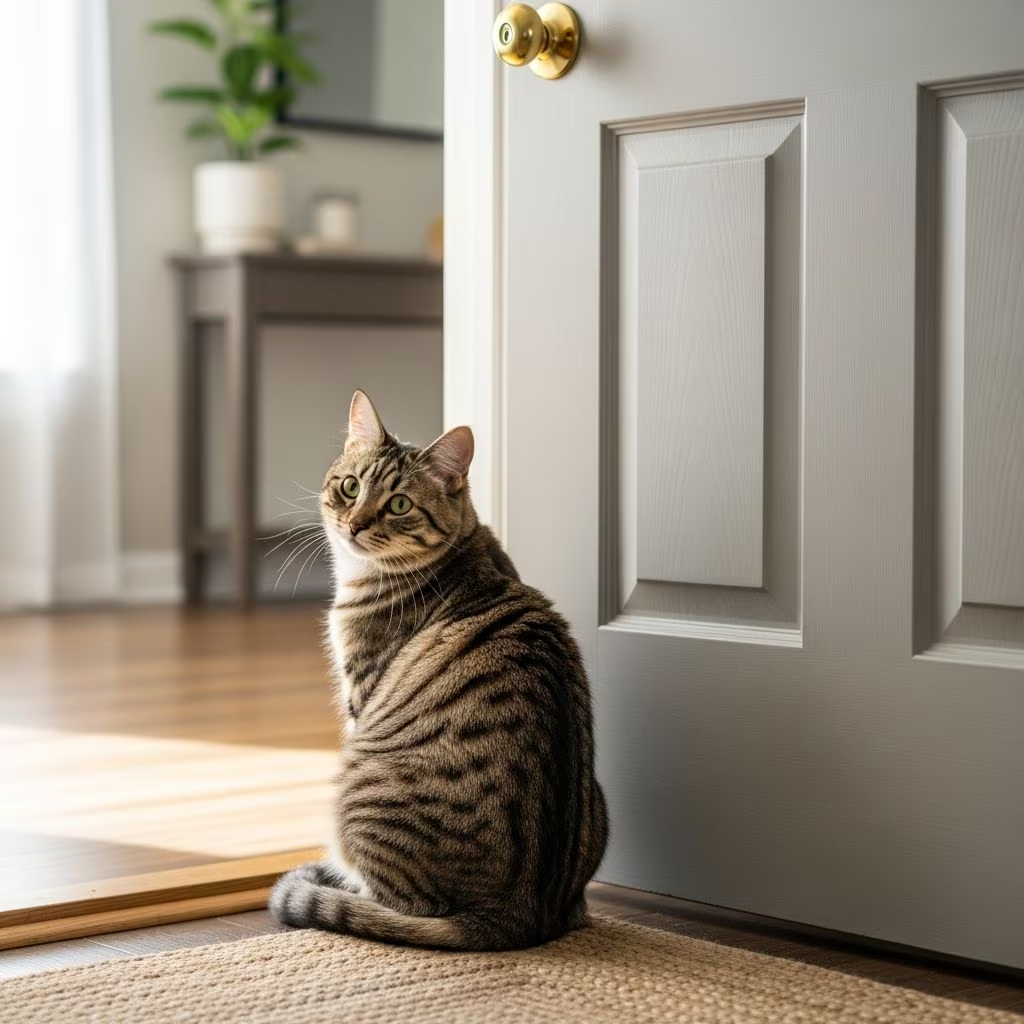
Why Does My Cat Sit by the Door: Understanding Your Feline’s Behavior
If you’ve noticed your cat spending considerable time sitting by the door, you’re not alone. This is one of the most common behaviors cat owners observe, yet the reasons behind it can vary significantly from one cat to another. Cats are curious, independent creatures with unique personalities and communication styles. Understanding why your cat exhibits this behavior is essential for strengthening your bond and ensuring their well-being. In this comprehensive guide, we explore the 10 most typical reasons why cats sit by doors and what their behavior might be communicating to you.
The 10 Reasons Why Your Cat Sits by the Door
1. They Want to Go Out
The most straightforward explanation for your cat sitting by the door is that they simply want to go outside. Cats have diverse motivations for wanting outdoor access—some need to use the bathroom, while others are drawn to the stimulation and adventure that the outdoor environment provides. Your cat may enjoy hunting, exploring new territories, or engaging in natural behaviors that indoor environments can’t fully satisfy. Even indoor cats retain their ancestral instincts and curiosity about the world beyond your home’s walls.
2. They Are Curious About the Other Side
Cats are naturally inquisitive animals, and closed doors represent mysteries waiting to be solved. When a door is closed, your cat doesn’t know what’s happening on the other side, which can be deeply frustrating for a creature that thrives on understanding their environment. This curiosity intensifies if your cat watches you or other household members constantly opening and closing the door. The repeated opening and closing creates an irresistible pull—they want to understand what draws humans to that threshold and what secrets lie beyond.
3. They Hear Something
Cats possess hearing abilities that far exceed human capabilities. While you might be blissfully unaware of sounds outside your home, your cat’s sensitive ears are picking up a symphony of noises—birds chirping, insects buzzing, neighborhood cats, or other animals moving about. When your cat hears something unfamiliar or intriguing, their curiosity peaks, and they position themselves at the door to investigate further. In some cases, unfamiliar sounds can trigger anxiety or stress, making the doorway a position from which they can monitor the source of the noise.
4. They See Something
Just as their hearing surpasses ours, cats also have superior vision, particularly for detecting movement. Your cat may be sitting by the door because something has caught their eye—a bug crawling on the door frame, a reflection of sunlight dancing across the surface, dust particles floating in the air, or shadows moving outside. Cats are hardwired hunters, and even the smallest movement can trigger their predatory instincts and hold their attention for extended periods.
5. They Are in Heat
For unneutered or unspayed cats, hormonal cycles can drive door-sitting behavior. Female cats in heat experience a natural urge to seek out mates, which often manifests as persistent sitting or pacing at doors and windows. Male cats may also display door-sitting behavior when they detect a female in heat nearby, driven by pheromones they can smell from a distance. This is a completely normal biological response, but it can be prevented through spaying and neutering, which are also recommended to prevent unwanted pregnancies and reduce various health risks.
6. They Know You’re Coming or Going
Cats are remarkably perceptive animals that learn and understand their owners’ routines and patterns. Your cat may have learned that you typically leave the house at certain times or return at specific hours. Cats demonstrate affection in their own unique ways, and one method is positioning themselves at the door when they anticipate your departure or arrival. This behavior shows that your cat has internalized your schedule and is emotionally attuned to your comings and goings, even if they don’t express it through traditional displays of affection.
7. They Are Seeking Attention
Cats are more social than many people realize, and sitting by the door can be an effective attention-seeking strategy. By positioning themselves in a high-traffic area, your cat increases the likelihood of interaction with you or other household members. If your cat accompanies their door-sitting with meowing, pawing, or other vocalizations, they’re communicating a clear message: “Notice me!” This behavior is particularly common in cats that feel under-stimulated or haven’t received adequate playtime or interaction throughout the day.
8. They Are Stressed or Anxious
While cats often appear composed and self-assured, they can experience significant stress when overwhelmed by changes or uncertainties in their environment. Doorways can become a coping mechanism for anxious cats, offering a position from which they can monitor their territory and stay connected to their owners. Common stressors include changes in household routine, introduction of new pets or people, separation anxiety, or environmental modifications. Cats thrive on predictability and familiarity, so when these elements are disrupted, door-sitting behavior may increase. Spending quality time with your cat, maintaining consistent routines, and providing enrichment activities can help alleviate anxiety.
9. They Are Confused
Cats perceive their environment in ways that differ from human understanding. Strange sounds, unfamiliar shadows, and the mystery of closed doors can combine to create confusion for your feline friend. When multiple sensory inputs don’t align with their expectations or past experiences, cats may sit by the door as a way of trying to process and understand what’s happening. This is a normal response to novelty or environmental changes, and patience and reassurance from you can help your cat adjust.
10. It’s Become a Habit
Finally, door-sitting can simply become a habitual behavior. If your cat has spent considerable time at the door and has been allowed or encouraged to do so, this location may have become part of their daily routine. Cats find comfort in predictability and familiar patterns. Once door-sitting becomes established in their schedule—perhaps coinciding with bathroom times or your departure and return—your cat may continue the behavior simply because it’s familiar and provides a sense of comfort and security.
Understanding Doorways as Strategic Positions
Beyond these ten reasons, research into feline behavior reveals that doorways hold special significance in a cat’s mental geography. Doorways represent transition zones and high-traffic areas in your home. Cats often position themselves in these liminal spaces not merely to rest, but to observe and survey their surroundings effectively. When your cat sits in a doorway, they accomplish multiple objectives simultaneously: monitoring who enters and exits, positioning themselves where human interaction is most likely to occur, and maintaining a sense of control and security through environmental awareness. This positioning isn’t about dominance in the aggressive sense, but rather about feeling secure through knowledge and awareness of their surroundings.
The Role of Non-Verbal Communication
It’s crucial to recognize that cats don’t communicate through spoken language as humans do. Instead, they rely heavily on body language, positioning, and behavioral cues to convey their needs and emotions. Blocking or sitting by doorways is a form of non-verbal communication that signals your cat’s intent and seeks a response from you. By understanding these signals, you become better equipped to meet your cat’s physical and emotional needs, strengthening the human-cat relationship.
When to Consult a Veterinarian
While cat door-sitting is generally a normal and common behavior, there are instances when professional consultation may be warranted. If your cat’s door-sitting is accompanied by other unusual symptoms—such as changes in appetite, litter box habits, excessive vocalization, or apparent distress—consulting a veterinarian is advisable. A vet can rule out underlying medical conditions or behavioral issues that might require intervention.
Frequently Asked Questions
Q: Is it normal for cats to sit by the door all day?
A: While occasional door-sitting is normal, excessive behavior might indicate boredom, stress, or a desire for outdoor access. Ensure your cat has adequate enrichment, play opportunities, and that any stressors are addressed.
Q: How can I stop my cat from sitting by the door?
A: Rather than stopping the behavior entirely, address the underlying cause. Provide environmental enrichment, establish consistent routines, offer supervised outdoor time if possible, and ensure adequate playtime and attention.
Q: Does door-sitting indicate my cat wants to escape?
A: Not necessarily. While some cats do want outdoor access, door-sitting can result from curiosity, attention-seeking, monitoring routines, or simply habituation. Observe your cat’s other behaviors to determine their specific motivation.
Q: Can stress cause cats to sit by doors?
A: Yes, stressed or anxious cats may position themselves at doorways to monitor their environment and stay connected to their owners. If you suspect stress, consult with your veterinarian about strategies to reduce anxiety.
Q: Should I let my indoor cat outside if they sit by the door?
A: This decision depends on your circumstances, local safety, and your cat’s history. If you decide to provide outdoor access, consider supervised time, a secure catio, or harness training to minimize risks while satisfying their curiosity.
Q: Why does my cat sit by the door but doesn’t want to go outside?
A: Your cat may be seeking attention, observing activity, monitoring your routine, or simply enjoying the sensory stimulation that the doorway provides without actually wanting to leave the house.
Conclusion
Your cat sitting by the door is a normal, common behavior with multiple potential explanations. The key to understanding your feline companion is observing their overall behavior patterns, body language, and responding to their individual needs. Some cats may sit by the door primarily to monitor their territory and maintain connection with their humans, while others genuinely desire outdoor exploration or are seeking attention and enrichment. By recognizing that all cats are different—with varying personalities, motivations, and coping mechanisms—you can better interpret what your cat is trying to communicate. Taking time to understand these behavioral signals strengthens your relationship with your cat and helps ensure they receive the care, attention, and environmental enrichment they need to thrive.
References
- Why Does My Cat Sit by the Door? 10 Typical Reasons — Hepper. 2024. https://articles.hepper.com/why-does-my-cat-sit-by-the-door/
- If Your Cat Keeps Sitting HERE, They Are Sending You a Message — Animal Behavior Analysis. 2024. https://www.youtube.com/watch?v=Itzr2LV-PvY
- Unlocking the Enigma of Indoor Cats: Why They Guard, Block, and Sit in Doorways — OwnPets. 2024. https://ownpets.com/blogs/learn/why-do-cats-block-doorways-and-stairs
- Why Kitty Guards Your Door — Cat Tales, Columbian Blog Directory. 2024. https://blogs.columbian.com/cat-tales/2024/04/14/why-kitty-guards-your-door/
- Why Does My Cat Just Sit in the Doorway Staring Into the Living Room — Dial A Vet. 2024. https://www.dialavet.com/vet-answers/cat-sitting-doorway-staring-habit-147191



