

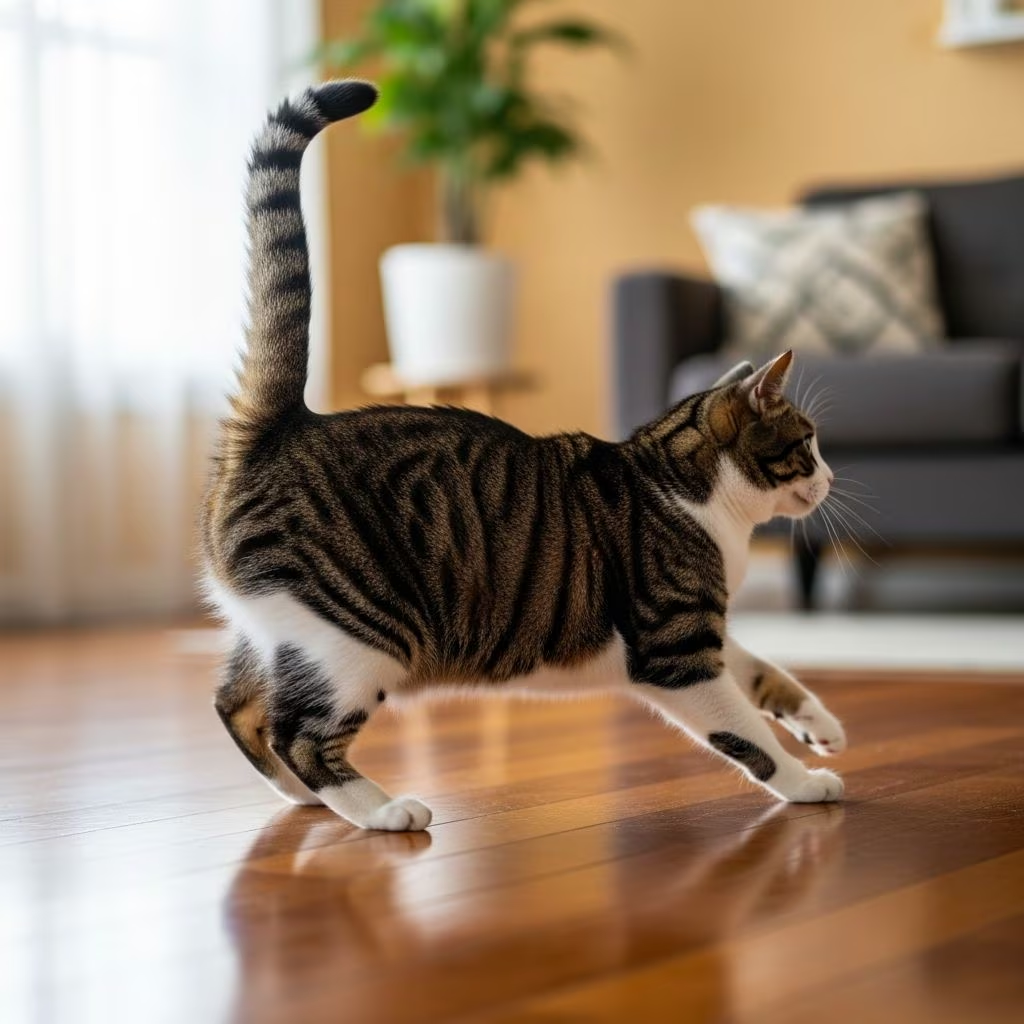
Your cat’s sideways scamper, often called “crab walking,” is a quirky behavior where they stiffen their legs, arch their back, puff their tail, and hop or skip laterally. This distinctive movement serves various purposes, from pure playfulness to signaling stress or even indicating health concerns. Understanding the context—body language, environment, and frequency—helps determine if it’s harmless fun or something requiring veterinary attention.
Most commonly observed in kittens and young cats, sideways running mimics a crab’s gait, hence the name. It’s typically accompanied by piloerection (fur standing on end) and a playful or defensive posture. While endearing, persistent or isolated sideways walking without emotional cues warrants a vet visit to rule out ataxia or neurological issues.
The 7 Reasons Why Your Cat Runs Sideways
Cats exhibit this behavior for both positive and negative reasons. Here’s a breakdown of the primary causes, supported by veterinary insights.
1. Having Fun and Playfulness
Play is the most frequent trigger for sideways running, especially in kittens and young adults. When excited by a toy, person, or another pet, cats adopt the “play posture”: legs straight, back arched, tail fluffed and raised. They circle sideways before pouncing, signaling invitation to engage—similar to a dog’s play bow.
This behavior hones hunting skills, practicing stealthy approaches. Indoor cats may direct it at laser pointers, feather wands, or moving shadows. Encourage it with interactive toys to channel energy positively, preventing destructive scratching or night-time zoomies.
- Signs it’s play: Relaxed ears forward, dilated pupils, chirping or trilling sounds.
- Age factor: Peaks in kittens under 2 years as they develop motor coordination.
- Tip: Join in with wand toys to strengthen your bond and tire them out.
2. Excess Energy or Zoomies
Known as Frenetic Random Activity Periods (FRAPs) or “zoomies,” this burst sees cats racing erratically, often sideways, to burn pent-up energy. Common after naps, meals, or confinement, young cats under 3 years are most prone due to high metabolism and underdeveloped impulse control.
Sideways elements occur when bouncing off walls or evading imaginary foes, mimicking wild pursuit. It’s normal but can damage furniture if unchecked. Provide vertical spaces like cat trees and scheduled play sessions (15-20 minutes twice daily) to preempt episodes.
- Triggers: Boredom, full bladder, or evening crepuscular instincts.
- Health note: Distinguished from medical issues by episodic nature and accompanying enthusiasm.
3. Attention Seeking
Cats are masters of manipulation. A slow, deliberate sideways walk near you—especially if you’ve rewarded it before—means “pet me now.” They position close, escalating to keyboard-sitting or lap-leaping if ignored. This reinforces through learned behavior, as cats associate the display with your response.
Respond selectively: ignore demands, reward calm approaches to avoid escalation. Over-attention-seeking may signal unmet needs like insufficient play or litter box issues.
4. Fear or Startle Response
Fear prompts the classic Halloween-cat pose: arched back, sideways sidle to appear larger and monitor threats from the side. Tail bushed, ears back—it’s a defensive retreat. Common with sudden noises, strangers, or unfamiliar animals. Without escalation, they relax quickly.
Differentiate from play by flattened ears and hissing. Create safe spaces (hiding boxes, high perches) and desensitize gradually with positive associations.
5. Wary of Strangers
A milder caution than full fear, wary cats sideways-walk around new people, assessing safety. Less extreme posture, but ready to flee. Home invaders trigger this territorial vigilance. Patience and treats help integration; never force interaction.
- Body cues: Dilated pupils, low growl, side-eye glances.
- Solution: Allow observation from afar, use pheromone diffusers like Feliway.
6. Anger or Aggression
Angry cats mirror fear posture but with forward menace: swishing tail, direct stares, growls. Sideways movement warns “back off” while maintaining visual contact. Triggers include resource guarding (food, territory) or redirected frustration (e.g., seeing outdoor cats).
Intervene by removing triggers; spay/neuter reduces inter-cat aggression. Multi-cat homes benefit from separate resources.
7. Neurological or Health Issues
Unlike emotional displays, medical sideways walking lacks piloerection or posture changes—it’s uncoordinated (ataxia), with leaning, circling, or falling. Causes include:
| Condition | Symptoms | Treatment |
|---|---|---|
| Vestibular Disease/Ear Infections | Head tilt, nystagmus, vomiting | Antibiotics, anti-nausea meds |
| Cerebellar Hypoplasia (Wobbly Cat Syndrome) | Lifelong tremors, congenital | Supportive care, no cure |
| Toxins/Trauma | Seizures, disorientation | Detox, vet emergency |
| Diabetes/FIV/Tumors | Weakness, weight loss | Manage underlying disease |
Per the Cornell University College of Veterinary Medicine, ataxia signals urgent care as it may indicate brain/spine issues. Seek immediate vet if sudden onset, persistent, or with lethargy/drooling.
When to Worry: Normal vs. Medical
Normal (emotional): Episodic, with arched back/fluffed tail, environmental trigger.
Concerning (medical): Constant, wobbly gait, no posture cues, other symptoms like head tilt.
Monitor 24-48 hours; video episodes for the vet. Early intervention prevents progression.
How to Encourage Positive Sideways Running
- Daily play: 20 mins with interactive toys.
- Enrichment: Puzzle feeders, window perches.
- Exercise: Cat wheels for high-energy breeds like Bengals.
- Socialization: Early exposure to stimuli reduces fear responses.
Frequently Asked Questions (FAQs)
Q: Why do cats do the sideways crab walk?
A: Cats crab walk for play, zoomies, attention, fear/anger (to look bigger), or rarely medical reasons like ataxia or infections.
Q: Is sideways running always playful?
A: No, check context—play includes forward ears; fear/anger shows flattened ears and hissing.
Q: My old cat walks sideways—should I worry?
A: Yes, in seniors it may indicate vestibular issues or arthritis; consult a vet promptly.
Q: How to stop nighttime sideways zoomies?
A: Evening play, consistent bedtime routine, and a tiring dinner (wet food) help.
Q: Can diet affect this behavior?
A: High-energy diets fuel zoomies; balance with exercise. Medical cases need vet-prescribed nutrition.
Final Thoughts
Sideways running enriches cat ownership, revealing their wild instincts. Embrace playful displays while staying vigilant for distress signals. A happy cat is an active one—provide outlets, and consult pros for anomalies.
References
- Why Is My Cat Running Sideways? 7 Vet-Reviewed Reasons — Catster (Veterinary Review). 2023-05-15. https://www.catster.com/cat-behavior/why-is-my-cat-running-sideways/
- Why Do Cats Crab Walk: Here’s What It Means — Cats.com. 2024-02-10. https://cats.com/why-do-cats-crab-walk
- What to do if your cat is walking sideways — Vetster (Veterinary Resource). 2024-08-20. https://vetster.com/en/wellness/what-to-do-if-your-cat-is-walking-sideways
- Cerebellar Hypoplasia in Cats (Feline Cerebellar Hypoplasia) — Cornell University College of Veterinary Medicine. 2023-11-01. https://www.vet.cornell.edu/departments-centers-and-institutes/cornell-feline-health-center/health-information/feline-health-topics/cerebellar-hypoplasia
- Ataxia in Cats — Merck Veterinary Manual (Peer-Reviewed). 2025-01-05. https://www.merckvetmanual.com/cat-owners/brain-spinal-cord-and-nerve-disorders-of-cats/ataxia-in-cats



