

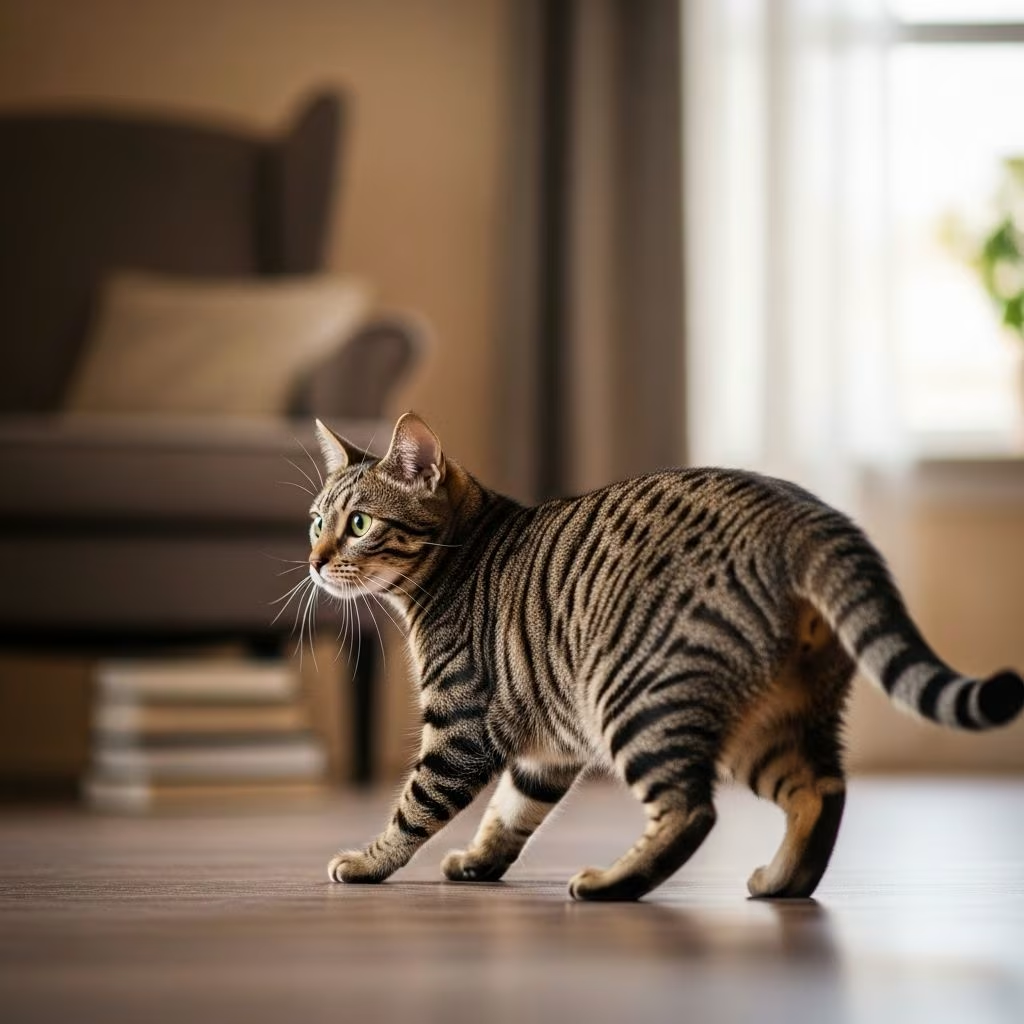
Why Does My Cat Run Away From Me?
Cats have a reputation for being independent and aloof, but when your feline friend suddenly starts running away from you, it can be concerning and disheartening. Understanding the reasons behind this behavior is the first step toward building a stronger relationship with your pet. Unlike dogs, cats don’t always display their emotions openly, and their running away might not mean they don’t love you—it often signals something deeper that needs your attention and care.
Unlike the common misconception that cats run away because they want to escape their homes permanently, most cats are actually trying to communicate something about their current situation. Your cat’s running behavior is typically a response to specific triggers or changes in their environment. By recognizing these signals, you can address the underlying causes and create a more harmonious living situation for both you and your beloved pet.
Stress and Environmental Changes
Cats are sensitive creatures that thrive on routine and predictability. Any significant change to their environment can trigger stress responses, including running away from you. Major renovations, the arrival of a new family member, or even rearranging furniture can disrupt your cat’s sense of security and comfort.
When cats feel stressed, they instinctively seek out safe spaces where they can retreat and decompress. If your home doesn’t provide adequate hiding spots, your cat may choose to run away to find a quieter, more peaceful environment. Additionally, loud noises such as vacuum cleaners, blenders, or sudden household commotion can startle your cat and trigger their flight response. Creating designated safe spaces where your cat can retreat during stressful times is essential for their emotional well-being.
Pro Tip: Establish a quiet room or corner in your home equipped with hiding spots, comfortable bedding, and calming resources. This dedicated space allows your cat to decompress during stressful periods without needing to venture away from home.
Fear and Anxiety
Fear is one of the most common reasons cats run away from their owners. Unexpected events like fireworks, thunderstorms, or encounters with other animals can trigger your cat’s natural fear response. When adrenaline kicks in, some cats freeze while others immediately go into flight mode, running as far as possible from the perceived threat.
The challenge with fear-driven running is that by the time your cat’s adrenaline subsides, they may be far from home and unfamiliar territory. This disorientation can make it difficult for them to find their way back. Additionally, if you’ve inadvertently scared your cat through rough handling, sudden movements, or punishments, they may learn to run away from you specifically as a protective measure.
If your cat shows signs of fear—such as flattened ears, a tucked or swishing tail, an arched back, hissing, or growling—give them space and time to calm down naturally. Forcing interaction can intensify their anxiety and reinforce running as a coping mechanism.
Personality and Individual Differences
Just like humans, cats have distinct personalities that influence their behavior. Some cats are naturally social and affectionate, while others are inherently more reserved or asocial. A cat that spends most of their time hiding under the bed or avoiding human contact may not be misbehaving—they may simply be expressing their true personality.
Certain breeds and individual cats are wired differently when it comes to social interaction. What appears as running away might actually be your cat’s natural preference for solitude. Cats are individuals who enjoy control over their interactions and physical space. If your cat runs away when you approach, it might mean they’re not in the mood for your attention at that particular moment, and they’re exercising their autonomy.
Understanding and respecting your cat’s personality rather than trying to force them into a more social mold is crucial for a healthy relationship. Accept that your cat may never be a lap cat, and instead, find ways to bond that align with their natural temperament.
Mood Swings and Unpredictability
Cats are famously mercurial creatures whose moods can shift quickly and sometimes without obvious reason. Your cat might be affectionate and purring one moment, then suddenly run away the next. These mood swings are completely normal feline behavior and don’t necessarily indicate a problem. Various factors influence cat moods, including changes in routine, sudden loud noises, age-related changes, and over-stimulation from excessive petting or play.
Some cats are genetically predisposed to moodiness and may be unpredictable in their desire for human interaction. Understanding that your cat’s running away might simply be a temporary mood is helpful in not taking it personally. The solution is to let your cat approach you on their own terms and to respect their boundaries when they signal they need space.
Pay attention to patterns in your cat’s mood changes. If running away happens consistently at certain times of day or under specific circumstances, you may identify triggers that you can manage or minimize to reduce stress for both of you.
Playfulness and Hunting Instincts
Sometimes a cat that runs away with their tail held high and a playful demeanor is simply inviting you to engage in a game of chase. Cats are naturally playful and curious creatures, and running away can be part of their interactive behavior. Unlike dogs, however, cats aren’t always in the mood for playtime, and they may lose interest quickly once the play begins.
If you notice your cat running away in a playful manner, seize the opportunity to bond through interactive play. Use toys that encourage your cat’s natural hunting instincts, such as feather wands, laser pointers, or balls. Engaging your cat in regular play sessions provides mental stimulation and physical exercise, which can reduce behavioral problems and strengthen your relationship.
However, be mindful not to over-stimulate your cat. Extended play sessions can lead to overstimulation, causing your cat to become frustrated or aggressive. Watch for signs of fatigue and allow your cat to rest between play sessions.
Lack of Socialization
Cats that weren’t properly socialized during their critical kitten period may be fearful or uncomfortable around humans, leading them to run away from their owners. If you adopted an adult cat with an unknown history, or if your cat wasn’t handled frequently as a kitten, they may exhibit avoidant behavior.
Poorly socialized cats may perceive you as a threat rather than a friend. They might run away whenever you approach, not because they’re sick or stressed, but because they weren’t taught early on that human interaction is safe and positive. Building trust with an under-socialized cat takes time, patience, and a consistent, gentle approach.
Work with your cat at their pace. Sit near them without attempting to touch or pick them up. Allow them to approach you voluntarily. Offer treats from your hand to create positive associations with your presence. Over time, many under-socialized cats develop trust and become more comfortable with human interaction.
Illness and Injury
Sometimes a cat’s sudden or increased tendency to run away can signal an underlying health problem. Cats are naturally stoic animals that mask pain and illness, so changes in behavior are often the first visible sign that something is wrong. If your cat is experiencing pain, discomfort, or feeling unwell, they may run away to avoid being handled or to seek a safe place to recover.
Watch for additional signs of illness such as changes in appetite or energy levels, unusual discharge from the eyes or nose, excessive grooming, labored breathing, or limping. If your normally affectionate cat suddenly becomes withdrawn and runs away frequently, a veterinary check-up is warranted to rule out medical issues.
Pay attention to how your cat reacts when you attempt to pick them up or touch certain areas. If they squirm, cry out, or run away specifically during handling, they may be experiencing localized pain. Consult your veterinarian to pinpoint the cause and provide appropriate treatment.
Neglect and Lack of Attention
While cats are independent animals, they still require adequate food, water, affection, and mental stimulation. If your cat doesn’t receive sufficient attention or if they’re left alone for extended periods, they may become increasingly distant and start spending less time at home. Cats that run out of food or water due to prolonged neglect may leave home seeking resources elsewhere.
Additionally, cats that lack physical and mental enrichment become bored and may wander off in search of stimulation. Interactive play, puzzle feeders, climbing structures, and window perches that provide entertainment can help keep your cat mentally engaged and less likely to run away.
Examine your daily routine and ensure your cat receives consistent attention, playtime, and environmental enrichment. Even brief daily interactions—such as a 10-minute play session or a few minutes of petting—can significantly improve your relationship and reduce running away behavior.
Territory and Territorial Disputes
Cats are inherently territorial animals that claim and defend their territory, whether indoors or outdoors. If a neighboring cat, dog, or other animal enters your cat’s perceived territory, your cat may feel compelled to defend it or, conversely, to flee to find safer ground. Changes to your cat’s territory, such as friends visiting frequently or construction in your home, can also trigger territorial responses.
Indoor cats may run away and hide if their safe spaces are invaded. For example, if you typically keep your cat’s litter box in a quiet guest room, but that room becomes filled with visitors, your cat may flee to find peace elsewhere. Respecting your cat’s territorial needs by maintaining consistent access to resources and quiet spaces helps reduce stress-related running away.
Reproductive Instincts
Unneutered or unspayed cats may run away due to reproductive instincts. Male cats may roam far from home searching for females in heat, while females in heat may become particularly clingy or, conversely, may want to be left alone. If your cat hasn’t been spayed or neutered, these instincts can drive them to run away more frequently.
Spaying and neutering your cat not only prevents reproductive-driven running away but also offers numerous health and behavioral benefits. Discuss with your veterinarian when the best time is to spay or neuter your cat, as early sterilization can prevent many behavioral problems before they develop.
When Your Cat Doesn’t Return Home
While most cats that run away eventually return home safely, some sadly do not. Understanding the risks that prevent cats from returning can help you take preventive measures:
- Theft: Valuable or rare breeds are more vulnerable to being stolen by unscrupulous individuals
- Predation: Local wildlife such as coyotes, hawks, or other predators can pose serious threats to outdoor cats
- Getting trapped: Your cat may become trapped in a garage, shed, or other enclosed space and be unable to escape
- Injury: Accidents, fights with other animals, or injuries may prevent your cat from finding their way home
- Animal control: Outdoor cats without identification may be picked up by animal control officials
- Transportation accidents: Your cat might accidentally jump into a vehicle without the driver’s knowledge
The Feline Homing Instinct
Many cats possess a homing instinct, an ability to find their way home from considerable distances. This instinct, sometimes called PSI trailing, is thought to be linked to the Earth’s geomagnetic field, though researchers don’t fully understand its mechanisms. Cats that have both indoor and outdoor access tend to develop stronger homing abilities than strictly indoor cats.
However, relying on the homing instinct alone is risky. Microchipping, ID tags, and outdoor enclosures provide much more reliable protection for your cat’s safety.
Practical Solutions to Prevent Running Away
Once you understand why your cat runs away, you can implement targeted solutions:
- Create multiple safe spaces throughout your home where your cat can retreat and feel secure
- Maintain a consistent daily routine for feeding, play, and interaction
- Provide environmental enrichment including climbing structures, scratching posts, and window perches
- Use pheromone diffusers or calming treats to reduce anxiety during stressful periods
- Schedule regular veterinary check-ups to rule out underlying health issues
- Allow your cat to set the pace for interaction and respect their boundaries
- Ensure your cat is microchipped and wearing an ID tag with current contact information
- Consider using a cat harness and leash for supervised outdoor exploration
- Spay or neuter your cat to reduce reproductive-driven roaming
- Gradually socialize under-socialized cats using positive reinforcement and patience
Frequently Asked Questions
Q: Is it normal for my cat to run away from me?
A: Yes, it’s relatively common for cats to run away from their owners for various reasons including stress, fear, personality preferences, illness, or simply being in a mood where they don’t want interaction. The key is identifying the underlying cause.
Q: How can I tell if my cat is scared?
A: A scared cat will display obvious body language signals including flattened ears, a tucked or swishing tail, an arched back, and possibly hissing or growling. Cats that are frightened will often run away to escape the perceived threat.
Q: Why is my cat suddenly running away from me?
A: Sudden changes in running away behavior can indicate stress from environmental changes, illness or injury, fear from a traumatic event, or changes in mood. A veterinary check-up is recommended to rule out medical causes.
Q: What should I do if my cat won’t return home?
A: If your cat is missing, search your neighborhood thoroughly, post on social media and lost pet websites, contact local animal shelters and veterinary clinics, and consider using humane traps baited with food. Having your cat microchipped and wearing an ID tag greatly increases the chances of recovery.
Q: Can I train my cat not to run away?
A: While you can’t eliminate the instinct, you can reduce the triggers by creating a stress-free environment, providing mental stimulation, maintaining a consistent routine, and building trust through positive interactions. Work with your cat at their pace and respect their personality.
Q: Does spaying or neutering help with running away?
A: Yes, spaying and neutering significantly reduces reproductive-driven running away behaviors. It also provides numerous other health and behavioral benefits. Most veterinarians recommend spaying or neutering kittens before they reach sexual maturity.
References
- 10 Reasons Why Cats Run Away From Home & What You Can Do — Rover.com. Accessed January 2026. https://www.rover.com/blog/why-do-cats-run-away/
- Why Does My Cat Run Away From Me? Tips for Keeping Them Safe — Kinship.com. Accessed January 2026. https://www.kinship.com/cat-behavior/why-does-cat-run-away
- Why Does My Cat Run Away From Me? — Cats.com. Accessed January 2026. https://cats.com/why-does-my-cat-run-away-from-me
- Can Cats Find Their Way Home? — PetMD.com. Accessed January 2026. https://www.petmd.com/cat/care/can-cats-find-their-way-home



