

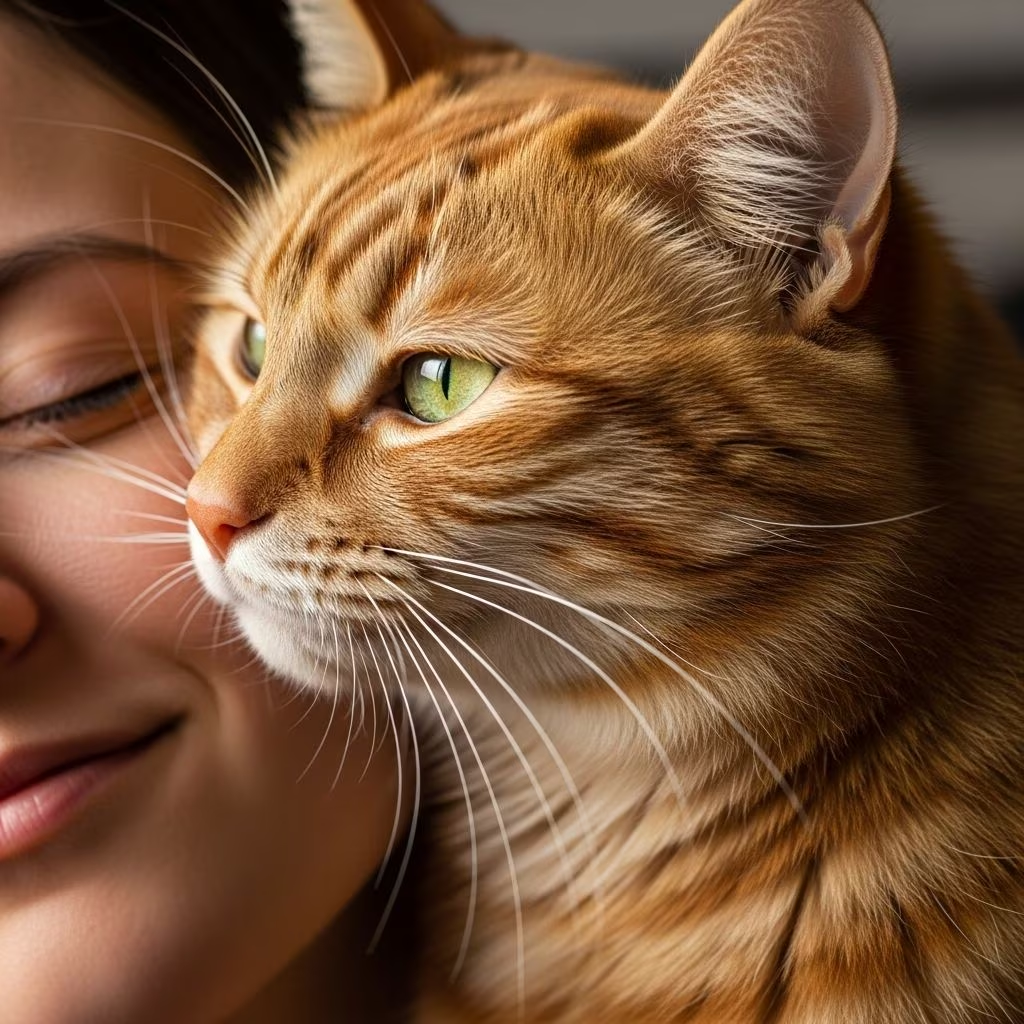
Your cat’s habit of rubbing its face against yours is a common and endearing behavior rooted in feline instincts. This action, often called “bunting” or nuzzling, serves multiple purposes including scent marking, affection, and social bonding. Understanding it strengthens your relationship with your pet.
What Is Bunting in Cats?
Bunting refers to when a cat rubs its head or face against people, objects, or other animals. It’s a natural communication method driven by scent glands located on the cat’s cheeks, forehead, chin, and lips. These glands release pheromones—chemical signals that convey information about the cat’s identity, mood, and territory.
Cats perform bunting when they feel safe, happy, and secure. It’s not random; it’s an intentional way to mix scents, creating a communal “group smell” that fosters familiarity in their environment.
- Key areas of scent glands: Cheeks, forehead, chin, lips, and near the ears.
- Pheromone types: Feline facial pheromones signal comfort, ownership, and low stress.
- Frequency: Common in relaxed household cats, especially during greetings or when seeking attention.
Why Do Cats Rub Their Face on You?
Cats rub their faces on humans for several interconnected reasons, all tied to their evolutionary instincts as solitary hunters who use scent for survival and socialization.
1. Scent Marking Territory
The primary reason is territory marking. Cats deposit their unique scent onto you, claiming you as part of their territory. This makes you “smell like them,” reducing perceived threats and signaling to other cats that you’re off-limits.
Imagine it as your cat writing their name on you, like a child labeling a toy. This behavior reassures them that their home and people are safe and familiar.
2. Showing Affection and Love
Face rubbing is a profound sign of trust and love. By sharing their scent, cats include you in their family or “colony.” It’s their way of saying, “You’re one of us—I love and accept you.”
Accompanied by purring, slow blinks, or tail wrapping, this reinforces emotional bonds. In multi-cat homes, cats rub faces to maintain group harmony through shared scents.
3. Greeting and Social Bonding
Rubbing serves as a friendly “hello.” Cats often greet owners this way after separations, weaving around legs or head-butting faces to reestablish connection.
This mirrors wild cat behaviors where rubbing mixes colony scents, promoting unity. Your cat is welcoming you back into the fold.
4. Seeking Attention or Requests
Cats are smart; they learn rubbing gets results. It might signal hunger, a desire for play, pets, or door access. Positive responses reinforce the habit.
Body language matters: Relaxed ears and eyes indicate affection; tense posture might mean a specific need.
5. Comfort and Familiarity
In new environments or after changes (e.g., moving furniture), cats rub to spread their scent, making spaces feel secure. Rubbing on you extends this comfort.
Cat Scent Glands Explained
Cats possess specialized apocrine glands concentrated on their face. When rubbed, these release invisible pheromones detectable by other cats via the vomeronasal organ—a scent analyzer in the mouth.
Flehmen response: Cats may grimace with open mouth to “taste” scents, aiding analysis.
| Gland Location | Purpose | Effect |
|---|---|---|
| Cheeks | Happy/low-stress pheromone | Marks safe, comfortable areas |
| Forehead | Territory claim | Ownership signal |
| Chin/Lips | Affection/identity | Bonding and recognition |
These pheromones are species-specific, invisible to humans but crucial for cat communication.
Is Face Rubbing Always Positive?
Generally yes, but context matters. Normal rubbing is gentle, occasional, and paired with relaxed body language.
When to worry:
- Sudden increase in frequency or intensity.
- Aggressive rubbing causing irritation.
- Accompanied by aggression, hiding, or appetite loss.
Excessive rubbing may indicate:
- Allergies or fleas: Itching prompts over-rubbing.
- Ear infections: Head shaking or pawing at ears.
- Stress/anxiety: Environmental changes.
- Medical issues: Hypersensitivity or neurological disorders.
Consult a vet if behavior changes abruptly. Track patterns: time of day, triggers, duration.
How to Respond to Your Cat’s Face Rubbing
Encourage this bonding ritual safely:
- Reciprocate gently: Pet their cheeks or offer a slow blink to affirm affection.
- Use synthetic pheromones: Products like Feliway mimic facial scents for calming.
- Provide alternatives: Scratching posts, cat trees for scent marking.
- Observe body language: Tail up = happy; flattened ears = discomfort.
Avoid punishing; it erodes trust. Instead, reward with play or treats to channel energy positively.
Why Do Cats Rub on Objects and Other Animals?
Beyond humans, cats rub furniture, walls, and other pets for the same reasons: scent mixing and territory assurance. In homes with multiple cats, mutual rubbing prevents conflicts.
On objects, it creates a familiar scent map, reducing stress in dynamic environments.
Fun Facts About Cat Rubbing
- Cats rub more on owners they trust deeply.
- Kittens learn from mothers via mutual rubbing.
- Stray cats may rub friendly humans as tentative greetings.
- Rubbing frequency peaks during feeding times or evenings.
Frequently Asked Questions (FAQs)
Q: Is it safe for my cat to rub its face on mine?
A: Yes, for healthy cats. It spreads love via pheromones. Wash face after if allergies are a concern, and ensure your cat is parasite-free.
Q: Why does my cat rub more at night?
A: Cats are crepuscular (active dawn/dusk). Evening rubbing seeks pre-bedtime attention or reassurance.
Q: What if my cat stopped rubbing suddenly?
A: Possible illness, stress, or depression. Monitor health and environment; vet check recommended.
Q: Can I train my cat not to rub on my face?
A: Redirect to toys or furniture. Punishment harms bonds; positive reinforcement works best.
Q: Do all cats rub faces?
A: Most do, but feral or undersocialized cats may not, due to lack of trust.
Strengthening Your Bond Through Understanding
Embracing face rubbing deepens your connection. Recognize it as your cat’s ultimate compliment—a declaration of safety and love. Regular vet care, enrichment, and responsive interactions ensure this behavior remains a joy.
References
- If Your Cat Rubs Their Face on You, They’re Saying THIS — Feline Fanatics (YouTube). 2025-05-16. https://www.youtube.com/watch?v=ntI6QMtVTxU
- Why does my cat rub against me? — Cats Protection. Accessed 2026. https://www.cats.org.uk/cats-blog/why-does-my-cat-rub-against-me
- Why Do Cats Nuzzle You? — Hill’s Pet Nutrition. Accessed 2026. https://www.hillspet.com/cat-care/behavior-appearance/what-is-cat-nuzzling
- Why do cats rub their cheeks on stuff? — Ask Dr. Universe, Washington State University. 2023-11-09. https://askdruniverse.wsu.edu/2023/11/09/7411/
- Why Do Cats Rub Against You? — Nutrish. Accessed 2026. https://www.nutrish.com/blog/why-do-cats-rub-against-you/



