

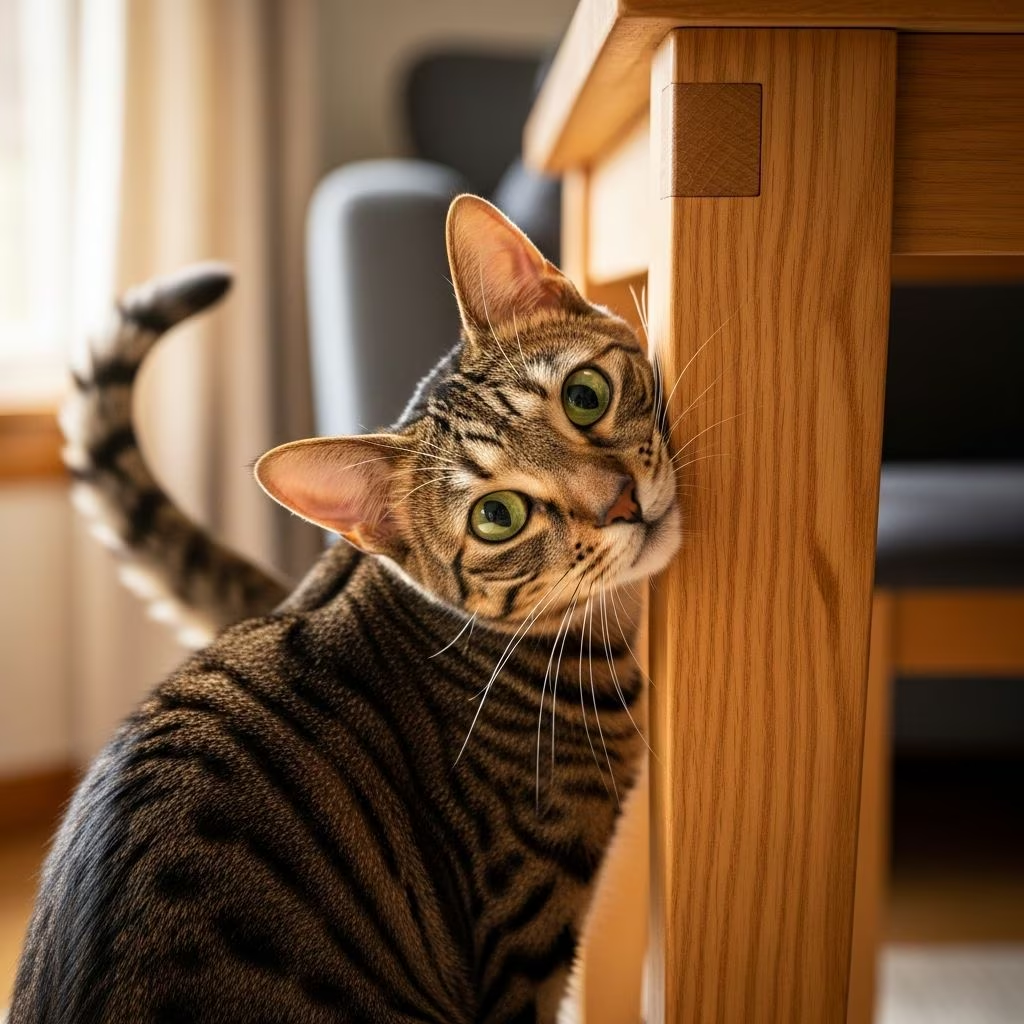
Your cat’s rubbing behavior is one of the most common and endearing feline habits. Whether it’s weaving between your legs, nuzzling furniture, or head-butting your hand, this action serves multiple purposes rooted in instinct, communication, and emotion. Cats possess scent glands in key areas like their cheeks, forehead, chin, paws, and tail base, releasing pheromones—chemical signals invisible and odorless to humans but potent to other animals. This guide explores the science behind why cats rub against things, drawing from veterinary experts and research to help you understand and respond to your pet’s needs.
The Science of Cat Scent Glands
Cats are olfactory masters, using scent as their primary communication tool. Specialized sebaceous glands produce pheromones that convey ownership, familiarity, and social bonds. When a cat rubs, it deposits these scents, creating a ‘colony odor’ that reassures the group and wards off intruders.
- Cheeks and Face: Primary sites for F3 pheromone, signaling ‘this is mine.’
- Forehead and Chin: Mark territory and companions.
- Paw Pads: Used during kneading or scratching to reinforce claims.
- Tail Base: Involved in allorubbing with other cats or trusted humans.
According to veterinary behaviorists, this glandular activity feels pleasurable, stimulating endorphin release and whiskers (vibrissae), which act as touch sensors.
Reason 1: Marking Territory
The most instinctive reason cats rub against things is to claim territory. In the wild, felines are solitary hunters establishing boundaries via scent. Domestic cats adapt this to homes, rubbing furniture, walls, and you to declare ownership.
Key pheromones include:
- F3 Pheromone: Released from cheeks and chin, it shouts ‘claimed area’ to other cats.
- F2 Pheromone: Male-specific, indicates mating readiness.
- F4 Pheromone: Promotes social bonds and safety among familiars, including humans.
This behavior prevents conflicts by visually and olfactorily mapping safe zones. Multi-cat homes see increased rubbing on shared surfaces to maintain harmony.
Reason 2: Showing Affection and Greeting
Rubbing is a love language. When your cat head-butts (bunts) you upon return, it’s reconnecting after separation. A 2021 study in Applied Animal Behaviour Science found 83% of cats bunt owners post-absence, mixing scent exchange with joy.
Experts note:
‘Cats rub to say, “I love you,” “I missed you,” or “Pet me”’ — Tomeshia Hubbard, DVM.
Vibrissae stimulation feels good, releasing endorphins. It’s mutual scenting: your cat mixes its odor with yours, reinforcing family ties. Greetings often include purring and meowing, escalating to leg-weaving for attention or food.
Reason 3: Seeking Attention or Resources
Cats are clever communicators. Rubbing your legs might butter you up for treats, play, or dinner. This attention-seeking pairs with vocalizations, training humans effectively.
In multi-pet homes, rubbing distinguishes ‘my person’ from others. It’s efficient: physical contact demands response while refreshing scents disrupted by outings.
Reason 4: Self-Soothing and Pleasure
Bunting calms cats in new environments, easing anxiety via familiar scents. The act massages glands, providing sensory pleasure akin to a mini-massage.
When Rubbing Signals Health Issues
Excessive or frantic rubbing warrants concern. It may indicate:
| Condition | Symptoms | Action |
|---|---|---|
| Allergies/Fleas/Ticks | Intense itching, skin irritation | Vet exam, flea treatment |
| Ear Infections | Head shaking, pawing ears | Ear cleaning, meds |
| Heat Cycles (Unspayed) | Vocalizing, spraying, restlessness | Spay recommendation |
| Neurological Issues | Head pressing, imbalance | Immediate vet visit |
Unspayed females in estrus rub excessively during 4-20 day cycles. Spay by 5 months per AAFP guidelines. Differentiate from normal bunting: illness rubbing targets itchy spots persistently.
Bunting vs. Head Pressing
Normal bunting is affectionate rubbing. Head pressing—pushing head against walls repeatedly—signals illness like liver issues or tumors. Seek vet care if seen.
How to Respond to Your Cat’s Rubbing
Encourage healthy rubbing:
- Pet gently along cheeks/chin to reciprocate.
- Provide scratching posts with catnip for outlets.
- Use synthetic pheromones (F3/F4 diffusers) for stress.
- Monitor frequency; consult vet if excessive.
Never punish—it’s natural. Respond positively to strengthen bonds.
Frequently Asked Questions (FAQs)
Why does my cat rub against me when I get home?
It’s a greeting and scent refresh. Your cat missed the colony odor and re-marks you as family.
Is cat rubbing a sign of dominance?
Not dominance, but affiliation. It includes you in their social group via shared scent.
Why does my cat rub on furniture more than me?
Furniture marks static territory; you move, so dynamic marking occurs on legs/hands.
What if my cat rubs too much on one spot?
Check for irritation or allergies. Persistent focus may need vet evaluation.
Do all cats rub the same way?
Variations exist by personality, but all use facial glands primarily.
Conclusion
Cat rubbing blends instinct with emotion: territory, love, communication. Understanding it deepens your bond. If behaviors shift, prioritize health checks for a happy feline friend.
References
- Why Do Cats Rub Against You? We Asked a Veterinarian — Country Living. 2023-10-01. https://www.countryliving.com/life/kids-pets/a62392728/why-cats-rub-against-you-explained/
- Why Do Cats Rub Against Your Legs? — Encyclopaedia Britannica. 2024-01-15. https://www.britannica.com/science/Why-Do-Cats-Rub-Against-Your-Legs
- Why Does My Cat Do That? Three Cat Behaviors Explained — Patton Veterinary Hospital. 2023-05-12. https://pattonvethospital.com/blog/992680-why-does-my-cat-do-that-three-cat-behaviors-explained
- Why Do Cats Rub Up Against You? — Chewy. 2024-03-20. https://www.chewy.com/education/cat/training-and-behavior/why-do-cats-rub-against-you
- Bunting (animal behavior) — Wikipedia (informed by primary sources). 2025-01-10. https://en.wikipedia.org/wiki/Bunting_(animal_behavior)
- 6 Common Cat Behaviors Explained — UC Davis. 2023-11-05. https://www.ucdavis.edu/magazine/6-common-cat-behaviors-explained



