

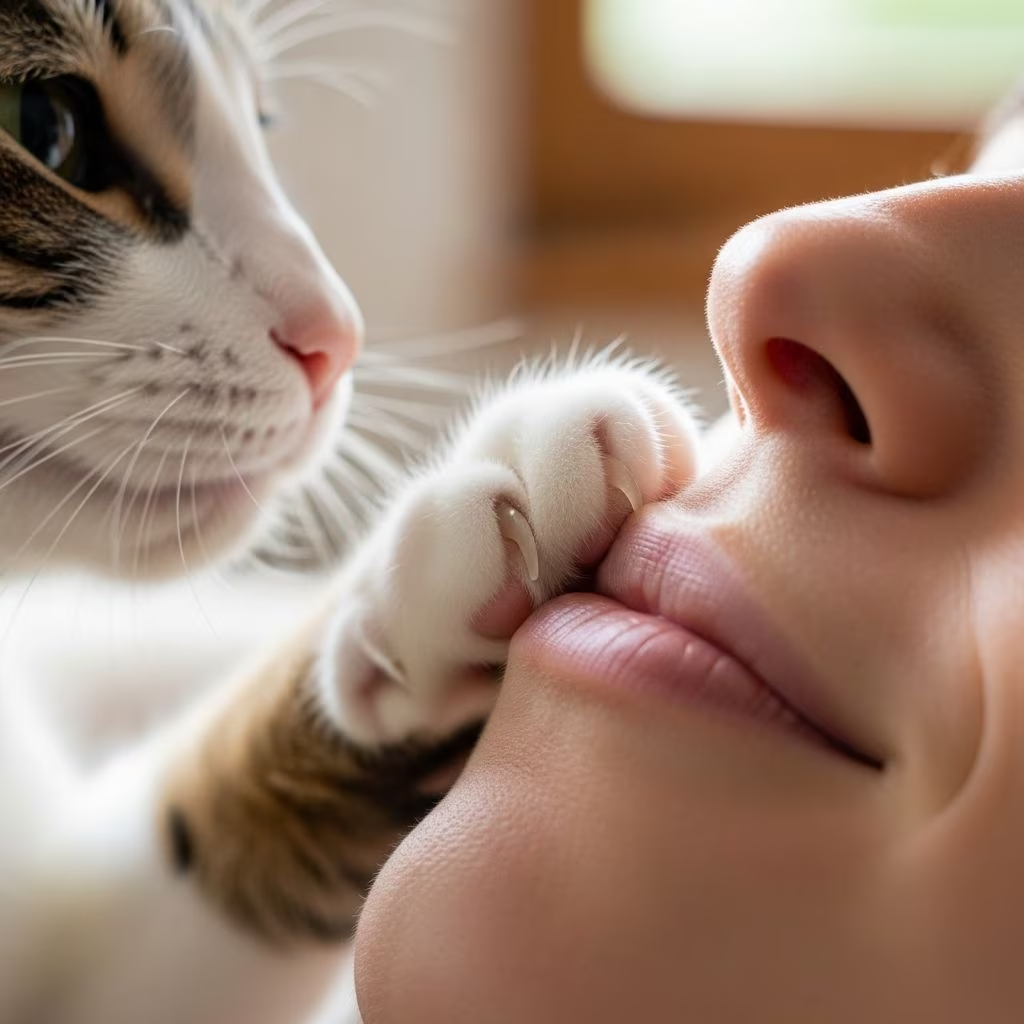
Why Does My Cat Put Their Paw on My Mouth?
If you’ve noticed your cat placing their paw gently on your mouth, you’re experiencing one of the most endearing yet puzzling feline behaviors. This intimate gesture carries multiple meanings, and understanding what your cat is trying to communicate can deepen your bond with your furry companion. Cat paw-on-mouth behavior is a complex form of non-verbal communication that can signify everything from affection to a request for your attention.
Understanding Cat Communication Through Paws
Cats communicate through a sophisticated system of body language, vocalizations, and physical touch. When your cat reaches out and places their paw on your mouth, they are engaging in what experts recognize as a meaningful interaction. This behavior is distinct from casual pawing or batting, as it represents a deliberate and purposeful action. Cats have scent glands located in their paw pads, which means every touch carries chemical signals that help them express their feelings and mark their territory.
Six Reasons Why Your Cat Puts Their Paw on Your Mouth
1. Showing Affection and Love
One of the most common reasons your cat places their paw on your mouth is to express affection and tenderness. When your cat engages in this behavior, they may be unaware that they’re invading your personal space—from their perspective, they’re simply getting as close to you as possible. Your face and chest are feline favorites for physical contact, and because you use your mouth when talking to your cat, this gesture serves as their way of demonstrating approval and love. It’s equivalent to a cat’s way of saying “all paws up” in acknowledgment of their bond with you.
2. Seeking Your Attention
If your cat isn’t receiving enough attention from you, they may strategically place their paw on your mouth to request your focus. This behavior often develops when cats learn that this particular gesture successfully captures their owner’s attention. Whether your cat wants you to refill their empty food bowl, desires cuddle time, or simply needs some interactive play, a paw on the mouth is their way of saying “listen to me.” If this action has inadvertently resulted in positive outcomes in the past, your cat has likely learned that it’s the most effective way to get what they want from you.
3. Expressing Comfort and Contentment
When your cat nestles cozily against your chest and places their paw on your mouth while purring, accept this as a highly coveted sign of comfort on their part. This behavior indicates that your cat feels safe, secure, and content in your presence. The combination of physical closeness, paw placement, and purring creates a complete picture of feline contentment. This is one of the most rewarding behaviors to witness, as it demonstrates that your cat considers you a source of comfort and security.
4. Initiating Playtime
If your cat is feeling particularly frisky and playful, they might crawl up on you and place their paw on your mouth as an invitation to engage in interactive play. Watch for accompanying signs of playfulness, such as dilated eyes, a tail whipping around, and a body tensed in anticipation. When you observe these signals, it’s time to bring out their favorite wand toy, feather teaser, or laser pointer. This allows your cat to constructively burn off excess energy while bonding with you through shared play.
5. Demonstrating Trust
When your cat places their paw on your mouth, this intimate action serves as a powerful demonstration of the trust and adoration they feel for you. Cats are naturally cautious animals, and allowing themselves to be this physically close to your face—a vulnerable area—shows significant trust. This behavior indicates that your cat views you as a safe presence and has complete confidence in your intentions toward them.
6. Regulating Physical Contact
Sometimes cats place their paw on your mouth to communicate that they need you to stop moving or talking. When you’re holding your cat while sitting on the sofa and cuddling, your movement and conversation can disturb their comfort. By placing their paw on your mouth, your cat is essentially asking you to “shush” and remain still. Once you comply by reducing movement and noise, your cat may gently keep their paw on your mouth while purring contentedly, indicating they’ve received exactly what they needed.
The Physical Mechanics Behind the Behavior
Beyond emotional communication, there are practical physical reasons why cats choose to place their paws on your mouth. When you’re holding your cat in an upright position facing you, it’s not the most comfortable stance for their body structure. By placing their paw on your mouth or face, cats gain additional stability and support. Your mouth is a prominent feature on your face and likely feels like a comfortable “Press Here” button to your feline friend, making it an ideal anchor point for balance.
Health Considerations and Safety
While the behavior is undeniably cute and meaningful, it’s important to understand the health implications. Your mouth is an entryway to your digestive and respiratory systems, and your cat’s paws can transmit bacteria, fungi, and viruses. As your cat walks through their litter box, they come into contact with their own urine and feces. This means that a paw on your mouth can potentially deposit harmful bacteria such as E. coli, parasites, and salmonella into your system.
To minimize health risks while still enjoying this intimate behavior with your cat:
- Maintain routine parasite prevention for your cat as recommended by your veterinarian
- Keep your cat’s litter box clean and change it regularly
- Gently redirect your cat’s paw if they attempt to touch your mouth
- Wash your hands after playing with your cat and before eating
- Practice good oral hygiene and avoid letting your cat lick your face
Reading Your Cat’s Body Language
To accurately interpret why your cat is placing their paw on your mouth, observe the accompanying body language signals:
| Body Language Signal | Likely Meaning |
|---|---|
| Purring and slow blinks | Affection and comfort |
| Dilated pupils and twitching tail | Playfulness and energy |
| Relaxed posture and leaning in | Trust and contentment |
| Ears pinned back and tense body | Stress or discomfort |
| Kneading motions alongside paw placement | Contentment and bonding |
Distinguishing Similar Behaviors
Cat paw-on-mouth behavior is distinct from other forms of feline interaction. When your cat reaches out to tap you on the face or boop your nose, they’re using their paws to communicate, but the intention and context may differ. Paw-on-mouth placement is typically more deliberate and intimate than casual face taps. Similarly, this behavior differs from face licking, which serves different communicative purposes. Understanding these nuances helps you better interpret your cat’s needs and intentions.
Training and Redirecting the Behavior
If you find that your cat’s paw-on-mouth behavior is becoming bothersome or if you’re concerned about hygiene, you can gently redirect the behavior. When your cat places their paw on your mouth, calmly move their paw away and offer an alternative form of affection, such as gentle petting on their back or head. Reward them with treats or praise when they accept these alternatives. Consistency is key in helping your cat learn new ways to express their needs and affection.
Age and Experience Factors
The frequency and intensity of paw-on-mouth behavior can vary depending on your cat’s age and past experiences. Kittens may exhibit this behavior more frequently as they explore their environment and learn communication techniques. Adult cats typically demonstrate this behavior when they have established strong bonds with their owners. Senior cats may engage in this behavior less frequently due to reduced energy levels, though the behavior often carries even more significance when it does occur, as it represents their deep affection and trust.
Creating a Stronger Bond Through Understanding
By understanding the reasons behind your cat’s paw-on-mouth behavior, you’re better equipped to respond appropriately to their needs. When your cat seeks affection, providing attentive cuddles strengthens your relationship. When they request attention, engaging with them demonstrates that you value their communication. When they show trust through this intimate gesture, reciprocating with gentle care reinforces your bond. This two-way communication creates a deeper, more meaningful relationship with your feline companion.
Individual Personality Differences
Every cat has a unique personality and communication style. Some cats may place their paw on your mouth frequently throughout the day, while others may do it only occasionally in specific situations. These differences are normal and reflect your individual cat’s temperament, background, and attachment style. A cat that was well-socialized from a young age and had positive early experiences with humans may display this behavior more openly than a cat with a more reserved personality. Learning your specific cat’s patterns and preferences helps you respond to their needs more effectively.
Frequently Asked Questions
Q: Is it safe to let my cat put their paw on my mouth?
A: While the behavior itself is not inherently dangerous, your cat’s paws can carry bacteria from their litter box. To balance safety with affection, you can gently redirect their paw to your cheek or forehead, or wash your mouth area afterward. Ensure your cat is on a regular parasite prevention program recommended by your veterinarian.
Q: What if my cat never puts their paw on my mouth?
A: Not all cats exhibit this behavior, and that’s completely normal. Cats have different communication styles and attachment expressions. Your cat may show affection in other ways, such as head bunting, slow blinking, or sitting close to you. Each cat has their own unique way of expressing love.
Q: How can I tell if my cat is seeking attention versus showing affection?
A: Pay attention to the context and accompanying body language. If your cat places their paw on your mouth while purring and has relaxed body posture, they’re likely showing affection. If they do it repeatedly and then look toward their food bowl or toys, they’re probably seeking attention for a specific need.
Q: Should I discourage this behavior?
A: You don’t need to discourage the behavior entirely, but you can gently redirect it if you have hygiene concerns. Move their paw to a different location on your face or body, and reward the new behavior with treats and affection. This teaches your cat an alternative way to express their needs.
Q: Does paw-on-mouth behavior mean my cat loves me?
A: Yes, when accompanied by purring, relaxed body language, and affectionate behavior, paw-on-mouth placement typically indicates that your cat has strong positive feelings toward you. It represents trust, affection, and a desire for close physical connection.
Q: Why does my cat do this more at certain times of day?
A: Cats may place their paw on your mouth more frequently during specific times, such as early morning (requesting breakfast) or evening (seeking playtime and interaction). Your cat learns when you’re most available and responsive to their requests, and adjusts their behavior accordingly.
References
- Why Cats Put Their Paw on Your Mouth? — North Toronto Cat Rescue. Retrieved from https://www.northtorontocatrescue.com/cat-put-paw-in-my-mouth/
- Why Does My Cat Put His Paw on My Mouth? 2 Cats I’ve Had Do This! — Kitty Clysm. Retrieved from https://kittyclysm.com/cat-puts-paw-on-my-mouth/
- 7 Reasons Why Cats Tap You With Their Paws — Kinship. Retrieved from https://www.kinship.com/cat-behavior/why-cats-tap-you-with-paw



