

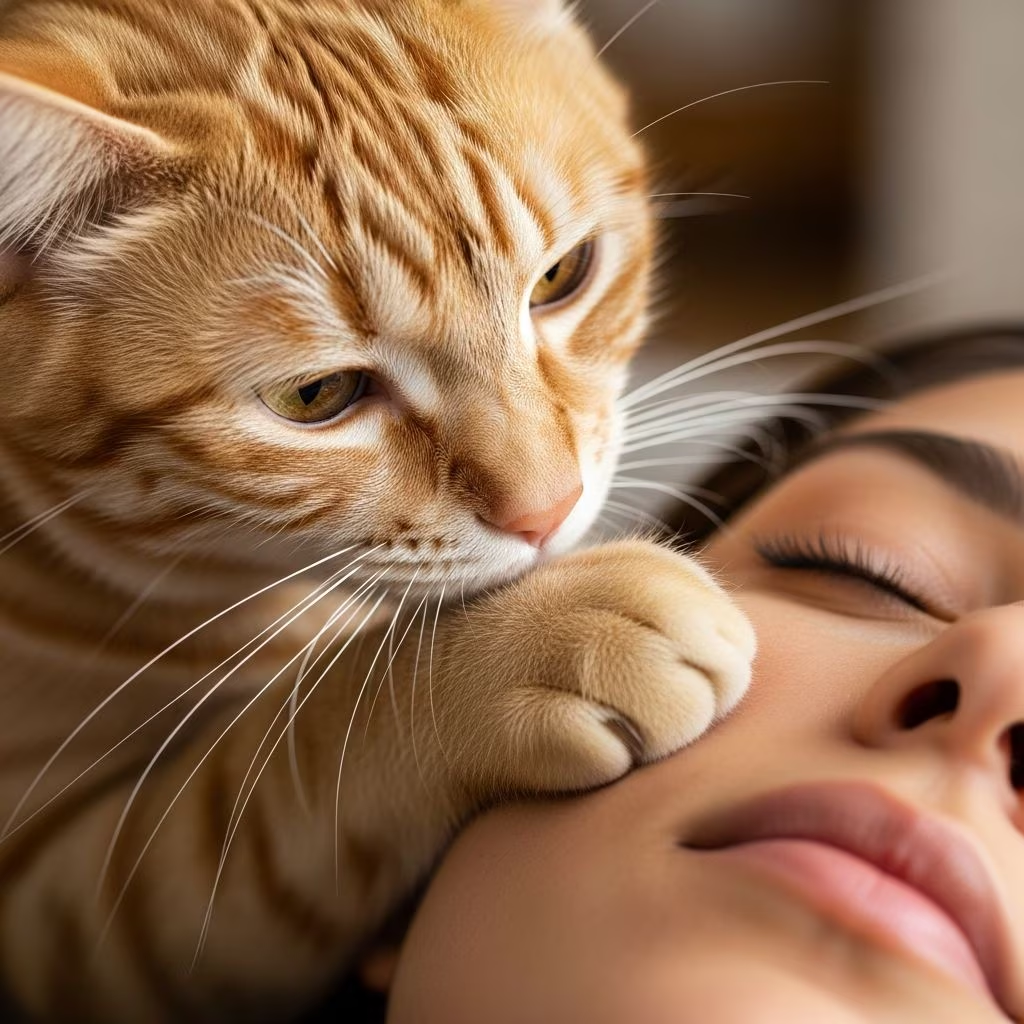
As a devoted cat owner, you’ve likely experienced the gentle—or insistent—touch of your feline friend’s paw on your face. This quirky behavior can catch you off guard, especially first thing in the morning or during a quiet evening cuddle session. Cats communicate in subtle, instinct-driven ways that often puzzle their human companions. While it might feel like random mischief, there’s usually a clear reason behind it, rooted in their natural instincts and learned associations.
Understanding why cats put their paws on faces strengthens the bond between you and your pet. It could signal affection, a request for food, or even a boundary-setting push. In this comprehensive guide, we’ll break down the five most common reasons, drawing from veterinary insights and feline behavior experts. Whether your cat is a playful kitten or a wise senior, these explanations will help you decode their paw gestures and respond effectively.
The 5 Reasons Why Cats Put Their Paws on People’s Faces
Cats’ paws are versatile tools for communication, equipped with scent glands and sensitive pads that convey messages without words. Below, we explore the primary motivations, complete with contextual clues to help you interpret each one accurately.
1. Your Cat Is Marking You with Their Scent
Cats possess scent glands on their paws, particularly on the soft pads, which secrete pheromones—chemical signals unique to each individual cat. When your cat delicately places its paw on your face, it’s often an act of scent marking, claiming you as part of their territory or social group.
This behavior stems from their wild ancestors, who used scent to define safe zones and family units. By rubbing or pressing their paw against your skin, your cat mixes their pheromones with yours, creating a communal scent profile. It’s a profound compliment: you’re not just a provider; you’re family. Observe if your cat does this while head-butting (bunting) or rubbing against your legs—these are all scent-related affirmations of trust.
In multi-cat households, this marking prevents conflicts by signaling ‘mine’ to other felines. If your cat frequently paws your face during relaxed moments, like while you’re lounging on the couch, it’s likely reinforcing this bond. Respond by offering gentle pets in return, which encourages positive associations without overwhelming them.
2. Your Cat Is Hungry
Mealtime is sacred for cats, and they masterfully employ pawing as a wake-up call. Picture this: it’s dawn, you’re nestled under the covers, and suddenly a soft paw taps your cheek. Your cat is politely demanding breakfast, leveraging the most effective tool to rouse you—their human alarm clock.
Cats are crepuscular, most active at dawn and dusk, aligning their hunger pangs with these times. Pawing your face exploits your vulnerability in bed, where ignoring a meow might be possible, but a direct paw contact is harder to dismiss. If this happens consistently around feeding times, it’s a learned behavior: past successes reinforce it.
To manage this, establish a routine. Feed them on a schedule and avoid rewarding nighttime pawing with food, as it perpetuates the cycle. Instead, use an automatic feeder for early mornings. Signs include pawing paired with vocalizing or pacing—clear hunger cues. Addressing this promptly keeps everyone happier and prevents escalation to more insistent nudges.
3. Your Cat Wants To Be Left Alone
Not every paw on your face is an invitation; sometimes, it’s a firm ‘back off.’ During play or unwanted petting sessions, a cat might place its paw on your face with gentle pressure, signaling they’ve had enough. This boundary-setting push respects their need for personal space, much like humans turning away from overzealous hugs.
Cats adore interaction on their terms but tire quickly, especially if overstimulated. Watch body language: flattened ears, dilated pupils, or a twitching tail precede the paw push. It’s not aggression but a polite request. Ignoring it risks scratches, as frustration builds.
Fickle by nature, cats’ moods shift rapidly—what thrilled them yesterday might annoy today. If you lean in for a nose kiss and get pawed away, heed the message. Give them space, perhaps with a toy distraction elsewhere. Reapproach later when their tail is up and eyes soft, indicating receptivity. Respecting these signals fosters trust and reduces stress.
4. Your Cat Is Petting You
In a delightful role reversal, your cat might be petting you back. Just as you stroke their fur to show love, they reciprocate with a paw to your face, mimicking grooming behaviors seen among cat peers.
Observe bonded cats: they allogroom (mutual licking) and touch paws as affection. Extending this to humans shows deep trust. Accompanied by purring, slow blinks, or kneading, it’s pure endearment. Your cat views you as pack, worthy of their tender touch.
This gesture often occurs during close cuddles or when you’re still. Embrace it by staying calm—movement might interrupt. It’s a rare honor, affirming your status in their world. If they half-close eyes while pawing, they’re blissfully content, solidifying your emotional connection.
5. Your Cat Wants To Be Cuddled
Clever cats know pawing your face prompts a response. By tapping you, they elicit pets, scratches, or verbal affirmations—their desired cuddles. This attention-seeking tactic leverages association: past pawing led to affection, so they repeat it.
Especially common in affectionate breeds or well-socialized cats, it bridges their independence with a need for connection. If your cat paws then nuzzles or flops nearby, they’re soliciting interaction. Respond selectively: indulge when convenient to reinforce positively, but set limits to avoid demanding habits.
Incorporate play or treats post-pawing to channel energy. This behavior highlights cats’ intelligence—they manipulate environments (and owners) masterfully for comfort.
Understanding Context and Body Language
Context is key to decoding pawing. A relaxed cat with upright ears and purring signals affection; tense posture indicates discomfort. Paws with retracted claws are gentle communications; extended claws warn of irritation.
- Affectionate pawing: Soft touch, purring, slow blinks.
- Hunger pawing: Insistent tapping near mealtime, vocal meows.
- Boundary pawing: Pushing with stiff body, averted gaze.
Age matters: kittens paw playfully, seniors seek reassurance. Health issues like vision loss might increase face-touching for orientation—consult a vet if sudden.
Should You Worry? When to See a Vet
Occasional pawing is normal, but excessive or altered patterns warrant attention. If paired with aggression, lethargy, or litter box issues, it could indicate pain, dental problems, or stress. Sudden increases might signal cognitive changes in older cats.
Vets recommend monitoring for:
| Normal Behavior | Potential Concern |
|---|---|
| Gentle, occasional pawing | Aggressive swatting or biting |
| Context-specific (e.g., mornings) | Constant, regardless of time |
| Relaxed body language | Tense, hiding afterward |
Annual check-ups ensure underlying issues aren’t at play.
Frequently Asked Questions (FAQs)
What does it mean if my cat paws my face at night?
Typically hunger or a bid for cuddles. Establish routines to minimize disruptions.
Is cat pawing on the face a sign of dominance?
No, more often affection or marking. Dominance shows through staring or blocking paths.
Why do some cats paw more than others?
Personality, breed, and socialization influence it. Siamese are notably ‘touchy.’
Should I discourage face pawing?
Not if gentle; redirect if bothersome with toys or scheduled play.
Can pawing indicate health problems?
Possibly—monitor changes and vet if persistent or with other symptoms.
Cats’ paw-on-face habit reveals their rich inner world. By attuning to these cues, you enhance mutual understanding. Next time that paw lands, smile—it’s your cat’s way of saying you’re special. Just maybe wash up if the litter box visit was recent!
References
- Why Does My Cat Put Its Paw on My Face? 5 Vet Reasons — Catster. 2023. https://www.catster.com/cat-behavior/why-does-my-cat-put-its-paw-on-my-face/
- If your CAT TOUCHES YOUR FACE Don’t Ignore It — AnimalWised (YouTube). 2025-08-10. https://www.youtube.com/watch?v=Jmp7zPghMCU
- Why Does My Cat Put Their Paw on My Face? — Cats.com. 2024. https://cats.com/why-does-my-cat-put-their-paw-on-my-face



